Unlocking the power of salesforce cms the key to content management success – Unlocking the power of Salesforce CMS, the key to content management success, involves harnessing the platform’s capabilities for effective content creation, management, and delivery. This comprehensive guide explores the core functionalities of Salesforce CMS, its integration with other Salesforce products, and strategic approaches to optimizing content workflows. Learn how to leverage Salesforce CMS to improve customer engagement, ensure content security, and integrate with marketing automation for enhanced performance.
From defining content strategies to implementing advanced techniques like AI-powered personalization, this exploration covers every facet of content management within the Salesforce ecosystem. We’ll delve into best practices, providing actionable insights and real-world examples to illustrate the transformative potential of Salesforce CMS.
Introduction to Salesforce CMS: Unlocking The Power Of Salesforce Cms The Key To Content Management Success
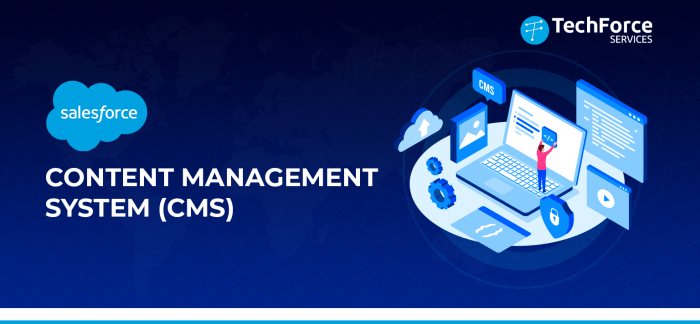
Salesforce Content Management System (CMS) is a powerful platform built on the Salesforce ecosystem, enabling businesses to manage and deliver content effectively. It provides a centralized repository for all content, streamlining workflows and improving collaboration across teams. This platform isn’t just about storing documents; it’s about creating a dynamic content experience that integrates seamlessly with other Salesforce applications.Salesforce CMS simplifies content creation, editing, and publishing processes, allowing businesses to efficiently manage various content types, from marketing materials to product documentation.
This streamlined approach improves content consistency, enhances brand messaging, and ultimately, boosts customer engagement. The system’s adaptability and integration capabilities make it a valuable asset for companies of all sizes.
Key Benefits of Salesforce CMS
Salesforce CMS offers numerous advantages for businesses seeking a comprehensive content management solution. These benefits include improved content consistency across all channels, streamlined workflows for content creation and publishing, enhanced collaboration between teams, and the ability to personalize content based on customer preferences and behavior. This comprehensive approach ensures that your message resonates effectively with your audience.
Salesforce CMS Functionalities
Salesforce CMS provides a range of functionalities to support content creation, editing, and publishing. These functionalities include a user-friendly interface for content authoring, version control for managing changes, automated workflows for content approval and publishing, and integration with other Salesforce applications for enhanced content management. This streamlined process enables teams to focus on creating valuable content, knowing it will be published seamlessly.
Integration with Other Salesforce Products
Salesforce CMS seamlessly integrates with other Salesforce products, such as Sales Cloud, Service Cloud, and Marketing Cloud. This integration allows for a unified view of customer interactions and enables businesses to personalize content based on customer data and behavior. This cohesive approach provides a comprehensive understanding of customer journeys and facilitates the delivery of tailored experiences.
Salesforce CMS Features
| Feature | Description | Benefits |
|---|---|---|
| Content Creation and Editing | Provides a user-friendly interface for creating and editing various content types, such as articles, blog posts, web pages, and product documentation. | Streamlines the content creation process, improves efficiency, and ensures consistency across all channels. |
| Content Versioning | Allows for tracking changes to content over time, ensuring that the most up-to-date versions are always accessible and easily recoverable. | Reduces the risk of losing important content updates, facilitates collaboration, and enables effective version control. |
| Content Workflow Management | Enables automated approval processes and publishing workflows, ensuring that content is reviewed and published according to defined procedures. | Streamlines the content approval process, reduces manual intervention, and ensures content quality control. |
| Integration with Salesforce Products | Seamlessly integrates with Sales Cloud, Service Cloud, and Marketing Cloud to provide a unified view of customer interactions and allow for personalized content delivery. | Provides a 360-degree view of customers, enables personalized content delivery, and enhances customer engagement. |
Content Management Strategies with Salesforce CMS
Unlocking the true potential of your Salesforce CMS requires a robust content strategy. This isn’t just about uploading content; it’s about crafting a system that ensures your content is valuable, accessible, and optimized for maximum impact across various channels. A well-defined content strategy, integrated seamlessly within the Salesforce CMS framework, empowers organizations to manage and distribute information effectively, fostering engagement and driving business results.Implementing a content strategy within Salesforce CMS involves meticulous planning and execution.
It’s crucial to understand your target audience, their needs, and how your content can best address those needs. A clear understanding of your brand voice and messaging is also fundamental to creating a consistent and impactful brand experience. This framework will guide you through best practices for optimizing content workflows, maximizing collaboration, and tracking performance.
Content Strategy Implementation Best Practices
A robust content strategy is crucial for leveraging the full potential of Salesforce CMS. This involves a clear understanding of your target audience and the specific content needs for various departments. Prioritizing content creation based on business objectives and aligning content calendars with marketing campaigns are essential elements for a successful implementation. A well-defined content strategy also includes establishing clear ownership and accountability for content creation, editing, and publishing.
By establishing a clear content governance model, you can ensure consistency, accuracy, and brand adherence.
Content Workflows for Efficiency and Collaboration, Unlocking the power of salesforce cms the key to content management success
Efficient content workflows are paramount for streamlined collaboration and faster delivery. Implementing a structured approval process within the CMS streamlines the review and approval stages, reducing delays and ensuring accuracy. This can be achieved through features like commenting, version control, and task assignment. The right workflow ensures all stakeholders have clear roles and responsibilities, minimizing conflicts and fostering a collaborative environment.
Unlocking the power of Salesforce CMS is crucial for content management success, but did you know that incorporating little surprises, like easter eggs, can also boost your brand’s marketing efforts? These hidden gems can grab attention and leave a lasting impression on your audience, much like a well-structured Salesforce CMS helps you organize and present your content effectively.
For more on how easter eggs can help your brand with marketing, check out this great resource: how easter eggs help your brand with marketing. Ultimately, both strategies – clever easter eggs and a robust Salesforce CMS – work together to create a strong, engaging online presence.
Managing Content Across Channels
Managing content effectively across multiple channels (website, social media, email, etc.) requires a centralized content repository within Salesforce CMS. This enables easy repurposing of content for different formats and platforms, optimizing efforts and ensuring consistency across all communication channels. Leveraging Salesforce’s built-in tools for scheduling and publishing content across platforms can significantly improve your efficiency.
Tracking Content Performance and Measuring ROI
Tracking content performance is essential for optimizing future content strategies. Salesforce CMS provides tools for analyzing key metrics such as website traffic, engagement, and conversions. Analyzing these metrics allows for data-driven decisions regarding content creation, distribution, and optimization. Measuring the ROI of your content strategy involves establishing clear goals and tracking the impact of content on key business metrics like lead generation, sales, and customer satisfaction.
Supported Content Formats in Salesforce CMS
| Content Format | Pros | Cons |
|---|---|---|
| Web Pages | Flexible, easily adaptable to various layouts and functionalities. | Can be complex to create, requiring significant technical expertise. |
| Blog Posts | Engaging, builds thought leadership, fosters community engagement. | Requires regular content creation, needs to be optimized for search engines. |
| Social Media Posts | Direct engagement with target audience, immediate feedback. | Requires short, concise content, needs consistent posting schedule. |
| Email Campaigns | Targeted communication, drives engagement with specific audiences. | Requires careful list management, needs to comply with email marketing regulations. |
| White Papers/Ebooks | In-depth information, positions brand as thought leader, leads to downloads. | Requires significant time investment, needs thorough editing and proofreading. |
Leveraging Salesforce CMS for Enhanced Customer Experience
Salesforce CMS, in its core, is a powerful tool for businesses to elevate customer engagement and satisfaction. It’s more than just content management; it’s a dynamic platform that allows companies to tailor their communication and interactions to resonate deeply with individual customer needs. This ability to personalize the customer journey is crucial in today’s competitive market, fostering loyalty and driving revenue growth.The key to a successful customer experience is understanding and responding to customer needs in real-time.
Salesforce CMS empowers businesses to achieve this by centralizing content creation, delivery, and personalization. This means marketers can use customer data to create relevant content that speaks directly to each customer’s unique situation. The result is a more engaging and meaningful experience, which translates to higher customer satisfaction and retention.
Unlocking the power of Salesforce CMS is crucial for content management success. Before diving into building out your Salesforce content strategy, however, it’s essential to consider the SEO fundamentals. Understanding the 7 things to do before you start SEO, like keyword research and site audits, is vital for optimizing your content for search engines 7 things to do before you start seo.
This foundational knowledge will significantly improve your Salesforce CMS content’s visibility and ultimately drive more traffic and conversions, ensuring your Salesforce content management strategy truly shines.
Personalized Content Experiences
Delivering a truly personalized experience is paramount to customer satisfaction. Salesforce CMS enables the creation of dynamic content that adapts to individual customer preferences, past interactions, and demographics. This goes beyond simple personalization; it involves crafting content that anticipates customer needs and proactively addresses them.
Tailoring Content Based on Customer Data
Salesforce CMS allows businesses to leverage customer data to tailor content in a sophisticated manner. This includes analyzing purchase history, browsing behavior, demographics, and even social media activity. For example, a customer who frequently purchases outdoor gear might receive targeted promotions for new camping equipment or outdoor apparel. By analyzing past interactions, the system can predict future needs and present relevant content.
This approach not only improves customer engagement but also increases the likelihood of conversions.
Integrating Customer Feedback
Gathering and acting on customer feedback is crucial for continuous improvement. Salesforce CMS platforms facilitate the integration of customer feedback mechanisms directly into the content creation process. Customer surveys, feedback forms, and social media monitoring tools can be seamlessly integrated, allowing businesses to gather real-time insights and use them to refine their content strategy. This iterative approach ensures that content consistently aligns with customer expectations and preferences.
Customer Journey Support
Different customer journeys require different approaches to content delivery. A well-structured Salesforce CMS can support a variety of journeys, adapting to the customer’s specific needs at each stage.
| Customer Journey Stage | Salesforce CMS Support Strategies |
|---|---|
| Awareness | Content creation focused on addressing customer pain points and highlighting solutions. Targeting potential customers with relevant articles, blog posts, and social media content. |
| Consideration | Providing in-depth information about products and services, comparing features, and showcasing testimonials. Creating interactive content like calculators or configurators to allow customers to explore options. |
| Decision | Highlighting unique selling propositions, offering exclusive discounts or promotions, and emphasizing the benefits of choosing the product or service. Personalizing the checkout experience with targeted offers. |
| Action | Facilitating seamless transactions, providing clear instructions, and offering support resources. Creating follow-up content to address questions or concerns post-purchase. |
| Retention | Building relationships with customers through exclusive content, loyalty programs, and personalized recommendations. Providing ongoing support and fostering community engagement. |
Content Security and Compliance
Salesforce CMS, while a powerful content management system, necessitates robust security measures to protect sensitive information. This is crucial for maintaining brand reputation, complying with industry regulations, and ensuring data integrity. Safeguarding content and adhering to compliance standards are paramount to success in the digital age.
Security Measures Integrated into Salesforce CMS
Salesforce’s platform offers a comprehensive suite of security features for protecting content. These include user authentication and authorization, access controls, and encryption at rest and in transit. Implementing these measures prevents unauthorized access and data breaches, ensuring that only authorized personnel can view and modify sensitive information. The platform’s multi-factor authentication, for example, adds another layer of security, significantly reducing the risk of unauthorized login attempts.
Compliance Aspects of Salesforce CMS
Salesforce CMS adheres to various industry standards and regulations. This includes compliance with GDPR, HIPAA, and other relevant regulations, depending on the specific industry and use case. The platform’s architecture and configuration are designed to meet these compliance requirements, allowing organizations to maintain regulatory compliance seamlessly within their content management processes. Careful configuration of data access controls and audit trails ensures that organizations maintain compliance with evolving regulations.
Strategies for Maintaining Data Integrity and Preventing Unauthorized Access
Data integrity is crucial for accurate and reliable information. To maintain this, Salesforce CMS employs robust data validation and version control features. These tools ensure that only authorized personnel can make changes, with a clear audit trail of all modifications. Regular security assessments and vulnerability scanning are essential to proactively identify and address potential security risks. This proactive approach helps prevent unauthorized access and ensures data integrity.
Content Governance Policies for Salesforce CMS
Content governance policies are crucial for maintaining data quality and consistency. These policies define who can create, edit, and publish content, establishing clear guidelines for content creation and approval workflows. Content approval processes can be tailored to different levels of sensitivity, ensuring that sensitive content is reviewed by appropriate personnel before publication. These policies should be documented and regularly reviewed to ensure they remain relevant and effective.
Examples include defining specific naming conventions for files, establishing a process for handling sensitive data, and requiring metadata tagging for efficient search and retrieval.
Table: Security Measures and Effectiveness in Salesforce CMS
| Security Measure | Description | Effectiveness |
|---|---|---|
| Multi-factor Authentication | Requires multiple forms of verification (e.g., password, code) for login. | High. Significantly reduces unauthorized login attempts. |
| Data Encryption | Encrypts data at rest and in transit. | High. Protects data even if compromised. |
| Access Control Lists (ACLs) | Defines granular permissions for users to access specific content. | High. Restricts access to authorized personnel only. |
| Regular Security Audits | Proactive assessment of potential vulnerabilities. | High. Identifies and mitigates potential threats before they occur. |
| Version Control | Tracks changes to content, allowing rollback to previous versions. | High. Ensures data integrity and facilitates recovery from errors. |
Integrating Salesforce CMS with Marketing Automation
Salesforce CMS offers a powerful foundation for content management, but its true potential shines when integrated with marketing automation platforms. This integration unlocks a dynamic capability for personalized content delivery, automated workflows, and enhanced campaign performance. By connecting these two Salesforce tools, businesses can streamline their marketing efforts, achieving greater efficiency and a more targeted approach to reaching their audience.Integrating Salesforce CMS with marketing automation platforms like Pardot, Marketo, or HubSpot allows for seamless data exchange.
Content created and published within the Salesforce CMS can be automatically populated into marketing campaigns. This automated flow enhances efficiency, saving time and resources previously spent on manual data entry and campaign setup.
Benefits of Integration
Marketing automation tools are powerful for managing and tracking campaigns, but often struggle with the dynamic content required for personalized customer experiences. Salesforce CMS offers a centralized repository for all content, enabling personalized content delivery tailored to specific customer segments and stages of the buying cycle. This integration leads to a more relevant and engaging customer experience, driving conversions and fostering customer loyalty.
The result is a unified platform for content creation, management, and distribution, ultimately boosting campaign effectiveness.
Content Performance Tracking
Automated tracking within marketing automation platforms offers detailed insights into content performance. By integrating the Salesforce CMS with these tools, businesses can gain a comprehensive view of content engagement metrics, such as click-through rates, open rates, and conversion rates. This data-driven approach allows marketers to identify successful content strategies and optimize campaigns in real-time. Crucially, this tracking provides quantifiable results, enabling continuous improvement and refinement of content strategies.
Example of Enhanced Marketing Campaigns
Imagine a company selling software. Using Salesforce CMS and a marketing automation platform, they can create dynamic landing pages for different product tiers, automatically populated with relevant content based on the lead’s profile and engagement. This personalization creates a more tailored experience for each prospect, improving conversion rates. Furthermore, automated email sequences can be triggered based on user interactions with the content, nurturing leads and guiding them through the sales funnel.
These types of targeted campaigns result in increased lead generation and higher customer satisfaction.
Unlocking the power of Salesforce CMS is crucial for content management success. Knowing how to optimize your content for search engines is vital, and understanding common SEO errors is key. For instance, if you’re not careful, issues like poor keyword research or technical SEO problems can hinder your content from reaching its full potential. Check out this helpful guide on top 10 SEO errors and solutions to ensure your Salesforce CMS content gets the visibility it deserves.
Ultimately, a strong SEO strategy is essential for a robust Salesforce CMS content management system.
Comparison of Marketing Automation Platforms
| Marketing Automation Platform | Salesforce CMS Compatibility | Key Features |
|---|---|---|
| Pardot | High | Excellent integration with Salesforce, strong automation capabilities, and comprehensive reporting. |
| Marketo | High | Robust platform with advanced personalization and segmentation features. |
| HubSpot | Medium | User-friendly interface and strong capabilities, but integration might require more technical expertise. |
| Other Platforms | Variable | Some other platforms might offer limited or custom integration solutions. |
This table provides a simplified comparison of marketing automation platforms and their compatibility with Salesforce CMS. The degree of compatibility varies depending on the specific platform and the complexity of the desired integration. Further research is advised for a more comprehensive understanding of each platform’s capabilities and integration procedures.
Advanced Content Management Techniques
Unlocking the full potential of your Salesforce CMS requires more than just basic content creation. Advanced techniques leverage AI, personalization, and optimization strategies to create a truly dynamic and engaging customer experience. This section delves into powerful methods to boost content performance and maximize your ROI.Advanced content management techniques are crucial for maintaining a competitive edge in today’s digital landscape.

They allow businesses to deliver highly personalized and relevant content, which ultimately translates to increased engagement and conversions. Implementing these strategies within the Salesforce CMS framework empowers businesses to not only manage content effectively but also to optimize its impact on key metrics.
AI-Powered Content Generation and Personalization
AI tools are transforming content creation and delivery. Integrating AI-powered content generation into your Salesforce CMS streamlines the process and allows for dynamic, personalized content tailored to individual customer segments. This approach not only reduces manual effort but also ensures consistency and accuracy in content delivery. Tools can automatically create various content formats like blog posts, social media updates, or product descriptions.
The key is to leverage AI’s capabilities to craft highly personalized content experiences, ensuring relevant messaging for each user.
Dynamic Content and Personalized Recommendations
Dynamic content adapts to different user contexts and preferences. Using Salesforce CMS, you can create content that changes based on factors like location, device, or past interactions. This personalized experience significantly enhances user engagement. Real-time recommendations, based on browsing history or past purchases, further enhance the user journey. This approach keeps users engaged and increases the likelihood of conversion.
For example, a customer browsing electronics might see recommendations for related accessories or complementary products, fostering a more comprehensive shopping experience.
Search Engine Optimization () with Salesforce CMS
Optimizing content for search engines is vital for driving organic traffic. Salesforce CMS provides features for implementing best practices directly within the platform. This allows for seamless integration of s, meta descriptions, and other elements. By optimizing content for relevant s and ensuring proper tagging, you improve the visibility of your website and content in search engine results.
This increases the likelihood of attracting organic traffic and expanding your online reach.
A/B Testing for Enhanced Content Performance
A/B testing is a powerful technique for evaluating the effectiveness of different content variations. Within the Salesforce CMS environment, you can implement A/B tests to compare various headlines, calls to action, or even entire sections of content. By analyzing the results, you can identify which versions perform best and iterate to further optimize content for maximum impact. This data-driven approach allows you to continuously improve content performance and refine your strategies for optimal results.
For example, testing different versions of a landing page’s headline can significantly impact conversion rates.
Implementing advanced content management techniques within the Salesforce CMS framework offers a competitive advantage by allowing for personalized, engaging, and optimized content experiences. This, in turn, leads to increased user engagement, conversions, and a higher return on investment.
Case Studies and Examples
Unlocking the power of Salesforce CMS often involves concrete examples of how organizations have leveraged it for improved content management. These case studies highlight the real-world impact and demonstrate the tangible benefits that businesses can achieve. This section will explore successful implementations, showcasing how Salesforce CMS can streamline workflows, enhance customer experience, and drive significant business outcomes.Implementing Salesforce CMS effectively requires a clear understanding of its potential applications.
Different industries and businesses have unique content management needs, and the successful implementation of Salesforce CMS depends on tailoring its functionalities to address those specific requirements. This section will delve into various real-world scenarios, showcasing how Salesforce CMS has delivered substantial improvements for diverse organizations.
E-commerce Success with Salesforce CMS
E-commerce businesses often grapple with managing vast amounts of product information, promotions, and customer-facing content. Salesforce CMS simplifies this process. A notable example involves an online retailer that used Salesforce CMS to centralize product descriptions, images, and specifications. This streamlined their content creation process, enabling faster updates and improved search engine optimization. Consequently, the retailer experienced a noticeable increase in organic traffic and sales conversions.
Another e-commerce success story involved a company using Salesforce CMS to manage dynamic content based on customer location and preferences. This personalized approach led to higher engagement and conversion rates, demonstrating the effectiveness of dynamic content delivery within the Salesforce CMS framework.
Healthcare Applications of Salesforce CMS
In the healthcare industry, maintaining accurate and compliant patient information is paramount. Salesforce CMS can be a valuable tool for streamlining content management in this sector. One example involves a hospital system that utilized Salesforce CMS to manage patient portals, providing secure and easy access to medical records and appointment scheduling. This enhanced patient experience and reduced administrative burden.
Another example includes a pharmaceutical company that leveraged Salesforce CMS for managing clinical trial information and regulatory documents. This centralized approach ensured regulatory compliance and facilitated efficient access to crucial data, improving the overall efficiency of the clinical trial process.
Financial Institutions and Salesforce CMS
Financial institutions often face complex regulatory requirements and stringent security protocols. Salesforce CMS can address these challenges by offering secure and compliant content management. A case study involving a financial institution using Salesforce CMS for managing regulatory disclosures and investor relations materials demonstrates how Salesforce CMS can streamline compliance procedures. This streamlined process facilitated faster regulatory reporting and reduced the risk of compliance violations.
Another example involves a bank using Salesforce CMS for managing customer-facing content, including brochures, FAQs, and loan applications. This centralized approach enabled the bank to provide consistent and accurate information to its customers.
Results and Key Takeaways
| Organization Type | Specific Use Case | Key Improvements | Business Outcomes |
|---|---|---|---|
| E-commerce | Centralized product information management, dynamic content delivery | Faster updates, improved , higher conversion rates | Increased organic traffic, higher sales conversions |
| Healthcare | Managing patient portals, clinical trial information | Enhanced patient experience, reduced administrative burden, ensured regulatory compliance | Improved patient satisfaction, efficient clinical trial management |
| Financial Institutions | Managing regulatory disclosures, investor relations materials, customer-facing content | Streamlined compliance procedures, provided consistent and accurate information | Faster regulatory reporting, reduced risk of compliance violations, enhanced customer experience |
The consistent theme across these case studies is the demonstrable improvement in efficiency, customer experience, and regulatory compliance through the strategic implementation of Salesforce CMS.
Final Review
In conclusion, unlocking the power of Salesforce CMS is not just about implementing a system; it’s about transforming how you manage and interact with your content. This guide has provided a roadmap to leverage the platform’s robust features, from basic content creation to sophisticated integrations with marketing automation. By understanding best practices and applying the insights shared, you can achieve significant improvements in content management success, ultimately enhancing customer experience and driving business growth.