What is digital marketing the fundamentals of digital in marketing – What is digital marketing, the fundamentals of digital in marketing? This guide dives deep into the core concepts, strategies, and tools that power successful online campaigns. From defining digital marketing and its key differences from traditional methods, to exploring various channels like social media and search engines, we’ll cover everything you need to know. We’ll also examine the importance of data analytics, customer journey mapping, and in achieving your marketing goals.
Understanding the evolving landscape of digital marketing is crucial for businesses aiming to thrive in today’s online world. This exploration provides a solid foundation, equipping readers with practical insights and actionable strategies.
Defining Digital Marketing
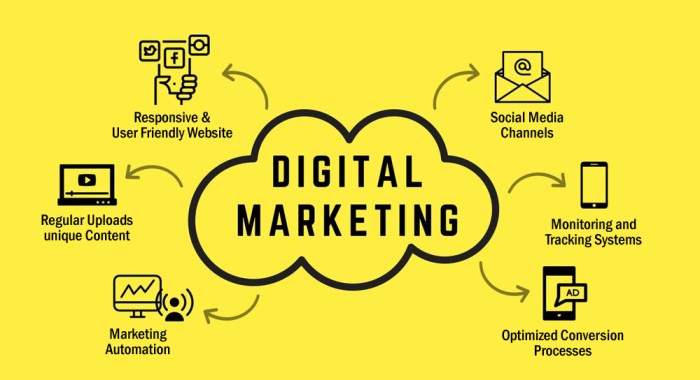
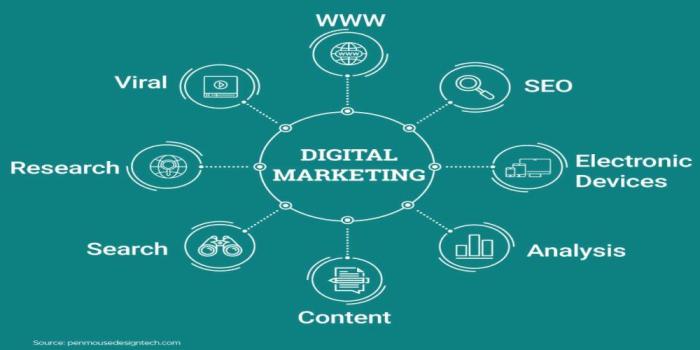
Digital marketing has revolutionized how businesses connect with customers and achieve their goals. It’s no longer enough to rely solely on traditional methods; understanding and leveraging the digital landscape is crucial for success in today’s market. This section dives into the core principles and practices of digital marketing, highlighting its key differences from traditional approaches and outlining the essential channels used.Digital marketing encompasses all marketing efforts that utilize electronic devices or the internet.
It leverages various online channels to promote products or services, build brand awareness, drive sales, and engage with potential and existing customers. This approach is dynamic and allows for precise targeting, measurement, and adaptation based on real-time data.
Digital Marketing Definition
Digital marketing is the application of marketing principles and strategies using digital channels and technologies to reach, engage, and convert customers online. This includes a broad spectrum of activities, from social media campaigns to search engine optimization () strategies.
Traditional vs. Digital Marketing
Traditional marketing relies on offline channels like print advertising, television commercials, and radio announcements. These methods often have a broader reach but can be less targeted and more expensive to measure. In contrast, digital marketing utilizes online platforms, allowing for more precise targeting and real-time feedback. The key difference lies in the ability to track and measure results in digital marketing, making it more adaptable and cost-effective in the long run.
Digital Marketing Channels
Digital marketing utilizes a diverse array of channels to connect with customers. These include:
- Search Engine Optimization (): Optimizing website content and structure to improve organic search rankings on search engines like Google. This ensures visibility to potential customers actively searching for related products or services.
- Search Engine Marketing (SEM): Utilizing paid advertising campaigns on search engines to increase website visibility. This often involves bidding on s to appear at the top of search results.
- Social Media Marketing: Engaging with audiences on platforms like Facebook, Instagram, Twitter, and LinkedIn to build brand awareness, foster community, and drive traffic to websites.
- Email Marketing: Utilizing email campaigns to nurture leads, promote products or services, and maintain communication with existing customers. This channel allows for targeted messages and personalized engagement.
- Content Marketing: Creating and sharing valuable content, such as blog posts, articles, videos, and infographics, to attract and engage a target audience. This builds trust and establishes expertise in the industry.
- Pay-Per-Click (PPC) Advertising: A model where advertisers pay each time a user clicks on their advertisement. This can be implemented across various digital channels, including search engines and social media.
- Affiliate Marketing: Collaborating with other websites or influencers to promote products or services and earn a commission on sales generated through their referrals.
Successful Digital Marketing Campaigns
Several successful campaigns illustrate the power of digital marketing. For example, the “Dove Real Beauty” campaign used social media and online advertising to challenge traditional beauty standards, resonating with a large audience. Similarly, companies like Dollar Shave Club successfully leveraged online videos and social media to disrupt the traditional razor market, demonstrating the effectiveness of targeted digital strategies.
Traditional vs. Digital Marketing Comparison
| Strategy | Target Audience | Cost | Measurement | Example |
|---|---|---|---|---|
| Traditional Print Advertisement | Broad, geographically based | High (printing, distribution) | Difficult to measure precise reach and impact | Newspaper ad for a local bakery |
| Digital Social Media Campaign | Targeted based on demographics, interests, and behaviors | Variable (depending on platform and campaign scope) | Trackable metrics (impressions, engagement, conversions) | Instagram campaign promoting a new clothing line |
| Television Commercial | Large, geographically dispersed audience | High (production, airtime) | Difficult to measure direct impact on sales | National TV ad for a car manufacturer |
| Search Engine Optimization () | Customers actively searching for relevant products/services | Low to Medium (ongoing effort) | Trackable organic traffic and rankings | Optimizing a website for search terms related to “organic food delivery” |
Core Concepts in Digital Marketing: What Is Digital Marketing The Fundamentals Of Digital In Marketing
Diving deeper into the digital marketing landscape reveals several fundamental concepts that underpin successful strategies. Understanding these concepts is crucial for navigating the complex world of online engagement and achieving tangible results. This section explores the key building blocks of effective digital marketing, from customer journeys to data analysis and strategies.The digital realm is a dynamic environment, requiring marketers to constantly adapt and refine their approaches.
Success hinges on understanding the nuances of customer behavior, leveraging data insights, and employing strategies that resonate with today’s digitally-savvy consumers. This section will explore the crucial concepts needed for this journey.
Customer Journey Mapping
Customer journey mapping is a powerful tool for understanding how customers interact with a brand across various touchpoints. By visualizing the customer’s experience, businesses can identify pain points and opportunities for improvement. This process allows for a holistic view of the customer’s perspective, from initial awareness to final purchase and beyond. It’s not just about the product; it’s about the entire experience.
Data Analytics in Consumer Behavior
Data analytics plays a critical role in understanding consumer behavior. By analyzing website traffic, user engagement, and purchase patterns, marketers can gain valuable insights into customer preferences, motivations, and pain points. This data-driven approach allows for personalized marketing campaigns and targeted messaging, leading to higher conversion rates. This data is invaluable for tailoring experiences to individual needs.
Search Engine Optimization ()
Search engine optimization () is the process of optimizing a website to rank higher in search engine results pages (SERPs). By improving a website’s visibility, businesses can attract more organic traffic, leading to increased brand awareness and ultimately, more conversions. Effective strategies involve research, content optimization, and link building, all aimed at making a website more discoverable.
Content Marketing
Content marketing involves creating and distributing valuable, relevant, and consistent content to attract and retain a clearly defined audience. This approach builds brand awareness, fosters trust, and ultimately drives customer engagement. Content can take various forms, from blog posts and articles to videos and infographics, all designed to provide value and educate the audience. The key is to create content that addresses customer needs and establishes your brand as an authority.
Digital Marketing Metrics
Tracking key metrics is essential for measuring the success of digital marketing efforts. These metrics provide insights into campaign performance and areas for improvement. Monitoring these indicators allows marketers to refine strategies, optimize campaigns, and ultimately maximize return on investment.
- Website traffic (unique visitors, page views, bounce rate)
- Conversion rates (leads generated, sales made)
- Customer acquisition cost (CAC)
- Return on ad spend (ROAS)
- Social media engagement (likes, shares, comments)
- Email open and click-through rates
- Customer lifetime value (CLTV)
Customer Journey Stages
Understanding the customer journey is crucial for tailoring marketing efforts at each stage. The following table illustrates the different stages, activities, digital touchpoints, and associated goals.
| Stage | Activities | Digital Touchpoints | Goals |
|---|---|---|---|
| Awareness | Researching, discovering potential solutions | Search engine results, social media feeds, online articles | Increase brand visibility, build initial interest |
| Consideration | Comparing options, evaluating features | Product pages, reviews, comparison websites | Generate leads, showcase product benefits |
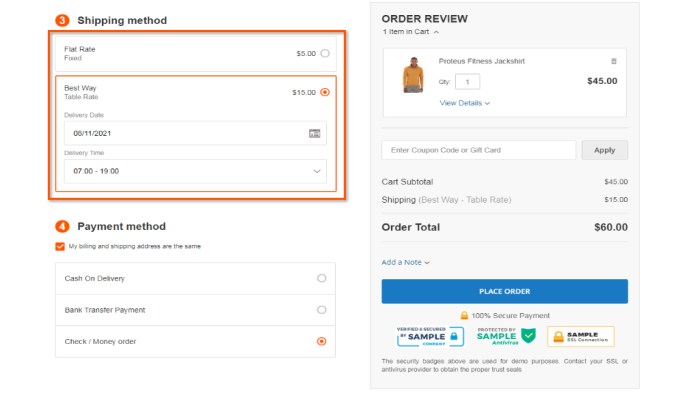
| Decision | Making a purchase decision | Shopping carts, checkout processes, payment gateways | Drive conversions, facilitate seamless purchase |
| Retention | Building customer loyalty, encouraging repeat purchases | Loyalty programs, customer support channels, personalized recommendations | Increase customer lifetime value, foster brand advocacy |
Key Digital Marketing Channels
Digital marketing isn’t just about having a website anymore. It’s about strategically using various channels to connect with your target audience. This involves understanding how different platforms cater to specific customer needs and behaviors. Successful digital marketing hinges on understanding these channels and employing effective strategies within each.
Search Engine Marketing (SEM)
Search engine marketing (SEM) is a powerful tool for driving targeted traffic to your website. By utilizing paid advertising on search engines like Google, businesses can strategically place their ads in front of users actively searching for products or services related to their offerings. This targeted approach ensures that your ads reach potential customers who are most likely to convert.
research is crucial for optimizing your SEM campaigns and ensuring your ads are shown to the right audience at the right time.
Social Media Marketing Strategies
Social media marketing is a dynamic and engaging way to connect with customers. It goes beyond simply posting updates; effective strategies involve understanding your target audience’s preferences and creating content that resonates with them. Engaging with comments, responding to messages, and running contests are key components of building a strong social media presence. Building brand awareness and fostering customer loyalty are critical objectives in social media marketing.
Digital marketing, at its core, is about connecting with your audience online. Understanding the fundamentals, from SEO to social media engagement, is key. But, what if you need to optimize your budget? Consider reallocating your conference budget without sacrificing quality content, like you can discover at reallocate your conference budget without sacrificing quality content. This way, you can still get valuable insights and networking opportunities for your digital marketing efforts.
Successful Email Marketing Campaigns
Email marketing remains a valuable tool for direct communication with customers. Successful campaigns often involve personalized content, segmented lists, and clear calls to action. A well-crafted email subject line is essential for grabbing attention and encouraging opens. Automated email sequences can nurture leads and provide a consistent customer experience. For example, welcome series emails can onboard new subscribers and encourage engagement.
Mobile Marketing, What is digital marketing the fundamentals of digital in marketing
Mobile marketing is essential in today’s on-the-go world. Understanding how your customers interact with their mobile devices is key to developing successful mobile marketing strategies. This might include creating mobile-friendly websites, utilizing mobile-specific advertising platforms, or deploying location-based services. A mobile-first approach is vital for effectively reaching your target audience where they spend a significant amount of time.
Influencer Marketing
Influencer marketing leverages the credibility and reach of key individuals to promote products or services. Identifying influencers whose audience aligns with your target market is crucial for maximizing the impact of your campaigns. Building authentic relationships with influencers is paramount for generating genuine recommendations and endorsements. It’s essential to ensure the influencer’s content aligns with your brand values.
Digital Marketing Channels Comparison
| Channel | Pros | Cons | Examples |
|---|---|---|---|
| Search Engine Marketing (SEM) | Targeted traffic, measurable results, quick implementation | Cost can be high, requires ongoing management, competition for s | PPC campaigns on Google Ads, Bing Ads |
| Social Media Marketing | Brand building, customer engagement, cost-effective (depending on strategy) | Requires consistent effort, can be time-consuming, algorithm changes | Facebook ads, Instagram marketing, TikTok campaigns |
| Email Marketing | Direct communication, personalized content, measurable ROI | Requires list building, potential for spam complaints, declining open rates | Newsletter campaigns, promotional emails, abandoned cart recovery emails |
| Mobile Marketing | Targeted messaging, location-based services, high engagement | Requires mobile-friendly design, varying mobile usage patterns, privacy concerns | Mobile app development, in-app advertising, SMS marketing |
| Influencer Marketing | Authentic recommendations, targeted reach, brand awareness | Finding suitable influencers, influencer authenticity concerns, managing relationships | Sponsored posts, product reviews, collaborations |
Digital Marketing Strategies
Crafting a robust digital marketing strategy is crucial for any business aiming to thrive in the online landscape. It’s not just about posting content; it’s about a meticulously planned approach to achieve specific marketing objectives. A well-defined strategy ensures that all your digital marketing efforts are aligned, maximizing their impact and return on investment. This involves understanding your target audience, choosing the right channels, and constantly adapting to the ever-evolving digital environment.Effective digital marketing hinges on a comprehensive strategy.
This strategy is a roadmap, guiding all marketing efforts toward measurable results. It goes beyond simple tactics; it encompasses a deep understanding of your target audience, their needs, and their behaviors. The success of a digital marketing campaign hinges on a clear understanding of the objectives and a strategy tailored to achieve those goals.
Digital marketing, at its core, is about understanding your audience and connecting with them online. A crucial part of this is customer retention and acquisition, customer retention and acquisition strategies. Ultimately, effective digital marketing hinges on building lasting relationships and driving consistent growth through engaging content and targeted campaigns.
Developing a Comprehensive Digital Marketing Strategy
A comprehensive digital marketing strategy is a document that details your business’s approach to reaching its marketing objectives through digital channels. It’s a living document, requiring periodic review and adjustments to reflect changes in the market and your business goals. This document Artikels your marketing goals, target audience segmentation, key channels, and measurable performance indicators.
Importance of Clear Marketing Objectives and Goals
Clearly defined marketing objectives and goals are essential for any digital marketing strategy. These objectives should be specific, measurable, achievable, relevant, and time-bound (SMART). For example, instead of a vague objective like “increase brand awareness,” a SMART objective would be “increase website traffic by 20% within the next quarter by implementing strategies and social media campaigns.” This provides a clear direction and allows for tracking of progress.
Segmenting Your Target Audience for Effective Marketing
Understanding your target audience is paramount for effective digital marketing. Effective segmentation breaks down your audience into distinct groups based on demographics, psychographics, behaviors, and needs. This allows for the development of targeted marketing messages that resonate with each segment, maximizing the impact of your campaigns. For example, a clothing retailer might segment its audience by age group (teenagers, young adults, middle-aged adults) and interests (fashion trends, sustainability, athletic wear) to tailor their marketing campaigns.
Examples of Effective A/B Testing Methodologies
A/B testing is a crucial tool for optimizing digital marketing campaigns. It involves comparing two versions of a marketing asset (e.g., an ad, a landing page) to determine which performs better. For instance, testing different headlines, calls to action, or images on a landing page can reveal which elements are most effective in driving conversions. Common A/B testing methodologies include testing different variations of headlines, calls-to-action, and visual elements to identify the optimal combination for conversions.
Personalization Techniques in Digital Marketing
Personalization in digital marketing is crucial for creating a more meaningful and engaging experience for your customers. This involves tailoring your marketing messages and content to individual customer preferences, behaviors, and needs. For example, using data from website interactions to offer personalized product recommendations or showcasing content relevant to past searches demonstrates a commitment to understanding individual customers.
Digital marketing, at its core, is about connecting with audiences online. From SEO to social media, understanding the fundamentals is key. Recent tech developments like Google’s new SOS feature, detailed in this article google launches new sos feature , highlight how crucial digital strategies are becoming for safety and communication. Ultimately, mastering these fundamentals is vital for any business looking to thrive in today’s digital landscape.
Personalization is about using data to make your marketing messages more relevant and engaging for individual customers.
Steps for Developing a Successful Digital Marketing Plan
- Define your goals and objectives: Clearly articulate what you want to achieve through your digital marketing efforts. This includes specific, measurable, achievable, relevant, and time-bound (SMART) goals. For example, a goal could be increasing website traffic by 15% within the next three months.
- Identify your target audience: Understand your ideal customer’s demographics, psychographics, and online behaviors. This will help you tailor your messaging and choose the right channels to reach them. For instance, you might determine that your target audience are millennial women interested in sustainable fashion.
- Select your marketing channels: Choose the digital channels that are most effective for reaching your target audience and achieving your objectives. This could include social media, search engine optimization (), email marketing, and paid advertising.
- Create engaging content: Develop high-quality content that provides value to your target audience and positions your brand as a thought leader. This could involve blog posts, articles, videos, infographics, and social media updates.
- Implement a content calendar: Plan your content in advance to ensure a consistent flow of engaging material to your target audience. This will also help you stay organized and track your progress.
- Track your results and make adjustments: Regularly monitor the performance of your digital marketing campaigns and make necessary adjustments to optimize your strategy. This is a key element for ongoing improvement.
Measuring and Optimizing Results
Digital marketing isn’t just about creating engaging content and running ads; it’s about meticulously tracking and analyzing the results to continuously improve performance. Understanding what works and what doesn’t is crucial for maximizing ROI and achieving your business goals. This involves a deep dive into key performance indicators (KPIs), utilizing effective analytical tools, and consistently monitoring campaign effectiveness.
Successful digital marketers are masters of data, using it to refine strategies and adapt to evolving market trends.Data-driven decision-making is paramount in today’s digital landscape. Analyzing the results of your digital marketing efforts allows you to identify areas of strength and weakness, fine-tune your approach, and ultimately achieve better outcomes. This iterative process of measurement, analysis, and optimization is essential for sustained growth and success.
Key Performance Indicators (KPIs)
KPIs are quantifiable metrics that track the success of your digital marketing initiatives. They provide a clear picture of what’s working and what needs adjustment. Choosing the right KPIs depends on your specific business objectives, whether it’s increasing brand awareness, driving sales, or generating leads. Effective KPI selection is critical to understand the effectiveness of your digital marketing strategy.
Analytical Tools in Digital Marketing
Various analytical tools are available to track and analyze data from different digital marketing channels. These tools provide insights into website traffic, user behavior, campaign performance, and more. By utilizing these tools effectively, you can gain a comprehensive understanding of your audience and refine your strategies for better results. The use of analytical tools allows you to monitor the impact of your marketing efforts on key metrics.
- Google Analytics: A powerful tool for tracking website traffic, user behavior, and conversion rates. It offers a comprehensive view of how users interact with your website, allowing you to identify areas for improvement.
- SEMrush: Provides data on research, competitor analysis, and search engine rankings. This is particularly valuable for and paid search campaigns.
- Hootsuite: A social media management tool that tracks social media engagement, including likes, shares, comments, and follower growth. It offers a centralized platform to manage multiple social media accounts.
- Moz: Another tool that provides detailed insights into website optimization, including backlink analysis, research, and site audits.
- Ahrefs: A comprehensive tool that allows for in-depth analysis of backlink profiles, research, and site audits. This can help identify potential issues and opportunities to improve search engine rankings.
Importance of Ongoing Monitoring and Adjustments
Digital marketing campaigns aren’t static; they require continuous monitoring and adjustments to maintain optimal performance. Market trends and consumer behavior evolve constantly, and your campaigns must adapt accordingly. Regular monitoring ensures that your strategies remain aligned with current market conditions.
Common Mistakes in Digital Marketing and How to Avoid Them
Several common mistakes can hinder the effectiveness of your digital marketing efforts. These include neglecting audience segmentation, failing to track and analyze results, and not adapting to changing trends.
- Ignoring Audience Segmentation: Creating targeted campaigns tailored to specific audience segments is crucial. Generic messages are often less effective than those that resonate with particular groups. Consider using demographics, interests, and behaviors to tailor your messaging.
- Lack of Data Analysis: Failing to track and analyze campaign performance prevents identification of what’s working and what isn’t. Thorough analysis reveals areas for improvement and optimization. Don’t simply run campaigns; monitor their impact.
- Inflexibility in Adapting to Trends: The digital landscape is dynamic. Campaigns must adapt to changing consumer behavior and market trends. Staying current with industry developments ensures strategies remain effective.
Examples of Tools to Track Website Traffic and User Behavior
Tools like Google Analytics provide detailed insights into website traffic and user behavior. These tools can show you which pages are most popular, how long visitors stay on your site, and where they’re coming from. By understanding these metrics, you can identify areas to improve the user experience and drive better results.
Digital Marketing KPIs Table
| KPI | Definition | How to Measure | Target Value |
|---|---|---|---|
| Website Traffic | The number of visitors to your website | Using Google Analytics or similar tools | Increase over time |
| Conversion Rate | Percentage of visitors who complete a desired action | Track actions like purchases, sign-ups, or form submissions | Aim for higher conversion rates |
| Bounce Rate | Percentage of visitors who leave your website after viewing only one page | Monitor in Google Analytics | Lower than industry average |
| Average Session Duration | The average time spent on your website by a visitor | Use Google Analytics | Increase through engaging content |
| Click-Through Rate (CTR) | Percentage of people who click on a link or ad | Monitor ads and links | Higher CTR is generally better |
Fundamentals of Digital Marketing Tools
Digital marketing thrives on a wide array of tools, each designed to streamline various aspects of the process. From managing social media campaigns to analyzing website traffic, these tools are crucial for success in today’s online landscape. Understanding their features and functionalities empowers marketers to make informed decisions and optimize their strategies for maximum impact. This section delves into essential digital marketing tools, highlighting their roles and showcasing practical examples.
Essential Tools for Digital Marketers
A diverse range of tools empowers digital marketers to effectively manage campaigns, analyze performance, and optimize strategies. These tools streamline various tasks, from social media management to website optimization. A solid foundation in utilizing these tools is essential for achieving optimal results in the digital marketing arena.
- Social Media Management Tools: These platforms facilitate scheduling posts, monitoring engagement, and analyzing performance across various social media channels.
- Analytics Platforms: These tools provide insights into website traffic, user behavior, and campaign effectiveness, enabling data-driven decision-making.
- Email Marketing Platforms: These platforms streamline email campaigns, enabling personalized communication and improved customer engagement.
- Tools: These tools help optimize websites for search engines, improving visibility and organic traffic.
Social Media Management Tools
Social media management tools are vital for handling multiple social media platforms efficiently. They offer features like scheduling posts, monitoring mentions, and analyzing engagement, which are essential for managing social media presence effectively. Using these tools allows marketers to stay consistent and track the effectiveness of their content.
- Hootsuite: A popular choice, Hootsuite allows users to manage multiple social media accounts from a single dashboard. It offers scheduling, analytics, and reporting features. The ability to schedule posts in advance allows for better planning and consistent engagement.
- Buffer: Buffer is another widely used tool known for its user-friendly interface and scheduling capabilities. It allows for easy scheduling of posts across various platforms, making it suitable for both small and large businesses.
- Sprout Social: Sprout Social offers a comprehensive suite of social media management features, including advanced analytics and social listening capabilities. This provides a deeper understanding of customer sentiment and brand mentions.
Analytics Platforms
Analytics platforms are indispensable for understanding user behavior and campaign performance. They provide crucial data points for optimizing strategies and achieving desired outcomes.
- Google Analytics: Google Analytics is a free and powerful tool that tracks website traffic, user behavior, and conversion rates. It offers a wide range of reports and customizable dashboards, enabling marketers to gain a comprehensive understanding of website performance.
- Adobe Analytics: Adobe Analytics provides advanced analytics capabilities for understanding user behavior across websites and applications. It’s a robust option for businesses needing detailed insights into their digital properties.
Email Marketing Platforms
Email marketing platforms are critical for building and nurturing relationships with customers. They streamline the process of creating, sending, and tracking email campaigns. Effective email marketing builds trust and fosters customer loyalty.
- Mailchimp: A popular choice for beginners, Mailchimp provides a user-friendly interface for creating and managing email campaigns. It offers features for segmentation, automation, and A/B testing.
- Constant Contact: Constant Contact is another widely used email marketing platform, offering robust features for building email lists, segmenting audiences, and automating campaigns.
Tools
tools are vital for optimizing websites for search engines. They help identify opportunities, analyze website performance, and improve search engine rankings.
- SEMrush: SEMrush provides a comprehensive suite of tools, including research, site audits, and rank tracking. It aids in identifying relevant s, assessing website performance, and tracking search engine rankings.
- Ahrefs: Ahrefs is another powerful tool that provides detailed backlink analysis, research, and site audit capabilities. It helps in understanding the competitive landscape and optimizing website content for better search engine visibility.
Digital Marketing Tools Comparison
| Tool | Function | Key Features | Examples |
|---|---|---|---|
| Hootsuite | Social media management | Scheduling, analytics, reporting | Managing multiple social media accounts |
| Google Analytics | Website analytics | Traffic tracking, user behavior analysis | Understanding website performance |
| Mailchimp | Email marketing | Campaign creation, automation, segmentation | Sending targeted email campaigns |
| SEMrush | optimization | research, site audits, rank tracking | Improving website search engine rankings |
Final Thoughts
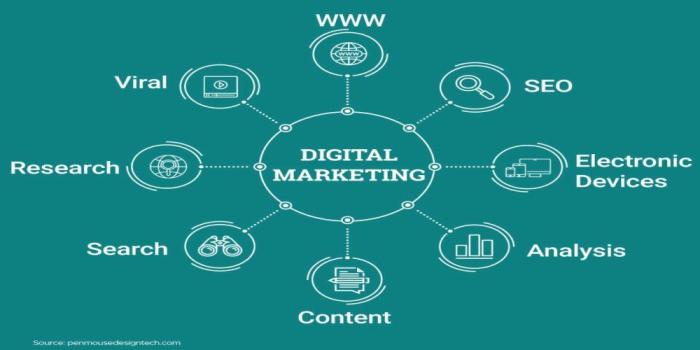
In conclusion, what is digital marketing and its fundamentals involve a multifaceted approach encompassing various strategies and channels. From defining the core principles to understanding the tools and emerging trends, this guide provides a comprehensive overview. By mastering the fundamentals, businesses can unlock the power of digital marketing to connect with their target audience, drive growth, and achieve their business objectives.