

Google search operators guide empowers you to refine your online searches, unearthing hidden gems and relevant information with ease. Mastering these tools unlocks a world of precision, allowing you to go beyond simple searches and target your research with laser focus. From basic to advanced techniques, this guide will equip you with the knowledge to navigate the vast digital landscape effectively.
This guide explores the fundamentals of search operators, from using quotation marks for precise phrase searches to leveraging advanced operators like site: and filetype: to zero in on specific information. It also delves into practical applications, showcasing how operators can streamline research tasks, find scholarly articles, locate news items, and uncover related websites. Finally, the guide provides a troubleshooting section to address common errors and enhance your understanding of complex search queries.
Introduction to Search Operators
Search operators are special s or symbols that you can use in search engines like Google to refine your searches and get more precise results. They act as filters, allowing you to specify exactly what information you want to find, whether it’s a specific type of document, a particular phrase, or a range of dates. This greatly improves the quality and relevance of your search results, saving you time and effort.Employing search operators can significantly enhance your online research.
Mastering Google search operators is key for effective online research, but optimizing your website for search also hinges on understanding crucial metrics like Cumulative Layout Shift (CLS). A deep dive into CLS, including its explanation, measurement, and solutions, can be found at understanding cumulative layout shift cls explanation measurement and solutions. Ultimately, knowing both these areas will make your online presence more search-friendly and user-friendly, enhancing your overall search strategy.
By tailoring your queries, you can quickly isolate the information you need from a vast sea of results, making it easier to find what you are looking for. This targeted approach saves time and effort compared to browsing through a large number of irrelevant pages.
Search Operator Categories
Search operators are categorized to aid in understanding and using them effectively. This organization simplifies the process of finding relevant information. Knowing the types of operators available allows you to precisely tailor your search.
| Category | Operator | Description | Example |
|---|---|---|---|
| Basic Operators | Quotation Marks (“…”) | Finds pages containing the exact phrase within the quotation marks. | “best pizza near me” |
| Basic Operators | Plus Sign (+) | Forces the inclusion of a specific word or phrase in the results. | +pizza +delivery |
| Basic Operators | Minus Sign (-) | Excludes specific words or phrases from the search results. | pizza -delivery |
| Basic Operators | Asterisk (*) | Acts as a wildcard, matching any characters. | cat* |
| Advanced Operators | Filetype: | Limits results to specific file types. | filetype:pdf marketing strategy |
| Advanced Operators | Site: | Limits results to a specific website or domain. | site:nytimes.com climate change |
| Advanced Operators | Intitle: | Limits results to pages where the search term appears in the title. | intitle:best restaurants |
Fundamental Search Operators: Google Search Operators Guide
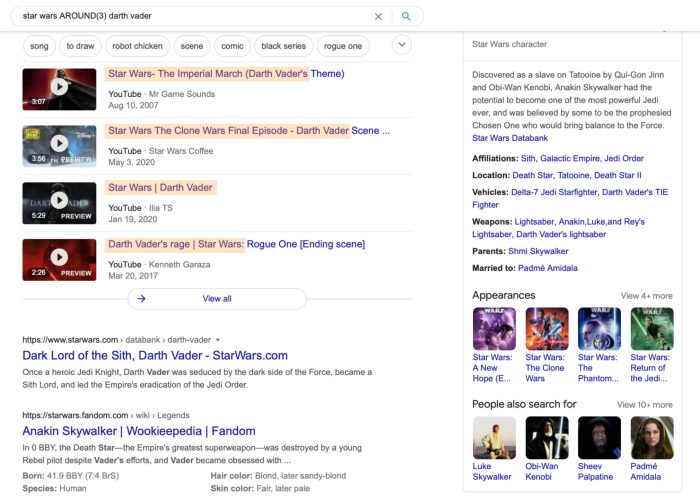
Mastering search operators unlocks powerful capabilities for refining your Google searches. Beyond basic searches, these operators allow you to be incredibly precise and efficient, finding exactly what you need. This section will delve into the most crucial operators, demonstrating how they can significantly enhance your search results.
Precise Phrase Searching with Quotation Marks
Using quotation marks forces Google to search for the exact phrase you enter. This is invaluable when you need to find sources that explicitly use a specific wording combination. For example, if you want to find articles discussing “sustainable urban development,” you’ll get results focusing on that specific phrase, rather than broader searches for “sustainable” or “development.”
Excluding Specific Terms with the Minus Sign
The minus sign allows you to exclude specific terms from your search results. This is particularly helpful when a has multiple meanings, and you want to filter out irrelevant results. For instance, if you’re researching “cloud computing” but want to avoid results related to “cloud storage,” you can use the search query “cloud computing -cloud storage.”
Wildcard Searches with the Asterisk
The asterisk (*) acts as a wildcard, substituting for any sequence of characters. This is an extremely useful tool for finding variations of a word or phrase. For example, to find information about “programming languages” in different programming languages, such as “Python,” “Java,” and “C++,” you could use the search “programming languages”. This will return results that include variations on the term.
Finding Related Terms with the Tilde
The tilde (~) operator helps locate related terms. This is beneficial for discovering synonyms or similar concepts. If you’re looking for information on “artificial intelligence,” you can use the search “artificial intelligence ~machine learning” to uncover results related to both terms. This often broadens your search to uncover a wider range of information than using just the exact term.
Alternative Terms with the OR Operator
The OR operator lets you search for results containing either of the specified terms. This is a valuable tool when you need to explore multiple options or topics. For example, searching for “digital marketing OR online advertising” allows you to find information about either concept.
Using Operators for Specific Tasks
Search operators aren’t just for basic searches; they unlock powerful ways to refine your results and target specific information. Knowing how to use these tools can drastically improve your research efficiency and save you time when navigating the vast ocean of online data. This section will demonstrate how to apply operators to various tasks, from locating academic papers to finding specific types of news and images.This section dives into the practical applications of search operators.
We’ll explore how to use them for various tasks, from academic research to image discovery and finding relevant websites. These specific examples show how operators can be used to find precisely what you need, allowing for focused and efficient searches.
Finding Scholarly Articles
Using search operators like “filetype:pdf” and “intitle:” can dramatically improve your search results when looking for scholarly articles. Combining these with s relevant to your topic will yield a more focused result set. This targeted approach is essential for research, allowing you to filter out irrelevant information and isolate credible academic sources.
- Use “filetype:pdf” to retrieve results predominantly in PDF format. This is highly effective for academic papers, which are often available as PDFs.
- Use “intitle:” to search within the title of the documents. For example, “intitle:artificial intelligence” will find pages with “artificial intelligence” in their titles, leading to relevant pages on the topic.
- Combine these operators with s to refine the results further. For example, “filetype:pdf intitle:machine learning artificial intelligence” will return PDF files with “machine learning” and “artificial intelligence” in the title.
Locating Specific Types of News Articles
Search operators can be instrumental in pinpointing specific news articles. Using the “site:” operator to narrow down your search to a particular news source allows you to focus your results. Combining this with specific s or dates helps you find articles within a certain time frame.
- Use the “site:” operator to limit your search to a specific website. For example, “site:nytimes.com climate change” will search only the New York Times website for articles related to climate change.
- Combine “site:” with specific s to find news articles about a particular event. For example, “site:bbc.com inurl:ukraine crisis” will search the BBC website for articles including the phrase “ukraine crisis” in the URL.
- Use quotation marks to search for exact phrases within news articles. For example, “site:reuters.com \”inflation rate\”” will find articles on Reuters about the inflation rate.
Finding Specific Images
Finding specific images can be challenging. The “filetype:jpg” operator, along with s, can help you locate images on the web. This approach is effective for finding images related to specific topics.
- Use “filetype:jpg” (or other image formats like “filetype:png”) to narrow your search to images. This is crucial for focusing your search results on visuals rather than text.
- Combine “filetype:jpg” with s to find images related to your topic. For example, “filetype:jpg \”solar eclipse\”” will return images related to the solar eclipse.
- Utilize advanced search operators such as “related:” to discover similar images and sites with similar content.
Discovering Related Websites, Google search operators guide
The “related:” operator is invaluable for discovering websites similar to the one you’re interested in. This operator helps find websites with comparable content, aiding in research and exploration of similar topics.
- Use the “related:” operator to find websites similar to a given website. For example, “related:wikipedia.org” will show websites with content similar to Wikipedia.
- Combine “related:” with s to find websites with similar content to a specific topic. For example, “related:cnn.com inurl:business news” will show sites similar to CNN with the phrase “business news” in their URLs.
- This operator is particularly useful for expanding your research by finding alternative sources or perspectives on a given topic.
Practical Applications of Search Operators
Search operators are not just a fancy feature; they’re powerful tools that significantly enhance your online research and everyday tasks. By mastering these operators, you can transform the way you find information, increasing efficiency and accuracy. Imagine effortlessly sifting through millions of web pages to find precisely what you need – that’s the power of search operators at your fingertips.Using operators refines your search queries, allowing you to zero in on the most relevant results.
This precision translates to saving valuable time and effort, whether you’re a student conducting research, a professional seeking specific data, or a casual user looking for answers to everyday questions.
Research Projects
Search operators are invaluable tools for research projects. They enable you to filter information and focus on specific aspects of a topic, significantly increasing the efficiency and effectiveness of your research. By combining operators with s, you can isolate information, eliminating irrelevant results and honing in on what truly matters.
- For a history research project on the impact of the Industrial Revolution on child labor in Britain, you could use the following query: “Industrial Revolution child labor Britain site:gov.uk” This limits your results to web pages from the UK government website, ensuring the information is credible and relevant to your topic.
- To compare and contrast the perspectives of two different historians on the French Revolution, you could use the following query: “French Revolution historian1 -historian2” This excludes results containing both historian names, helping you focus on the individual perspectives.
- When investigating a specific scientific theory, use quotation marks around the phrase and combine it with a specific date range. For example, to find research papers published between 2010 and 2020 on the “quantum entanglement hypothesis,” you could use the query: “quantum entanglement hypothesis” 2010..2020.
Everyday Tasks
Beyond research, operators streamline everyday tasks. They are not limited to academics; everyone can benefit from using them. Imagine finding a specific recipe or quickly locating the latest news on a particular topic.
- Finding a specific recipe for “chocolate chip cookies” from a trusted cookbook, use the query: “chocolate chip cookies site:allrecipes.com”.
- To locate the latest news articles about “artificial intelligence” published within the past week, use the query: “artificial intelligence” since:2024-08-22.
- Quickly finding nearby stores selling “organic vegetables” involves the use of operators like “organic vegetables near me”.
Enhancing Efficiency in Information Retrieval
Search operators significantly improve the efficiency of information retrieval. By precisely targeting your search, you reduce the time spent sifting through irrelevant information, allowing you to focus on what matters most.
- By using operators, you can refine your search to precisely target the information you need, thereby minimizing the time spent on irrelevant results.
- Combining operators with s allows you to pinpoint specific data points, making your searches significantly faster and more effective.
- Operators eliminate the need to manually sort through numerous results, saving time and resources.
Identifying Relevant Resources
Search operators are powerful tools for identifying relevant resources. They enable you to filter out irrelevant results and focus on the information that aligns with your specific needs.
- Using the “filetype:” operator to search for PDF files related to “renewable energy policy” ensures that you’re only looking at documents in the desired format, increasing relevance.
- By using the “site:” operator to search a particular website, you are directing your search to a specific source, thereby ensuring credibility and relevance.
- Combining operators with specific s and phrases, you can create extremely precise searches, which yield relevant results quickly.
Impact on Search Results Accuracy
Operators dramatically enhance search results accuracy. By precisely defining your search criteria, you increase the likelihood of finding accurate and reliable information.
- Operators refine your search query, reducing the chances of finding inaccurate or misleading information.
- Operators help to identify credible sources, leading to more reliable and accurate results.
- By minimizing irrelevant information, operators help ensure your results are accurate and directly address your needs.
Advanced Techniques and Best Practices

Mastering search operators goes beyond simple searches. Advanced techniques allow for more precise and focused results, saving time and effort. This section dives into combining operators, optimizing queries, and handling complex searches effectively. Learning these methods empowers you to unlock the full potential of search engines.Combining Operators for PrecisionCombining different search operators yields highly targeted results.
Using multiple operators refines your search, ensuring you retrieve exactly the information you need. This often leads to significantly fewer irrelevant results.
Advanced Operator Combinations
Utilizing a combination of operators, such as site:, intitle:, and filetype:, provides highly specific results. For example, searching for “site:wikipedia.org intitle:programming languages filetype:pdf” will return PDF files about programming languages on Wikipedia. This strategy significantly narrows the search scope. Other effective combinations include Boolean operators (AND, OR, NOT), quotation marks for exact phrases, and the tilde (~) for related terms.
Optimizing Search Queries
Optimizing your search queries improves efficiency and minimizes wasted time. By using precise s and strategically placing operators, you can dramatically increase the relevance of search results.
Handling Complex Searches
Complex searches, encompassing multiple concepts and conditions, require a structured approach. Breaking down a complex topic into smaller, manageable queries can streamline the process. For instance, searching for “history of the internet AND social media development” will yield results focused on both topics.
Knowing how to use Google Search Operators is key for any online marketer. It’s all about refining your searches, and that translates directly into more effective marketing strategies. For example, learning how to find the right pain points for your target audience, as covered in this insightful article on marketing tactics with Kindsey Haynes, nurturing leads and targeting pain points marketing tactics with kindsey haynes nurturing leads and targeting pain points , can be greatly enhanced by understanding how to use operators to pinpoint exactly what your audience is searching for.
Ultimately, a solid grasp of these operators will give you a powerful edge in your online research and marketing efforts.
Refining Search Results
Efficiently refining search results involves understanding how different operators affect the outcome. This includes strategically using quotation marks, wildcards, and Boolean operators. The more sophisticated your understanding of these techniques, the more accurate your search results will be.
Examples of Advanced Operator Combinations for Complex Searches
| Search Query | Description | Expected Results |
|---|---|---|
| “artificial intelligence” site:researchgate.net filetype:pdf | Finds PDFs on artificial intelligence research from the ResearchGate website. | Relevant academic papers on AI from ResearchGate. |
| (machine learning OR deep learning) -neural networks | Searches for articles about either machine learning or deep learning, excluding results mentioning neural networks. | Articles about machine learning or deep learning, excluding results directly about neural networks. |
| “quantum computing” inurl:algorithms | Finds web pages containing the phrase “quantum computing” and the word “algorithms” within the URL. | Web pages about quantum computing algorithms. |
Troubleshooting and Common Errors
Mastering search operators empowers you to extract precise information from vast online resources. However, misuse or misunderstanding can lead to frustrating results. This section delves into common errors when using search operators, offering practical solutions and strategies to avoid them.Misinterpreting operator syntax or combining operators improperly can yield unexpected or irrelevant search results. Understanding these pitfalls is crucial for effective information retrieval.

Incorrect Operator Usage
Incorrect operator syntax is a frequent source of errors. For example, using “site:example.com” without specifying a search term will return a list of all pages on that site. Likewise, using a search operator that’s not supported by the search engine can result in an error message or no results.
- Using an incorrect operator, such as mistyping “filetype:pdf” as “filetyep:pdf,” will yield no results or potentially unexpected outcomes.
- Omitting essential components like the search term when using “site:” will return the entire site content instead of specific results.
- Misusing quotation marks (“…”) for phrases can lead to the search engine returning individual words within the phrase instead of the complete phrase.
Operator Combination Issues
Combining search operators effectively is vital for refined results. However, incorrect combinations can produce unexpected and often unhelpful results. For instance, using too many or inappropriate combinations can narrow your search too much, yielding no results or results that are not relevant.
Knowing Google search operators is crucial for efficient searching, but it’s just one piece of the puzzle. To truly leverage the power of information, you need to understand how to be smarter than your smart phone. Mastering these techniques, like the ones outlined in how to be smarter than your smart phone , will take you beyond simple search results and help you unearth hidden insights.
This includes refining your search strategies and thinking critically about your information needs. Ultimately, mastering Google search operators will allow you to extract more valuable data and insights from your searches.
- Combining “intitle:” with “inurl:” in a single query can produce surprisingly narrow results, limiting search terms to the title
-and* URL of the documents, potentially excluding relevant pages. - Using “filetype:pdf” and “site:edu” together might limit results to educational PDF documents, but if the s are too specific or rare, you may find nothing.
- Employing multiple Boolean operators (“AND,” “OR,” “NOT”) without careful consideration can yield unexpected results. For example, using “apple AND NOT fruit” may not give the intended result.
Identifying and Resolving Issues
Troubleshooting search operator errors involves a systematic approach. Carefully review your search query, ensuring correct syntax and appropriate operator combinations. Verify that the operators you’re using are supported by the specific search engine you’re employing.
- Start with a simple search query to isolate the operator issue.
- Test your search query with different search engines to see if the error persists.
- Consult the search engine’s documentation or help pages to confirm operator syntax and usage.
Avoiding Pitfalls
Avoiding common search operator errors involves careful planning and testing. Before running a complex query, break it down into smaller, more manageable parts. Test each part individually to ensure correct usage and expected results.
- Thoroughly understand the syntax and capabilities of each search operator.
- Test each operator and operator combination to verify its functionality and expected results.
- Use quotation marks to ensure that search engines find complete phrases, rather than individual words.
Illustrative Examples
Mastering search operators isn’t just about knowing the commands; it’s about understanding how to weave them together to unearth specific information. This section provides practical examples, demonstrating how combining various operators refines searches and yields more accurate results. From basic searches to complex queries, these examples highlight the power and flexibility of search operators.
Combining Operators for Specific Results
Understanding how to combine different operators allows you to refine searches and extract precise information. The following examples showcase how various operators can be used together to achieve targeted results.
- Finding scholarly articles on “machine learning” published in the last five years:
- “machine learning” AND (“2018” OR “2019” OR “2020” OR “2021” OR “2022”) AND (“filetype:pdf” OR “filetype:ps”)
- This query combines the search term “machine learning” with the years 2018-2022 and file types PDF or PS. This combination drastically narrows down the search results to specific academic articles.
- Locating websites discussing “sustainable agriculture” in the UK:
- “sustainable agriculture” AND site:uk
- This example utilizes the “site:” operator to restrict the search results to websites based within the UK. The search will return results relevant to sustainable agriculture specifically from UK-based sites.
- Finding images of “golden retrievers” that are not blurry:
- “golden retrievers” -blurry
- This query leverages the minus (-) operator to exclude results containing the term “blurry”. This is crucial for finding high-quality images of golden retrievers.
Advanced Search Techniques
This section delves into more sophisticated search strategies, demonstrating how to combine multiple operators for intricate queries.
- Finding articles discussing “climate change” and “renewable energy” published in scientific journals:
- “climate change” AND “renewable energy” AND (“filetype:pdf” OR “filetype:ps”) AND (“site:nature.com” OR “site:sciencemag.org”)
- This example uses the “filetype:” and “site:” operators to pinpoint specific scientific publications from reputable sources.
- Discovering recent news articles about “artificial intelligence” in the tech sector:
- “artificial intelligence” AND “tech sector” AND (2023) AND (“filetype:pdf” OR “filetype:txt”)
- Combining the “AND” operator with the year “2023” significantly reduces the search results to articles from the current year.
Illustrating Multiple Operators in a Single Query
This section illustrates the effectiveness of using multiple operators in a single query for achieving comprehensive searches.
- Locating research papers on “quantum computing” that are accessible for free:
- “quantum computing” AND (“filetype:pdf” OR “filetype:ps”) AND “free access”
- This example demonstrates the use of multiple operators to pinpoint research papers about quantum computing, which are available freely.
Final Summary
In conclusion, this guide to Google search operators provides a comprehensive toolkit for efficient and effective online searching. By mastering these operators, you can significantly improve the quality and precision of your results, saving time and effort in your research and everyday tasks. Whether you’re a student, researcher, or just someone looking to maximize their online discoveries, this guide will prove invaluable in your quest for information.