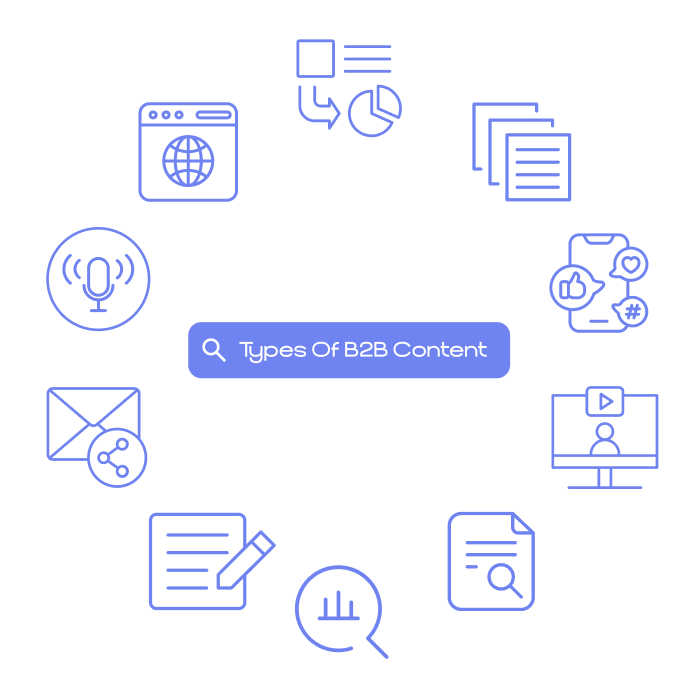
B2B content marketing guide is your comprehensive roadmap to crafting impactful content for business-to-business audiences. This guide delves into the intricacies of defining your target audience, developing compelling content pillars, and measuring campaign success. Learn how to effectively create, distribute, and analyze B2B content to boost lead generation and foster meaningful connections with potential clients.
From defining the nuances of B2B vs. B2C content marketing to mastering various content formats like case studies and webinars, this guide provides actionable strategies. We’ll explore the future of B2B content marketing and the tools to empower your content strategy. This is your ultimate resource to elevate your B2B content marketing efforts.
Defining B2B Content Marketing
B2B content marketing is a strategic approach for businesses targeting other businesses (B2B). It involves creating and distributing valuable, relevant, and consistent content to attract and engage a clearly defined audience – ultimately, driving profitable customer action. This differs significantly from B2C marketing, which focuses on the end consumer.This approach builds trust and establishes thought leadership, fostering long-term relationships rather than immediate sales.
It’s about providing insights and solutions to the problems of potential clients, positioning your company as an expert in its field.
B2B vs. B2C Content Marketing Strategies
B2B content marketing strategies are tailored to address the unique needs and decision-making processes of business buyers. Unlike B2C, where emotional appeals and quick conversions are common, B2B buyers are more rational and analytical. Content focuses on demonstrating expertise, showcasing solutions, and addressing specific business challenges.
Key Differences in Content Formats
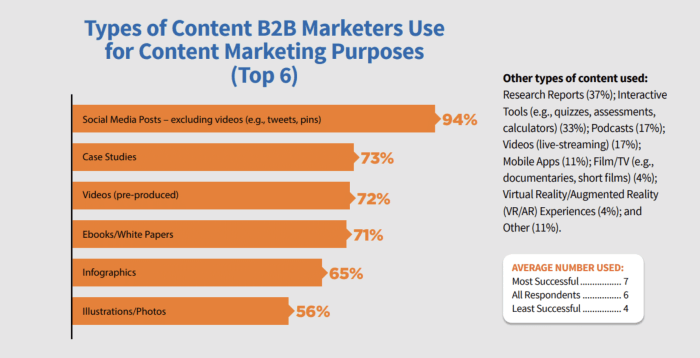
B2B content frequently involves in-depth reports, case studies, white papers, webinars, and detailed product overviews. These formats provide substantial value and demonstrate a thorough understanding of the buyer’s industry. In contrast, B2C content might lean toward shorter-form content like social media posts, engaging videos, or interactive quizzes, focusing on immediate engagement and brand awareness.
Essential Elements of a Successful B2B Content Marketing Strategy
A successful B2B content marketing strategy hinges on several key elements. Understanding your target audience is paramount; knowing their needs, challenges, and preferred information formats is crucial for effective content creation. Creating valuable content that addresses their specific pain points is essential. A clear content strategy and plan with measurable goals is also vital. Consistent and strategic distribution of this content across appropriate channels is also key.
Comparing B2B and B2C Content Marketing Goals
| Characteristic | B2B Content Marketing Goals | B2C Content Marketing Goals |
|---|---|---|
| Primary Goal | Generate leads, build brand authority, drive sales to businesses. | Increase brand awareness, drive immediate sales to individual consumers. |
| Content Focus | Problem-solving, thought leadership, building trust. | Emotional connection, entertainment, and brand building. |
| Content Length | Typically longer-form (e.g., white papers, case studies). | Shorter-form (e.g., social media posts, short videos). |
| Content Distribution | Often via industry publications, webinars, and direct email marketing to decision-makers. | Typically through social media, search engines, and advertising targeted at broad consumer segments. |
| Call to Action | Download resources, schedule a consultation, or request a demo. | Purchase a product, sign up for a service, or visit a store. |
Content Pillars and Strategy
Building a robust B2B content marketing strategy hinges on identifying key content pillars and creating a consistent plan to support your business goals. These pillars provide a framework for creating valuable, targeted content that resonates with your ideal customer profile (ICP). A well-defined strategy not only attracts potential clients but also positions your company as a thought leader in your industry.A successful B2B content marketing strategy isn’t a one-time effort; it’s a continuous process of planning, creating, and promoting valuable content that educates and engages your audience.
This involves understanding your audience’s needs, anticipating their questions, and providing solutions through various content formats.
Common Content Pillars for B2B Content Marketing
Defining clear content pillars is crucial for establishing a consistent and effective B2B content strategy. These pillars should reflect your company’s expertise and align with your target audience’s pain points and interests.
- Industry Trends and Insights: This pillar focuses on providing valuable analysis and commentary on emerging industry trends. This helps establish your company as a knowledgeable resource, building trust and credibility with potential customers. Examples include in-depth reports on market shifts, forecasts for future growth, or analyses of competitor activities.
- Product/Service Deep Dives: This pillar centers on detailed explanations of your products or services, highlighting their features, benefits, and use cases. This allows your target audience to gain a deeper understanding of your offerings, making them more likely to consider you as a solution.
- Problem-Solution Frameworks: This pillar focuses on addressing the challenges and pain points faced by your target audience. Providing solutions through case studies, white papers, or blog posts demonstrates your expertise in solving their problems and positions you as a trusted advisor.
- Customer Success Stories: This pillar leverages the positive experiences of your existing customers to showcase the value proposition of your products or services. Testimonials, case studies, or success stories provide social proof and can be very effective in converting prospects.
- Expert Guides and Tutorials: This pillar offers practical advice and guidance related to your industry. Tutorials, how-to guides, and expert interviews can help establish your company as an authority and attract customers seeking knowledge and solutions.
Importance of a Content Calendar for B2B Marketing
A well-structured content calendar is essential for maintaining a consistent flow of high-quality content. It allows for strategic planning, ensuring that your content aligns with your overall marketing objectives and meets the needs of your target audience.A content calendar helps streamline your content creation process, allowing you to schedule posts in advance and track progress. This provides better organization and reduces the risk of missed deadlines or content gaps.
By planning content in advance, you can ensure a consistent message and a steady flow of valuable content for your audience.
Different Content Formats for B2B Audiences
B2B content marketing offers a diverse range of formats to engage your audience. Choosing the right format is crucial for maximizing impact and achieving specific goals.
- Case Studies: These provide detailed accounts of how your company’s products or services helped a particular customer. They are powerful tools for showcasing results and building credibility.
- Webinars: These online seminars offer a platform for presenting expert insights, addressing questions, and engaging with your audience in a live, interactive format.
- White Papers: These comprehensive documents provide in-depth analysis on a specific topic and position your company as a thought leader in the industry.
- Blog Posts: These articles are excellent for establishing your expertise, answering audience questions, and driving traffic to your website.
- Infographics: These visually appealing presentations of data and information are highly shareable and can quickly convey complex information to your audience.
Content Format Use Cases
| Content Format | Use Case |
|---|---|
| Case Studies | Demonstrating results, building credibility, showcasing product/service effectiveness |
| Webinars | Presenting expert insights, engaging with audience, driving lead generation |
| White Papers | Positioning as thought leader, showcasing in-depth knowledge, generating leads |
| Blog Posts | Establishing expertise, answering questions, driving traffic, educating audience |
| Infographics | Visually conveying complex information, increasing shareability, simplifying data |
Content Pillar Strategy Document Template
This template provides a framework for developing a comprehensive content pillar strategy document.| Section | Description ||—|—|| Executive Summary | Concise overview of the content pillar strategy. || Target Audience | Detailed description of the ideal customer profile (ICP). || Content Pillars | List of key content pillars and their descriptions. || Content Calendar | Artikel of the content plan, including topics, formats, and deadlines.
|| Key Performance Indicators (KPIs) | Metrics for measuring success, such as website traffic, lead generation, and conversions. || Budget and Resources | Allocation of resources for content creation, promotion, and distribution. || Timeline | Projected timeline for implementing and achieving goals. || Team Roles and Responsibilities | Clear delegation of tasks and responsibilities within the team. |
Target Audience and Buyer Persona
Knowing your target audience is crucial for effective B2B content marketing. It allows you to create content that resonates with their needs, pain points, and interests, ultimately driving engagement and conversions. A well-defined target audience helps you avoid wasting resources on content that doesn’t reach the right people. Understanding their motivations and behaviors is paramount to crafting a compelling message.Defining a specific target audience isn’t just about identifying demographics; it’s about understanding their motivations, challenges, and aspirations.
This deep understanding allows you to create content that speaks directly to their needs and positions your product or service as the ideal solution. A well-defined target audience, translated into detailed buyer personas, forms the bedrock of a successful B2B content strategy.
Developing Detailed Buyer Personas
Understanding your ideal customer is paramount to effective B2B content marketing. Creating detailed buyer personas goes beyond simple demographics. It delves into the motivations, pain points, and behaviors of your target customers. This detailed understanding allows you to tailor your content to resonate with their specific needs.A robust buyer persona includes:
- Demographics: Age, job title, industry, location, company size. These basic details provide a foundation for understanding your audience’s characteristics.
- Psychographics: Values, interests, motivations, goals, and pain points. This provides insight into the “why” behind their decisions.
- Behaviors: How they research, what content they consume, where they spend their time online, and their preferred communication channels. This helps you understand how they engage with your content and industry information.
- Needs and Goals: What problems are they trying to solve? What are their specific business objectives? This directly links your product or service to their desired outcomes.
Tailoring Content to Different Buyer Personas
Once you’ve developed your buyer personas, you need to tailor your content to their unique needs and interests. This personalization is crucial for driving engagement and conversions. The content you create for a CEO will differ significantly from the content you create for a junior marketing manager.
- Different communication styles: Tailor the tone and language of your content to match the preferred communication style of each persona. A formal tone might resonate with a CEO, while a more conversational style might appeal to a junior marketing manager.
- Varying content formats: A detailed white paper might be suitable for a C-suite executive, while a concise infographic might better suit a marketing team member. Tailor your content formats to meet each persona’s needs.
- Address specific pain points: Tailor your content to address the specific pain points of each persona. Highlight the benefits of your product or service that directly address their concerns.
Organizing Buyer Personas by Needs and Interests
This table demonstrates a method for categorizing buyer personas based on their specific needs and interests. It allows you to quickly identify the appropriate content for each persona.
| Buyer Persona | Needs | Interests | Content Examples |
|---|---|---|---|
| CEO | Growth, efficiency, ROI, strategic planning | Industry trends, competitive analysis, high-level reports, thought leadership | Executive summaries, case studies, white papers, webinars |
| Marketing Manager | Lead generation, brand awareness, campaign performance | Marketing tools, social media trends, content marketing strategies, techniques | Blog posts, case studies, how-to guides, social media tips |
| Sales Manager | Closing deals, sales process optimization, lead nurturing | Sales techniques, sales tools, sales analytics, closing strategies | Sales guides, sales tools demos, success stories, ROI calculators |
Using Buyer Personas to Guide Content Creation
Using your buyer personas as a guide for content creation allows you to tailor your efforts to maximize impact.
- Identify content gaps: Analyze your content library to determine any gaps in addressing the needs of your buyer personas. This analysis helps you identify content opportunities.
- Prioritize content creation: Prioritize content creation based on the needs and interests of each persona. Focus on topics that resonate with their specific goals.
- Optimize content for different channels: Optimize your content for the channels your buyer personas use. A LinkedIn post will likely differ from a Twitter tweet. This tailored approach ensures your content is seen and engaged with by the right people.
Content Creation and Distribution: B2b Content Marketing Guide
Crafting compelling B2B content is crucial for establishing thought leadership and driving conversions. This stage demands a meticulous approach, blending creative flair with strategic intent. Understanding your target audience’s needs and pain points is paramount. High-quality content not only informs but also engages, fostering a connection that builds trust and loyalty.
Creating High-Quality B2B Content
Effective B2B content transcends mere information dissemination. It’s about crafting valuable, insightful pieces that resonate with your target audience and establish your brand as an industry expert. This involves in-depth research, meticulous planning, and a keen understanding of your audience’s specific challenges and aspirations.
- Focus on Value Proposition: Each piece of content should directly address a specific need or pain point for your target audience. Highlighting the tangible benefits your products or services offer is key. For instance, a software company might create a case study showcasing how their platform helped a client streamline their workflow and boost efficiency.
- Employ a Multi-faceted Approach: Leverage various content formats such as blog posts, white papers, webinars, infographics, and videos. This ensures diverse engagement and caters to different learning styles.
- Prioritize Quality over Quantity: Concentrate on producing a limited number of exceptional pieces that deeply engage your audience rather than churning out numerous mediocre articles.
- Maintain Consistency: Establish a regular publishing schedule to maintain audience engagement and reinforce your brand’s presence in the market. Consistency builds anticipation and encourages ongoing interaction.
Best Practices for B2B Content Distribution Channels
Choosing the right distribution channels is vital for maximizing your content’s reach and impact. Understanding your target audience’s preferred platforms is critical to ensure your message resonates effectively.
- Leverage LinkedIn: LinkedIn’s professional network is an excellent platform for distributing thought leadership content. Sharing articles, insightful posts, and industry updates can foster engagement and position your company as a leader in the field.
- Harness Email Marketing: Building an email list allows for direct communication with potential customers and subscribers. Sharing relevant content through targeted newsletters and email campaigns is a powerful way to nurture leads and foster relationships.
- Optimize Content for Search Engines: Incorporating relevant s into your content helps it rank higher in search engine results, increasing visibility to potential customers.
- Embrace Content Syndication: Sharing your content on other relevant websites and platforms can broaden your reach and expose your brand to a wider audience.
Optimizing Content for Search Engines
Search engine optimization () is crucial for increasing organic traffic to your content. By understanding search engine algorithms and implementing appropriate strategies, you can improve your content’s visibility.
- Research: Identifying relevant s that your target audience uses when searching for information related to your industry is essential. Tools like Google Planner can assist in this process.
- On-Page Optimization: Incorporating s naturally into your content, title tags, meta descriptions, and image alt text is crucial for improving search engine rankings.
- Backlinks: Acquiring backlinks from reputable websites within your industry enhances your website’s authority and visibility in search results.
- Content Structure: Organizing your content in a logical and easy-to-read format improves user experience and search engine crawlability.
Examples of Effective B2B Content Distribution Strategies
Effective B2B content distribution goes beyond simply posting content. It involves creating a cohesive strategy that aligns with your business goals and target audience.
- Case Study Series: Sharing detailed case studies showcasing successful implementations of your products or services can be incredibly impactful. This type of content builds trust and demonstrates the real-world benefits your offerings provide.
- Industry Webinars: Hosting or participating in webinars can position your company as a thought leader and attract a targeted audience interested in specific industry trends.
- Content Calendars: Creating a content calendar helps maintain a consistent posting schedule and ensure your content aligns with your marketing goals. This proactive approach helps maximize your reach and impact.
B2B Content Distribution Channels
| Distribution Channel | Strengths |
|---|---|
| Excellent for reaching professionals, sharing thought leadership, and engaging in industry discussions. | |
| Email Marketing | Direct communication with leads, nurturing relationships, and driving conversions. |
| Industry Publications | Increased visibility among target audiences and potential customers. |
| Content Syndication Platforms | Expanding reach and exposure to a wider audience. |
| Social Media (excluding LinkedIn) | Engaging broader audiences and fostering brand awareness. |
| Paid Advertising | Targeted advertising campaigns reaching specific demographics. |
Measurement and Analysis
Turning your B2B content marketing efforts into tangible results requires meticulous measurement and analysis. This isn’t just about counting clicks; it’s about understanding the impact of your content on your business goals, from lead generation to brand awareness. Effective tracking and analysis provide crucial insights for refining your strategy and maximizing ROI.The success of B2B content marketing is directly tied to its ability to drive measurable outcomes.
By implementing robust measurement systems, businesses can pinpoint what resonates with their target audience, optimize their content creation process, and ultimately achieve better business results.
Metrics for Measuring B2B Content Marketing Campaign Success
Understanding the key metrics that truly matter for B2B content marketing is crucial. It’s not just about vanity metrics like website traffic; it’s about quantifying the impact on lead generation, customer engagement, and sales. Key performance indicators (KPIs) that provide valuable insights include website traffic, engagement metrics (time on page, bounce rate, social shares), lead generation, conversion rates, and customer acquisition cost.
Tracking and Analyzing Key Performance Indicators (KPIs)
Tracking KPIs involves regularly monitoring and analyzing data to identify trends and patterns. This data-driven approach allows for informed decisions and adjustments to your content marketing strategy. Tools like Google Analytics, HubSpot, and similar platforms provide comprehensive insights into website traffic, user behavior, and campaign performance. Regular reporting and analysis are essential for adapting to evolving market demands.
Detailed reports should not only present the data but also offer insights into the trends and patterns emerging from the data.
Examples of Successful B2B Content Marketing Analytics Dashboards
A well-designed analytics dashboard visually displays key performance indicators (KPIs). It should be easily accessible and intuitively designed to provide a clear overview of campaign performance. Dashboards typically feature charts and graphs that illustrate key metrics such as website traffic, lead generation, and conversion rates. For example, a dashboard could display a line graph showing website traffic over time, alongside a bar chart highlighting the conversion rate for different content types.
Another crucial element is the ability to segment the data, allowing for comparisons between different marketing channels and audience segments.
Importance of A/B Testing Content for B2B Audiences
A/B testing allows businesses to compare different versions of content to identify what resonates best with their target audience. By systematically testing variations in headlines, calls to action, and other elements, businesses can optimize their content for maximum impact. For example, A/B testing different versions of a landing page can reveal which version leads to higher conversion rates.
This data-driven approach ensures that your content is consistently optimized for conversions.
Using Data to Refine Content Marketing Strategies
Using data to refine your content marketing strategy is an ongoing process. Analyzing the data collected from your campaigns helps to identify what is working and what is not. This allows for adjustments to be made, whether it’s changing the content format, focusing on different s, or altering the distribution channels. Regularly reviewing and analyzing data is essential for continuous improvement and achieving desired results.
By adapting your strategy based on the data, businesses can continually optimize their content marketing efforts to better meet the needs of their target audience.
Case Studies and Examples
Content marketing isn’t just about creating great content; it’s about proving its value. Case studies demonstrate the tangible impact of well-crafted strategies, showcasing how content can drive leads, boost brand awareness, and ultimately, generate revenue. Understanding successful campaigns provides invaluable insights for replicating their success in your own B2B context.Successful B2B content marketing campaigns leverage a combination of targeted content, strategic distribution, and meticulous measurement.
Analyzing these campaigns helps us identify key patterns and best practices, equipping us with tools to tailor strategies for optimal results.
Successful B2B Content Marketing Campaign: A SaaS Company
A software-as-a-service (SaaS) company, “ProjectZen,” successfully used a content marketing campaign focusing on in-depth blog posts, webinars, and downloadable guides centered around project management methodologies. They created targeted content addressing common project management challenges faced by enterprise clients. This included detailed articles on Agile methodologies, Scrum implementation, and project risk mitigation. These resources positioned ProjectZen as a thought leader in project management, attracting qualified leads and driving conversions.
The campaign resulted in a 30% increase in qualified leads over a six-month period, showcasing the power of providing valuable, actionable content to target audiences.
Examples of Effective B2B Content Pieces Across Industries
Effective B2B content adapts to diverse industries, catering to specific needs and preferences. For example, in the healthcare industry, white papers on emerging medical technologies or detailed case studies of successful patient outcomes can be highly effective. In the finance sector, educational webinars on investment strategies or downloadable guides on risk management can resonate strongly with potential clients.
In the manufacturing sector, technical articles on new machinery or process optimization guides can attract qualified prospects seeking solutions. Content tailored to specific industry pain points and aspirations demonstrates a deeper understanding of the target audience’s needs.

Impact of High-Quality Content on B2B Lead Generation
High-quality content plays a crucial role in attracting and nurturing B2B leads. Well-researched, informative, and engaging content establishes credibility, positions the brand as a thought leader, and attracts prospects actively seeking solutions. By consistently providing valuable content, companies can build trust, nurture relationships, and ultimately, convert prospects into customers.
Table of Successful B2B Content Strategies by Industry
| Industry | Successful Content Strategies |
|---|---|
| Healthcare | White papers on emerging technologies, case studies on patient outcomes, webinars on best practices in patient care. |
| Finance | Educational webinars on investment strategies, downloadable guides on risk management, articles on market trends. |
| Manufacturing | Technical articles on new machinery, process optimization guides, case studies showcasing successful implementations. |
| Technology | Blog posts on industry trends, webinars on emerging technologies, downloadable guides on software solutions. |
Key Takeaways from Examples and Case Studies
These examples underscore the importance of tailoring content to specific industries and target audiences. High-quality, informative content can significantly impact lead generation and nurture potential customers. A focused content strategy, aligned with business goals, is critical to success. Consistent, valuable content creation is essential for building brand authority and trust.
Tools and Technologies
B2B content marketing thrives on the right tools. Choosing and effectively integrating these technologies is crucial for maximizing impact and achieving desired results. These tools streamline creation, distribution, and analysis, ultimately improving ROI. Beyond basic tools, a sophisticated understanding of how different platforms work together is essential for optimal performance.Effective B2B content marketing hinges on using the right tools for each task, from content creation and scheduling to tracking performance and analyzing results.
Understanding which platforms work best together is vital for achieving a cohesive and effective strategy. The selection of these tools requires a careful evaluation of specific business needs and desired outcomes.
B2B content marketing guides are crucial for establishing thought leadership and driving qualified leads. Understanding how to leverage programmatic display advertising, like the fundamentals of programmatic display advertising , can significantly enhance your content’s reach and impact. Ultimately, these combined strategies are key to maximizing your B2B content marketing efforts.
Essential Tools for B2B Content Marketing
Choosing the right tools for your B2B content marketing strategy is essential for success. This selection process needs to be based on your specific business needs, including the type of content you produce, your target audience, and your overall goals. A thoughtful approach will help you streamline workflows and improve efficiency.
So, you’re diving into B2B content marketing? It’s a powerful strategy, but staying ahead of the curve is key. Knowing how to leverage new platforms is crucial, and with the recent launch of Threads, an Instagram app, it’s important to consider how this new social media space might fit into your overall B2B content marketing plan. You can learn more about Threads and its potential impact on introducing threads an instagram app by checking out this resource.
Ultimately, a strong B2B content marketing strategy involves staying informed about the latest trends and adapting to them.
- Content Management Systems (CMS): WordPress, Drupal, and HubSpot are popular choices for managing and publishing content. They offer various features, including website building, blog management, and form creation, simplifying the entire content lifecycle. Their versatility allows B2B businesses to adapt their content strategy effectively.
- Analytics Platforms: Google Analytics, Adobe Analytics, and similar platforms provide insights into website traffic, user behavior, and content performance. Analyzing this data helps optimize content strategies, identify areas for improvement, and ultimately enhance ROI.
- Social Media Management Tools: Hootsuite, Buffer, and Sprout Social streamline social media scheduling and monitoring, enabling businesses to maintain a consistent presence across multiple platforms. These tools aid in efficiently engaging with audiences and amplifying content reach.
- Email Marketing Platforms: Mailchimp, Constant Contact, and ActiveCampaign are crucial for nurturing leads and building relationships. These platforms help automate email campaigns, segment audiences, and track engagement metrics.
- Graphic Design Tools: Canva, Adobe Photoshop, and Illustrator are essential for creating visually appealing content like infographics, presentations, and social media graphics. The ability to generate engaging visuals is critical for capturing and maintaining audience attention.
Analytics Platforms in B2B Content Marketing
Analytics platforms are indispensable for measuring the success of B2B content marketing efforts. Data-driven insights allow for adjustments and improvements, ensuring the content strategy remains aligned with objectives. The ability to track key metrics is vital for optimization.
- Key Metrics Tracking: Analytics platforms allow for tracking metrics like website traffic, bounce rate, time on page, conversion rates, and lead generation. Tracking these metrics enables a deeper understanding of user engagement with your content.
- Content Performance Analysis: By analyzing data from various channels, you can identify high-performing content pieces and areas needing improvement. This data-driven approach allows you to tailor your content strategy for optimal results.
- Audience Segmentation and Behavior Analysis: Analytics help identify your target audience’s preferences and behaviors, allowing for tailored content and targeted campaigns. Understanding audience needs enables more effective messaging and engagement.
Content Management Systems (CMS) for B2B Businesses, B2b content marketing guide
Choosing the right CMS is vital for B2B businesses to manage their content effectively. A user-friendly platform streamlines the content creation and publishing process, allowing for efficient content updates and maintenance. The platform should seamlessly integrate with other marketing tools for a cohesive strategy.
- WordPress: A highly customizable and flexible platform, WordPress is a popular choice for B2B websites. Its extensive plugin library allows for integration with various marketing tools and functionalities. The wide range of themes and plugins caters to diverse B2B needs.
- Drupal: A robust and scalable CMS, Drupal is suitable for complex B2B websites with a large volume of content. Its modular architecture allows for tailored functionality to meet specific business requirements. Drupal is ideal for companies needing extensive customization and flexibility.
- HubSpot CMS: An all-in-one platform, HubSpot CMS combines website building, marketing automation, and CRM features, simplifying the B2B content marketing process. Its integration with other HubSpot tools enhances workflow efficiency.
Choosing the Right Tools for Your B2B Needs
Choosing the right tools depends on several factors, including budget, technical expertise, and specific business needs. Consider the scale of your operations and the complexity of your content strategy.
B2B content marketing is all about crafting engaging content that resonates with your ideal clients, right? A key part of that is making a great impression, and that includes those crucial thank-you pages after a purchase. Learning how to easily create custom WooCommerce thank you pages, like the ones shown in how to easily create custom woocommerce thank you pages , can significantly boost your brand’s perceived value.
Ultimately, well-designed thank you pages contribute significantly to a strong overall B2B content marketing strategy.
- Assess Your Needs: Define specific goals, content types, and target audience to select tools that effectively support your B2B content marketing strategy. A clear understanding of your business objectives is essential.
- Evaluate Functionality and Features: Carefully review the features of different tools to determine if they align with your content strategy and workflow. The tools must effectively support the specific content needs of your business.
- Consider Integration Capabilities: Choose tools that integrate seamlessly with other marketing platforms to enhance efficiency and streamline your workflow. Integration capabilities should reduce redundancy and optimize processes.
Integrating Various B2B Content Marketing Tools
Effective integration of B2B content marketing tools is essential for maximizing ROI. The tools should work together to create a cohesive workflow and ensure a seamless user experience. Integration ensures a unified and streamlined approach to content creation and distribution.
- Establish a Centralized Content Repository: A central repository ensures that all content assets are stored and accessible in one location. This enhances collaboration and efficiency.
- Automate Content Distribution: Automate social media posting, email marketing, and other distribution channels to maximize reach and engagement. Automating content distribution helps save time and effort.
- Implement a Data-Driven Approach: Utilize data from various tools to track content performance and make necessary adjustments to your content strategy. A data-driven approach ensures informed decisions.
Future Trends in B2B Content Marketing
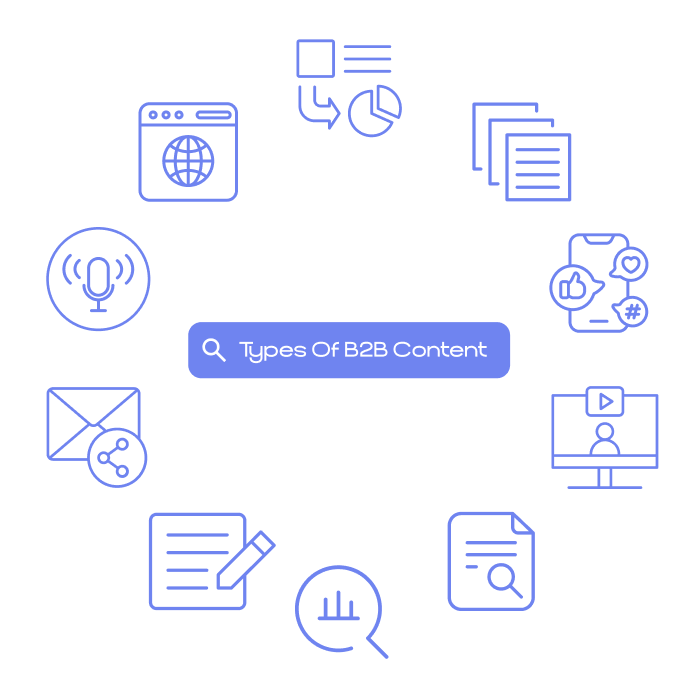
The B2B content marketing landscape is constantly evolving, driven by technological advancements and shifting buyer behaviors. Staying ahead of the curve is crucial for businesses to maintain relevance and effectively connect with their target audience. This section delves into emerging trends, emphasizing the importance of adaptation and the role of AI in shaping future strategies.Predicting the precise future of B2B content marketing is challenging, but analyzing current trends and technological advancements allows us to identify likely pathways.
Businesses must proactively adapt to these trends to maintain competitiveness and effectively engage with their target audience.
Emerging Technologies and Their Impact
Emerging technologies are fundamentally altering how B2B content is created, distributed, and consumed. Artificial intelligence (AI) and machine learning (ML) are leading this charge, impacting every facet of the content marketing process. The automation of repetitive tasks, personalization of content experiences, and predictive analysis of buyer behavior are all outcomes of these advancements.
Artificial Intelligence in Content Creation
AI is revolutionizing content creation in several key ways. AI-powered tools can now generate various types of content, including articles, social media posts, and even video scripts. Furthermore, AI can analyze vast amounts of data to understand customer preferences, enabling highly targeted and personalized content. This leads to a more effective and efficient content creation process. Examples include tools that generate different writing styles, summarize lengthy documents, or translate languages.
Potential Future Trends in B2B Content Marketing
Understanding potential future trends allows businesses to prepare for evolving demands and proactively shape their content strategies. These trends are not set in stone, but rather reflect the most probable developments based on current technological advancements and market analysis.
| Trend | Description | Impact on B2B Content Marketing |
|---|---|---|
| AI-Powered Content Personalization | AI algorithms will increasingly tailor content to individual buyer personas and preferences, providing hyper-personalized experiences. | Improved engagement and conversion rates, increased customer satisfaction. |
| Interactive Content Experiences | Interactive content formats, such as simulations, quizzes, and 3D models, will become more prevalent, engaging audiences on a deeper level. | Higher audience engagement, improved knowledge retention, and a more memorable brand experience. |
| Augmented and Virtual Reality (AR/VR) Integration | AR/VR will play an increasingly important role in product demonstrations, training programs, and virtual events, enhancing the customer experience. | More immersive and engaging content experiences for customers, fostering deeper understanding of products and services. |
| Emphasis on Visual Content | Video, infographics, and other visual formats will remain crucial for capturing attention and conveying complex information effectively. | Improved comprehension and memorization of information, and a more engaging user experience. |
| Rise of Conversational Marketing | Chatbots and other conversational AI tools will become integral to lead generation, customer service, and overall communication strategies. | Improved customer support, enhanced lead nurturing, and more efficient communication channels. |
Closing Notes
In conclusion, this B2B content marketing guide equips you with the knowledge and strategies needed to navigate the complexities of business-to-business content creation. By understanding your audience, crafting compelling content, and utilizing the right tools, you can effectively drive engagement, generate leads, and ultimately achieve your business objectives. Let this be your starting point to crafting a winning B2B content marketing strategy.