Differentiation strategy not working heres how to make it better – Differentiation strategy not working? Here’s how to make it better. This comprehensive guide dives deep into revitalizing a struggling differentiation strategy. We’ll dissect why your current approach might be falling flat, evaluate its effectiveness, and adapt it to better meet customer needs. From identifying the root causes to implementing changes and monitoring results, we’ll provide actionable steps and real-world examples to help you navigate this crucial aspect of business success.
This in-depth analysis will help you pinpoint exactly what’s not working with your differentiation strategy. We’ll cover everything from analyzing market trends and competitor actions to understanding customer feedback and internal resource constraints. Armed with this knowledge, you can adapt your strategy for optimal results.
Identifying the Problem
A well-defined differentiation strategy is crucial for a company’s success in a competitive market. However, a differentiation strategy that fails to deliver desired results requires careful analysis to pinpoint the reasons behind its shortcomings. This analysis is not just about identifying the problem but also about understanding the root causes and developing a robust plan for improvement. Effective problem-solving involves a multifaceted approach that combines market analysis, competitor benchmarking, internal resource assessment, and customer feedback.This process helps companies understand where their strategy is falling short and allows for the development of targeted solutions.
A successful differentiation strategy must not only be unique but also effectively communicate its value proposition to the target audience, demonstrating a clear advantage over competitors. Without a deep understanding of why a differentiation strategy isn’t working, efforts to improve it will be largely ineffective.
Analyzing Market Changes
Market dynamics are constantly evolving. Emerging trends, shifts in consumer preferences, and technological advancements can quickly render a differentiation strategy obsolete. A thorough understanding of the current market landscape is essential. This involves analyzing market size, growth rate, and competition. Analyzing competitor actions and strategies is also critical.
Identifying how competitors are responding to the differentiation strategy can reveal gaps in the market or highlight areas where the differentiation needs to be further refined or adjusted. A dynamic market requires a flexible and adaptable differentiation strategy.
Assessing Competitor Actions
Competitors are constantly seeking to gain market share. Closely monitoring competitor actions and strategies is vital. Are competitors introducing similar differentiators? Are they offering better value propositions? Identifying how competitors are reacting to the differentiation strategy is critical to understanding its effectiveness.
Competitors might launch aggressive marketing campaigns or offer competitive pricing strategies to counter the differentiation.
Evaluating Internal Resource Limitations
Internal resources play a crucial role in the success of any differentiation strategy. Adequate financial resources, skilled personnel, and robust infrastructure are necessary to support the implementation and execution of the strategy. Resource constraints can limit the scale of operations, hinder innovation, or affect the quality of the differentiated product or service. A thorough internal assessment is essential to identify any potential limitations.
So, your differentiation strategy isn’t hitting the mark? It’s a common problem. Maybe you need to look at the recent resurgence of seller-fulfilled Prime the resurrection of seller fulfilled prime and how it’s impacting the market. Analyzing that shift in consumer behavior is key to adapting your strategy and making it more effective. Think about how to adjust your unique selling points to better compete, ultimately finding a more successful differentiation approach.
Understanding Customer Feedback
Customer feedback is crucial in understanding how the differentiation strategy is perceived by the target audience. Gathering feedback through surveys, interviews, and social media monitoring can provide valuable insights into customer needs, preferences, and expectations. Unmet needs related to the differentiation strategy must be identified. Analyzing customer feedback can help companies understand how the differentiation strategy is perceived and whether it effectively addresses customer needs.
Benchmarking Against Competitors and Industry Standards
Benchmarking against competitors and industry standards is a critical component of assessing the effectiveness of the differentiation strategy. Comparing the differentiated features and benefits against competitor offerings provides valuable insights into the strengths and weaknesses of the current strategy. Understanding industry benchmarks and best practices can help identify areas where the strategy can be improved.
Potential Causes for a Failing Differentiation Strategy
| Category | Specific Cause | Impact on Strategy | Mitigation Strategy |
|---|---|---|---|
| Market | Emerging competitor with a superior offering | Loss of market share, reduced brand recognition | Re-evaluate the differentiation strategy, develop new features, improve marketing and sales strategies. |
| Market | Shifting consumer preferences | Reduced customer engagement, loss of sales | Analyze new trends and adapt the differentiation to align with current consumer demands. |
| Competitor | Aggressive competitor actions | Diminished market share, decreased customer loyalty | Strengthen existing brand value proposition, focus on innovative solutions, enhance customer experience. |
| Competitor | Competitor offering similar differentiation | Reduced perceived value, decreased customer engagement | Improve the differentiation strategy, refine messaging to highlight unique advantages, and emphasize the overall value proposition. |
| Internal | Inadequate resources | Limited implementation, reduced effectiveness of the strategy | Secure additional resources, streamline processes, improve operational efficiency. |
| Internal | Lack of effective communication | Misinterpretation of the differentiation, decreased customer understanding | Improve communication channels, create clear and concise messaging, engage in interactive communication with customers. |
Evaluating the Current Strategy
Differentiation strategies, while promising, often require rigorous evaluation to identify areas for improvement. A thorough review of the current approach can reveal hidden weaknesses and pave the way for a more effective strategy. This section delves into the process of evaluating existing differentiation elements, assessing market value, and analyzing the effectiveness of supporting strategies.
Reviewing Differentiation Elements
A comprehensive review of the current differentiation elements should encompass all aspects of the product or service. This includes examining the unique features, benefits, and value proposition offered to customers. It is crucial to understand how these elements compare to competitor offerings and the overall market landscape.
Assessing the Value Proposition
Evaluating the value proposition involves analyzing how the differentiated product or service addresses customer needs and desires. Consider the following: What problems does it solve? How does it improve upon existing solutions? What are the unique benefits? By quantifying these aspects, you can assess the perceived value by customers in the current market environment.
So, your differentiation strategy isn’t hitting the mark? Maybe it’s time to look at the little things. Boosting your website speed with tweaks like optimizing your website speed with htaccess for enhanced performance optimize website speed with htaccess for enhanced performance can have a surprisingly big impact on overall customer experience. If your site is slow, customers bounce, and a poor experience can seriously hinder any differentiation efforts.
Ultimately, focusing on a better online experience is key to a successful differentiation strategy.
For instance, a premium coffee shop might assess the value proposition of its ethically sourced beans, fair trade practices, and unique brewing techniques. This assessment should consider factors like pricing, customer segmentation, and competitive positioning.
So, your differentiation strategy isn’t hitting the mark? It’s frustrating, but often, the problem isn’t the strategy itself, but rather the execution. Improving internal processes can be key. For instance, streamlining your sales processes using Salesforce, avoiding common mistakes, and boosting efficiency is crucial for maximizing revenue. Check out this insightful article on avoiding Salesforce mistakes and boosting efficiency and maximizing revenue for actionable tips to refine your sales operations.
Once your sales process is optimized, you’ll have a stronger foundation to re-evaluate your differentiation strategy and make it truly effective.
Analyzing Marketing and Communication Strategies
The efficacy of marketing and communication strategies supporting the differentiation should be meticulously examined. This includes evaluating the reach, impact, and return on investment of various marketing channels. For example, a clothing brand emphasizing sustainable materials might analyze the effectiveness of their social media campaigns promoting ethical production practices and showcasing the durability of their garments.
Identifying Strengths and Weaknesses, Differentiation strategy not working heres how to make it better
A critical analysis of the current strategy must identify both strengths and weaknesses. Strengths represent areas where the differentiation strategy excels, while weaknesses highlight areas needing improvement. For example, a software company might recognize its strong user interface as a strength, while its limited customer support channels could be a weakness.
Comparing with Competitor Strategies
A comparative analysis of the current differentiation strategy with competitors’ strategies is crucial. This allows for a clearer understanding of the competitive landscape and areas where the current strategy can be improved.
| Differentiation Feature | Competitor Offering | Strengths of Competitor Strategy | Areas for Improvement |
|---|---|---|---|
| Sustainable Packaging | Competitor A’s recycled cardboard boxes | Strong environmental message, appealing to eco-conscious customers | Lack of innovation in material or design, potential for higher cost |
| Premium Customer Service | Competitor B’s 24/7 support hotline | Builds customer loyalty, addresses issues promptly | High operational cost, potential for inconsistent quality across agents |
| Unique Product Design | Competitor C’s modular furniture system | Provides customization and flexibility for customers | Complex assembly instructions, potential for high pricing |
Adapting and Improving the Strategy
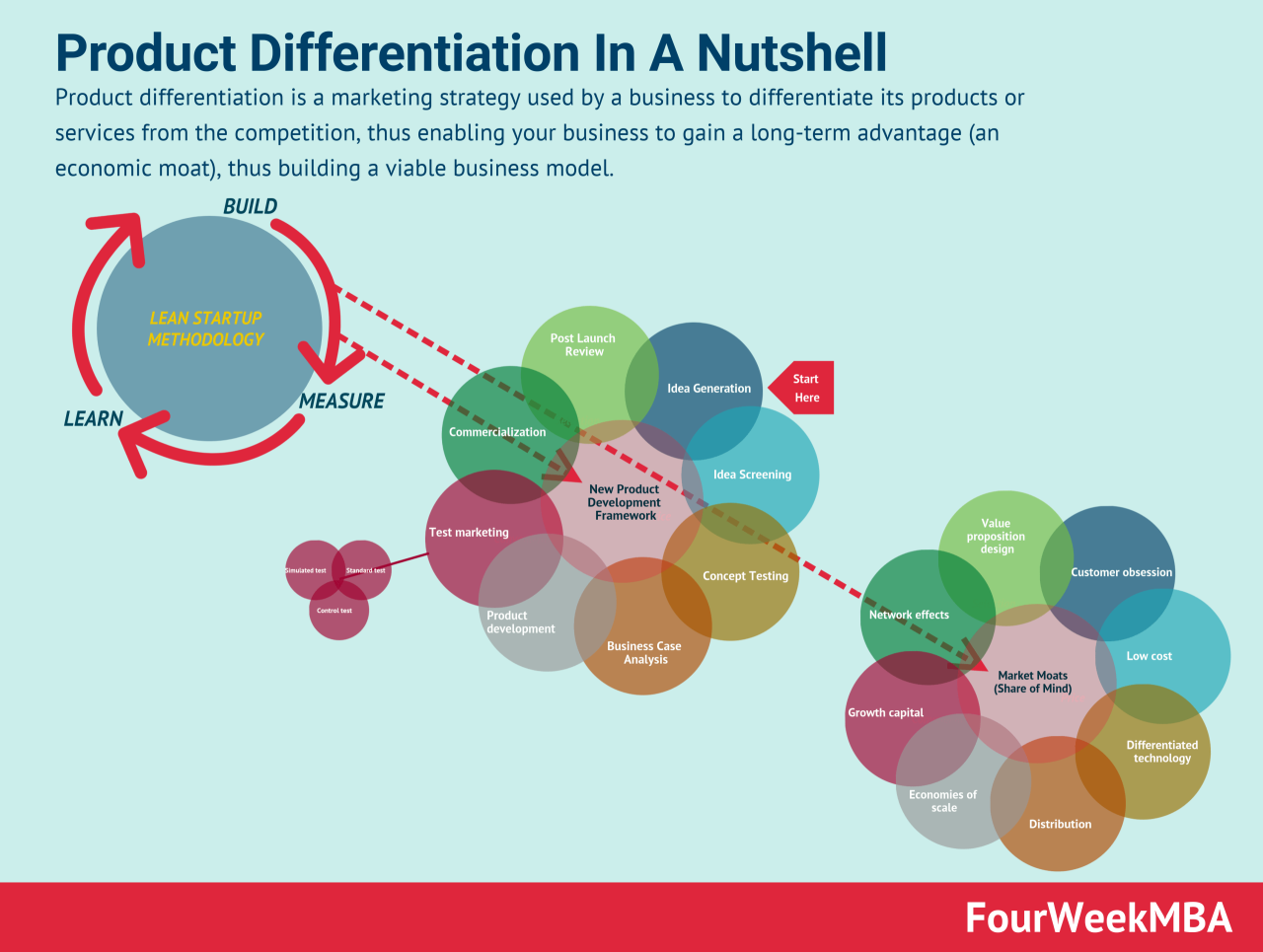
A differentiation strategy, while initially promising, can falter if not adapted to evolving market demands and customer preferences. This section explores crucial adjustments to revitalize a struggling differentiation approach. Understanding the reasons behind the strategy’s current shortcomings is paramount to implementing effective changes. We’ll delve into adapting the value proposition, refining messaging, enhancing product/service delivery, and realigning resources to support a more robust differentiation.
Examining successful adaptations in similar industries will provide valuable insights for creating a revitalized approach.Effective adaptation requires a comprehensive understanding of the market and customer responses. Simply repeating the same approach will likely lead to continued stagnation. Instead, a proactive and data-driven approach is needed to pinpoint specific areas for improvement and implement tailored changes. This section will Artikel concrete steps to achieve a stronger differentiation strategy.
Adapting the Value Proposition
To better resonate with the target audience, the current value proposition needs to be re-evaluated. Identifying the key pain points of the target market and how the differentiated offering addresses them is crucial. The revised value proposition should highlight the unique benefits that customers derive from the offering, showcasing the compelling reasons for choosing it over alternatives. It should be communicated in a clear, concise, and compelling manner that directly addresses the customer’s needs.
For example, a company selling software might highlight its ease of use, reduced training time, and improved productivity, instead of simply emphasizing technical specifications.
Refining Messaging and Communication
Effective communication is essential for conveying the value proposition. The current messaging should be scrutinized to ensure it accurately reflects the unique benefits and resonates with the target audience. This includes analyzing the tone, language, and channels used to communicate the differentiated offering. For instance, a company targeting environmentally conscious consumers might adjust its messaging to emphasize sustainable practices and eco-friendly features.
Clear, concise, and consistent messaging across all channels is critical.
Enhancing Quality and Delivery
The quality and delivery of the differentiated product or service play a significant role in customer satisfaction. Analyzing customer feedback and identifying areas for improvement in product quality, customer service, and support channels is paramount. This may involve refining the product’s features, improving the user experience, or enhancing the customer support process. A company selling handmade jewelry, for example, might focus on improving packaging and shipping to enhance the overall customer experience.
Realigning Resources
A comprehensive strategy for realigning resources is crucial for supporting the improved differentiation strategy. This involves assessing current resource allocation and identifying areas where adjustments are needed. This might involve reallocating budget to research and development, marketing, or customer support to better support the new value proposition and messaging. For instance, a company might invest more in training its customer service representatives to effectively communicate the unique value proposition.
Examples of Successful Adaptations
Numerous companies have successfully adapted their differentiation strategies. For instance, Apple’s focus on user experience and design has been a key differentiator. Similarly, Patagonia’s commitment to environmental sustainability has resonated with a specific segment of consumers. Studying these examples provides valuable insights into successful differentiation adaptations.
Potential Improvements (Categorized)
| Improvement | Impact | Feasibility |
|---|---|---|
| Refine Value Proposition | High | Medium |
| Enhance Customer Service | Medium | High |
| Invest in Marketing Materials | High | Medium |
| Improve Product Quality | High | Medium |
| Realign Budget Allocation | High | Medium |
The table above Artikels potential improvements, categorized by their impact and feasibility. Implementing these improvements will require careful planning and execution, but the potential rewards are significant.
Implementing and Monitoring the Changes
Revitalizing a differentiation strategy requires a meticulous implementation plan and consistent monitoring to ensure success. Simply adjusting the strategy isn’t enough; a structured approach is crucial for gauging the impact of the changes and making necessary course corrections. This phase involves translating the revised strategy into actionable steps, tracking progress, and adapting the plan based on real-time feedback and market analysis.Effective implementation hinges on clear communication, defined roles, and a timeline.
Monitoring performance demands established KPIs, consistent data collection, and regular reporting. By understanding how the changes affect key performance indicators, we can determine the efficacy of the adjusted strategy and identify areas for further improvement. This proactive approach is essential for maintaining a competitive edge in a dynamic market.
Implementing the Revised Differentiation Strategy
Implementing the revised strategy requires a phased approach. Initial steps should focus on training employees and communicating the new strategy to stakeholders. Following this, a pilot program or a small-scale rollout can be beneficial to identify and address any unforeseen issues before full-scale implementation. This iterative approach allows for adjustments and refinements, leading to a smoother transition and greater chances of success.
Monitoring Strategy Performance
A robust monitoring plan is critical for tracking the performance of the adapted differentiation strategy. Regular reviews of key performance indicators (KPIs) provide insights into the strategy’s impact. This iterative process ensures that the strategy remains relevant and effective in response to market changes and customer feedback.
Measuring Impact on KPIs
Measuring the impact of changes on KPIs is essential for assessing the success of the differentiation strategy. For instance, if the strategy focuses on enhancing customer service, tracking customer satisfaction scores, resolution times, and customer retention rates will be crucial. If the focus is on product innovation, monitoring sales figures, customer reviews, and market share will be vital.
These metrics provide quantifiable data that can be analyzed to understand the impact of the revised strategy.

Importance of Ongoing Customer Feedback and Market Analysis
Ongoing customer feedback and market analysis are indispensable for tracking progress and making necessary adjustments. Customer feedback forms, surveys, and social media monitoring provide valuable insights into customer perceptions and expectations. Market analysis tools and competitive intelligence reports offer a deeper understanding of industry trends and competitor activities. This ongoing feedback loop allows for adjustments to the strategy to stay ahead of the curve.
Monitoring Plan
Regular monitoring and analysis are essential for tracking the success of the adapted differentiation strategy. This data-driven approach allows for continuous improvement and adaptation to changing market conditions.
| KPI | Target Value | Monitoring Method | Reporting Frequency |
|---|---|---|---|
| Customer Satisfaction Score (CSAT) | 85% | Regular customer surveys | Monthly |
| Customer Retention Rate | 90% | Analysis of customer churn data | Quarterly |
| Market Share | 15% | Market research reports | Quarterly |
| Product Innovation Adoption Rate | 75% | Customer feedback and sales data | Monthly |
Examples of Successful Adaptations: Differentiation Strategy Not Working Heres How To Make It Better
Re-evaluating a differentiation strategy requires more than just tweaking messaging. Successful adaptation often involves a significant shift in how a company positions itself in the market. This means understanding how the market has evolved, recognizing unmet needs, and leveraging new tools and technologies. Looking at successful case studies can provide invaluable insights into how to effectively adapt a differentiation strategy to thrive in a dynamic environment.Companies that have successfully adapted their differentiation strategies demonstrate a keen ability to understand market shifts and customer needs.
They use this understanding to reposition their brand, leverage new technologies, and communicate a more compelling value proposition. The key is not just identifying the problem, but proactively anticipating and addressing potential future challenges through strategic adaptation.
Case Studies of Successful Brand Repositioning
Understanding how successful companies repositioned their brand provides valuable lessons for adapting your own differentiation strategy.
“A successful repositioning strategy requires a deep understanding of the target market and a willingness to embrace change.”
- Netflix: Initially known for DVD rentals, Netflix recognized the growing demand for streaming services. They successfully repositioned themselves as a leading provider of streaming entertainment, adapting their business model and marketing strategy to align with this new market. Their strategic shift from physical media to digital content delivery, coupled with aggressive marketing, successfully attracted a large customer base.
They also invested heavily in original content, differentiating themselves from competitors by creating unique and popular series and movies. This was a complete re-imagining of their value proposition, moving from a rental service to a subscription-based streaming platform. Their adaptation highlighted their understanding of the evolving media landscape and their ability to capitalize on emerging technologies.
- Starbucks: While known for its premium coffee, Starbucks has expanded its product offerings beyond traditional coffee beverages to include food items and a variety of drinks. They have tailored their menu to meet diverse consumer needs and preferences, attracting a broader customer base. Starbucks’s ongoing commitment to enhancing the customer experience through personalized service, comfortable seating, and Wi-Fi access demonstrates a proactive approach to market adaptation.
This expansion of their product offerings and services, coupled with their focus on creating a unique atmosphere and customer experience, reinforces their differentiated brand position.
- Apple: Apple’s success isn’t just about innovative products, but also a sophisticated understanding of the customer experience. Their emphasis on design, user-friendliness, and a seamless ecosystem of products has enabled them to maintain a distinct position in the tech market. By constantly refining their product design and user interface, they successfully differentiate themselves from competitors and maintain a high-value proposition.
Apple’s adaptability is evident in its ability to embrace emerging technologies like mobile payments and wearables, while retaining its core brand identity.
Market Research and Strategic Changes
Market research is critical for identifying opportunities and threats in the marketplace and informing strategic adaptations.
- Spotify: Spotify, initially focusing on a music streaming service, analyzed market trends and recognized the growing popularity of podcasts. This market research led them to expand their platform to include podcasts and other audio content, solidifying their position as a comprehensive audio streaming platform. Their ability to adapt to changing user needs and preferences enabled them to cater to a wider audience, thereby strengthening their competitive edge.
Leveraging New Technologies and Partnerships
New technologies and strategic partnerships can be powerful tools for enhancing differentiation.
- Tesla: Tesla’s innovative approach to electric vehicle design and production, coupled with its integrated ecosystem of charging stations, has created a unique value proposition in the automotive industry. Their use of advanced technologies, like AI-powered features and over-the-air software updates, further reinforces their differentiated position. This adaptability and innovation differentiate them from traditional car manufacturers, attracting a dedicated customer base.
Revised Messaging and Value Proposition
Effective communication of the revised value proposition is essential for successfully adapting a differentiation strategy.
- Nike: Nike’s brand messaging focuses on inspiring athletes and promoting a lifestyle of active engagement. Their marketing campaigns effectively communicate this message, emphasizing the emotional connection and aspirational values associated with the brand. Nike has adapted its messaging to resonate with evolving cultural values and market trends, maintaining its relevance and differentiation. They have effectively integrated these values into their advertising campaigns, making their brand appeal to a broader customer base and reinforcing their differentiated position.
Closure
In conclusion, a failing differentiation strategy isn’t insurmountable. By thoroughly evaluating your current approach, identifying areas for improvement, and implementing a revised strategy, you can successfully adapt and enhance your offering. Remember, continuous monitoring and customer feedback are key to maintaining a competitive edge in today’s dynamic market. By following the steps Artikeld in this guide, you can revitalize your differentiation strategy and position your business for long-term success.