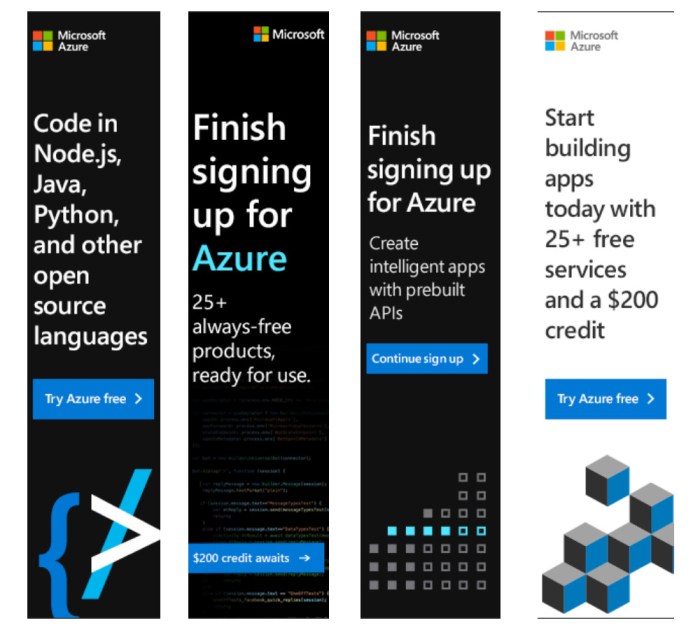
Examples of highly clickable banner ads are essential for boosting website traffic and conversions. This guide explores the key elements that make banner ads stand out, from captivating visuals to compelling calls-to-action. We’ll delve into design principles, audience targeting, and optimization strategies to create banner ads that not only grab attention but also drive meaningful results.
Understanding how to craft effective banner ads requires a multi-faceted approach. From the initial design choices to ongoing A/B testing and mobile optimization, we’ll uncover the secrets to maximizing your click-through rates and achieving impressive results. Discover how to leverage visual appeal, compelling copy, and targeted messaging to create ads that resonate with your audience and convert visitors into customers.
Banner Ad Design Principles
Crafting compelling banner ads is crucial for driving traffic and conversions. Effective design goes beyond aesthetics; it’s about strategically using visual elements and messaging to capture attention and encourage clicks. Understanding the key principles behind visually engaging banner ads is essential for maximizing their impact. This post dives into the design principles that separate successful banner ads from the rest.A well-designed banner ad immediately grabs the user’s attention, conveying a clear message, and ultimately driving desired actions.
This involves meticulous attention to color schemes, typography, imagery, and the strategic placement of key information. By implementing these principles, businesses can significantly increase their click-through rates and ROI from their online advertising campaigns.
Visually Appealing Banner Ad Designs
Visually striking banner ads stand out from the sea of generic ads. They use unique layouts and compelling imagery to capture attention. A visually appealing design can communicate the core message of the ad more effectively, thus driving engagement. For example, a banner ad for a clothing store might feature a high-quality image of a stylish outfit, set against a clean, modern background.
This design element is more likely to draw the eye and intrigue the viewer than a blurry, low-resolution image. Simple, uncluttered layouts also contribute to a more effective visual appeal.
Color Palettes and Typography for Click-Through Rates
Color palettes play a critical role in a banner ad’s effectiveness. The right color combination can evoke specific emotions and associations, impacting user perception and click-through rates. A study by [Insert Reliable Source Here] demonstrated that warm colors like red and orange can increase attention-grabbing potential, while cool colors like blue and green can convey trust and calmness.
Font choice is equally important. A legible and visually appealing font can improve readability and make the ad more inviting. A bold, sans-serif font might work well for a tech-focused banner ad, whereas a more elegant, serif font might be suitable for a luxury brand. Font size and contrast are also crucial for ensuring the text is easily readable.
Creating Urgency and Excitement in Banner Ads
Creating a sense of urgency is vital for encouraging immediate action. Techniques like countdown timers, limited-time offers, and scarcity messages can trigger a sense of urgency and drive users to click. For instance, a banner ad for a flash sale might display a countdown timer prominently, emphasizing the limited duration of the offer. Similarly, highlighting a limited supply of a product can create a sense of scarcity and encourage immediate purchase.
These techniques are effective in driving quick conversions.
Clear and Concise Messaging in Banner Ads
Clear and concise messaging is paramount. The ad copy should communicate the key message quickly and effectively. A concise, well-structured message that focuses on the value proposition of the product or service is more likely to resonate with the target audience. Avoiding jargon and using simple, straightforward language improves readability and comprehension. For example, instead of saying “Experience cutting-edge technology,” a banner ad could say “Get the latest tech today.”
Effective Use of Whitespace in Banner Ads
Whitespace is often overlooked but plays a crucial role in highlighting key elements in a banner ad. Strategically placing whitespace around text, images, and other elements can create visual hierarchy, drawing the eye to important information. Whitespace creates a sense of balance and visual appeal, making the ad more visually engaging. A good example is a banner ad with a prominent image, with just a few concise lines of text around it.
This layout allows the image to stand out while providing the necessary information.
Color Palette Impact on Ad Performance
| Color Palette | Impact on Ad Performance | Example Use Case |
|---|---|---|
| Red/Orange | High attention-grabbing potential, can evoke feelings of urgency | Flash sales, limited-time offers |
| Blue/Green | Conveys trust and calmness, suitable for products/services targeting reliability | Financial services, healthcare products |
| Yellow/Orange | Evokes feelings of optimism and warmth, suitable for products/services related to fun and happiness | Entertainment, leisure activities |
| Black/White | Clean, modern feel, can be suitable for various products/services | Technology, design-focused products |
Targeting Specific Audiences
Reaching the right audience is crucial for banner ad success. Generic ads often fall flat, failing to resonate with the intended viewers. Tailoring designs to specific demographics and interests leads to higher engagement and conversion rates. This involves understanding the needs and preferences of different customer segments and crafting ads that speak directly to them.Effective targeting strategies go beyond simple demographics.
They consider psychographics, lifestyle choices, and even browsing history to create ads that feel personalized and relevant. This personalized approach builds trust and encourages action.
Demographic Segmentation and Ad Styles
Understanding the different preferences of various demographic groups is vital for creating effective banner ads. Each segment responds differently to visual cues, colors, and messaging. This knowledge enables advertisers to craft campaigns that maximize their impact.
Ever wondered what makes a banner ad truly pop? High-impact visuals and clear calls to action are key. But it’s not just about aesthetics. Authenticity matters, too. Take a look at how Authentitik is crushing it with genuine TikTok creator marketplace content, authentitik winning with authentic tiktok creator marketplace content.
Their success highlights how genuine content drives engagement, which in turn translates to more clicks on their banner ads. Ultimately, memorable and effective banner ads need a strong foundation of trust and authenticity.
| Demographic Segment | Preferred Ad Style | Example |
|---|---|---|
| Millennials (ages 25-40) | Modern, minimalist designs with vibrant colors, and emphasis on social proof (testimonials, reviews). | A clean, bright banner featuring a product testimonial and a call to action button. |
| Gen Z (ages 10-24) | Trendy, playful designs with bold colors and animation, potentially featuring trending internet culture references. | An animated banner with a quirky visual and a short, punchy headline reflecting current trends. |
| Baby Boomers (ages 55+) | Classic, trustworthy designs with clear, concise information, and a focus on reliability. | A banner with a traditional layout, featuring an image of the product and detailed text about its features and benefits. |
| High-Income Professionals | Sophisticated, high-quality imagery with premium branding, showcasing exclusivity and luxury. | A banner with a professional photo of the product and a concise, elegant message, highlighting the product’s unique value proposition. |
Data-Driven Optimization
Data plays a critical role in optimizing banner ad campaigns for specific audience segments. Analyzing click-through rates, conversion rates, and other metrics allows for iterative improvements in ad design and targeting. This data-driven approach allows advertisers to adjust campaigns in real-time, ensuring maximum ROI.By tracking user behavior and preferences, advertisers can refine their targeting strategies and ensure that their ads reach the most receptive audiences.
This constant refinement is key to maintaining a high return on investment (ROI) in online advertising. Tools that analyze website traffic and user interactions with ads provide valuable insights for adapting strategies to optimize campaign performance.
Effective Call-to-Actions

Crafting compelling call-to-action (CTA) phrases is crucial for driving clicks and conversions in banner ads. A well-designed CTA encourages users to take the desired action, whether it’s visiting a website, downloading an app, or making a purchase. This section delves into the power of effective CTAs, examining examples, placements, and design strategies to maximize their impact.Effective CTAs are more than just simple instructions; they are persuasive prompts that tap into user motivations.
They need to be concise, clear, and benefit-driven, highlighting the value proposition for the user. This means focusing on what’s in it for them, rather than simply stating the desired action.
Compelling CTA Phrases
Understanding the language that resonates with your target audience is paramount. Instead of generic phrases like “Learn More,” consider more specific and engaging options such as “Unlock Your Potential Now,” “Get Your Free Trial Today,” or “Shop Now and Save.” The key is to use language that creates a sense of urgency, excitement, or value.
Examples of Strong and Persuasive CTAs in Banner Ads
A banner ad for a software company could use the CTA “Start Your Free Trial,” immediately highlighting the value proposition of a free trial. An online retailer might use “Shop the Sale Now” to drive urgency. An e-learning platform could use “Enroll Today and Boost Your Skills” to emphasize learning and growth. These examples demonstrate how precise wording can create a stronger connection with the user.
Placement and Design of CTAs
The placement of the CTA within the banner ad is just as important as the phrasing itself. Ideally, the CTA button should be easily visible, distinct from the rest of the banner design, and positioned where the eye naturally gravitates. A prominent position, often near the center or bottom of the banner, is key for maximizing visibility. The color contrast between the CTA button and the background should be high enough for easy identification, without being jarring.
Different CTA Buttons and Conversions
Different types of CTA buttons can be used to elicit various actions. A button with a vibrant color, like a bright orange or a bold green, can be used to encourage urgency and excitement. A button with a sleek, minimalist design can be used to evoke a sense of trust and professionalism. A button with an image, like a download icon or a shopping cart, can be particularly effective in conveying the action to be taken.
Table Comparing CTA Designs and Effectiveness
| CTA Design | Phrase Example | Potential Effectiveness | Rationale |
|---|---|---|---|
| Bright, Bold Button | “Claim Your Discount!” | High; encourages immediate action. | Vibrant color grabs attention, “claim” implies immediate benefit. |
| Subtle, Minimalist Button | “Learn More” | Moderate; suitable for informational banners. | Clean design, suitable for conveying trust and credibility. |
| Button with Icon | “Download Now” (with download icon) | High; visually reinforces the action. | Icon visually represents the action, increasing clarity and engagement. |
| Animated Button | “Explore Our Services” (with animation) | Moderate; potentially high for engagement, but depends on context. | Animation can add interest but might be distracting if not well-integrated. |
Visual Appeal and Imagery
High-quality visuals are crucial for banner ad success. A captivating image can instantly grab a viewer’s attention, leading to a higher click-through rate. The right imagery can effectively communicate the ad’s message and resonate with the target audience, significantly boosting engagement and ultimately driving conversions. Beyond aesthetics, strategic use of visuals also impacts the ad’s overall performance and memorability.Effective banner ads utilize compelling visuals to convey their message quickly and efficiently.
This visual impact translates directly into higher click-through rates, as a strong image acts as a powerful magnet drawing the viewer’s eye. Images are more than just decorations; they are vital components of a successful ad campaign.
Impact of High-Quality Images on Click-Through Rates
High-quality images significantly influence click-through rates (CTRs). A professional, visually appealing image is more likely to capture attention and encourage interaction compared to a blurry or poorly designed one. This enhanced visual appeal fosters engagement, leading to increased clicks and ultimately driving conversions. The impact is amplified when the imagery aligns with the target audience’s preferences and expectations.
Examples of Visually Striking Banner Ads
Numerous examples showcase the effectiveness of visually striking banner ads. A clothing retailer might use a vibrant image of a stylish model wearing their latest collection. An electronics company could feature a close-up shot of a sleek, modern device in action. A travel agency could use a captivating panoramic image of a beautiful destination. These examples illustrate how high-quality imagery can communicate a message effectively and attract potential customers.
The key is to use images that are relevant to the product or service being advertised.
Choosing the Right Imagery to Resonate with the Target Audience
Understanding the target audience is essential for choosing the right imagery. A company targeting young adults might use a trendy, contemporary image, while a company targeting families might opt for a warm, welcoming image featuring a happy family. The imagery should reflect the brand’s values and appeal to the specific demographics and interests of the intended audience.
Comparing Different Types of Imagery
| Type of Imagery | Effect on Engagement | Example |
|---|---|---|
| High-resolution photographs | Highly engaging, realistic representation. | A detailed photo of a new smartphone showcasing its features. |
| Illustrations | Unique, creative, and easily recognizable. | A cartoon-style illustration of a character using a new app. |
| Infographics | Visually appealing and convey complex information quickly. | An infographic presenting the benefits of a particular financial product. |
| Videos | Highly engaging, showing product in action. | A short video demonstrating how to use a new software. |
Optimizing Images for Fast Loading Times
Image optimization is crucial for a positive user experience. Large image files can significantly slow down page loading times, leading to a poor user experience and potentially decreased click-through rates. Compressing images without sacrificing quality and selecting the appropriate file format (e.g., JPEG, PNG) are key steps. Tools like image editors and online compression services can help optimize image sizes and ensure fast loading times, maximizing the effectiveness of banner ads.
A/B Testing and Optimization
A/B testing is crucial for banner ad campaigns. It allows marketers to experiment with different versions of their ads to identify which performs best. This iterative process of testing and refining leads to significant improvements in click-through rates (CTR) and conversion rates, ultimately maximizing the return on investment (ROI) of advertising spend. By systematically evaluating variations, marketers can ensure their banners are optimized for the intended audience.Understanding the nuances of A/B testing is vital to achieve meaningful results.
Ever wondered what makes some banner ads practically irresistible? Think bold colors, compelling visuals, and a clear call to action. Learning to craft these effective designs is key to maximizing your marketing impact. Ultimately, mastering these techniques can dramatically improve your return on investment. Want to unlock your sales potential with Salesforce account management?
Check out unlock your sales potential with account salesforce for actionable strategies. By employing these types of visually engaging banner ads, you’ll be well on your way to driving impressive click-through rates.
A well-designed experiment isolates the impact of changes to specific elements of the ad, such as the headline, call-to-action, image, or color scheme. This allows marketers to pinpoint the exact modifications that resonate most with their target demographic.
Successful A/B Testing Methodologies
A/B testing methodologies should be meticulously planned to yield accurate and reliable results. Commonly employed strategies include randomly assigning users to different ad variations. For instance, 50% of users might see version A of the banner, and 50% version B. This ensures that any observed differences in performance are attributable to the variations themselves, not other factors. Crucially, the test duration should be sufficient to gather statistically significant data, and the sample size should be large enough to minimize the influence of random fluctuations.
Metrics for Analyzing Banner Ad Effectiveness
Numerous metrics are crucial for assessing the performance of banner ads. Click-through rate (CTR) measures the percentage of impressions that result in clicks. Conversion rate quantifies the percentage of clicks that lead to desired actions, such as purchases or sign-ups. Bounce rate indicates the percentage of visitors who leave the landing page without taking any further action.
Eye-catching banner ads are key to driving clicks. Think vibrant colors, compelling imagery, and clear calls to action. However, optimizing your website for search engines, like by using structured data markup, can sometimes create unexpected challenges. For example, some schema markups, like hEntry, might actually hurt your SEO efforts. If you’re curious to learn more about how hEntry schema might negatively impact your search rankings, check out this article on hentry schema bad for seo.
Ultimately, the best banner ads are those that are both visually appealing and strategically designed to maximize conversions.
Cost per click (CPC) tracks the cost associated with each click, and return on ad spend (ROAS) calculates the profit generated for every dollar spent on advertising. Tracking these metrics provides a comprehensive view of ad effectiveness and allows for targeted improvements.
Role of Data Analysis in Optimizing Campaigns
Data analysis plays a pivotal role in the optimization of banner ad campaigns. Tools that provide detailed reports and analytics dashboards allow marketers to visually represent data and gain actionable insights. Analyzing trends in CTR, conversion rates, and other key metrics helps identify patterns and pinpoint areas for improvement. Furthermore, by identifying which variations perform better in specific demographics or devices, marketers can tailor their ads to achieve optimal results.
This targeted approach yields higher conversion rates and better ROI.
A/B Testing Parameters and Significance
| Parameter | Significance |
|---|---|
| Headline variations | Impact on initial user engagement; more compelling headlines often lead to higher CTRs. |
| Call-to-action (CTA) button text | Crucial for prompting desired user actions; strong CTAs drive higher conversion rates. |
| Image/visual design | Aesthetic appeal and visual clarity directly affect user perception; high-quality imagery can improve CTRs. |
| Ad placement | Optimal placement on a website or platform maximizes visibility; strategically placing ads can improve engagement. |
| Target audience | Tailoring ads to specific demographics and interests improves relevance and conversion rates; understanding user preferences is crucial. |
Mobile-Friendly Banner Ads
Mobile devices are now the primary way many people interact with the internet. This means that banner ads need to be optimized for smaller screens and diverse mobile operating systems to be effective. Ignoring this crucial aspect can lead to a significant drop in ad engagement and conversion rates. Mobile-friendly banner ads are essential for reaching and engaging your target audience effectively.
Responsive Design for Banner Ads
Responsive design ensures that your banner ads adapt to various screen sizes and orientations, maintaining their visual appeal and functionality. This adaptability is vital because different mobile devices (smartphones, tablets) have varying screen resolutions and aspect ratios. A non-responsive design can lead to a distorted or unusable banner ad experience, driving away potential customers. Responsive design allows your banner to automatically adjust its layout, ensuring a seamless viewing experience across different mobile platforms.
This approach avoids the need for creating separate banner ads for each device, saving time and resources.
Ensuring Correct Display Across Platforms
To ensure consistent display across different mobile platforms, use industry-standard responsive design techniques. This involves using flexible images and CSS to adjust the ad’s dimensions dynamically based on the device’s screen size. Utilizing media queries is essential. These queries allow you to specify different styles for different screen sizes and orientations. Furthermore, testing on various devices and browsers is crucial.

This iterative testing process helps identify and fix any display issues that might arise on specific platforms. Employing a cross-browser compatibility testing tool can help ensure your ad functions correctly on the most common mobile browsers.
Mobile-Specific Banner Ad Formats, Examples of highly clickable banner ads
Different mobile-specific banner ad formats are available, each with its own impact on performance. Consider the size and shape of the ad to match the user’s context. For example, a large, eye-catching banner ad might be ideal for home screens, while a smaller, more compact ad might be suitable for app interfaces. Experimentation with various formats is crucial to determine which works best for your target audience and campaign objectives.
Interstitial ads, which appear full-screen, are another popular choice, but they can disrupt the user experience if not used appropriately. In-app ads are another way to engage with mobile users, often appearing within the context of an app’s interface.
Mobile Device Screen Sizes and Optimal Ad Formats
| Device Category | Screen Size (approx.) | Optimal Ad Format | Rationale |
|---|---|---|---|
| Smartphones (portrait) | 320×50, 320×100, 300×250, 320×480 | 320×50, 320×100, 300×250 | Smaller formats are more likely to be seen and interacted with on the mobile screen. |
| Smartphones (landscape) | 480×320, 728×90, 320×50 | 320×50, 320×100, 728×90 | Landscape orientations can accommodate larger formats while maintaining usability. |
| Tablets | 768×1024, 1024×768 | 300×250, 320×50, 300×50, 728×90 | Larger screen space allows for larger formats, but maintain visual appeal. |
This table illustrates the different screen sizes of mobile devices and suggests optimal banner ad formats for each. Advertisers should carefully consider the device type and screen size when selecting the ad format to maximize visibility and engagement.
Creative Examples of Clickable Banners

Beyond the basics of design and targeting, truly captivating banner ads stand out through innovative creativity. They go beyond simply showcasing a product; they engage the viewer on a deeper level, often prompting curiosity and encouraging interaction. This involves understanding not just the product but also the audience’s interests and desires. A well-crafted creative approach can significantly boost click-through rates.
Unique and Innovative Designs
Clever design choices can transform a standard banner into a memorable experience. Unusual shapes, vibrant colors, and unexpected layouts can capture attention. For instance, a banner for a clothing store might use a dynamic, flowing design that mimics the movement of fabrics. This approach is more than just aesthetics; it subtly communicates the brand’s personality and the nature of the product.
Another example could be a banner for a music streaming service, using abstract musical notes as its design element.
Interactive Elements
Interactive banners encourage user participation, transforming passive viewing into active engagement. A simple example is a banner that allows users to drag and drop items or adjust settings within the banner itself. This encourages exploration and deeper connection with the product or service. An online game company could use a banner that lets users try a mini-game, providing a taste of the experience before they click through.
Animations and Videos
Motion can greatly enhance the impact of a banner ad. Animations and short videos can showcase products in action, demonstrating their features and benefits. A banner ad for a new smartphone could show the phone in various situations, highlighting its camera capabilities or ease of use. Videos can be particularly effective in conveying complex ideas or demonstrating product features.
A crucial aspect of this strategy is to keep the video concise and engaging, focusing on a clear message.
Humor and Storytelling
Humor and storytelling can connect with audiences on an emotional level. A banner ad for a travel agency could use a humorous anecdote about a memorable trip. Or a banner for a software company could tell a story about how the software helped a customer solve a problem. A key element is ensuring the humor or narrative is relevant to the target audience and aligns with the brand’s personality.
This approach requires a deep understanding of the audience’s values and interests.
Categorized Examples of Banner Ads
| Category | Description | Example |
|---|---|---|
| Abstract/Geometric | Emphasizes visual interest and brand identity. | A banner for a design software, featuring abstract shapes that resemble complex graphical elements. |
| Interactive Games/Mini-Games | Encourages engagement and provides a taste of the product. | A banner for a social media platform showcasing a simple, quick game related to the platform’s features. |
| Animated/Video | Demonstrates product features and benefits through dynamic visual elements. | A banner for a video editing software showcasing clips of edited videos and animations. |
| Humorous/Storytelling | Connects with audiences emotionally through relatable narratives or wit. | A banner for a food delivery service showcasing a funny situation of a person being late for dinner, but with the food delivery app solving the problem. |
Analyzing Banner Ad Performance Metrics: Examples Of Highly Clickable Banner Ads
Understanding how your banner ads perform is crucial for optimizing your campaigns and achieving your marketing goals. Analyzing key performance indicators (KPIs) allows you to identify what’s working, what’s not, and where you can improve to maximize your return on investment (ROI). This involves more than just counting clicks; it’s about understanding the entire customer journey and how your ads influence it.Effective banner ad performance analysis goes beyond simply tracking clicks.
It requires a deep dive into the data, identifying trends, and using that information to refine your strategies. By monitoring and evaluating various metrics, you can gain insights into the effectiveness of your targeting, messaging, and creative elements. This data-driven approach helps you make informed decisions to boost click-through rates, conversion rates, and overall campaign success.
Key Performance Indicators (KPIs) for Banner Ads
Banner ad success hinges on a combination of metrics. These metrics paint a comprehensive picture of how well your ads are performing, from initial engagement to final conversions. Click-through rate (CTR) is just one piece of the puzzle; understanding other metrics like cost per click (CPC), conversion rate, and viewability is equally important.
Click-Through Rate (CTR)
Click-through rate (CTR) measures the percentage of people who see your banner ad and subsequently click on it. A high CTR suggests that your ad copy, imagery, and targeting are resonating with your audience. For example, a visually appealing banner ad with a clear call-to-action (e.g., “Shop Now”) often generates a higher CTR than a less engaging one.
A high CTR is a good indicator of a strong ad, but it’s not the sole measure of success.
Conversion Rate
Conversion rate is the percentage of clicks that result in a desired action, such as a purchase, sign-up, or lead generation. This metric is critical because it directly measures the effectiveness of your ad in driving desired outcomes. A high conversion rate indicates that your ad effectively guides users toward completing a specific goal.
Cost Per Click (CPC)
Cost per click (CPC) measures the amount you pay for each click on your banner ad. It’s a vital metric for budgeting and understanding the cost-effectiveness of your campaigns. A low CPC suggests that your ad is performing well in terms of cost efficiency. Monitoring CPC alongside CTR and conversion rate allows for a comprehensive evaluation of ad performance.
Viewability
Viewability measures the percentage of times your banner ad was fully visible to the user for a specified period. This metric is essential because an ad that isn’t visible isn’t effectively reaching your target audience. A high viewability rate indicates that your ad is being displayed correctly and in a manner that ensures it’s seen.
Analyzing Data from Banner Ad Analytics Dashboards
Banner ad analytics dashboards provide a wealth of data that can be used to identify trends and optimize campaigns. Understanding the information presented on these dashboards is critical to evaluating the effectiveness of your ads. Look for patterns in CTR, conversion rates, and other metrics to gain actionable insights.
Example of Successful Banner Ads
Several successful banner ads consistently outperform expectations by employing compelling visuals, concise messaging, and relevant targeting. For instance, an e-commerce company might use a banner ad showcasing a limited-time offer with a clear call-to-action, leading to a high conversion rate. Another example might be a software company featuring a demo video within the ad, resulting in a significant number of lead submissions.
Importance of Various Metrics in Banner Ad Performance Analysis
| Metric | Importance |
|---|---|
| Click-Through Rate (CTR) | Measures initial engagement; high CTR suggests effective ad design and targeting. |
| Conversion Rate | Measures the effectiveness of driving desired actions; high conversion rate indicates successful ad copy and user experience. |
| Cost Per Click (CPC) | Indicates cost-effectiveness; low CPC is desirable. |
| Viewability | Ensures the ad is visible to the target audience; high viewability is critical for reaching the intended users. |
Closure
In conclusion, crafting effective banner ads is a blend of art and science. By mastering design principles, understanding your target audience, and optimizing your campaigns with A/B testing, you can create visually appealing and highly clickable banner ads that drive impressive results. The key is to combine a strong visual identity with persuasive copy and strategic targeting to truly capture attention and convert visitors.