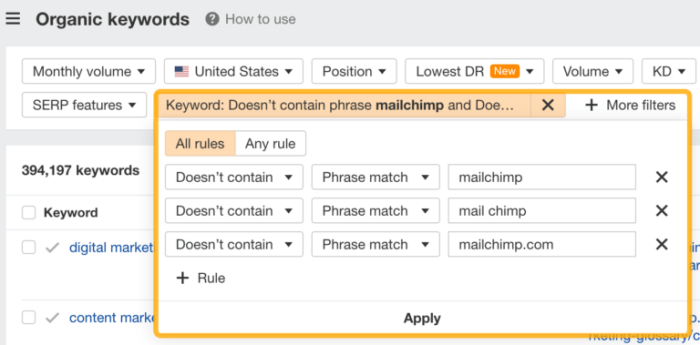
General phrase match keywords bringing in competitor searches – General phrase match s bringing in competitor searches is a powerful strategy. It’s about understanding what phrases your rivals are using to attract customers, and then leveraging those same phrases in your own content. This approach isn’t just about mimicking competitors; it’s about uncovering untapped search opportunities and improving your content strategy to draw in a wider audience.
We’ll delve into how to analyze competitor tactics, understand search intent, and optimize your content to maximize results.
By examining the search volume and intent behind general phrases, we can identify high-value s and tailor our content to meet the needs of potential customers. This allows for a more strategic approach to research, enabling us to target not just our own ideal customers but also those who might be drawn in by the phrases competitors use.
We’ll look at real-world examples and practical strategies to make this process more effective for your website.
Understanding Competitor Search Behavior
Unraveling how competitors attract search traffic through broad s is crucial for crafting effective strategies. Understanding their tactics provides valuable insights into their target audience and market positioning. This analysis can reveal the specific s they use to capture a broader audience, and the correlation between their chosen phrases and overall business objectives.Competitors employ a range of broad phrases to capture a large audience, aiming to attract potential customers seeking general information or solutions.
These phrases are not overly specific and are meant to catch a wide net of searches. This strategy allows them to reach a larger audience and potentially capture those who might not be actively looking for a precise product or service, but who are looking for a solution within the competitor’s field of expertise.
Types of General Phrases Used
Competitors use a variety of general phrases to attract searches. These include:
- Problem-oriented phrases: These phrases highlight the customer’s pain points, aiming to attract users actively seeking solutions to a specific issue. For example, phrases like “best way to learn Python” or “cheap flights to Paris” tap into common problems and desires.
- Need-based phrases: These phrases address the needs of the target audience. They focus on broad needs rather than specific solutions. For example, phrases like “online learning platforms” or “budget travel destinations” cater to the broad need for online learning and travel within a budget.
- Informational phrases: These phrases seek to provide general information on a topic or category. Competitors often use informational phrases to establish themselves as an authority in their field. For example, phrases like “history of artificial intelligence” or “latest trends in fashion” aim to attract those looking for information.
Relationship to Business Goals
The general phrases used by competitors directly correlate with their business objectives. If a competitor prioritizes brand awareness, they might use more informational phrases. Conversely, if a competitor prioritizes lead generation, they might employ phrases that focus on specific needs or problems. Understanding the relationship between these phrases and their goals helps in identifying potential areas for improvement in your own strategy.
Comparative Analysis of Competitor Phrases
The following table provides a comparison of the general phrases used by different competitors:
| Competitor | General Phrase 1 | General Phrase 2 | General Phrase 3 |
|---|---|---|---|
| Competitor A (Online Education Platform) | Online courses | Best online learning | Online education resources |
| Competitor B (Travel Agency) | Cheap flights | Luxury travel packages | International travel deals |
| Competitor C (Software Development Company) | Software solutions | Custom software development | Web application development |
Analyzing Search Volume and Intent
Understanding search volume and intent is crucial for any strategy. Knowing how often people search for specific phrases and what they’re hoping to find when they do, helps you tailor your content to meet those needs. This allows you to optimize your website for relevant searches and attract the right audience.General phrases, while broad, can still reveal significant insights into user behavior.
By analyzing search volume and intent, we can understand the underlying motivations behind these searches and target our content effectively. This understanding empowers us to create content that resonates with users, improving both organic visibility and user engagement.
Search Volume and Popularity
Search volume directly reflects the popularity of a general phrase. Higher search volume indicates that the phrase is searched for more frequently, suggesting a higher level of interest in the topic. This increased interest can be due to various factors, such as current trends, emerging needs, or seasonal changes. Conversely, lower search volume suggests less interest in the topic, potentially indicating a niche market or a less popular search term.
Real-world examples include seasonal searches like “best pumpkin recipes” (high volume in fall) compared to “rare earth element properties” (lower volume).
Search Intent Analysis, General phrase match keywords bringing in competitor searches
Understanding the intent behind a general phrase is equally important. Search intent refers to the underlying purpose behind a user’s search. This can vary significantly, impacting how you should structure and optimize your content.
Types of Search Intent
There are three primary types of search intent: informational, navigational, and transactional. Informational searches aim to find information or learn about a topic. Navigational searches aim to find a specific website or page. Transactional searches aim to complete a purchase or take a specific action.
General phrase match keywords are a fantastic way to snag competitor searches, but to truly maximize their potential, you need a well-rounded approach like agile marketing and blended skill sets – a successful marketing formula. This means understanding your target audience, identifying their needs, and adapting quickly to changing market trends. By embracing agile marketing and blended skill sets a successful marketing formula , you’ll be able to refine your keyword strategy and effectively attract more potential customers.
Ultimately, these general phrase match keywords will continue to drive organic traffic and help you stay ahead of the competition.
Example Search Intent Analysis
- Informational Searches: These searches typically involve broad topics or questions seeking knowledge. For example, “best coffee beans” seeks information about different types of coffee beans. Content optimized for informational searches should provide comprehensive, in-depth information.
- Navigational Searches: These searches are highly specific and often lead directly to a particular website or page. For instance, “Amazon” or “Wikipedia” are navigational searches. For these, you might want to focus on building a strong online presence and ensuring your website is easily discoverable and linked to.
- Transactional Searches: These searches reflect a user’s intention to complete an action, such as making a purchase or booking a service. An example is “buy running shoes online.” Optimizing for transactional searches often involves clear calls to action and concise product descriptions.
Search Volume and Intent Table
This table illustrates a potential analysis of search volume and intent for various general phrases:
| General Phrase | Search Volume (estimate) | Search Intent |
|---|---|---|
| Best restaurants in New York | High | Informational |
| Best-selling novels 2023 | Medium | Informational |
| amazon | Very High | Navigational |
| buy iPhone 14 | High | Transactional |
Discovering Opportunities for Improvement
Improving your strategy isn’t just about finding the right words; it’s about understanding how your target audience searches and anticipating their needs. This involves proactively identifying areas where your current approach can be refined to attract more relevant searches and capture a wider audience. A well-structured approach to optimization can significantly enhance your online visibility and drive more targeted traffic to your site.Optimizing general phrases can lead to a more effective search engine strategy.
This involves moving beyond broad terms and targeting more specific search queries. By understanding the nuances of user intent and leveraging competitor data, you can uncover opportunities to refine your strategy and achieve better search engine rankings. This process is iterative, requiring constant monitoring and adaptation to changing search trends.
Identifying Potential Areas for Improvement
General phrases, while broad, can sometimes be too broad. This limits the potential reach and relevance of your content. By focusing on specific, targeted phrases, you can attract a more qualified audience. Analyzing competitor strategies can provide insights into s they are targeting, revealing opportunities you may have overlooked.
Strategies to Attract a Wider Range of Searches
Attracting a wider range of searches often involves moving beyond general phrases to more specific, long-tail s. These longer, more descriptive phrases often reflect a higher level of intent and are less competitive. For example, instead of “best coffee,” consider “best coffee shops in downtown Austin.” This more specific phrase is more likely to attract users actively searching for coffee shops in that particular location.
Techniques for Identifying Underserved Search Niches
Identifying underserved search niches involves researching specific s and topics that have high search volume but relatively low competition. Tools like Google Planner, Ahrefs, and SEMrush can be valuable for identifying these opportunities. By targeting these niche phrases, you can achieve higher rankings and attract users seeking highly specialized information. For example, if you are selling gardening supplies, a search niche could be “organic vegetable gardening techniques for beginners in Northern California.”
Examples of General Phrases That Could Be More Effective
General phrases like “best restaurants” or “cheap flights” are often too broad. A more targeted approach might be “best Italian restaurants in the city center” or “cheap flights to Europe in October.” This level of specificity helps attract users with a clear purchasing intent.
General phrase match keywords are a powerful way to attract competitor searches, but you need to optimize for search engine user experience to truly leverage their value. By focusing on search engine user optimization , you can ensure your content is both discoverable and relevant to users searching those terms. This ultimately leads to a stronger impact from general phrase match keywords bringing in those valuable competitor searches.
Potential Improvements to General Phrases
| Original Phrase | Improved Phrase | Reason for Improvement |
|---|---|---|
| “best hotels” | “best luxury hotels near the beach in Miami” | More specific, targeting a niche market with high purchasing intent |
| “cheap electronics” | “cheap laptops under $500 with a long battery life” | More specific, addressing a particular need and price range |
| “online courses” | “online data analysis courses for beginners with a certificate” | More specific, targeting a particular skill and course format |
Optimizing Content Strategy: General Phrase Match Keywords Bringing In Competitor Searches

Attracting a wider audience and outperforming competitors hinges on a comprehensive content strategy that strategically incorporates competitor search s. This involves more than just mirroring what competitors are doing; it requires a nuanced understanding of search intent and the ability to weave relevant general phrases into existing and new content seamlessly. This approach positions your content for higher visibility and increased organic traffic.By proactively integrating general phrases, you’re tapping into a larger pool of potential searchers, effectively drawing in those looking for information broadly related to your niche.
This approach significantly broadens your reach, helping you capture a wider share of the market and establish a stronger online presence.
Importance of General Phrases for Competitor Searches
General phrases, often overlooked, can be surprisingly powerful tools for capturing competitor searches. These phrases represent broader user queries and can lead to valuable organic traffic. Targeting these broader searches allows you to capture a larger share of the market by addressing a broader spectrum of user needs. Instead of focusing solely on highly specific s, incorporating general terms positions your content for higher visibility and increased discoverability by users seeking information relevant to your products or services.
Integrating General Phrases into Existing Content
To integrate general phrases into existing content, a strategic approach is needed. This doesn’t involve haphazardly inserting s; instead, focus on seamlessly incorporating them into existing content. This can be achieved by rewriting existing content to incorporate general phrases that align with the original topic. For example, if you have a blog post on a specific type of running shoe, consider adding broader phrases like “best running shoes for beginners” or “running shoes for various terrains” in natural-sounding sentences.
General phrase match keywords are a fantastic way to snag competitor searches, but knowing how to measure success is key. Understanding the top B2B website marketing metrics, like bounce rate and conversion rates, is crucial for optimizing your strategy. The top b2b website marketing metrics help you see which keywords are actually driving real results.
Ultimately, this detailed analysis ensures you’re targeting the right general phrase match keywords for maximum impact and competitor visibility.

The key is to maintain readability and ensure the general phrases fit naturally within the context of the original content.
Incorporating General Phrases into New Content Creation
When creating new content, strategically incorporate general phrases right from the start. Consider the topics you want to cover and identify the general phrases that resonate with your target audience. Ensure these phrases flow naturally within the new content. Use general phrases as guiding principles for organizing the content and for selecting relevant examples, case studies, or data.
For instance, if creating a new landing page for “cheap flights,” consider incorporating general phrases like “budget travel destinations,” or “affordable international travel.” This proactive approach ensures that your new content immediately targets a broader audience.
Structuring Content Around General Phrases
Crafting content around general phrases requires careful structuring. Use the general phrases as organizing principles, creating different sections or chapters based on these terms. Organize the content logically, with subheadings reflecting the general phrases and supporting details. This helps users quickly scan and find information relevant to their specific search query. For example, a blog post titled “Best Running Shoes” could have sections on “best running shoes for beginners,” “best running shoes for marathon training,” and “best running shoes for different foot types.”
Content Strategy Table for Incorporating General Phrases
| Content Type | Target Phrase | Content Focus |
|---|---|---|
| Blog Post | “best running shoes” | Review of various running shoes, considering factors like cushioning, support, and price. The review should also include a comparison of different brands and models. |
| Landing Page | “cheap flights” | Focus on showcasing deals and discounts on flights, highlighting specific travel destinations and including filters for different criteria. |
Evaluating Results and Adjustments

Fine-tuning your strategy isn’t a one-and-done process. It requires continuous monitoring, analysis, and adaptation. This section dives into the crucial steps of evaluating the effectiveness of your chosen general phrases and making informed adjustments to your content strategy. By tracking performance, understanding ranking fluctuations, and responding to changes in search behavior, you can continually optimize your approach and maximize your online visibility.Once you’ve implemented your strategy, the next phase involves rigorous monitoring and evaluation.
This isn’t just about checking your search rankings; it’s about understanding the entire picture of how your chosen phrases are performing. It’s about identifying what’s working, what’s not, and pinpointing areas for improvement.
Tracking Effectiveness
Understanding the impact of general phrases requires a structured approach. You need to meticulously track metrics that reveal how your content is resonating with search engines and users. This data is vital for making informed adjustments to your strategy.
- Website Analytics Tools: Utilize tools like Google Analytics to monitor website traffic, user engagement, and conversion rates. Look for patterns related to specific s. For example, a sudden increase in traffic for a particular page containing a specific phrase might indicate that phrase is performing well.
- Search Engine Ranking Monitoring: Tools like SEMrush or Ahrefs provide real-time updates on your website’s search rankings for different s. This allows you to see how your rankings shift in response to changes in your content or algorithm updates. Regular monitoring is key to spotting any declines in position.
- Performance Reports: Create reports that track the performance of your general phrases over time. These reports should include key metrics like search volume, click-through rates (CTR), and conversion rates. Analyze which phrases consistently drive traffic and which ones need improvement.
Monitoring Search Rankings and Traffic
Staying informed about your search rankings and website traffic is critical for evaluating the success of your general phrase strategy. Real-time data helps you make timely adjustments to your content strategy.
- Rank Tracking Tools: Utilize specialized tools that monitor your website’s search rankings for various general phrases. These tools provide detailed insights into your current ranking position and historical trends. This allows you to track the fluctuations and identify any downward trends in your ranking.
- Traffic Source Analysis: Within your analytics platform, meticulously analyze the sources of website traffic. Identify which general phrases are driving the most organic traffic. This data provides valuable insight into which phrases are attracting users and which are underperforming.
- Trend Analysis: Track search volume trends for your general phrases. If search volume for a particular phrase is increasing, it indicates a potential opportunity to create more relevant content. Conversely, if search volume declines, you might need to adapt your strategy or explore new general phrases.
Adjusting the Strategy Based on Performance Data
The data gathered from tracking effectiveness and monitoring rankings will show you where you stand. Use this information to refine your approach.
- Content Optimization: If a particular general phrase is performing well but the ranking is not as expected, analyze the content related to that phrase. Are there opportunities to improve the quality or structure of the content? Consider adding more relevant s or improving the overall user experience.
- Expansion: If a particular general phrase isn’t performing as expected, consider expanding your research. Explore related general phrases and long-tail s to discover new opportunities and optimize your content for a wider range of searches.
- Competitor Analysis: Analyze the content of your competitors who rank higher for your general phrases. Identify any gaps or opportunities that your content can fill. This can involve adding more detailed information or focusing on a specific niche within the general topic.
Performance Tracking Template
A structured template for tracking performance is essential. This template should be designed to capture all the relevant metrics, making it easier to track and analyze results.
| General Phrase | Search Volume | Current Rank | Previous Rank | Traffic (Visits) | Click-Through Rate (CTR) | Conversion Rate | Notes |
|---|---|---|---|---|---|---|---|
| [Phrase 1] | [Value] | [Rank] | [Rank] | [Value] | [Value] | [Value] | [Notes] |
| [Phrase 2] | [Value] | [Rank] | [Rank] | [Value] | [Value] | [Value] | [Notes] |
This template allows for organized recording of performance data, making it easy to identify trends and make data-driven adjustments. Remember to regularly update this table with new data for accurate evaluation.
Last Point
In conclusion, understanding and leveraging competitor search behavior through general phrase match s is a crucial component of a robust strategy. By analyzing competitor tactics, understanding search intent, and optimizing your content strategy, you can identify and capture valuable search opportunities. Remember that this is an ongoing process requiring constant monitoring and adjustments based on performance data.
Stay adaptable and always refine your approach to maximize your results. Implementing this strategy can help you attract more relevant searches and improve your website’s overall performance.