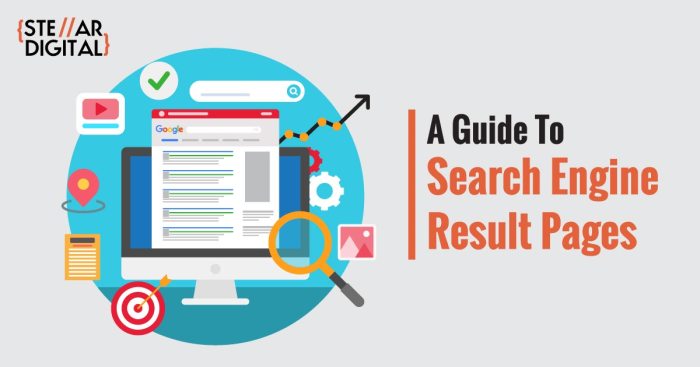
Search engine result pages serps – Search engine result pages (SERPs) are the gateway to the online world. They’re more than just lists of links; they’re dynamic displays reflecting search engine algorithms and user behavior. Understanding how SERPs function, from the underlying algorithms to the visual elements, is crucial for anyone navigating the digital landscape. This deep dive explores the intricacies of SERPs, covering everything from organic and paid results to featured snippets and the ever-evolving features that shape search experience.
This comprehensive guide delves into the various factors influencing SERP rankings, including on-page and off-page optimization techniques. We’ll analyze the significance of different SERP features, from knowledge panels to image packs, and their impact on user experience and business outcomes. We’ll also look at how mobile SERPs differ from their desktop counterparts, and the importance of mobile-first indexing.
Defining Search Engine Result Pages (SERPs)
Search Engine Result Pages (SERPs) are the curated lists of web pages that search engines display in response to a user’s query. They’re more than just a simple list; they’re dynamic interfaces that adapt to user needs and search engine algorithms. Understanding SERPs is crucial for anyone seeking to optimize their online presence and effectively engage with searchers.SERPs aren’t static.
They evolve constantly, incorporating new features and adjusting their layout to improve the user experience and reflect the latest search engine trends. This ever-changing landscape necessitates ongoing adaptation for businesses and individuals alike.
Components of a Typical SERP
SERPs are composed of various elements, each serving a specific purpose. The layout and visual presentation are meticulously designed to convey information clearly and efficiently to the user.
- Organic Results: These are listings of web pages that the search engine has deemed relevant to the query, based on its complex algorithms. Organic results typically appear in a structured format, with titles, snippets of text, and links to the corresponding web pages.
- Paid Results (PPC Ads): These are advertisements displayed prominently on the SERP. Search engines often highlight these results with distinct visual cues, such as “Ad” labels or different color schemes, to differentiate them from organic results.
- Featured Snippets: These are concise summaries of information directly extracted from a web page, displayed prominently at the top of the SERP. They often provide a quick answer to a user’s query, aiming to satisfy the need for immediate information.
- Knowledge Panels: These concise summaries of information about specific entities, like people, places, or organizations, appear prominently on the SERP. They provide readily accessible background information to the user, potentially eliminating the need to click on a specific result.
- Images and Videos: Search engines often include relevant images and videos within the SERP, alongside textual results. These visual elements are particularly valuable for visual search queries.
- Local Pack/Map Results: For location-based queries, SERPs may include a map and listings of local businesses. This is a powerful feature for businesses targeting local customers.
Evolution of SERPs
The design and functionality of SERPs have undergone significant transformations over time. Early SERPs were simpler, with fewer features and a less sophisticated layout.
- Early SERPs: These typically focused primarily on displaying a list of links, with basic title and snippet information. User experience was less refined, and visual elements were minimal.
- Refinement and Expansion: As search technology advanced, SERPs evolved to include more features, such as paid advertising, featured snippets, and knowledge panels. This expansion reflected the growing complexity of search queries and the need to deliver more comprehensive information to users.
- Mobile Optimization: The rise of mobile search necessitated the adaptation of SERPs for mobile devices. The layout and presentation of results were adjusted to optimize the mobile experience, making results more accessible and visually appealing on smaller screens.
- AI Integration: Advancements in artificial intelligence (AI) have led to more sophisticated search algorithms and SERP displays. This has resulted in more personalized and contextually relevant search results, which better understand user intent and preferences.
Key Differences Between SERP Result Types
The table below Artikels the key distinctions between various SERP result types.
| Result Type | Description | Example | Characteristics |
|---|---|---|---|
| Organic | Results displayed based on search engine algorithm relevance. | A blog post about “best coffee beans” | Usually ranked by relevance; not directly paid for. |
| Paid | Advertisements displayed on SERP, often with visual cues (e.g., “Ad”). | An advertisement for a coffee shop. | Paid placement; often targeted to specific s. |
| Featured Snippet | Concise summary of information extracted from a webpage. | A brief definition of “specialty coffee”. | Provides a direct answer to a question; often appears at the top of the SERP. |
| Knowledge Panel | A concise summary of information about a specific entity. | Information about a particular coffee roaster. | Offers quick access to background information; often prominent on the SERP. |
Factors Influencing SERP Ranking
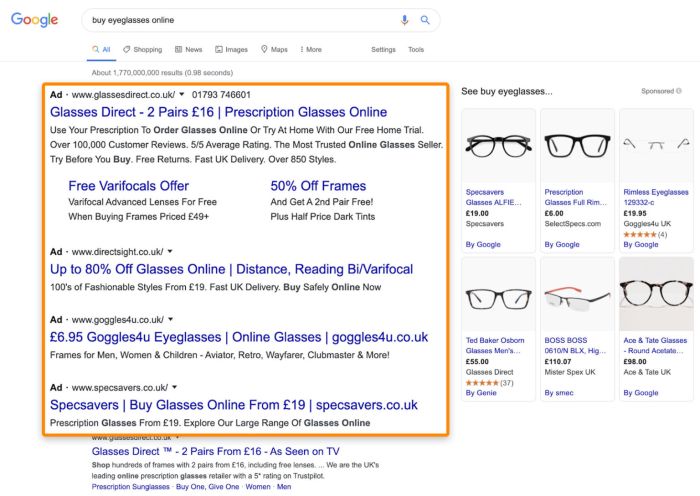
Search engine result pages (SERPs) are dynamic displays of web content, ordered based on complex algorithms. Understanding the factors that influence this ranking is crucial for website owners and professionals to optimize their online presence. These factors are constantly evolving, reflecting the search engines’ continuous efforts to provide the most relevant and valuable results to users.The precise algorithms used by major search engines like Google are proprietary and closely guarded secrets.
However, through observation and analysis of search engine behavior, patterns emerge that highlight key ranking factors. These factors encompass a broad spectrum of on-page and off-page elements, as well as user engagement metrics.
Ranking Algorithms Used by Major Search Engines
Search engines employ sophisticated algorithms to analyze billions of web pages and present the most relevant results. These algorithms are constantly updated and refined, making precise predictions challenging. Key elements within these algorithms often include page content analysis, link analysis, user interaction data, and other signals. For example, Google’s algorithm, while not fully disclosed, is known to prioritize fresh content, high-quality writing, and authoritative sources.
Key Factors Influencing Organic Search Results Positioning
Several key factors contribute to a website’s ranking in organic search results. These factors encompass technical aspects, content quality, and user engagement. Factors like site speed, mobile-friendliness, and secure connections (HTTPS) significantly influence rankings, as search engines prioritize a positive user experience. High-quality content, relevant s, and proper meta descriptions are crucial for attracting users and achieving higher rankings.
Impact of User Behavior on SERP Ranking
User behavior plays a vital role in shaping SERP rankings. Metrics like click-through rates (CTR), time on page, and bounce rate are all considered by search engines. High CTR and engagement suggest that users find the result relevant and valuable. Conversely, high bounce rates and low engagement indicate that the result may not meet user expectations. Search engines learn from user interactions, refining their algorithms to prioritize results that satisfy users.
Crucial On-Page Factors Affecting Search Engine Rankings
On-page factors directly relate to the content and structure of a webpage. These elements are crucial for providing search engines with clear signals about the page’s relevance and value.
- Content Quality and Relevance: High-quality, unique content that directly addresses user queries is vital. Content should be well-written, informative, and engaging, providing value to the reader. Plagiarism and duplicate content are detrimental to rankings.
- Optimization: Strategic use of relevant s within the content, meta descriptions, and headings is essential. s should be naturally incorporated into the text and not overused.
- Website Structure and Navigation: A clear and well-organized website structure with logical navigation helps search engines understand the content and facilitates user experience.
- Page Speed and Mobile Friendliness: Fast loading times and mobile responsiveness are critical for user experience and are highly valued by search engines. Slow loading pages and non-responsive designs can lead to lower rankings.
- Meta Tags and Descriptions: Relevant meta tags and compelling meta descriptions summarize the page content for search engines and users, influencing click-through rates.
Crucial Off-Page Factors Affecting Search Engine Rankings
Off-page factors are external signals that influence a website’s ranking. These factors highlight the website’s authority and trustworthiness in the eyes of search engines.
- Backlinks: High-quality backlinks from reputable websites are a key signal of authority and relevance. Search engines analyze the quality and quantity of backlinks to assess a site’s importance.
- Social Media Signals: Social media shares and mentions can positively influence a website’s ranking. Engagement and shares on social media platforms indicate user interest and validation.
- Domain Authority and Trust: A website with a strong domain authority and trust score suggests credibility and reliability to search engines.
- Brand Mentions: Positive brand mentions from reputable sources can contribute to a website’s perceived authority and improve its ranking.
SERP Features and Their Significance
Search Engine Result Pages (SERPs) are constantly evolving, offering users a more comprehensive and engaging experience. Beyond the standard list of links, SERPs now incorporate a variety of features designed to deliver immediate answers, visual context, and local information. Understanding these features and their significance is crucial for both users and businesses vying for visibility and engagement.
Types of SERP Features
SERP features are diverse and aim to provide users with relevant information quickly and easily. They go beyond just presenting links, offering richer, more contextual results. These features often include knowledge panels, image packs, local packs, featured snippets, and video carousels.
Knowledge Panels
Knowledge panels are dedicated boxes that display comprehensive information about a specific entity, often a person, place, or thing. They often contain biographical data, historical context, or key statistics, providing users with a concise summary without needing to navigate multiple links. For example, a search for “Bill Gates” might yield a knowledge panel summarizing his career, accomplishments, and philanthropic efforts.
This feature significantly improves user experience by offering quick access to essential information.
Image Packs
Image packs are collections of visually appealing images relevant to a search query. These features are particularly useful for visual searches, such as “Italian food recipes” or “dog breeds.” They provide users with a visual overview of the search results, enabling quick identification and comparison of different options. The immediate visual appeal can lead to higher click-through rates and improved user satisfaction.
Local Packs
Local packs are designed for location-based searches. When searching for “restaurants near me,” the local pack displays nearby businesses with ratings, reviews, and directions. These features enhance the user experience by making it easier to find businesses in a specific geographical area. For businesses, this feature offers an excellent opportunity to appear in local searches and attract customers actively seeking their services.
Featured Snippets
Featured snippets are concise answers displayed at the top of the SERP, often in a question-and-answer format. These snippets often address commonly asked questions related to a particular search query, such as “How to cook pasta.” Featured snippets provide immediate answers and can significantly reduce the need for users to click through to other pages, enhancing user satisfaction.
Video Carousels
Video carousels display a collection of videos relevant to a search query. They’re particularly useful for searches involving tutorials, demonstrations, or explanations, like “how to tie a tie.” This feature provides users with a quick overview of various perspectives on a topic, which is a crucial aspect of the search experience.
SERP Feature Placement and Impact
| Feature Type | Description | Typical Placement | User Impact |
|---|---|---|---|
| Knowledge Panel | Comprehensive information about an entity. | Usually at the top or prominent position on the SERP. | Provides quick access to key information, reducing need to click through multiple results. |
| Image Pack | Collection of relevant images. | Often below the knowledge panel or above the standard result list. | Improves visual appeal, facilitates quick visual comparisons, and enhances user satisfaction. |
| Local Pack | Businesses near the user’s location. | Often prominently displayed, especially for location-based searches. | Helps users find relevant businesses quickly, especially those actively seeking services. |
| Featured Snippets | Concise answers to frequently asked questions. | At the top of the SERP, sometimes above the organic search results. | Provides immediate answers, reducing need for further exploration. |
| Video Carousels | Collection of videos relevant to the search. | Often below the organic search results or image packs. | Provides quick access to video content, especially for educational or instructional topics. |
SERP Analysis Techniques
Unveiling the secrets hidden within search engine result pages (SERPs) is crucial for any website aiming to thrive in the digital landscape. SERP analysis goes beyond simply observing rankings; it delves into the intricate tapestry of user intent, competitor strategies, and emerging trends to pinpoint opportunities and fine-tune strategies. This in-depth exploration of SERP analysis techniques equips you with the tools to not only understand your current performance but also predict future outcomes and adapt to the ever-evolving search algorithm.Understanding SERP data is essential for interpreting user search intent and behavior.
This data provides valuable insights into what users are looking for, allowing businesses to tailor their content and strategies to better meet those needs. This, in turn, leads to improved website performance, increased traffic, and ultimately, a higher return on investment.
Identifying Opportunities and Trends
Analyzing SERP data reveals emerging trends and identifies untapped opportunities. By meticulously examining the top-ranking websites for specific s, you can pinpoint content gaps, identify popular formats (like videos or lists), and understand the overall tone and style preferred by users. For example, a surge in the appearance of “how-to” videos in SERPs for a particular suggests a shift in user preference toward visual learning resources.
Search engine result pages (SERPs) are constantly evolving, and keeping up with the latest changes is crucial for online visibility. A great example of this is our recent addition to the team, new team member Jessica Ward , whose expertise will undoubtedly improve our strategies for optimizing content to rank higher on those all-important SERPs. Understanding the nuances of SERP algorithms is key to achieving a strong online presence.
This insight can prompt a website to adapt its content strategy to incorporate similar formats.
Interpreting User Search Intent
SERP analysis provides valuable insights into user search intent. Examining the type of content featured in the top results—whether it’s product pages, blog posts, or informational articles—offers clues into what users are actively seeking. If a search query consistently returns product pages, it suggests a transactional intent. This information is critical for optimizing content to match user expectations and improve conversion rates.
Furthermore, identifying the different types of searches (e.g., informational, navigational, transactional) provides an accurate picture of user intent, which helps optimize website content accordingly.
Tracking SERP Changes and Measuring Impact
Regularly monitoring SERP changes is vital for assessing the impact of efforts. Tools can track rankings, the presence of featured snippets, and the overall visibility of a website across different SERP features. This allows you to measure the effectiveness of strategies and make necessary adjustments. For instance, if a website sees a significant drop in rankings for specific s after a recent update, it signals a need to reassess and adapt tactics to conform to the new algorithm.
Comparing Competitor SERP Results
Comparing SERP results for competing websites provides a valuable benchmark for performance evaluation. Identifying which competitors rank higher for specific s and understanding the content strategies they employ allows you to pinpoint areas where you can improve your own website’s performance. A competitor’s dominance in a particular SERP feature, such as a knowledge panel, indicates a potential opportunity to optimize your own website to achieve similar visibility.
Analyzing their strategies can inspire innovative approaches and strategies for your website.
User Experience and SERPs
Search Engine Result Pages (SERPs) are more than just a list of links. They are the primary interface between users and the vast expanse of the internet. A well-designed SERP fosters a positive user experience, driving engagement and ultimately, success for both users and search engines. Understanding the interplay between user experience and SERP design is crucial for anyone seeking to improve their online presence and reach their target audience effectively.Search engines are constantly evolving, prioritizing user satisfaction above all else.
Algorithms now meticulously analyze user behavior on SERPs, including click-through rates, dwell time, and bounce rates. This data provides invaluable insights into user engagement and satisfaction with search results. This, in turn, informs algorithm updates, refining the ranking process to better match user needs. Search engines strive to provide the most relevant and helpful information to users, recognizing that a positive user experience is directly correlated with their continued use of the service.
SERP Design and User Satisfaction
The design of a SERP significantly impacts user satisfaction. Clear, concise, and easily digestible information is key. A well-organized layout, visually appealing elements, and strategically placed features all contribute to a seamless and enjoyable user experience. Search engines use various features to provide context and make results more accessible. The placement and design of these features are carefully considered to enhance user comprehension and satisfaction.
Impact of SERP Features on User Experience, Search engine result pages serps
SERP features are designed to enhance the user experience by providing more information upfront and contextualizing search results. For instance, featured snippets, knowledge panels, and image carousels directly answer user queries or offer alternative perspectives, thereby saving users time and effort. This directness and efficiency boost user satisfaction, leading to a more positive perception of the search engine.
Examples of Exceptional SERP Design
Google’s use of rich snippets and knowledge graphs is a prime example of a user-centric approach. By providing comprehensive information in a visually engaging format, Google ensures users can quickly grasp the essence of a topic, making the search process more intuitive and satisfying. Another example is the integration of local business information directly into the SERPs, facilitating immediate access to relevant details for users seeking local services or products.
Search engine result pages (SERPs) are crucial for visibility, right? Understanding how to optimize for them is key. Learning about the latest strategies and insights, like those shared in the insightful “interview with the adometry brain trust” interview with the adometry brain trust , can dramatically impact your SERP rankings. Ultimately, mastering SERPs is about staying ahead of the curve in the ever-evolving digital landscape.
This tailored approach to information presentation directly addresses the user’s need for quick, relevant information, improving overall user experience. These types of innovations, which prioritize user satisfaction and engagement, are essential for successful SERP design.
Mobile SERPs and Their Characteristics
Mobile search engine result pages (SERPs) are fundamentally different from their desktop counterparts. This difference stems from the distinct user experience and interaction patterns associated with mobile devices. Mobile users often have different information needs and search behaviors, leading to optimized SERP layouts and features. The evolution of mobile-first indexing further emphasizes the importance of mobile SERPs in strategies.
Mobile SERP Design Differences
Mobile SERPs are designed with a focus on a more compact and user-friendly layout. The reduced screen real estate dictates a different approach to presenting search results. Key differences often include:
- Reduced Result Count: Mobile SERPs often display fewer results per page, prioritizing user experience by avoiding overwhelming users with a long list of results. This encourages quicker navigation and a more concise experience.
- Emphasis on Featured Snippets and Knowledge Panels: Mobile SERPs frequently prioritize concise, quick answers and knowledge panels, which often appear at the top of the results page. This reflects the need for quick information access and comprehension. Users on mobile devices often want answers immediately.
- Enhanced Mobile-Friendly Design: The layout of mobile SERPs is optimized for touchscreens, making it easy for users to interact with the results and navigate the page. Buttons and links are often larger and more easily clickable.
Impact of Mobile-First Indexing
Google’s mobile-first indexing strategy has profoundly impacted SERP optimization. Since Google now prioritizes the mobile version of a website for indexing and ranking, optimizing for mobile is paramount.
- Prioritization of Mobile Experience: This shift emphasizes the importance of creating a seamless and user-friendly mobile website experience. The mobile site’s content, design, and performance directly affect rankings.
- Enhanced Website Structure: Website owners must ensure their mobile site is structured effectively to provide a good user experience and meet the mobile-first indexing criteria. This often includes responsive design, a clear site hierarchy, and fast loading times.
- Focus on Content Accessibility: The mobile version of a website must be easily accessible, ensuring the content is visible and understandable on a smaller screen. This includes optimizing text size, layout, and image resolution.
Mobile-Friendliness and Ranking
Mobile-friendliness is critical for ranking in mobile SERPs. Google’s algorithms prioritize websites that offer a positive mobile experience.
- Improved User Experience: A mobile-friendly site enhances the user experience, leading to increased engagement and reduced bounce rates, which are crucial ranking factors.
- Page Speed: Fast loading speeds are essential for a good mobile experience. Slow-loading pages negatively impact user satisfaction and rankings.
- Visual Appeal: A well-designed mobile website, with appropriate images and graphics that are optimized for mobile devices, contributes to the user experience.
SERP and Business Impact
Search Engine Result Pages (SERPs) are more than just lists of links; they’re a dynamic reflection of how users interact with the internet and how businesses are perceived online. Understanding the intricacies of SERPs and their impact on business is crucial for success in today’s digital landscape. Changes in SERPs directly affect a company’s visibility, lead generation, and ultimately, its bottom line.Understanding how search engine results pages (SERPs) function and evolve is critical for any business seeking to thrive online.
Adapting marketing strategies to these changes is vital to maintaining a strong online presence, increasing conversions, and maximizing lead generation.
Impact of SERP Changes on Business Visibility
SERP changes often translate to shifts in visibility for businesses. A significant update to Google’s algorithm, for instance, could result in a sudden drop in organic traffic for a company if their website is not optimized for the new parameters. Conversely, a successful campaign can lead to a noticeable improvement in search rankings and greater visibility on SERPs.
This increased visibility translates into more potential customers discovering the business.
Impact of SERP Features on Lead Generation and Conversion Rates
SERP features like featured snippets, knowledge panels, and local packs significantly influence lead generation and conversion rates. Businesses appearing in these prominent features often experience a boost in click-through rates and a higher chance of conversions. For example, a restaurant appearing in a local pack with positive reviews will likely receive more calls and online orders.
Leveraging SERP Insights to Improve Marketing Strategies
Analyzing SERP data provides valuable insights for refining marketing strategies. By monitoring changes in rankings, click-through rates, and impressions, businesses can identify trends and adjust their and content strategies accordingly. Tracking how users interact with SERPs reveals valuable information on user intent, preferences, and the effectiveness of current marketing campaigns.
Understanding search engine result pages (SERPs) is crucial for any online business. A strong online presence hinges on visibility, and optimizing your site for search engines is paramount. This often involves considering key factors when selecting the right ecommerce platform, like ease of use, scalability, and integration with marketing tools. Ultimately, a well-designed platform directly impacts your SERP ranking, leading to more customers finding your business online.
Capitalizing on Unique Opportunities Presented by SERP Changes
SERP updates present both challenges and opportunities. A business that proactively analyzes these changes and adapts its online presence accordingly can gain a competitive edge. This might involve optimizing content for new SERP features or adapting website design for better mobile user experience. Identifying emerging trends in search behavior and adapting content strategies accordingly will yield better results.For example, the increasing prevalence of image-based search results necessitates that businesses optimize image alt text and incorporate high-quality visuals into their content strategy.
Businesses can leverage this trend to improve their search rankings and visibility.
Case Studies on SERP Analysis: Search Engine Result Pages Serps
SERP analysis isn’t just about looking at rankings; it’s about understanding the entire user experience within search results. Successful businesses leverage SERP analysis to not only improve visibility but also to optimize their content and strategies to better align with user intent. This deep dive into case studies will showcase how these businesses have used SERP analysis to achieve measurable results.Analyzing SERPs allows businesses to identify opportunities for improvement, whether it’s tweaking existing content, developing new pages, or rethinking their entire approach to search engine optimization.
By understanding what users are searching for and how search engines are presenting that information, companies can tailor their offerings to better meet user needs and boost their online presence.
E-commerce and SERP Analysis
E-commerce businesses can significantly benefit from SERP analysis to optimize product listings and drive sales. Understanding which s and phrases are generating clicks, and which SERP features are most impactful for conversions, is crucial. A successful approach often involves analyzing which competitors are ranking high for relevant s and studying their product pages. This can help identify opportunities for improving existing products or adding new ones to address gaps in the market.
- A popular online retailer, analyzing SERP data, discovered that including specific s within product descriptions and using rich snippets (like star ratings and reviews) resulted in a substantial increase in click-through rates and conversions. This led to a 15% boost in sales for relevant products.
- Another e-commerce business found that by optimizing their product pages to target specific SERP features like “People Also Ask” questions, they saw a 20% improvement in organic traffic and a 10% increase in sales of related products.
Content Marketing and SERP Analysis
Content marketers can leverage SERP analysis to tailor their content strategy to align with user intent and search engine algorithms. Examining the top-ranking content for specific s reveals trends in content format and style. Understanding which content formats (like lists, videos, or infographics) are preferred by search engines and users helps optimize the creation of engaging and effective content.
- A blog focusing on home improvement noticed that blog posts incorporating high-quality images and videos were ranking higher in image-heavy SERPs. By incorporating more visual elements, they observed a 15% increase in organic traffic.
- Another content marketer discovered that long-form content, specifically comprehensive guides, ranked highly for specific topics and received significant engagement. This strategy led to a 25% growth in user engagement and a 10% rise in email sign-ups.
Local Businesses and SERP Analysis
Local businesses can use SERP analysis to optimize their local listings and attract customers in their geographic area. Analyzing the local pack results and the presence of local citations is critical for visibility. This involves optimizing Google My Business profiles, ensuring consistent NAP (Name, Address, Phone number) data, and creating location-specific content.
- A local restaurant found that by updating their Google My Business profile with accurate hours, photos, and menus, they significantly improved their visibility in the local pack. This resulted in a 20% increase in online orders and foot traffic.
- A local plumber, through SERP analysis, identified that including customer testimonials and reviews in their Google My Business profile significantly impacted their ranking within the local search results. This resulted in a 15% increase in customer inquiries.
End of Discussion
In conclusion, search engine result pages are far more complex than a simple list of links. They are a dynamic reflection of search engine algorithms, user behavior, and business strategies. Understanding the nuances of SERPs, from ranking factors to user experience, is critical for anyone seeking to thrive in the digital realm. By analyzing SERP data, businesses can identify opportunities, adapt to algorithm changes, and ultimately improve their online presence and user engagement.