US Treasury Cuts MEXC Global Off from U.S. Financial System in Landmark $16 Billion Illicit Finance Crackdown

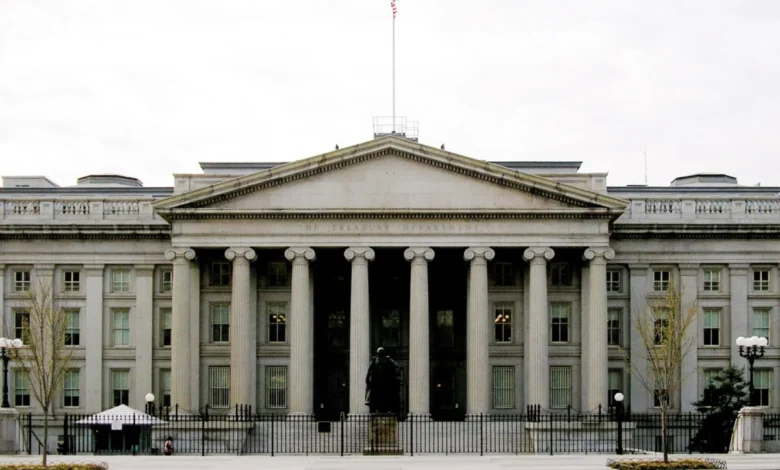
The United States Department of the Treasury has taken decisive regulatory action against the cryptocurrency exchange MEXC Global, severing its access to the American financial infrastructure over allegations of facilitating billions of dollars in unlawful transactions. Announced on November 6, the enforcement directive represents one of the most aggressive interventions by American authorities against a major digital asset trading platform to date, signaling an escalation in federal oversight of cross-border crypto operations.
The move, spearheaded by the Financial Crimes Enforcement Network (FinCEN), specifically targets the banking and payment rails that allow the exchange to interact with the broader traditional financial ecosystem. Rather than issuing a standard monetary fine or requesting voluntary compliance enhancements, FinCEN deployed a specialized regulatory mechanism designed to isolate the platform from U.S. financial institutions entirely.
Core Mechanics of the FinCEN Special Measure
At the heart of the regulatory action is a special measure that strictly prohibits U.S. financial institutions from processing funds transfers involving MEXC Global. By cutting off access to dollar-denominated banking channels, the directive aims to paralyze the institution’s ability to settle transactions through standard financial intermediaries.
According to federal investigators, the exchange facilitated a minimum of $16 billion in transactions tied to illicit activities. These operations allegedly included sanctions evasion, cybercrime, and the laundering of funds linked to state-sponsored actors in Iran, North Korea, and Russia.
Regulatory experts emphasize a critical distinction regarding the $16 billion figure: it does not represent customer fund losses, frozen account balances, or missing assets. Instead, it reflects FinCEN’s aggregate estimation of transaction volume associated with prohibited counterparties and illicit networks over the course of its investigation.
Furthermore, the measure does not outright ban public blockchain transactions or automatically render every digital asset held by a user inaccessible. Because public blockchains and regulated banking systems operate on separate technological layers, the restriction fundamentally targets the financial plumbing—such as correspondent banking, payment processors, and fiat on-off ramps—rather than shutting down underlying peer-to-peer ledger transfers.
Operation Economic Outcast and the Broader Regulatory Chronology
The action against MEXC Global did not occur in a vacuum; it operates as a cornerstone of "Operation Economic Outcast," a coordinated multi-agency Treasury initiative designed to dismantle sophisticated sanctions-evasion networks operating within the digital asset sector. Over the past several years, federal regulators have increasingly scrutinized centralized exchanges that maintain lax know-your-customer (KYC) protocols or inadequate anti-money laundering (AML) frameworks.
The chronology of regulatory pressure on offshore and nominally borderless crypto exchanges has accelerated significantly. Throughout 2023 and 2024, U.S. authorities—including the Department of Justice, the Securities and Exchange Commission, and the Commodity Futures Trading Commission—have pursued high-profile enforcement actions against major global platforms. By targeting the financial arteries rather than just levying domestic fines, FinCEN’s latest order reflects a strategic evolution in how Washington seeks to enforce compliance extraterritorially.
The timeline of the crackdown underscores a deliberate escalation:
- Initial Intelligence Gathering: Federal investigators track suspicious transaction flows originating from sanctioned jurisdictions and cybercriminal syndicates, repeatedly identifying MEXC Global as a primary liquidity venue.
- Inter-Agency Coordination: The Treasury aligns intelligence regarding state-sponsored threat groups, particularly those originating from North Korea and Iran, linking their operational funding to exchange accounts.
- The November 6 Directive: FinCEN formally issues the special measure under the authority of the USA PATRIOT Act, effectively blacklisting the exchange from the U.S. banking system.
Implications for Market Infrastructure and Compliance Teams
The restriction has immediate ramifications for institutional compliance departments and third-party financial service providers. Cryptocurrency exchanges rely on a complex web of payment companies, stablecoin issuers, custodians, and correspondent banks to ensure smooth liquidity and operational continuity.
When a major venue is barred from the U.S. financial system, every institutional partner tied to that venue must instantly re-evaluate its exposure. Compliance officers face heightened risks, as payment streams that indirectly touch prohibited counterparties can trigger severe regulatory liabilities, even if the primary customer base operates with entirely legitimate intentions.
The enforcement action also highlights the fragile nature of fiat-to-crypto gateways. Similar to recent regulatory adjustments surrounding European stablecoin restrictions—where changes to the regulatory perimeter forced users to alter how they accessed specific digital assets—FinCEN’s action forces market participants to reconsider their counterparty risk. While the long-term impact on MEXC Global’s global liquidity remains to be fully measured, the immediate hurdle of replacing traditional banking partners poses a formidable operational challenge.
Guidance for Users and Market Counterparties
In the wake of major enforcement announcements, regulatory authorities and consumer protection advocates routinely issue warnings regarding secondary risks, most notably fraud and phishing campaigns. Users of platforms targeted by federal regulators frequently become targets for bad actors posing as customer support representatives, recovery specialists, or compliance officers offering to "unlock" restricted accounts.
Financial watchdogs advise account holders to rely strictly on verified communications directly from official platform channels and to consult qualified legal counsel rather than reacting to unverified social media claims. For institutional entities, the priority is conducting a thorough legal review of counterparty exposures to ensure compliance with the newly enacted Treasury prohibitions.
As the situation develops, the broader cryptocurrency industry watches closely to see how MEXC Global responds to the allegations and whether other international exchanges face similar systemic measures. For now, the Treasury’s decisive action serves as a stark reminder that the intersection of digital assets and traditional fiat banking remains subject to rigorous, unyielding federal oversight.