When to use a landing page? This isn’t just about aesthetics; it’s about strategy. A landing page isn’t a one-size-fits-all solution. Understanding its purpose, target audience, and content is key to maximizing its impact. Knowing when to deploy a landing page, instead of a generic webpage, is crucial for achieving specific goals within your marketing strategy.
This guide will explore the nuances of when a landing page truly shines, offering a clear roadmap for making the right decisions.
From defining its purpose and analyzing your target audience, to crafting compelling content and optimizing for conversions, we’ll dissect the elements that make a landing page effective. We’ll also explore its integration with other marketing channels and best practices to ensure your landing page isn’t just a pretty face but a powerful tool in your arsenal. Ultimately, this guide will equip you with the knowledge to deploy a landing page at the precise moment it can deliver the most significant impact.
Defining the Purpose of a Landing Page
A landing page is more than just a pretty website design; it’s a strategically crafted page designed to achieve a specific, measurable goal within your marketing campaign. Its purpose is singular and focused, unlike a general website page that attempts to showcase a multitude of products or services. Understanding this singular focus is key to maximizing the impact of your landing page.Landing pages are meticulously designed to convert visitors into customers, leads, or subscribers, depending on your marketing objectives.
They are the primary tools for driving targeted actions and are frequently used in conjunction with other marketing channels like social media ads or email campaigns.
Landing Page Objectives
Landing pages are not just for showcasing products; they are powerful tools for a wide array of marketing objectives. Their effectiveness lies in their focused design, which helps drive conversions.
- Lead Generation: Landing pages excel at capturing valuable leads. They collect contact information (email addresses, names, phone numbers) in exchange for valuable resources like ebooks, webinars, or free trials. This allows businesses to build their email list and nurture potential customers.
- Sales Conversions: For e-commerce businesses or those selling services, a landing page can be a highly effective sales tool. By focusing on a specific product or service, the landing page can streamline the purchase process, reducing friction and increasing conversion rates.
- Sign-ups and Subscriptions: Landing pages are excellent for gathering email addresses, sign-ups for newsletters, or subscriptions to services. This is crucial for building an engaged audience and keeping customers informed about updates and promotions.
Landing Page vs. Other Website Pages
Distinguishing a landing page from other website pages is essential for proper implementation. A key differentiator is its singular focus on a specific conversion goal.
- Product Pages: Product pages are dedicated to showcasing a specific product or service. While they might include calls to action, their primary function is informational. Landing pages, on the other hand, are explicitly designed to drive a specific action, such as purchasing or signing up. They have fewer distractions.
- Blog Posts: Blog posts are informational content pieces designed to educate and engage readers. They typically cover broader topics, whereas landing pages target a very narrow audience with a focused message to achieve a clear goal.
Optimal Use Cases for Landing Pages
The best situations for using landing pages involve a targeted campaign with a specific goal.
- Targeted Advertising Campaigns: When running online advertising campaigns, a dedicated landing page ensures that the traffic from those ads is channeled toward a specific action. This ensures a clear and efficient conversion path.
- Limited-Time Offers: A landing page is the ideal platform for announcing limited-time offers, promotions, or discounts. The focused design helps drive quick action and conversions during the limited window.
- Lead Magnet Promotions: When offering a lead magnet, such as a free ebook or template, a landing page ensures that the lead generation process is optimized for capturing information and nurturing potential customers.
Landing Page Role in Marketing Campaigns
Landing pages play a critical role in the larger marketing ecosystem. They act as a focal point for driving specific actions, maximizing the effectiveness of broader marketing strategies.
- Integration with Other Channels: Landing pages work hand-in-hand with other marketing channels, such as email marketing, social media campaigns, and paid advertising. They provide a central hub for directing traffic from these channels toward a specific goal.
- Conversion Optimization: Landing pages are designed with conversion in mind. Their structure, copy, and design elements are meticulously optimized to guide visitors toward the desired action.
Target Audience and User Experience
Understanding your target audience is paramount to crafting a successful landing page. A well-defined audience allows for tailored messaging and design choices that resonate with their needs and preferences, ultimately increasing conversions. A strong user experience (UX) further enhances engagement and guides users toward desired actions. This section delves into crucial aspects of audience analysis, user persona development, and UX design for optimized landing pages.Effective landing pages are not simply about aesthetics; they’re about creating a seamless and intuitive experience for the visitor.
This means anticipating their needs and desires related to the offer, which requires deep understanding of the target audience. A user-centric approach, where the user’s journey is meticulously planned, is essential for a successful landing page.
Analyzing Target Audience Needs and Preferences
To effectively design a landing page, it’s vital to understand the specific needs and preferences of your target audience. This involves more than just demographics. Consider psychographics, motivations, and pain points. What problems are they trying to solve? What are their aspirations?
Understanding these nuances allows for messaging that directly addresses their needs, fostering a connection and trust.
Creating a User Persona
A user persona is a fictional representation of your ideal customer. It goes beyond simple demographics and delves into the motivations, goals, and pain points of the target user. This persona serves as a guiding light throughout the design and content creation process.Example: Imagine a landing page promoting a new software for small business accounting. A user persona might be named “Sarah,” a solopreneur with limited accounting experience, needing a simple yet effective solution to manage her finances.
This persona would highlight her struggles, needs, and aspirations, informing every aspect of the landing page design and copy.
Crucial Elements of a User-Friendly Design
Several elements contribute to a user-friendly design, driving conversions. A clean layout, clear hierarchy, and intuitive navigation are crucial. Visual appeal, incorporating high-quality images and graphics, also plays a significant role. Consistent branding and a seamless transition between different sections further enhance the user experience. The use of white space to avoid visual clutter is also vital, as is employing appropriate typography and color palettes to reinforce brand identity and enhance readability.
Clear Calls to Action (CTAs)
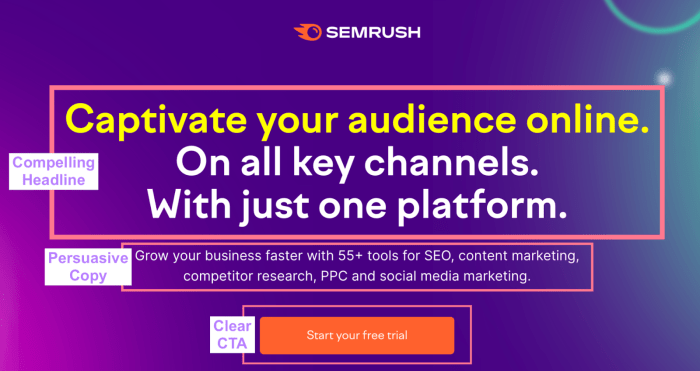
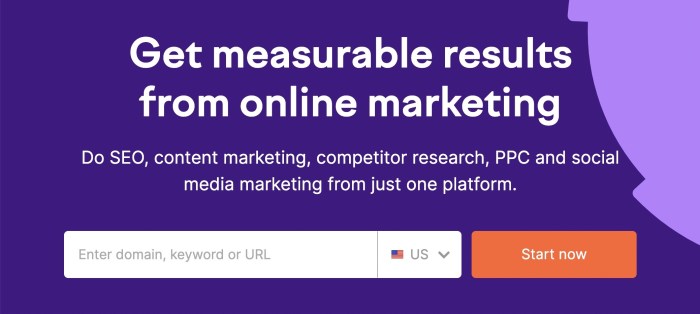
Clear calls to action (CTAs) are essential for guiding users towards the desired action. They should be prominent, concise, and compelling. Strong CTAs employ action verbs that are easily understood and encourage immediate response. Different types of CTAs, like “Sign Up Now,” “Learn More,” and “Download Now,” can be used depending on the specific goal of the landing page.
Landing pages are crucial when you need a dedicated space to convert visitors into customers. For example, if you’re running a special promotion, a landing page can focus on the offer and boost conversions. Knowing why SEO is important for business is also key here; a well-optimized landing page will help you rank higher in search results, bringing more potential customers to your page.
Ultimately, you should use a landing page whenever a specific, targeted offer needs a dedicated space for conversions. why seo is important for business
A well-placed and clear CTA significantly impacts user behavior and increases conversions.
Examples of Landing Page Layouts
Different landing page layouts can cater to diverse user needs and preferences. A simple layout, focusing on a single, compelling offer, is often effective for immediate action. A more detailed layout, offering multiple product options or services, can be suitable for more complex sales funnels. A multi-step layout, progressively revealing information, can be beneficial for high-value offers.
The layout should be aligned with the specific offer and target audience, optimizing the user experience and encouraging conversions.
Landing pages are crucial when you need a focused, single-minded conversion tool. For instance, if you’re running a specific promotion or product launch, a landing page can be super effective. However, if you’re seeing a slowdown in your SEO efforts, you might want to explore how to handle the SEO slog phenomenon – it’s a real issue, and this guide can offer some excellent insights.
Ultimately, knowing when to use a landing page is about understanding your marketing goals and how best to achieve them.
Content Strategy and Messaging
Crafting a compelling landing page isn’t just about aesthetics; it’s about crafting a persuasive narrative that guides visitors towards a desired action. Effective content strategy is the key to unlocking conversions. This involves understanding your target audience’s needs and pain points, and then translating those insights into a message that resonates with them. This section will delve into the critical elements of crafting content that not only attracts but also converts.A strong landing page content strategy focuses on clarity and value.
Your content needs to clearly communicate the benefits of your offer, showcasing how it solves a problem or fulfills a need for your target audience. This clarity is crucial for driving conversions.
Crafting Compelling Headlines
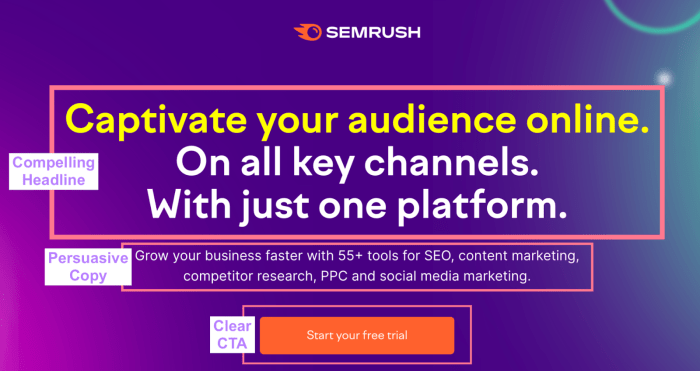
Headlines are the first impression a visitor gets. They need to be attention-grabbing and accurately reflect the value proposition of the page. A captivating headline immediately conveys the benefit of taking action, enticing visitors to delve deeper. Avoid generic or overly technical language. Instead, focus on the user’s perspective and their desires.
- Benefit-driven headlines: Instead of “New Software,” try “Boost Productivity with Our New Software.” This highlights the direct benefit to the user.
- Problem-solution headlines: If your product addresses a specific pain point, emphasize that. For example, “Stop Website Crashes with Our Reliable Hosting.”
- Intriguing questions: A question can pique curiosity, prompting users to continue reading. For example, “Tired of Slow Website Load Times?”
Value Proposition and USP
The value proposition clearly articulates the benefits a product or service offers to the customer. This should be presented in a way that highlights how it improves their lives, saves them time or money, or addresses a specific need.
- Highlighting the problem: Start by acknowledging the challenge your target audience faces. This immediately connects with their needs and establishes credibility.
- Introducing the solution: Clearly articulate how your offer solves the problem and delivers the promised value. Use specific and measurable language to show the benefits.
- Clear communication of USP: Your Unique Selling Proposition (USP) sets you apart from competitors. Highlight what makes your offer unique and superior. This could be a specific feature, a unique process, or a specialized approach.
Content Structure for Conversion
The structure of your content plays a vital role in guiding users towards the desired action. The content needs to flow logically, highlighting key information early and leading the reader toward the call to action.
- Introduction (Headline & Subheadline): Immediately grab attention with a compelling headline and subheadline that reflects the value proposition and addresses the reader’s pain point.
- Body copy: Use concise and persuasive language to explain how your offer solves the problem. Use short paragraphs, bullet points, and visuals to maintain engagement.
- Call to action (CTA): The call to action should be clear, prominent, and easy to understand. Use action verbs and specific language.
Compelling Examples
Effective headlines and body copy can significantly influence conversion rates. These examples showcase how to use language that resonates with the target audience.
- Headline example 1: “Stop Website Crashes with Our Reliable Hosting” – This headline clearly states the problem and the solution, appealing to a specific need.
- Body copy example 1: “Tired of slow website load times? Our reliable hosting ensures your website is always online, providing a seamless user experience.” – This body copy further explains the value and addresses the customer’s concern.
- Call to action example 1: “Get started with our hosting today! Click here.” – This is a direct and clear call to action.
Technical Aspects and Optimization
Landing pages, while conceptually simple, require a solid technical foundation to function effectively. Proper hosting, a user-friendly domain, and rapid loading times are critical for converting visitors into customers. optimization, meticulous tracking, and effective A/B testing are further crucial steps for success. This section delves into the technical requirements and optimization strategies to ensure a high-performing landing page.Landing page performance hinges on technical soundness.
A poorly constructed landing page can negatively impact user experience and frustrate potential customers, hindering the achievement of business goals. Robust technical implementation is crucial to establish a solid foundation for optimizing conversion rates and improving overall performance.
Technical Requirements
A functional landing page requires a reliable hosting platform and a user-friendly domain name. The hosting provider should guarantee uptime and fast loading speeds. The domain name should be easy to remember and relevant to the brand, facilitating easy access and establishing brand recognition.
Fast Loading Time
User experience is paramount. A slow-loading page frustrates users and increases bounce rates. Optimize images, leverage browser caching, and minimize HTTP requests to ensure rapid page loading. A study by Google revealed that a one-second delay in page load time can result in a 7% reduction in conversions. Therefore, ensuring fast loading speeds is a crucial element of landing page optimization.
Search Engine Optimization ()
Search engine optimization () is essential for driving organic traffic to your landing page. Optimize page titles, meta descriptions, and image alt text with relevant s. Ensure your page is easily crawlable and indexable by search engines. Implement a comprehensive strategy that targets specific s related to your product or service.
Tracking Mechanisms
Implementing tracking mechanisms is crucial for understanding user engagement. Utilize tools like Google Analytics to monitor key metrics, such as bounce rate, time on page, and conversion rates. Tracking user interactions allows for data-driven decisions and ongoing optimization. Tracking user behavior through tools like heatmaps and scroll maps can pinpoint areas of interest and improvement on the landing page.
This data allows for targeted adjustments to improve user experience.
A/B Testing
A/B testing is a vital tool for improving conversion rates. Experiment with different headlines, calls to action (CTAs), and image variations to determine which elements resonate most with your target audience. Track the performance of different versions of the landing page to identify optimal designs. By rigorously testing different elements of the landing page, businesses can iterate on their approach and ensure the most effective strategy.
Integration with Other Marketing Channels
Landing pages are not islands. They are powerful components of a larger marketing ecosystem. Integrating them effectively with your existing channels amplifies their impact and improves overall campaign performance. By strategically connecting your landing pages to social media, email marketing, and other touchpoints, you create a seamless user experience and drive higher conversion rates.Effective integration goes beyond simply linking pages.
It involves a deep understanding of your target audience’s journey, the messaging that resonates with them at each stage, and the tools to track the effectiveness of each interaction. This holistic approach allows you to measure the impact of your entire marketing funnel, identifying bottlenecks and optimizing for maximum results.
Connecting Landing Pages to Social Media
Social media is a crucial source of traffic for landing pages. A well-designed landing page, optimized for specific social media campaigns, can significantly improve conversion rates. This involves crafting compelling calls-to-action within your social media posts that clearly direct users to the landing page. The page itself should be tailored to the audience segment you’re targeting via that social media platform, ensuring that the messaging and design are consistent with the social media presence.
Visual elements, like images and videos, should be optimized for the platform to maximize engagement and conversions.
Leveraging Email Marketing for Landing Page Traffic
Email marketing is a powerful tool for driving traffic to landing pages. Segmenting your email list allows you to send targeted messages to specific audience groups. The emails should clearly communicate the value proposition of the landing page content. Use compelling subject lines and concise descriptions that entice recipients to click through. Include a clear call-to-action within the email, linking directly to the landing page.
Post-click, segmenting the landing page experience based on email content can further optimize conversions.
Landing Pages as Part of the Marketing Funnel
Landing pages play a vital role in guiding users through the marketing funnel. Early-stage users, exposed to awareness campaigns, might land on a landing page offering introductory content. Mid-funnel users, engaged in consideration, may visit a landing page for detailed product information. Late-stage users, ready to convert, can visit a landing page to complete a purchase or request a demo.
This stage-specific approach ensures the right message is presented at the right time, increasing the likelihood of conversion.
Tracking Landing Page Performance
Tracking the performance of your landing pages in relation to other marketing channels is crucial. Use UTM parameters to track the source of traffic, allowing you to understand which channels are driving the most valuable leads. Analytics tools can be used to measure click-through rates, conversion rates, and other key metrics. By analyzing this data, you can identify which channels are most effective at driving traffic to your landing page and optimize your strategies accordingly.

For example, a high bounce rate from a specific social media campaign might indicate that the landing page messaging or design needs adjustment for that audience.
Driving Traffic from Various Sources
Driving traffic to your landing page from various sources involves a multifaceted approach. Paid advertising, such as social media ads and search engine ads, can generate targeted traffic. Content marketing, such as blog posts and articles, can attract organic traffic by linking to the landing page. Collaborations with influencers can increase brand awareness and drive traffic to the landing page.
The key is to tailor your approach to the specific channel and the audience you’re targeting.
Landing pages are fantastic for specific campaigns, like promoting a new cybersecurity product. But how long does it take to actually train someone to sell those products effectively? Consider the time investment needed for thorough cybersecurity sales training, as detailed in this article on how long does it take to train a cybersecurity salesperson. Ultimately, a well-designed landing page is crucial for converting those qualified leads into paying customers.
Measuring Landing Page Success
Measuring the success of a landing page against business goals requires a clear understanding of those goals. Are you looking to generate leads, drive sales, or increase brand awareness? Track key metrics aligned with your goals. For example, if your goal is lead generation, monitor the number of form submissions. If it’s sales, measure conversion rates and revenue generated.
Analyze the data and make adjustments to improve performance. Regular monitoring and adaptation are crucial for consistent success.
Specific Use Cases and Examples
Landing pages are more than just pretty websites; they’re powerful tools for driving conversions. Understanding their specific use cases allows businesses to maximize their impact. Knowing when and how to leverage a landing page is crucial for achieving marketing goals, from generating leads to launching new products.Different landing pages serve distinct purposes, tailoring the experience to specific user needs.
This tailored approach is key to maximizing conversions and engagement. Understanding the various types and their applications helps you choose the right strategy for your goals.
Landing Page Types and Their Use Cases
Different landing page types are suited for specific goals. Understanding these distinctions is essential for creating effective campaigns. The appropriate type depends on whether you want to capture leads, drive sales, or announce a product launch.
| Type | Use Case | Target Audience | Key Message |
|---|---|---|---|
| Lead Magnet Landing Page | Generating leads and building an email list. | Potential customers interested in a specific topic or product. | Offer a valuable resource (e.g., ebook, checklist, template) in exchange for contact information. |
| Product Launch Landing Page | Announcing and selling a new product or service. | Customers interested in the product category or those who have shown interest in similar offerings. | Highlight the product’s key features, benefits, and unique selling propositions. |
| Webinar Registration Landing Page | Promoting and registering for webinars. | Individuals interested in the topic of the webinar. | Provide a concise description of the webinar’s content and benefits. |
| Event Registration Landing Page | Promoting and registering for an event. | Individuals interested in the event’s topic or activities. | Highlight the event’s key features, speakers, and benefits. |
Landing Pages in Different Industries
The effectiveness of landing pages is not limited to a specific industry. Their versatility extends across various sectors, from SaaS to e-commerce. Understanding how landing pages fit within specific industries is crucial for tailoring strategies.
- SaaS: Landing pages are essential for generating leads and showcasing the value proposition of software solutions. They can feature demos, trials, or pricing calculators to encourage engagement and conversions. For example, a SaaS company selling project management software might use a landing page to highlight the software’s features, offer a free trial, and capture user contact information.
- E-commerce: Landing pages can be used to promote specific products, highlight sales, and offer discounts. They can also drive traffic to product pages on the main website. For instance, an online clothing retailer might use a landing page to promote a Black Friday sale, featuring a limited-time offer and clear calls to action.
- Real Estate: Landing pages can showcase properties, highlight key features, and generate leads for real estate agents or companies. They can often include virtual tours or property details. For example, a real estate agency might use a landing page to highlight a specific property, include virtual tour options, and offer contact information.
Landing Page Best Practices
Effective landing pages follow a set of best practices. This consistency ensures that the page is optimized for conversions. Understanding these practices is vital to achieving marketing objectives.
| Product/Service | Target Audience | Value Proposition | CTA |
|---|---|---|---|
| Premium Subscription Service | Individuals seeking high-quality content or tools | Access to exclusive content, premium features, and expert support. | Sign up now, start your free trial, learn more. |
| Online Course | Individuals looking to learn a new skill or advance their knowledge | Comprehensive learning resources, expert instruction, and practical application. | Enroll now, register for free, get started today. |
| Consulting Services | Businesses seeking expert advice and support | Tailored solutions, proven strategies, and measurable results. | Schedule a consultation, request a proposal, learn more. |
Landing Page Best Practices
Landing pages are crucial for converting website visitors into customers. Optimizing them for maximum impact requires a multi-faceted approach, blending compelling design with strategic content. Effective landing pages are not just visually appealing; they need to be meticulously crafted to guide users toward the desired action.A well-structured landing page should clearly communicate the value proposition, address the target audience’s needs, and provide a seamless user experience.
Focusing on user-centered design principles is key to achieving high conversion rates. Understanding best practices, avoiding common pitfalls, and continuously optimizing are vital for success.
Actionable Best Practices for High-Converting Landing Pages
Landing page effectiveness hinges on a collection of well-executed strategies. These actionable best practices form the bedrock of successful conversion campaigns. Clear calls to action (CTAs), concise messaging, and a streamlined user journey are critical for driving engagement.
- Clear Value Proposition: Clearly articulate the benefits of the product or service. Avoid jargon and focus on the customer’s perspective. State explicitly what the user gains from interacting with the page.
- Concise and Compelling Copy: Use concise language that resonates with the target audience. Emphasize the unique selling proposition and avoid lengthy, complex descriptions. Focus on addressing the pain points of the customer.
- Strong Call to Action (CTA): Create visually prominent and compelling CTAs that stand out from the rest of the page. Use action-oriented verbs and clearly communicate the desired next step. Make sure the CTA button is easily identifiable.
- Mobile Responsiveness: Ensure the landing page is optimized for all devices, including mobile phones and tablets. A responsive design is essential to provide an optimal user experience across various screen sizes.
- Compelling Visual Design: Employ high-quality images and graphics that enhance the user experience and highlight the value proposition. A visually appealing page can increase engagement and attract attention.
Examples of Landing Page Design Elements and Their Impact on Conversion Rates
Different design elements can significantly impact conversion rates. Understanding how these elements affect user engagement is critical for optimization.
- High-Quality Images/Videos: Visual elements significantly influence user engagement. High-quality images and videos can create a strong emotional connection and increase trust. This can lead to increased engagement and higher conversion rates.
- Whitespace and Typography: Proper use of whitespace and legible typography improves readability and user experience. Visually appealing typography and appropriate whitespace make the page easy to scan and comprehend.
- Limited Form Fields: Short and simple forms are key to improving conversion rates. Too many fields can deter users from completing the process. A concise form increases the likelihood of a conversion.
Common Mistakes to Avoid in Landing Page Design, When to use a landing page
Avoiding common pitfalls is crucial for maximizing landing page effectiveness. Understanding these errors can help in creating a high-converting page.
- Cluttered Design: A cluttered page can overwhelm the user and make it difficult to find the essential information. Clutter can decrease engagement and lead to higher bounce rates.
- Poorly Written Copy: Poorly written copy can lead to a lack of clarity and confusion for the user. Unclear messaging can decrease engagement and lead to lower conversion rates.
- Lack of Mobile Optimization: A non-responsive design can negatively impact the user experience on mobile devices. Users might leave the page if it’s not optimized for different screen sizes, resulting in a loss of potential conversions.
Importance of Mobile Responsiveness
Mobile responsiveness is critical for landing page success. A mobile-friendly design is essential for reaching a broader audience and providing an optimal user experience across various devices.
- Increased Accessibility: A mobile-responsive landing page makes the content accessible to users regardless of their device. This increases the potential audience for the landing page.
- Improved User Experience: Users expect a seamless experience across all devices. A responsive design ensures a positive experience for mobile users.
- Benefits: Google prioritizes mobile-friendly websites in its search results. Mobile optimization can improve rankings.
Design Elements and Impact on User Engagement
Understanding how different design elements affect user engagement is crucial for optimization.
| Element | Description | Impact | Example |
|---|---|---|---|
| High-Quality Images | Visually appealing and relevant images | Increased engagement, trust, and memorability | A professional product image on an e-commerce landing page |
| Clear Call to Action (CTA) | Visually prominent and action-oriented button | Improved click-through rate and conversions | A button with text like “Learn More” or “Get Started Now” |
| Whitespace | Strategic use of empty space | Improved readability and visual appeal | Adequate spacing between elements |
| Concise Copy | Short, clear, and impactful language | Enhanced understanding and reduced bounce rates | Clear and concise product description |
Closing Summary: When To Use A Landing Page
In conclusion, using a landing page strategically is vital for achieving specific business goals. By focusing on your target audience, crafting compelling content, and optimizing for conversions, you can maximize the impact of your landing page. Knowing
-when* to use a landing page is a critical aspect of your overall marketing strategy. Understanding its potential and implementing best practices will be your key to success.
This guide should serve as a solid foundation for your future landing page deployments.