Why is my website slow? This question plagues many website owners. From frustratingly slow loading times to lost customers, a sluggish site can significantly impact your online presence. This guide dives deep into the common culprits behind slow website performance, offering practical solutions to get your site zipping again. We’ll explore everything from hosting choices to code optimization and content delivery strategies, providing actionable insights to pinpoint the problem and boost your website’s speed.
We’ll examine various hosting options (shared, VPS, dedicated), delving into how they affect loading times. We’ll also discuss crucial aspects like server location, response time, and database optimization, all key components in creating a fast and responsive website. Further, we’ll analyze code efficiency, the importance of CDNs, image optimization, and even the potential pitfalls of plugins. This comprehensive approach ensures a thorough understanding of the factors contributing to your website’s speed and how to address them effectively.
Your website’s speed is heavily influenced by the hosting platform you choose. Different hosting options offer varying levels of resources and control, directly impacting how quickly your site loads for visitors. Understanding these differences is crucial for optimizing your site’s performance and ensuring a positive user experience.Choosing the right hosting solution involves balancing cost, performance, and control. A poorly performing host can lead to frustrated visitors and a negative impact on your rankings.
Conversely, a well-chosen host can significantly improve your site’s speed, leading to better user engagement and conversions.
Hosting Options and Their Impact on Speed
Various hosting options cater to different needs and budgets. The choice directly affects website performance. Shared hosting is a cost-effective option, but it comes with limitations on resources. VPS hosting provides more control and resources compared to shared hosting, allowing for better performance. Dedicated servers offer the highest level of customization and control, but they come with a higher price tag.
Shared Hosting: This is the most affordable option, where multiple websites share the same server resources. While budget-friendly, it can lead to slower loading times if the server is overloaded with other websites. Shared hosting is suitable for smaller websites with modest traffic. Sites with fluctuating or high traffic volume may experience performance issues.
VPS Hosting: Virtual Private Servers (VPS) offer more dedicated resources than shared hosting, providing a better balance of cost and performance. Websites hosted on VPS have dedicated resources, reducing the risk of slowdowns caused by other websites on the same server. VPS hosting is suitable for websites experiencing moderate traffic and needing more control over resources than shared hosting.
Dedicated Servers: Dedicated servers provide the highest level of control and resources. They are best suited for high-traffic websites or those with specific performance requirements. Dedicated servers offer complete control over the server’s configuration and resources, allowing for optimal performance and customization. They are typically more expensive than shared or VPS hosting, but they provide the most resources and flexibility.
Loading Time Differences
Website loading times vary significantly depending on the hosting type. Shared hosting often experiences slower loading times due to resource limitations. VPS hosting generally provides faster loading times than shared hosting. Dedicated servers, with their dedicated resources, tend to provide the fastest loading times, but the cost is higher. This directly translates to user experience, with faster loading times leading to higher user satisfaction and lower bounce rates.
Server Location and Website Speed
The physical location of your server significantly impacts website loading times. Data centers closer to your target audience will experience lower latency, resulting in faster loading times. A server in Europe will load faster for users in Europe than a server in the United States.
Server Response Time and Website Performance, Why is my website slow
Server response time directly affects website speed. A server that responds quickly to requests results in faster loading times. Slow server response times can lead to poor user experience, increased bounce rates, and negatively impact .
Hosting Provider Comparison
Provider
Feature
Price
Load Time (avg.)
Provider A
Reliable uptime, excellent customer support, various server locations
$10/month
300ms
Provider B
High-performance servers, optimized for speed, robust security
$25/month
150ms
Provider C
Flexible server configurations, dedicated support, exceptional scalability
$50/month
100ms
Website Code Optimization
Your website’s code is the engine that drives its performance. Inefficient code can significantly impact loading speed, frustrating visitors and potentially affecting search engine rankings. Optimizing your website’s code is crucial for creating a smooth and enjoyable user experience.Inefficient code often manifests as bloated HTML, overly complex CSS styles, and poorly written JavaScript. These factors lead to larger file sizes, resulting in longer loading times.
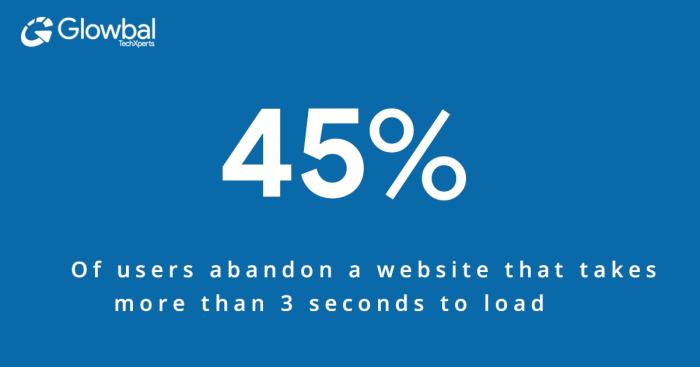
This translates into a poor user experience, as visitors will likely abandon a site that takes too long to load. By addressing these issues through optimization, you can significantly improve your website’s performance.
HTML Optimization Techniques
Well-structured HTML is fundamental for a fast website. Proper use of semantic tags, like `
My website’s been feeling sluggish lately, and I’m racking my brain trying to figure out why. Could it be something as simple as outdated plugins? Or maybe a surge in traffic? Interestingly, I’ve been wondering if the decline in engagement with influencer marketing is somehow related to slower site speeds. Is influencer marketing dead?
This article might shed some light on that. Regardless, I’m going to dive into optimizing my site’s performance and see if that solves the problem. Hopefully, a faster site will improve my overall online presence.
This website uses cookies so that we can provide you with the best user experience possible. Cookie information is stored in your browser and performs functions such as recognising you when you return to our website and helping our team to understand which sections of the website you find most interesting and useful.
Strictly Necessary Cookies
Strictly Necessary Cookie should be enabled at all times so that we can save your preferences for cookie settings.
If you disable this cookie, we will not be able to save your preferences. This means that every time you visit this website you will need to enable or disable cookies again.