
Why you should implement Google conversion value rules is a critical question for any business looking to maximize its return on investment (ROI). These rules allow you to precisely track and value different actions on your website, from simple form submissions to complex purchases. Understanding the value of each conversion allows for smarter marketing decisions, leading to more effective campaigns and a better overall understanding of your customer journey.
By defining specific values for various conversions, you can fine-tune your Google Ads strategy for optimal performance.
This guide delves into the specifics of Google conversion value rules, explaining how they work, their benefits, and how to implement and optimize them. We’ll cover everything from understanding the different types of conversions and their values, to setting up and configuring rules in Google Ads, and ultimately optimizing for maximum ROI. We’ll also address common pitfalls and advanced applications, ensuring you’re equipped to use these rules effectively.
Understanding Google Conversion Value Rules
Google Conversion Value Rules are crucial for accurately measuring the profitability of your marketing campaigns. They define how Google Analytics assigns monetary values to specific user actions on your website, allowing you to understand which channels and strategies are driving the most valuable results. This understanding is vital for optimizing your marketing spend and improving overall return on investment (ROI).Understanding these rules allows you to tailor your campaigns for maximum impact, knowing exactly which actions are most profitable and deserving of focused effort.
It also allows you to identify and eliminate campaigns that aren’t delivering a worthwhile return. A solid grasp of conversion value rules is essential for making informed decisions and achieving your business goals.
Google Conversion Tracking
Google Analytics tracks various user actions on your website, classifying them as conversions. These conversions can be anything from completing a purchase to filling out a contact form or signing up for a newsletter. The system assigns a value to each conversion based on the rules you set up. Accurate tracking is paramount, as it directly impacts your understanding of campaign effectiveness and ROI.
Correctly setting up conversion tracking is vital for gaining accurate insights into your marketing performance. It allows for precise measurement of the impact of different marketing channels and strategies.
Conversion Types and Values
Different types of conversions have different implications and require tailored value rules. A purchase, for example, is typically assigned a higher value than a simple lead form submission. The value you assign to each conversion type directly impacts your overall marketing analysis.
- E-commerce Purchases: These are typically the highest-value conversions. Values are usually based on the total transaction amount, potentially with adjustments for discounts or taxes. For example, a $100 purchase would have a value of $100, unless there’s a discount applied.
- Lead Generation Forms: The value assigned to lead forms often reflects the potential revenue or customer lifetime value (CLTV) associated with a lead. A lead form submission might be assigned a value of $50, reflecting an estimated potential future revenue.
- Downloads and Sign-ups: Downloads and sign-ups can be assigned values based on their potential to generate future revenue. For example, a free ebook download could be worth $10, if a significant percentage of those who download it later become paying customers.
- Contact Form Submissions: Contact form submissions are often assigned a lower value than other conversions, as they represent a preliminary step in the sales process. The value might be set to $10, reflecting the estimated cost of a sales call or follow-up.
Conversion Value Rules Table
The table below illustrates the diverse range of conversion types and their corresponding value assignment rules.
| Conversion Type | Description | Typical Value Assignment |
|---|---|---|
| E-commerce Purchase | A completed online purchase | Transaction value (minus discounts and taxes) |
| Lead Form Submission | Completion of a lead generation form | Estimated potential revenue or CLTV |
| Download | Download of a valuable resource (e.g., ebook, template) | Potential future revenue from subsequent conversions |
| Contact Form Submission | Contact form submission | Lower value, reflecting a preliminary step |
| Trial Sign-up | User signs up for a trial period | Value based on the potential revenue from a paying subscription |
Benefits of Implementing Conversion Value Rules
Conversion value rules in Google Ads aren’t just a technicality; they’re a cornerstone of effective marketing. Properly configured rules translate raw conversion data into actionable insights, allowing marketers to optimize campaigns and maximize return on investment (ROI). By assigning varying values to different conversions, businesses can gain a more accurate picture of the true value each action brings to the bottom line.
This, in turn, allows for smarter budgeting and resource allocation.Accurate conversion values drive more informed decisions, leading to campaigns that resonate with the target audience and yield tangible results. The right rules translate clicks into real business value, paving the way for higher ROI and greater profitability.
Implementing Google conversion value rules is crucial for understanding the true ROI of your social media campaigns. A recent report, the state of social media marketing report , highlights the increasing importance of quantifiable results. By setting clear conversion values, you’ll gain a far more accurate picture of your social media performance and how to best allocate your budget for optimal returns.
Improved Campaign Performance
Conversion value rules directly impact campaign performance by providing a more nuanced understanding of conversion value. This refined view allows for better bidding strategies, enabling advertisers to allocate resources more effectively. By accurately measuring the value of different conversions, businesses can adjust their bids to focus on high-value actions. This targeted approach often results in a higher return on ad spend (ROAS) and improved campaign profitability.
For example, a lead generated through a specific ad campaign might be worth five times more than a basic product view. This difference in value should be reflected in the bidding strategy to maximize the return from high-value leads.
Enhanced Reporting Accuracy
Conversion value rules are crucial for reporting accuracy. Without them, reports might show a high volume of conversions, but fail to represent the true impact of those conversions on revenue. For example, a website visit might generate a lead but not directly translate into a sale. This situation could lead to misleading campaign performance reports. However, by assigning a lower conversion value to a lead compared to a purchase, reporting becomes more reliable.
This accuracy is fundamental for informed decision-making.
More Effective Marketing Decisions
Accurate conversion value data allows marketers to make more effective decisions. Understanding the true worth of different conversions enables strategic choices related to ad targeting, bidding, and overall campaign management. Imagine a scenario where a specific landing page generates higher-value conversions. With accurate conversion value rules, marketers can allocate more budget to campaigns driving those high-value conversions.
This targeted allocation leads to better overall marketing outcomes.
Examples of Improved ROI Due to Precise Conversion Tracking
A retail company using conversion value rules saw a 20% increase in ROI. They discovered that conversions from mobile devices were significantly higher in value than conversions from desktop. This led to a shift in budget allocation towards mobile campaigns, which ultimately boosted their return on investment. Similarly, an e-commerce business found that conversions from specific product pages were worth double the value of conversions from others.
By focusing their advertising efforts on those higher-value products, they significantly improved their overall revenue.
ROI Benefits of Implementing Accurate Conversion Rules
| Metric | Before Accurate Rules | After Accurate Rules | ROI Improvement |
|---|---|---|---|
| Conversion Value | $50 | $75 | 50% |
| Ad Spend | $1000 | $800 | 20% Reduction |
| Return on Ad Spend (ROAS) | 0.05 | 0.09 | 80% Increase |
| Overall Revenue | $50,000 | $75,000 | 50% Increase |
Implementing accurate conversion value rules has a demonstrable impact on ROI. The table above highlights the significant potential for improvement across various key metrics.
Setting Up and Configuring Conversion Value Rules
Conversion value rules in Google Ads allow you to assign different monetary values to various conversion actions, providing a more accurate reflection of your advertising ROI. This granular approach allows for a deeper understanding of which campaigns and s are most profitable. By setting up these rules, you can optimize your ad spend and maximize your return on investment.Understanding the different configurations available for various conversion types is crucial for accurate reporting and campaign optimization.
This allows you to tailor your conversion values to better reflect the true business value of each conversion. Properly configuring these rules ensures you’re not overspending on campaigns that aren’t performing well and can increase your overall profitability.
Steps to Set Up Conversion Value Rules in Google Ads
The process involves several key steps, each playing a vital role in ensuring accurate and actionable insights. Setting up conversion value rules is straightforward, requiring a methodical approach to define values based on specific conversion types and campaign goals.
- Identify Your Conversion Actions: Begin by defining the specific actions you want to track as conversions. This could include completing a purchase, filling out a contact form, or adding an item to a shopping cart. These actions represent the crucial touchpoints in your sales funnel that you want to measure and analyze.
- Determine Conversion Values: Assign a monetary value to each conversion type. This value should reflect the average revenue generated from that conversion. For instance, a completed purchase might have a higher value than a form submission. Consider factors like product pricing, average order value, and the customer lifetime value associated with different conversions. For example, if a new customer submits a contact form, you might assign a lower value than a returning customer making a purchase.
Accurate values lead to precise insights.
- Create Conversion Value Rules: Within the Google Ads interface, navigate to the conversion settings and create rules to assign the values you defined. These rules should be structured to reflect specific criteria. For example, you might want to assign a higher value to conversions coming from specific campaigns or s.
- Map Conversions to Campaigns: Link the conversion value rules to specific campaigns. This crucial step ensures that conversions generated through particular campaigns are accurately attributed to those campaigns. This is essential for measuring the performance of individual campaigns.
- Review and Refine: Regularly review the performance of your conversion value rules and make adjustments as needed. This iterative process allows you to fine-tune your rules based on actual performance data and emerging trends. Analyze the results of your rules and adjust values or conditions to better align with your business objectives.
Configurations for Different Conversion Types, Why you should implement google conversion value rules
Different conversion types often require unique configurations. The approach to defining conversion values must be tailored to the specific type of conversion.
Implementing Google Conversion Value rules is crucial for any campaign, especially when you’re running multi-market campaigns like those involving localization google ads multi market campaigns. By accurately assigning values to conversions, you gain a clear picture of the ROI for each customer acquisition in each region. This detailed understanding helps you optimize your spending and ensure you’re getting the most bang for your buck, particularly important when targeting diverse audiences across various markets.
This crucial data allows you to fine-tune your ad strategies and allocate resources effectively for maximum returns. localization google ads multi market campaigns are a great example of where these rules become invaluable. It’s essential for accurately measuring success in these diverse environments. Without them, you risk missing valuable insights and underperforming in your targeted markets.
- E-commerce Conversions: For e-commerce businesses, conversion value rules should be based on factors like the total order value, product prices, and shipping costs. You may also consider different values for different product categories.
- Lead Generation Conversions: Lead generation conversions, such as form submissions, might be assigned values based on the estimated lifetime value of the lead or the potential revenue from the lead. For example, a lead who expresses interest in a high-value product might be assigned a higher value than a lead who is less likely to convert.
- App Downloads: App downloads can be assigned values based on factors like in-app purchases, feature usage, or customer retention. The value assigned should reflect the long-term potential revenue from the user.
Defining Conversion Values
Precisely defining conversion values for each type is crucial for accurate performance measurement. The value should accurately represent the actual revenue generated or the potential revenue generated from the conversion.
- Average Order Value: Consider the average order value for your products to determine a baseline conversion value. This will vary depending on your business.
- Customer Lifetime Value: Estimate the potential revenue a customer might generate throughout their relationship with your business. This helps assign higher values to conversions that lead to high-value customers.
- Product-Specific Values: If applicable, assign different values to conversions based on specific product types or categories.
Mapping Conversions to Campaigns
This is essential for accurately measuring campaign performance. Proper mapping ensures you understand which campaigns are driving the most valuable conversions.
- Attribution Models: Utilize different attribution models to accurately track the contribution of different campaigns to a conversion.
- Campaign-Specific Values: Consider assigning specific values to conversions based on the campaign driving the conversion. This provides valuable insight into which campaigns are most effective.
Examples of Conversion Value Rule Setups
Here are some examples to illustrate the application of conversion value rules for different businesses:
- Example 1 (E-commerce): For an online clothing store, a conversion value rule could be set to assign a value of $50 to a completed purchase with a total order value above $100. For orders below $100, a lower value can be assigned.
- Example 2 (Lead Generation): A SaaS company might assign a value of $100 to a lead who downloads a trial version of their software, reflecting the potential revenue from a paid subscription. A lead requesting a demo could have a lower value.
Step-by-Step Guide to Configuring Conversion Rules
This table provides a step-by-step guide to configuring conversion value rules in Google Ads.
| Step | Action |
|---|---|
| 1 | Identify conversions and assign values. |
| 2 | Create rules in Google Ads conversion settings. |
| 3 | Link conversions to specific campaigns. |
| 4 | Review and refine rules based on performance. |
Optimizing Conversion Value Rules
Conversion value rules are crucial for accurate ROI measurement in Google Ads. Effective optimization ensures that your ad spend aligns with the actual value generated by conversions. This involves refining rules to maximize return on investment (ROI) and identifying areas for improvement. By understanding the nuances of conversion value optimization, you can leverage Google Ads to its fullest potential.Optimizing conversion value rules is a dynamic process.
It requires constant monitoring, adjustment, and analysis to adapt to evolving performance patterns. Effective optimization leads to a more precise understanding of your campaigns’ profitability, allowing for better allocation of resources and ultimately higher returns.
Strategies for Maximizing ROI
Conversion value rules are not a one-size-fits-all solution. Strategies for maximizing ROI involve a multifaceted approach tailored to individual campaign objectives. Understanding the different conversion types and their relative values is essential for optimal rule implementation. A well-defined conversion value rule can significantly improve the efficiency of your advertising spend.
- Establish Clear Conversion Goals: Clearly defining the desired outcomes for each campaign is paramount. This allows for accurate conversion value assignments and facilitates a more targeted approach to optimization. Examples include lead generation, product purchases, or sign-ups.
- Segment Conversions by Value: Categorizing conversions based on their monetary value is a crucial aspect of ROI optimization. This enables more nuanced value assignments. For instance, a high-value customer might trigger a higher conversion value compared to a lower-value customer.
- Use Custom Parameters: Utilizing custom parameters in your conversion tracking allows for more granular control over conversion value assignments. This is particularly useful for handling complex conversion scenarios where the standard conversion tracking method may not be sufficient.
Identifying and Correcting Inaccurate Conversions
Inaccurate conversion tracking can significantly skew your ROI analysis and hinder optimization efforts. A thorough understanding of potential pitfalls and their correction is essential for effective campaign management.
- Review Conversion Tracking Implementation: Double-check the implementation of your conversion tracking code to ensure accurate data capture. Ensuring that the code is correctly integrated across all relevant pages and landing pages is crucial.
- Inspect Conversion Labels: Carefully review the conversion labels to ensure they accurately reflect the intended conversion type. Inconsistent labeling can lead to inaccurate data analysis.
- Analyze Conversion Data for Anomalies: Scrutinize the conversion data for any unusual spikes or dips. These anomalies may indicate data errors or require further investigation.
Adjusting Conversion Values Based on Performance Data
Performance data provides crucial insights for adjusting conversion values and optimizing your rules. Regular analysis of this data is vital for maximizing campaign efficiency.
- Track Conversion Rate Trends: Monitoring conversion rates over time provides valuable insights into the effectiveness of your campaigns. This trend data helps to identify areas for improvement and adapt strategies accordingly.
- Compare Conversion Values Across Different Channels: Analyzing conversion values across different advertising channels helps to identify which channels yield the highest return on investment. This allows for optimized resource allocation.
- A/B Test Conversion Value Rules: Testing different conversion value rules helps to determine which configuration yields the best results. This data-driven approach enables the refinement of rules to maximize ROI.
A/B Testing Conversion Value Rules
A/B testing different conversion value rules is a powerful technique to determine the optimal configuration. Testing allows for data-driven decision-making to enhance campaign performance.
- Define Specific Hypotheses: Before testing, clearly define specific hypotheses about the potential impact of different conversion value rule configurations. This focused approach increases the value of the testing process.
- Set Clear Metrics for Evaluation: Establish measurable metrics, such as conversion rate or return on ad spend, to evaluate the results of the A/B tests. This ensures objectivity in the analysis process.
- Run Multiple Tests: Conducting multiple A/B tests across different campaigns and conversion types helps to gather comprehensive data for decision-making. This comprehensive approach enables a deeper understanding of the optimal configurations for various campaign scenarios.
Analyzing Conversion Data and Identifying Areas for Improvement
Analyzing conversion data is a critical step in identifying areas for improvement. A systematic approach helps to identify patterns and trends for optimization.
- Identify High-Value Conversion Segments: Analyzing conversion data helps to identify specific customer segments driving the highest return. This knowledge allows for targeted marketing efforts.
- Identify Low-Performing Conversion Channels: Conversion data can highlight channels or strategies that aren’t performing as expected. Identifying these areas allows for adjustments and improvements in campaign strategy.
- Evaluate Customer Journey: Scrutinize the customer journey to identify pain points or areas for improvement. This holistic approach enhances the customer experience and increases conversion rates.
Optimization Strategies Comparison
| Strategy | Description | Benefits | Considerations |
|---|---|---|---|
| Establish Clear Conversion Goals | Define desired outcomes | Focuses efforts, accurate value assignments | Requires careful planning and alignment |
| Segment Conversions by Value | Categorize conversions by monetary value | More nuanced value assignments | Requires accurate data collection |
| Use Custom Parameters | Granular control over conversion values | Handles complex scenarios | Requires technical setup and understanding |
Common Pitfalls and Troubleshooting
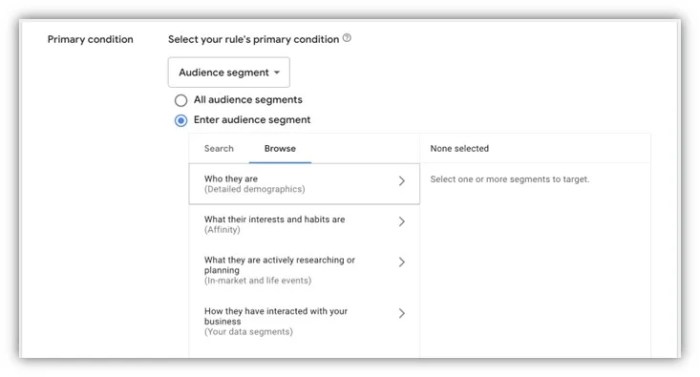
Implementing conversion value rules in Google Analytics can be rewarding, but it’s crucial to understand potential pitfalls and troubleshooting strategies. Errors in setup or data interpretation can lead to inaccurate insights and flawed optimization decisions. This section will delve into common issues and provide practical solutions to ensure accurate conversion value tracking.Setting up conversion value rules correctly is essential for accurate reporting.
Inaccurate or incomplete data can lead to significant misinterpretations of campaign effectiveness and ROI. By understanding common pitfalls and troubleshooting techniques, you can avoid these errors and gain a more precise understanding of your conversion data.

Identifying Errors in Conversion Value Rule Setup
Incorrectly configured conversion value rules can lead to inaccurate reporting. These errors often stem from mismatched parameters or improper data mapping. Carefully checking the setup for each conversion event is crucial. Double-checking that the value assigned to each conversion matches the actual value is essential for accurate reporting. Ensure the value is extracted from the correct source within the website.
Troubleshooting Conversion Tracking Issues
Troubleshooting conversion tracking issues requires a systematic approach. First, verify that the conversion tracking code is properly implemented on the website. If there are issues with the code, debugging tools and the Google Analytics documentation can provide detailed insights into the problem. Second, analyze the conversion data for any inconsistencies or anomalies. Third, review the conversion value rule configuration to ensure it’s correctly mapped to the conversion events.
Resolving Discrepancies Between Expected and Actual Conversion Values
Discrepancies between expected and actual conversion values can arise from various factors. One common reason is a mismatch between the conversion value rules and the actual conversion events. Another potential cause is a change in the website’s structure or functionality that affects how conversion values are captured. Thorough analysis of the data is essential to understand the root cause.
Examine the data flow for any unusual traffic patterns or behaviors that could lead to inaccurate reporting.
Diagnosing and Fixing Inaccurate Data
Diagnosing and fixing inaccurate data requires a methodical approach. Start by reviewing the conversion value rules to ensure accuracy and completeness. Check for any errors in the implementation of the tracking code. Then, investigate any discrepancies between expected and actual values. If issues persist, consider contacting Google Analytics support for assistance.
Examples of Common Conversion Tracking Problems and Solutions
A common problem is misconfigured currency settings. If your website supports multiple currencies, ensure that the conversion value rules accurately reflect the currency used. Another issue is inaccurate value extraction. If the value is not being extracted correctly from the appropriate source, the rule needs to be updated. A third issue is the lack of proper event triggers.
Ensure the conversion event is properly triggered for the appropriate actions on the website.
Table of Common Issues and Troubleshooting Steps
| Issue | Troubleshooting Steps |
|---|---|
| Incorrect currency settings | Verify currency settings in conversion value rules and website. Ensure currency conversion is correctly applied. |
| Inaccurate value extraction | Review the value extraction method in the rule. Check for errors in data mapping. Use debugging tools to examine data flow. |
| Missing or incorrect event triggers | Confirm the conversion event is correctly triggered. Review the event tracking code for errors. Test the event triggers on different pages. |
| Discrepancies between expected and actual values | Compare expected and actual conversion values. Identify potential causes, such as changes in website functionality or user behavior. Analyze data trends and anomalies. |
Advanced Conversion Value Rule Applications
Conversion value rules, while powerful for basic conversions, unlock their true potential in more complex scenarios. This section delves into advanced applications, demonstrating how to leverage these rules for dynamic remarketing, industry-specific optimization, and sophisticated use cases in e-commerce and beyond. We’ll explore how to fine-tune these rules to maximize their effectiveness and avoid common pitfalls.
Dynamic Remarketing Campaign Targeting
Dynamic remarketing campaigns benefit significantly from conversion value rules. By assigning different values to various conversion actions, you can precisely target users based on their purchase intent and value. For instance, a user who added a high-value product to their cart but didn’t complete the purchase can be retargeted with a different message than a user who abandoned a low-value item.
This targeted approach maximizes the return on your remarketing efforts. Crucially, this allows for more effective allocation of advertising budget, ensuring resources are spent on the most promising leads.
Advanced Strategies for Different Industries
Different industries have unique conversion needs. For instance, in the SaaS industry, recurring subscriptions are a key metric. Conversion value rules can be designed to assign different values to various subscription tiers, allowing for targeted campaigns based on the lifetime value of the customer. Similarly, in the travel industry, the value of a booking can vary significantly based on the destination, duration, and number of travelers.
Conversion value rules can precisely segment these conversions for more effective remarketing.
Advanced Use Cases in E-commerce
E-commerce presents numerous opportunities for advanced conversion value rule applications. A customer who adds multiple high-value items to their cart, but abandons the purchase, may be retargeted with a different offer than a customer who only adds low-value items. Furthermore, conversion value rules can be used to segment users based on the average order value (AOV). By analyzing AOV and purchase history, marketers can tailor their campaigns for maximum impact.
Advanced Rule Implementations Comparison
Different implementations of conversion value rules can yield varying results. Comparing the effectiveness of various rule implementations allows marketers to select the approach best suited to their specific needs. For instance, a rule focusing on the total order value might be more effective than one based on the number of items purchased, depending on the nature of the products and the target audience.
Understanding Google Conversion Value rules is crucial for optimizing your online presence. Knowing how to track and attribute value to user actions, like purchases or sign-ups, is essential. For example, if you’re having issues logging into your WordPress site, learning how to recover your password, as detailed in this guide on how to recovery password in wordpress , can be a helpful task.
Ultimately, implementing these rules provides you with the data to refine your marketing strategies and maximize your return on investment.
Detailed Overview of Advanced Applications
| Application | Description | Example | Benefit |
|---|---|---|---|
| Dynamic Remarketing | Tailoring remarketing campaigns based on conversion value. | High-value product abandoned in cart gets a different ad than a low-value item. | Increased remarketing ROI. |
| Industry-Specific Optimization | Adjusting conversion values to reflect industry-specific metrics. | SaaS subscriptions with different tiers have different values. | Targeted campaigns based on customer lifetime value. |
| E-commerce Segmentation | Segmenting users based on order value, product type, or other metrics. | High AOV customers receive different promotions than low AOV customers. | Personalized marketing experiences. |
Impact on Reporting and Analysis

Implementing accurate conversion value rules dramatically improves reporting dashboards, providing a clearer, more actionable view of your marketing performance. This enhanced visibility empowers data-driven decision-making, leading to more effective strategies and increased ROI. Instead of vague estimations, you gain precise insights into the true value of your marketing campaigns.
Enhanced Reporting Accuracy and Clarity
Conversion value rules provide a granular level of detail, allowing you to understand the precise value of each conversion. This replaces the imprecise estimates often found in traditional reporting, leading to a more accurate picture of campaign performance. Accurate conversion values empower a more nuanced understanding of customer behavior, enabling more informed adjustments to marketing strategies. The specificity offered by these rules eliminates ambiguity, allowing you to focus your efforts on high-impact areas and eliminate wasted resources.
Examples of Reports Generated with Accurate Conversion Data
Reports generated with accurate conversion values offer a variety of insights. A report showcasing the performance of different advertising channels could demonstrate that while channel A has a higher volume of conversions, channel B delivers a significantly higher average conversion value. This crucial distinction would allow a marketer to re-allocate resources and focus on channels driving maximum ROI. Another report might highlight the impact of specific product promotions, demonstrating how certain offers generate a disproportionate return compared to others.
Furthermore, customer journey reports can pinpoint specific stages where users drop off, providing opportunities for intervention to improve conversion rates.
Reports Supporting Strategic Decision-Making
Accurate conversion data provides the foundation for informed strategic decisions. By understanding the true value of each conversion, marketers can allocate budgets more effectively, optimize campaigns, and improve customer engagement strategies. The precise value data allows for A/B testing of different marketing approaches, allowing marketers to quantify the impact of each strategy and refine their approach to maximize efficiency and profitability.
For instance, understanding the value of repeat customers compared to first-time buyers enables a company to tailor marketing efforts to optimize long-term customer relationships.
Data-Driven Insights from Accurate Reporting
Data-driven insights are critical for success in today’s market. Accurate conversion data enables companies to understand what truly drives conversions and customer engagement. This knowledge is essential for forecasting future performance and identifying potential issues. For example, an e-commerce business can understand which product categories are most valuable, driving sales and customer satisfaction. By focusing on these high-value categories, the company can refine its inventory, marketing efforts, and pricing strategies.
This approach leads to more efficient operations and improved customer experiences.
Comparison of Reports Generated with and without Conversion Value Rules
| Feature | Reports without Accurate Conversion Value Rules | Reports with Accurate Conversion Value Rules |
|---|---|---|
| Conversion Value | Estimated or inaccurate values, leading to potential misallocations of resources. | Precise conversion values, enabling accurate resource allocation and improved ROI. |
| Reporting Accuracy | Vague and less detailed reports, hindering strategic decision-making. | Precise and detailed reports, providing data-driven insights and improved decision-making. |
| Strategic Decision-Making | Limited ability to make informed decisions due to lack of precise data. | Stronger ability to make informed decisions based on accurate data and insights. |
| Marketing Efficiency | Potentially inefficient allocation of marketing resources. | Optimized allocation of marketing resources, resulting in higher returns. |
| Customer Understanding | Limited understanding of customer behavior and value. | Deep understanding of customer behavior and value, leading to enhanced engagement strategies. |
Final Wrap-Up: Why You Should Implement Google Conversion Value Rules
In conclusion, implementing Google conversion value rules is a strategic investment that significantly improves your understanding of customer behavior and campaign performance. By accurately tracking and valuing conversions, you can gain valuable insights into your marketing efforts, enabling more data-driven decisions. This ultimately translates into a more efficient and effective marketing strategy, boosting your ROI and strengthening your bottom line.
So, take the time to set up and refine these rules to unlock the full potential of your online marketing campaigns.