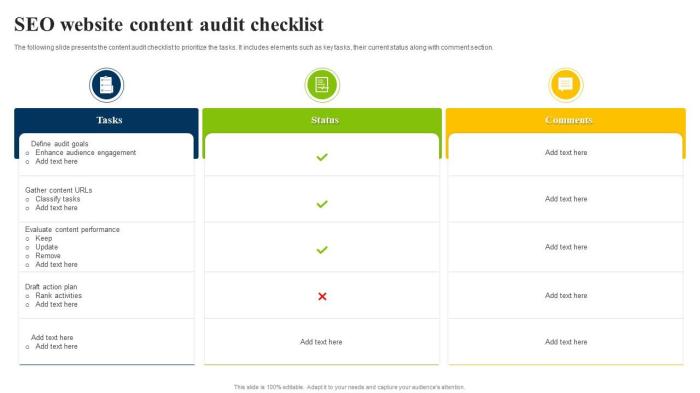
Your content audit checklist for optimizing your content marketing is your roadmap to a more effective content strategy. This comprehensive guide takes you through every step, from defining your audit scope to implementing improvements and tracking results. It’s your secret weapon for unlocking the full potential of your content and ensuring it resonates with your target audience.
We’ll explore how to assess your current content’s performance, identify areas for improvement, and create actionable strategies for optimizing your content marketing. From blog posts to social media updates, we’ll cover all the bases, ensuring your entire content ecosystem is working in harmony to achieve your business goals.
Defining the Scope of Your Content Audit
A content audit is a systematic evaluation of your existing content assets. It’s not just about finding what’s broken; it’s about uncovering opportunities to improve your content strategy, maximize its impact, and ultimately, drive better results for your business. This crucial step in content marketing helps you understand what’s working, what’s not, and where you can make strategic changes to boost your content’s effectiveness.A thorough content audit isn’t just about identifying outdated or irrelevant pieces; it’s a deep dive into the overall health and performance of your content ecosystem.
It’s a valuable diagnostic tool that can illuminate areas needing improvement, allowing you to optimize your content strategy for maximum return on investment.
Purpose and Benefits of a Content Audit, Your content audit checklist for optimizing your content marketing
A content audit aims to gain a comprehensive understanding of your current content landscape. This includes identifying strengths, weaknesses, and opportunities for improvement. Benefits include improved content performance, better resource allocation, and a more efficient content creation process. By understanding what resonates with your audience and what falls flat, you can optimize your content strategy to drive better results.
Types of Content to Include
This audit should encompass all relevant content formats. This includes blog posts, website pages (landing pages, product pages, about us), social media updates, email newsletters, videos, infographics, and any other content assets you use to communicate with your audience. The audit should analyze each piece to determine its current performance and potential.
Setting Clear Goals and Objectives
Defining specific, measurable, achievable, relevant, and time-bound (SMART) goals is critical for a successful content audit. These goals should align with overall business objectives. Examples include increasing website traffic by 15% or improving lead generation by 20%. Clear objectives will guide the audit process and ensure that the results are actionable and meaningful. Having a well-defined set of goals will enable you to focus the audit efforts and avoid being overwhelmed by the sheer volume of content.
Framework for Organizing the Audit Process
A structured approach is essential to ensure a thorough and efficient audit.
- Timeline: Establish a realistic timeline for each stage of the audit, considering the amount of content and the resources available. For example, a content audit of 500 blog posts could take several weeks. A thorough audit, even of a smaller set of content, will still take considerable time.
- Roles and Responsibilities: Assign specific roles to different team members to ensure accountability. This could include a content strategist to oversee the audit, a data analyst to collect and analyze performance metrics, and a writer to update or repurpose content. Clearly defined roles will ensure everyone understands their contribution and responsibilities.
- Data Collection: Develop a consistent method for gathering data about each piece of content, including its creation date, performance metrics (views, shares, comments), and s. Tools for data collection should be selected based on the nature of the content and resources available. Tools like Google Analytics and social media analytics dashboards can be helpful.
- Analysis and Prioritization: Analyze the collected data to identify content performing well and content needing improvement. Prioritize based on factors such as potential impact, ease of improvement, and alignment with business objectives. This will allow for efficient resource allocation.
Content Analysis Criteria
A detailed analysis should encompass several criteria:
- Relevance: Does the content still align with current business goals and target audience needs? This includes assessing the target audience’s evolving interests and needs.
- Accuracy: Is the content factually correct and up-to-date? Out-of-date information can damage credibility and lead to poor performance.
- Completeness: Does the content provide sufficient information to satisfy user intent? Inaccurate or incomplete information can lead to a poor user experience and negatively impact engagement.
- Readability: Is the content easy to read and understand? Poor readability can discourage users from engaging with the content.
Evaluating Content Performance
A crucial step in any content marketing audit is understanding how well your content is performing. This involves more than just looking at the number of views; it’s about analyzing the impact your content has on your audience and its contribution to your overall business goals. This section delves into the various methods for measuring content performance across different formats, emphasizing the importance of audience engagement metrics.Analyzing content performance is not just about counting page views.
It’s about understanding how your content is contributing to your business objectives, whether it’s driving sales, generating leads, or building brand awareness. By meticulously tracking key metrics, you can identify high-performing pieces and pinpoint areas for improvement, ultimately optimizing your content strategy for maximum impact.
Measuring Performance of Different Content Types
Understanding how different content types perform is key to a successful content strategy. This involves examining various metrics to gauge the effectiveness of blog posts, infographics, videos, and social media updates.
- Blog Posts: Blog posts are typically measured by website traffic, time on page, bounce rate, and comments. A high time-on-page indicates the post resonated with the reader. A low bounce rate suggests readers found the content engaging and valuable, encouraging them to explore more. Increased comments signify active audience participation and potential for community building.
- Infographics: The success of infographics is measured by social shares, website traffic from the infographic page, and the number of times the infographic is embedded on other sites. A high number of social shares indicates the infographic’s visual appeal and information value, potentially increasing brand awareness. Tracking website traffic to the infographic page provides insights into its effectiveness in driving user engagement.
- Videos: Video performance is often evaluated by views, watch time, click-through rates from social media or website embeds, and comments. Longer watch times indicate viewer engagement and demonstrate the video’s relevance and quality. High click-through rates show the video is effectively attracting and retaining an audience. Comments demonstrate viewer interaction and potential for building a community around the video’s topic.
- Social Media Updates: Social media content success is gauged by engagement metrics such as likes, shares, comments, retweets, and click-through rates to the linked content. High engagement levels suggest the content is resonating with the audience and driving desired actions. Click-through rates from social media to the website or landing pages provide insight into the effectiveness of social media content in driving traffic.
Comparing Metrics and Analyzing Audience Engagement
Different content types have unique strengths and weaknesses when it comes to specific metrics. Understanding these differences allows for more nuanced performance evaluations and better strategic decisions.
| Content Type | Key Metrics | Strengths | Weaknesses |
|---|---|---|---|
| Blog Posts | Website traffic, time on page, bounce rate, comments | Excellent for in-depth content, building authority, and driving traffic | Can take longer to produce and might not always drive immediate conversions |
| Infographics | Social shares, website traffic, embeds | Highly shareable, visually engaging, and perfect for quickly conveying information | Limited space for in-depth analysis, may not always generate direct leads |
| Videos | Views, watch time, click-through rates, comments | Excellent for storytelling, emotional connection, and showcasing products or services | Can be more expensive to produce, require careful audience targeting |
| Social Media Updates | Likes, shares, comments, retweets, click-through rates | Excellent for building brand awareness, driving traffic, and fostering community | Limited space for detailed information, requires constant monitoring and engagement |
A crucial component of evaluating content performance is analyzing how the audience engages with it. Understanding what aspects of the content resonate most with your target audience is vital for tailoring future content and improving overall engagement. This analysis can uncover trends in content preferences, enabling you to optimize your content strategy for better results.
A solid content audit checklist is crucial for optimizing your content marketing strategy. Understanding your audience and the latest trends in professional services marketing, like how professional services marketing goes online , is key. This helps you tailor your content to resonate with potential clients, ultimately driving better results for your content marketing efforts.
Assessing Content Quality and Relevance
A content audit isn’t just about counting views; it’s about ensuring your content is workingeffectively*. This crucial step involves scrutinizing the quality and relevance of each piece to identify areas for improvement and maximize your content marketing efforts. A strong content strategy relies on high-quality, engaging content that resonates with your target audience and stays current with industry trends.Effective content must be more than just informative; it needs to be
- engaging* and
- relevant*. This means understanding what makes content truly valuable to your audience and how to measure its impact. This section dives deep into the criteria for assessing content quality, identifying outdated pieces, and ensuring consistency across your brand’s messaging.
Identifying Factors Affecting Content Quality
Content quality isn’t a singular metric; it’s a multifaceted concept. Accuracy, clarity, originality, and even the overall tone of voice contribute to the perceived value of your content. These factors directly impact user engagement and ultimately, your content marketing success.
- Accuracy: Correct facts, statistics, and data are paramount. Inaccurate information can damage credibility and erode trust with your audience. For example, a blog post about the latest medical breakthroughs should cite reputable sources and be reviewed by experts.
- Clarity: Well-structured content, free of jargon and ambiguity, is crucial for understanding. Poorly written content hinders comprehension, leading to frustration and reduced engagement.
- Originality: Unique perspectives and fresh ideas set your content apart from the competition. While inspiration is valid, plagiarized content harms your brand’s reputation and risks legal issues. Instead of simply summarizing existing information, strive for insightful analysis and original contributions.
- Engagement: This is not just about the structure of the content but also the style. Content that captures attention and encourages interaction, such as comments, shares, or click-throughs, is far more valuable than static, one-dimensional pieces.
Evaluating Content Relevance to Target Audiences and Trends
Understanding your target audience is key to creating relevant content. Their interests, needs, and pain points dictate the content you should produce. Trends in your industry also play a crucial role.
- Target Audience Analysis: Understanding your audience’s interests, needs, and online behavior is crucial for creating content that resonates. Research demographics, interests, and pain points to tailor content that solves problems and fulfills needs. For instance, if your target audience is new parents, articles about baby care or parenting advice would be highly relevant.
- Trend Analysis: Stay updated on current industry trends. Relevant content addresses current issues, explores emerging technologies, and reflects the ever-changing needs of your target audience. If your industry is experiencing rapid technological advancement, staying current is vital to maintaining your audience’s interest and trust.
Ensuring Consistency in Content Messaging and Branding
Consistency in messaging and branding is essential for building a recognizable and trustworthy brand. A cohesive brand voice and style guide ensures that all content reflects the same values and personality.
- Brand Voice: A consistent brand voice ensures that all content emanates from the same source. Use consistent tone, vocabulary, and writing style to maintain a clear brand identity. A friendly and approachable voice, for example, would be inappropriate for a financial advisory service.
- Visual Consistency: Visual elements like logos, color palettes, and typography should be consistently used across all content. This reinforces brand recognition and makes content immediately recognizable.
Identifying Outdated or Irrelevant Content
Regularly reviewing content for relevance is vital. Outdated information can harm your brand’s reputation and negatively impact efforts.
- Date of Publication: Assess the publication date of each piece. Content older than a year or two might be outdated. If information is likely to change frequently, the timeline is shorter.
- Performance Metrics: Analyze metrics like views, engagement, and click-through rates. Low engagement suggests that the content is not relevant or appealing to your audience. For instance, a blog post with consistently low traffic might indicate a need for updates or a shift in focus.
Identifying Content Gaps and Opportunities
A content audit isn’t just about analyzing what’s
- working*; it’s equally crucial to pinpoint what’s
- missing*. Identifying content gaps and opportunities allows you to proactively fill knowledge voids, cater to unmet audience needs, and stay ahead of the curve in your industry. This proactive approach positions your content marketing strategy for sustained growth and relevance.
Pinpointing areas where your content falls short and exploring untapped potential are key elements for strategic improvement. Understanding what your audience wants and needs, along with analyzing competitor activity, will guide your content creation efforts. This approach will allow you to capitalize on opportunities and enhance your content’s impact.
Content Gaps Related to Topics
Understanding what topics your current content is lacking can reveal critical areas where your audience needs more information. This process involves meticulously reviewing your existing content and recognizing gaps in coverage. An in-depth examination can highlight missing connections or potential expansion areas.
- Analyze research data to discover relevant but unaddressed topics.
- Examine competitor content to identify content gaps in their offerings. Identifying where competitors lack robust coverage can highlight areas you could capitalize on.
- Use topic clustering to group related s and identify any topic clusters that are underrepresented.
Audience Needs and Content Gaps
Understanding your audience is paramount to recognizing content gaps that cater to unmet needs.
- Analyze website analytics to identify pages with low engagement or high bounce rates.
- Review feedback from customer surveys and social media comments to pinpoint common pain points or questions.
- Conduct surveys or focus groups to gain direct insights into audience preferences and unmet needs.

Content Opportunities Based on Market Research
Market research can unveil emerging trends and needs, allowing you to identify new content opportunities.
- Monitor industry news and publications for trending topics or emerging challenges.
- Track relevant social media conversations and discussions to pinpoint areas of audience interest and potential gaps.
- Identify emerging technologies or industry developments that warrant new content creation.
Identifying Underperforming Content with Potential
Not all underperforming content is useless. Sometimes, a piece of content just needs a refresh or a different approach to reach its full potential.
My content audit checklist is crucial for optimizing my content marketing strategy. It’s all about ensuring my content is performing as it should. However, with the recent Google Ads Manager data issue under investigation here , it’s extra important to double-check my existing content performance and adjust my strategies accordingly. This whole audit process helps me stay on top of my game and adapt to any potential shifts in the digital landscape.
- Analyze content performance metrics like page views, time on page, and engagement rates to identify underperforming pieces.
- Evaluate the content’s structure, readability, and visual appeal to determine potential areas for improvement.
- Assess the relevance of the content to current industry trends and audience interests.
Structuring Content Recommendations for Improvement
A crucial step in any content audit is translating findings into actionable recommendations. Simply identifying problems isn’t enough; you need a clear roadmap for improvement. This involves structuring recommendations in a way that’s easily understood and implemented, prioritizing them effectively, and outlining the specific actions required for each.This section details how to organize your content audit recommendations, providing a practical framework to guide your content strategy improvements.
Content Audit Recommendation Table
A well-structured table is essential for presenting recommendations clearly and concisely. It allows stakeholders to quickly grasp the problem, proposed solution, and priority level for each recommendation.
A solid content audit checklist is key to optimizing your content marketing strategy. Understanding your current content performance, like identifying underperforming blog posts or identifying areas where you could use more valuable content, is crucial. To effectively do this, consider the various B2B content marketing tactics, such as case studies, webinars, and white papers, which can significantly enhance your audience engagement.
By understanding these tactics, you can tailor your content audit to better reflect your audience’s needs, and ultimately optimize your content marketing efforts. Check out our guide on b2b content marketing tactics for more ideas. This way, your content audit will be more targeted and valuable, helping you refine your approach for better results.
| Content Type | Problem | Solution | Priority | Action Items |
|---|---|---|---|---|
| Blog Post | Low engagement (low social shares, comments, and time on page) on recent posts focused on . | Revise recent -focused blog posts to include more compelling visuals, a stronger call to action, and interactive elements like quizzes or polls. | High | Assign a writer to review and revise, create a content calendar with a visual element focus. |
| Landing Page | High bounce rate on landing pages promoting new products. | Improve landing page design with a clear value proposition, a simplified form for lead capture, and compelling visuals that showcase the product’s benefits. | Medium | Hire a web designer to review and implement design changes. |
| Case Study | Lack of consistency in case study structure and format, making it hard to understand and follow. | Establish a standardized case study template that includes a consistent structure, clear headings, and visual aids. | High | Create a style guide, assign a content editor to review all existing case studies. |
| YouTube Video | Low watch time on video tutorials; poor video quality. | Improve video quality, edit existing videos to ensure clarity and engagement, and include relevant calls to action in the video description. | Medium | Review equipment, re-edit the videos. |
Prioritizing Recommendations
Prioritizing recommendations is crucial for focusing efforts and maximizing impact. This involves considering the severity of the problem, the potential impact of the solution, and the resources required to implement it.
- High Priority Recommendations: These address significant problems that could severely impact content performance. They require immediate attention and resources to resolve the issues and ensure the positive impact.
- Medium Priority Recommendations: These address problems that could impact content performance, but not as severely as high-priority ones. These recommendations should be addressed in the near future, within a set timeframe, and should involve fewer resources.
- Low Priority Recommendations: These address minor issues that may not significantly impact content performance. These are typically less urgent and can be addressed at a later time.
Summary of Key Takeaways and Actions
| Area | Key Takeaway | Action |
|---|---|---|
| Content Performance | Recent -focused blog posts need a visual overhaul. | Revise recent -focused blog posts with improved visuals and calls to action. |
| Landing Page Optimization | Landing pages need improved design and clear value propositions. | Improve landing page design with a focus on clear value propositions, simplified forms, and compelling visuals. |
| Case Study Consistency | Lack of consistency in case study format. | Establish a standardized case study template. |
| Video Quality | Video quality and watch time are issues. | Improve video quality and edit existing videos for clarity. |
Implementing Content Improvement Strategies: Your Content Audit Checklist For Optimizing Your Content Marketing

Putting your content audit recommendations into action is crucial for achieving your content marketing goals. A well-defined implementation plan ensures that the identified areas for improvement are addressed systematically, leading to better performance and ROI. This phase requires careful planning, clear delegation, and ongoing monitoring to maximize the impact of your content optimization efforts.
Process for Implementing Recommendations
A structured process is essential for effectively implementing content improvement strategies. This involves breaking down each recommendation into actionable steps. Prioritize recommendations based on their potential impact and feasibility. For example, a recommendation to update outdated blog posts should be prioritized over a recommendation to create entirely new content if it requires more immediate action. Document each step, assigning deadlines and responsibilities to ensure accountability.
Assigning Responsibilities for Content Improvement
Defining clear roles and responsibilities is paramount for successful implementation. This ensures that each task is assigned to the appropriate team member or department, fostering accountability and efficiency. A content calendar or project management tool can be used to track assignments and deadlines. For example, if the audit identifies a need to optimize for existing articles, the responsibility should be assigned to the team, and the content creation team could handle the revisions.
Tracking Progress of Implemented Improvements
Tracking progress is critical to gauge the effectiveness of your implementation efforts. Establish key performance indicators (KPIs) to measure the success of each recommendation. These could include website traffic, engagement metrics (likes, comments, shares), conversion rates, and lead generation. Using a spreadsheet or project management software, document the progress of each task. Regular reporting on progress allows for adjustments to the plan as needed.
Measuring the Impact of Improvements Made
Measuring the impact of improvements is essential for demonstrating the value of your content audit. Compare metrics before and after implementing the changes. This will help determine whether the implemented strategies are producing desired results. For instance, if you improved the of a particular blog post, track the increase in organic traffic to that page. Compare this with the traffic from the same period in the previous year to determine the impact of the improvement.
Wrap-Up
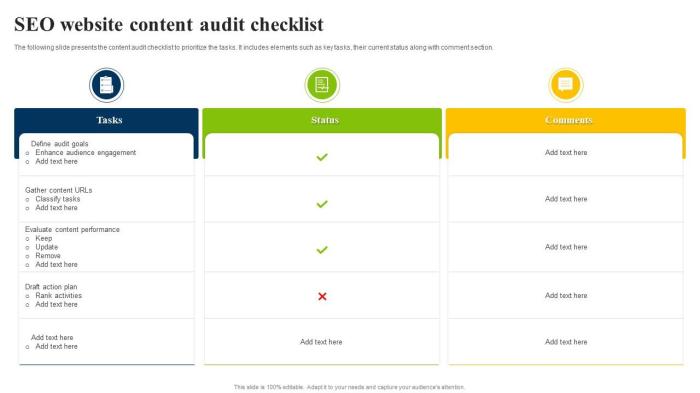
In conclusion, a thorough content audit is essential for a thriving content marketing strategy. By meticulously evaluating your content’s performance, identifying gaps, and implementing targeted improvements, you can significantly boost your content’s impact and ROI. Remember, consistent analysis and adaptation are key to maintaining a competitive edge in the ever-evolving digital landscape. This checklist provides the framework; now, it’s time to put your content to work!