749: How a Blind Man and his Guide Dog Survived Sept. 11 — and What His Mindset Can Teach Us, with Michael Hingson

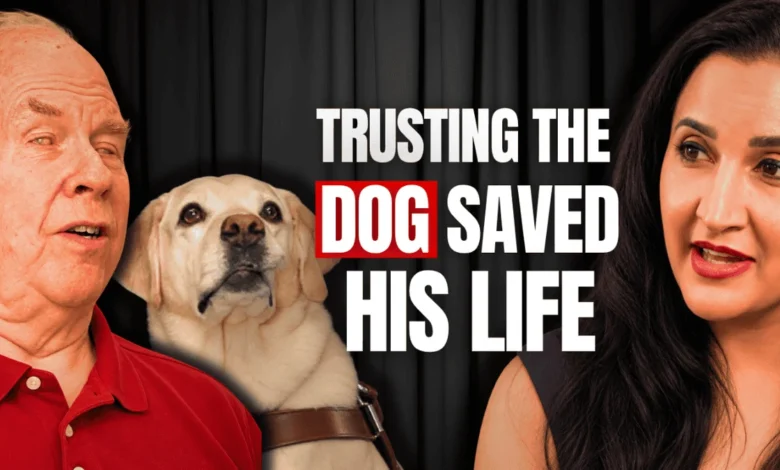
On the morning of September 11, 2001, Michael Hingson was working in his office on the 78th floor of the World Trade Center’s North Tower. As a man who has been blind since birth, Hingson relied on his sensory perception of the environment and his trusted guide dog, a yellow Labrador named Roselle. At 8:46 a.m., American Airlines Flight 11 struck the building between the 93rd and 99th floors, just 15 stories above Hingson’s office. The resulting impact severed elevator cables, destroyed stairwells, and showered the building in debris, trapping thousands of occupants. While the visual chaos of the event dominated the experiences of those who could see, Hingson’s survival story offers a unique perspective on human behavior, the mechanics of crisis management, and the psychological mastery of fear.
Chronology of the Descent
The structural integrity of the North Tower was compromised immediately upon impact. Hingson, who was speaking with a coworker at the time, felt the building sway violently. While many around him succumbed to the panic of the unknown, Hingson’s reliance on Roselle provided a grounding influence. Despite the heavy smell of jet fuel and the sound of cascading debris, Roselle remained composed, displaying a level of focus that served to stabilize Hingson’s own reaction.
Hingson and his colleague began the arduous task of descending 78 flights of stairs. This journey, which took approximately one hour, involved navigating crowded stairwells filled with people evacuating from higher floors. As they descended, Hingson took on a leadership role, utilizing his calm demeanor to help others manage their own rising terror. By the time they reached the ground level and exited the building, they were only minutes away from the collapse of the South Tower, an event that would fundamentally alter the landscape of Lower Manhattan.
Sensory Perception and Environmental Awareness
Hingson’s experience highlights the distinction between sight and perception. While the visual field of those fleeing the tower was filled with smoke, fire, and structural failure, Hingson’s reality was defined by auditory and tactile cues. He observed that the panic in the stairwell was often more dangerous than the physical obstacles. His ability to maintain a rhythmic, logical pace prevented the "what-if" scenarios—the catastrophic thinking that often leads to paralysis—from taking root in his mind.
This psychological resilience is the subject of his memoir, Thunder Dog. Hingson argues that blindness was not a deficit during the evacuation; rather, it allowed him to bypass the visual stimuli that frequently lead to irrational fear. He suggests that fear is an emotional response that can be managed through cognitive reframing, a concept he has spent the last two decades discussing in corporate and public forums.
The Role of Canine Companions in Crisis
The behavior of Roselle, the guide dog, serves as a focal point for researchers studying the human-animal bond in high-stress environments. Earlier that morning, Roselle had shown signs of distress during a thunderstorm, a common occurrence for many dogs. However, during the most critical moments of the 9/11 attacks, she exhibited an uncharacteristic calm. This phenomenon, often observed in highly trained service animals, suggests a profound attunement to their handlers. By remaining composed, Roselle allowed Hingson to focus on the objective task of evacuation rather than reacting to the ambient chaos.
Statistical and Contextual Background
The North Tower of the World Trade Center, known as 1 World Trade Center, was 1,368 feet tall and housed approximately 50,000 employees and visitors on a typical workday. The events of September 11, 2001, resulted in the deaths of 2,753 people in New York City. The survival rate for those below the impact zone was significantly higher than for those trapped above it, yet the evacuation process was fraught with systemic challenges.
According to reports from the National Institute of Standards and Technology (NIST), the evacuation of the World Trade Center towers remains one of the largest and most complex emergency egress operations in history. Key factors influencing survival included the physical condition of the stairwells, the availability of clear information from emergency personnel, and the individual psychological state of the occupants. Hingson’s ability to navigate the stairs while managing a group of strangers underscores the importance of leadership and communication in crisis situations, even when traditional sensory input is unavailable.
Psychological Implications and the "What-If" Habit
Hingson’s analysis of the "what-iffing" habit provides a framework for understanding generalized anxiety. He posits that the human tendency to speculate on future catastrophic outcomes creates unnecessary cognitive load, which in turn diminishes the ability to react effectively to the present moment. By focusing on the immediate objective—moving down the stairs—Hingson effectively mitigated the surge of adrenaline that might otherwise have impaired his decision-making.
This approach is echoed in psychological literature regarding "mindfulness in action." By grounding oneself in the immediate task, individuals can maintain executive function even under extreme duress. Hingson’s narrative serves as a case study for corporate training programs and personal development, emphasizing that the mastery of one’s own mental state is as critical as the physical path to safety.
Societal Perspectives on Disability
Beyond the narrative of 9/11, Hingson’s life experiences provide a critical lens through which to view societal perceptions of "disability." He notes that many people operate under the assumption that a disability is an inherent limitation. However, Hingson suggests that disability is often a social construct, defined by the accessibility of the environment rather than the individual’s physical or sensory capacity.
In a later incident involving a power outage at a Hollywood hotel, Hingson observed that sighted individuals were suddenly thrust into a state of disorientation and anxiety similar to the societal misconceptions of blindness. This role reversal highlighted that when the environment changes, the "disability" becomes a universal experience of limited information, rather than a fixed trait of one person.
Legacy and Continued Impact
Michael Hingson’s story remains a significant chapter in the oral history of September 11. It provides a unique, human-centric view of an event that is often discussed in terms of politics, engineering, and macro-economics. Through his continued work as a speaker and author, he bridges the gap between the traumatic past and a future defined by resilience.
The lessons derived from his experience are multifaceted:
- Psychological Preparation: The value of training and mental discipline in the face of unforeseen disaster.
- The Human-Animal Bond: The role of service animals as emotional stabilizers in high-stress environments.
- Reframing Disability: The importance of accessible design and the recognition that limitations are often environmental, not personal.
As time passes, the personal narratives of survivors like Hingson are vital to maintaining a comprehensive understanding of the 9/11 tragedy. They move the conversation away from the abstract statistics of the event and toward the individual capacity for survival, leadership, and adaptation. By examining the mindset that allowed Hingson to navigate the stairs of a collapsing skyscraper, we gain insights into how to cultivate resilience in our own lives, ensuring that when the "tower begins to tilt," we possess the tools to remain grounded.
For those interested in the full scope of Hingson’s experience, his memoir Thunder Dog serves as a primary resource. Furthermore, his work continues to advocate for the rights and capabilities of the blind and visually impaired, challenging the public to rethink the definition of potential in the face of crisis. Through his advocacy, Hingson ensures that the events of that day are not merely remembered as a tragedy, but as a testament to the enduring power of the human spirit when paired with the right mindset and the right support.