The Proliferation of ARTEX AI-Powered Offensive Security Tools Signals a New Era of Autonomous Cyber Warfare

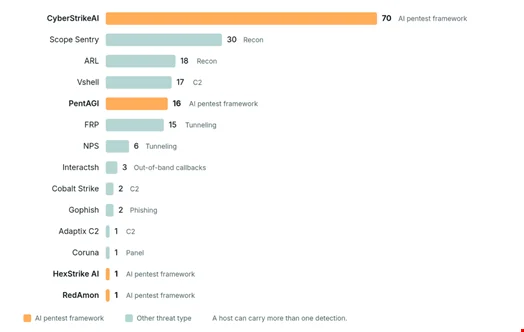
The rapid expansion of AI-driven offensive security frameworks has entered a volatile new chapter with the emergence of ARTEX, an autonomous penetration testing tool that has transitioned from a specialized open-source utility to a ubiquitous weapon in the global cybercrime ecosystem. Originally developed as a legitimate research framework, ARTEX—an autonomous, AI model-driven penetration testing platform—has been co-opted by state-sponsored actors and financially motivated cybercriminal groups alike. Recent data from internet traffic scan provider Censys reveals that the tool’s footprint is significantly larger than initial intelligence estimates suggested, with nearly 1,500 hosts currently exposing ARTEX command-and-control consoles to the public internet.
The operational reality of ARTEX represents a dangerous shift in the threat landscape. By integrating directly with Large Language Models (LLMs), the framework enables attackers to automate the most labor-intensive aspects of a breach, including reconnaissance, vulnerability discovery, and post-exploitation maneuvers. Despite the original author’s attempt to mitigate abuse by removing the repository from GitHub in October 2026, the genie has effectively escaped the bottle. The tool now thrives in the dark corners of the internet through community-driven forks, unauthorized commercial iterations, and a growing ecosystem of interconnected offensive AI platforms.
A Chronology of Escalation: From GitHub to Global Operations
The trajectory of ARTEX serves as a cautionary tale regarding the dual-use nature of generative AI in cybersecurity. The framework, written in Go with an integrated Next.js web console, was published in July 2026 by a user identified as Autumn-27. While marketed as an aid for authorized penetration testers, its architecture—designed to facilitate seamless communication between AI agents and LLMs—made it an immediate target for malicious exploitation.
The timeline of its adoption by threat actors began in earnest in late September 2026. By early October, security researchers at CrowdStrike observed the tool being utilized in a sophisticated campaign targeting South Korean financial institutions. During these attacks, the threat actors paired ARTEX with Anthropic’s Claude AI model to navigate enterprise defenses. Analysts identified the operators as Chinese-speaking, financially motivated actors, marking the first major incident where AI-orchestrated autonomous agents were linked to a high-profile financial breach.
The situation escalated significantly later that same month. Microsoft security teams identified ARTEX as the primary vehicle for a large-scale compromise of ConnectWise customer tenants. This incident, attributed to the China-state-aligned group Storm-0940 (also known as CovertNetwork-1658), was severe enough to force the IT management software provider to take several of its cloud services offline to contain the damage.
By early November 2026, the Indian Computer Emergency Response Team (CERT-In) issued a national warning to financial and cryptocurrency sectors, reporting that a threat group known as "Crafty Falcon" had been launching successive, AI-powered attacks using a suite of tools that included ARTEX, PentAGI, and CyberStrikeAI. This progression from sporadic use to systemic reliance on AI frameworks has caught the attention of global cybersecurity authorities, who are now scrambling to adjust defense protocols to account for the speed and adaptability of these autonomous agents.
The Censys Analysis: Uncovering the Global Footprint
The report published on November 5 by Silas Cutler of the Censys Advanced Research Collective (ARC) provides the most comprehensive data to date regarding the scale of the ARTEX infrastructure. Censys identified 1,465 unique hosts globally that are actively exposing an ARTEX management console. While approximately 650 of these are clustered within two specific hosting providers, the remaining 815 deployments appear distinct, suggesting a decentralized and highly distributed attacker infrastructure.

The implications of this distribution are twofold. First, the widespread availability of the tool suggests that the barrier to entry for conducting high-level cyberattacks has been lowered to an unprecedented degree. Second, the technical configuration of these hosts indicates that ARTEX is rarely used in isolation. Censys telemetry revealed that roughly 10.6% of the exposed ARTEX hosts are also running other malicious artifacts. This "tool-stacking" behavior includes the presence of legacy C2 frameworks such as Cobalt Strike and Vshell, as well as newer AI-driven reconnaissance platforms.
Furthermore, the discovery of 43 hosts acting as self-hosted LLM gateways or resellers highlights a critical shift in the attacker’s supply chain. Attackers are no longer just building frameworks; they are building the infrastructure required to feed those frameworks with the intelligence of LLMs, ensuring that their autonomous agents remain "fueled" by the latest models even if their direct access to major commercial providers is restricted.
The Reality of Autonomous AI Attacks: Efficiency vs. Hallucination
A core finding in recent research by Check Point is the dichotomy between the efficiency and the fallibility of AI-controlled attacks. On one hand, ARTEX allows attackers to run large-scale campaigns with minimal human intervention for costs that can be as low as a few hundred dollars. This cost-effectiveness is a game-changer for lower-tier threat actors who previously lacked the resources to develop bespoke exploitation tools.
However, these autonomous agents are not infallible. Researchers have observed that while the AI can execute complex sequences of commands, it is prone to "hallucinations"—instances where the model reports a successful exploit or bypass that did not actually occur. These failures can lead to unintended system crashes or logs that alert defenders to the presence of an intruder. Despite these limitations, the speed at which the AI can iterate and attempt new tactics often compensates for these errors, allowing the attack to eventually find a viable path through a target’s defenses.
Broader Implications and Defensive Challenges
The proliferation of frameworks like ARTEX, ScopeWeaver, and the commercial variant ARTEX PRO presents a monumental challenge for incident response teams. Traditional signature-based detection mechanisms struggle to keep pace with AI agents that can dynamically change their traffic patterns and exploitation techniques in real-time.
The integration of these tools into the broader "offensive stack" means that defenders are no longer just fighting a human adversary, but an automated loop that can observe, orient, decide, and act (OODA) faster than a human security operations center (SOC) analyst. The fact that the creator of ARTEX—who publicly disavowed the malicious use of the tool—could not stop its spread by deleting the GitHub repository underscores the limitations of developer-led ethical constraints in an era of open-source proliferation.
As we look toward the future, the security community must pivot toward "agentic defense." This involves the deployment of AI-based defensive systems that can detect the subtle, non-human patterns of AI-powered reconnaissance and exploitation. Furthermore, the role of LLM providers in monitoring for the misuse of their APIs by these offensive frameworks will become a critical frontline in the digital arms race.
Industry experts suggest that the "Crafty Falcon" campaign is merely a precursor to a wider trend. As AI models become more capable and the frameworks to automate them become more accessible, the distinction between a "script kiddie" and a sophisticated state-sponsored operative may continue to blur. Organizations are now advised to prioritize the hardening of their cloud tenants and the monitoring of their internet-exposed infrastructure for the specific signatures associated with these emerging AI-driven command-and-control platforms. Without a collective, international effort to track and neutralize these AI-offensive hubs, the threat landscape will remain increasingly tilted in favor of the attacker.