DiffusionGemma: Exploring the Paradigm Shift in Parallel Text Generation

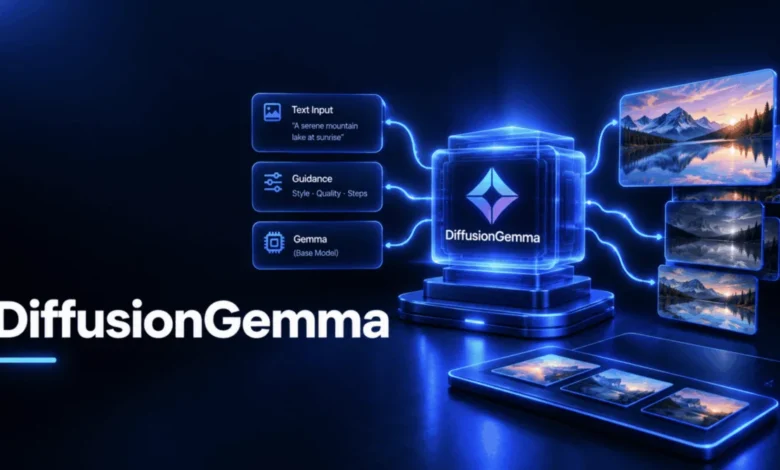
On June 10, 2026, Google DeepMind fundamentally challenged the established norms of Large Language Model (LLM) architecture with the release of DiffusionGemma. For over a decade, the field of Natural Language Processing has been dominated by autoregressive models—systems that generate text sequentially, token by token, from left to right. This paradigm, while effective, has long been constrained by memory bandwidth bottlenecks and the inability of models to revise their output once a token is committed. DiffusionGemma introduces an experimental alternative: a diffusion-based approach that generates and refines entire blocks of text in parallel, mirroring the generative processes that revolutionized image synthesis via models like Stable Diffusion.
The Mechanics of Innovation: Moving Beyond Autoregression
The core of DiffusionGemma lies in its departure from traditional causal generation. In a standard autoregressive model, such as GPT-4 or the original Gemma series, the system calculates the probability of the next word based on all preceding tokens. This process is inherently serial; the GPU must load the model weights, perform a forward pass, and output a single token before the process can begin again. This cycle creates a "memory wall," where the model’s performance is limited not by computational power, but by the speed at which data can be moved from memory to the processor.
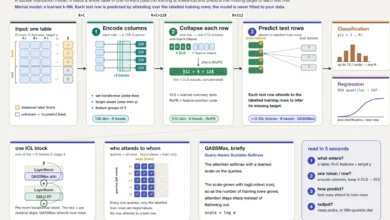
DiffusionGemma, built upon the 26-billion parameter Gemma 4 architecture, utilizes a Mixture-of-Experts (MoE) design with 3.8 billion active parameters per token, referred to as the A4B configuration. Rather than predicting the next word, it initializes a canvas of 256 placeholder tokens—essentially structured noise—and denoises the entire sequence simultaneously. Through a process identified as Uniform State Diffusion, the model iteratively refines these tokens. Because the model can look at the entire block at once, it possesses a unique capacity for self-correction. If the model determines a token is inconsistent with the emerging context, it can "re-noise" that specific token and attempt a more accurate generation in the next pass, a feat impossible in strictly causal models.
Chronology and Development Roadmap
The development of DiffusionGemma did not occur in a vacuum; it represents the culmination of years of research into non-autoregressive generation. Since early 2024, industry leaders had been seeking ways to overcome the latency issues inherent in long-form generation. The roadmap leading to the June 2026 release followed a rigorous testing phase:
- Q1 2025: Research into "block-autoregressive denoising" begins, focusing on the combination of causal attention for historical context and bidirectional attention for active blocks.
- Q4 2025: Internal benchmarks confirm that shifting the bottleneck from memory bandwidth to compute significantly improves performance on local consumer hardware.
- June 10, 2026: Google DeepMind officially unveils the model under an Apache 2.0 license, providing developers with a research preview.
- Late June 2026: Integration with the vLLM serving engine is finalized, enabling production-grade deployment for specialized use cases.
Technical Specifications and Resource Requirements
The model is designed with versatility in mind, particularly regarding its multimodal input capabilities. DiffusionGemma accepts text, images of varying aspect ratios, and video data, though its output remains strictly text-based. For deployment, the model’s resource footprint is a critical factor for developers. The unquantized version requires high-end enterprise infrastructure, such as NVIDIA A100 or H100 GPUs, due to memory overhead. However, the quantized build has been optimized to fit within an 18GB VRAM budget, making it accessible for users with high-end consumer hardware like the RTX 4090 or 5090.
The inclusion of a "thinking mode" provides a glimpse into the future of LLM reasoning. By enabling a separate reasoning channel, the model can deliberate on complex queries, such as mathematical problems or scientific formulas, before committing to a final response. This reasoning step is visible to the user when decoding with specialized parameters, allowing for greater transparency in the model’s decision-making process.
Implementation and Workflow
For developers looking to integrate DiffusionGemma, the process deviates from standard AutoModelForCausalLM workflows. Because the model relies on a denoising loop, it requires the use of the DiffusionGemmaForBlockDiffusion class found in Transformers version 5.11.0 and later.
To initiate a generation, the AutoProcessor handles the conversion of inputs—including visual media—into the internal token representation. A notable feature for developers is the TextDiffusionStreamer, which provides a real-time window into the refinement process. Unlike standard models that stream tokens as they are finalized, this tool allows developers to watch the 256-token canvas resolve from noise into coherent language, offering a unique diagnostic tool for debugging and model evaluation.
Industrial Implications and Production Readiness
The shift toward diffusion-based text generation carries significant implications for the future of AI infrastructure. While autoregressive models remain the gold standard for high-concurrency cloud environments—where massive batching allows them to overcome serial limitations—DiffusionGemma occupies a different niche. It is explicitly optimized for low-concurrency, high-performance local environments.
Google’s collaboration with the vLLM team underscores the importance of this shift. By integrating the denoising loop into the vLLM serving engine, developers can now deploy DiffusionGemma using familiar OpenAI-compatible APIs. Key configuration parameters, such as the diffusion_sampler and canvas_length, allow for fine-grained control over the model’s behavior. For instance, setting an entropy threshold of 0.005 for adaptive early stopping allows the model to conserve compute by halting the denoising process as soon as a high level of confidence is achieved.
Analysis of the "Thinking Mode" and Future Trajectory
The implementation of "thinking mode" via the enable_thinking argument marks a significant advancement in how models handle multi-step logic. By dedicating a separate block to reasoning, the model effectively segregates the "scratchpad" process from the final output. This mimics human cognitive processes, where deliberation precedes articulation. Analysts suggest that this architecture will likely become a standard feature in future iterations of both diffusion and autoregressive models, as it drastically reduces the rate of "hallucinations" in complex problem-solving scenarios.
Furthermore, the model’s ability to handle bidirectional attention within a 256-token canvas allows for a more fluid writing style. Because the model can revise earlier tokens in a block based on later information, the resulting text often exhibits higher semantic coherence and fewer grammatical errors than standard sequential models that are "trapped" by their own initial output.
Conclusion: A New Frontier in Inference
DiffusionGemma serves as a bridge between the current state of LLM technology and a future where inference is no longer hindered by the rigid, serial constraints of the past. By treating text generation as a process of refinement rather than a process of linear prediction, Google DeepMind has provided a blueprint for more efficient, self-correcting, and cognitively capable AI.
While the model is currently classified as an experimental preview, its performance on consumer-grade hardware and its capacity for multimodal reasoning suggest that the diffusion approach will play a pivotal role in the next generation of local and edge-computing AI. As researchers continue to refine the entropy-bound sampling strategies and optimize the block-diffusion architecture, the industry may find that the "one token at a time" era of AI is approaching its natural limit, making room for a more dynamic and parallelized future. For developers and enterprises alike, the challenge now lies in determining where this technology best fits within existing stacks, particularly in scenarios where local, high-precision reasoning is prioritized over massive, low-latency concurrency.