Rewiring the Global Economy: Why the Kunming-Montreal Biodiversity Framework is Failing and How to Fix It

Four years after the historic adoption of the Kunming-Montreal Global Biodiversity Framework at the United Nations Biodiversity Conference in Montreal—widely heralded at the time as the Paris Agreement for nature—the global community is confronting a sobering reality check. The first official progress report, released at the UN Biodiversity Conference (COP17) in Yerevan, paints a dismal picture of implementation efforts worldwide, revealing a profound disconnect between ambitious global political promises and the harsh economic realities governing natural resource management.
The comprehensive State of Biodiversity Action report highlights a paradox that has defined international environmental diplomacy for decades: while nearly 90% of nations have formally established domestic targets aligned with the framework—such as protecting 30% of land and sea areas, restoring 30% of degraded ecosystems, and halting human-induced extinctions by 2030—fewer than half of these assessed targets are currently on track to be met. This systemic underperformance has triggered urgent calls from international leaders for a fundamental reassessment of global environmental strategy as policymakers gather for parallel discussions, including the UN Climate Change Conference (COP31) in Antalya and ongoing deliberations regarding the post-2030 sustainable development agenda.
The Anatomy of Failure: A Financial System Built on Destruction
Addressing the root causes of this implementation crisis requires moving past the conventional assumption that governments are simply indifferent to ecological collapse. Instead, international economists and environmental scientists argue that the primary barrier to success is a global financial and economic architecture that actively incentivizes environmental degradation while penalizing conservation efforts.
Data compiled by the United Nations Environment Programme underscores the sheer scale of this macroeconomic miscalibration. In 2023 alone, an estimated $7.3 trillion flowed into economic activities that directly and severely harm nature, a figure equivalent to roughly 7% of global gross domestic product. Put differently, for every single dollar invested globally in nature-positive initiatives that year, approximately $30 was channeled into activities that deplete, degrade, or destroy natural ecosystems.
This dynamic creates an uphill battle for the Kunming-Montreal framework’s financial targets. The agreement explicitly calls for closing an annual $700 billion biodiversity finance gap by executing a dual strategy: reducing nature-harming subsidies by $500 billion annually and mobilizing $200 billion per year in incremental finance, with at least $30 billion sourced from external official channels. The majority of these vital investments are required to transform unsustainable management practices across vast swaths of agricultural land, rangelands, commercial fisheries, and forestry operations, with the remainder earmarked for direct ecosystem preservation and restoration.
The Chronology and Evolution of Global Biodiversity Governance
To understand how international environmental policy arrived at this critical juncture, it is necessary to examine the timeline of modern biodiversity commitments:
- October 2010 (Nagoya, Japan): Parties to the Convention on Biological Diversity adopted the Strategic Plan for Biodiversity 2011–2020, including the 20 Aichi Biodiversity Targets. By the end of the decade, a global review revealed that virtually none of the Aichi targets had been fully met, largely due to inadequate financing and a lack of binding accountability mechanisms.
- December 2022 (Montreal, Canada): Following pandemic-related delays, COP15 concluded with the landmark adoption of the Kunming-Montreal Global Biodiversity Framework. Designed to halt and reverse nature loss by 2030, the agreement introduced quantifiable goals, including the signature "30×30" conservation target.
- October 2026 (Yerevan, Armenia): COP17 marked the release of the first formal State of Biodiversity Action report. UN Secretary-General António Guterres described the gathering as a crucial "moment of accountability," where delegates confronted the stark data showing that most countries are falling behind their 2030 commitments.
- Late 2026 and Beyond: Attention shifts toward aligning biodiversity finance with parallel climate negotiations at COP31 in Antalya, alongside structural negotiations for the post-2030 development agenda to ensure future frameworks integrate economic incentives rather than relying solely on voluntary targets.
Structural Mismatch: The Cost of Mispriced Nature
Beyond straightforward market failures, analysts point to a deeper philosophical mismatch between standard economic valuation models and the intrinsic worth of ecological systems. Traditional market pricing captures only the immediate usefulness of natural resources, failing to reflect their broader relational, cultural, or ecological value.
Within the current international financial architecture, conservation is routinely framed as a costly burden—representing immobilized land and forgone economic growth—that wealthy nations frequently expect developing economies to absorb unilaterally. Consequently, major credit-rating agencies often downgrade the sovereign credit ratings of developing nations that prioritize extensive conservation over short-term extractive growth, citing heightened macroeconomic risks. This creates a punitive feedback loop for resource-rich nations seeking to balance fiscal solvency with ecological stewardship.
Rethinking the Bioeconomy as a Growth Strategy
To break this cycle, policy experts advocate for a paradigm shift that positions nature protection not as a fiscal liability, but as the foundation of a robust, regenerative bioeconomy. Current estimates indicate that approximately 55% of global GDP—representing roughly $58 trillion—depends directly on healthy, functioning ecosystems.
The emerging bioeconomy, which utilizes biological resources in a regenerative manner, currently accounts for an estimated $4 trillion in global economic value. Strategic policy interventions and targeted investments could scale this market to $30 trillion by 2050, seamlessly integrating local producers into sustainable global supply chains and steering them toward higher value-added activities.
This transformation is acutely urgent in developing countries with rich natural endowments but severely constrained fiscal space, such as Indonesia, Brazil, Peru, Zambia, Ecuador, the Philippines, and Mozambique. These nations frequently depend on high-impact extractive industries—including industrial logging, mining, and plantation agriculture—to generate the foreign exchange necessary to service crushing external debts.
The resulting environmental degradation leaves these countries disproportionately vulnerable to compounding climate disasters, such as severe floods, prolonged droughts, and destructive storms, which subsequently trigger further sovereign credit downgrades. Crucially, contemporary international debt frameworks continue to overlook or undervalue the economic dividends of building structural resilience against such environmental shocks.
Commodity Supply Chains and Corporate Accountability
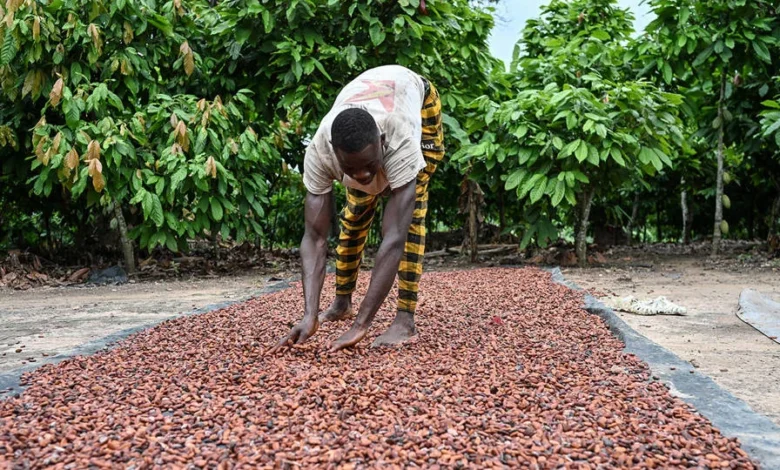
The challenge of aligning economic incentives with ecological preservation is particularly visible in global commodity supply chains. A primary example is West Africa, where Côte d’Ivoire and Ghana produce nearly two-thirds of the global cocoa supply, predominantly through smallholder farming operations.
Economic analyses reveal that between 73% and 90% of cocoa-producing households in these nations earn marginal incomes from their harvests. Unable to afford essential agricultural inputs such as fertilizers and weed-control agents necessary to maintain aging trees, farmers frequently clear pristine forests where new planting is cheaper and yields are temporarily higher.
With global chocolate trading, processing, and manufacturing heavily concentrated within a handful of multinational corporations, a small group of influential market players holds disproportionate leverage over global sustainability outcomes. Regulatory pressure is mounting; the European Union, which imports approximately 58% of the world’s cocoa beans, is rolling out stringent deforestation regulations. These rules condition market access for major commodities—including cocoa, coffee, and timber—on verifiable, deforestation-free supply chains.
Industry analysts emphasize that compliance cannot be achieved through punitive measures alone. Major commodity traders must actively invest in farmer training, input financing, and digital traceability systems, enabling smallholders to meet regulatory standards while securing fair compensation for sustainable practices.
Environmental Crime and the Security Imperative
Beyond traditional commerce, safeguarding ecosystems is increasingly viewed as a vital national and international security imperative. Transnational environmental crime—encompassing illegal logging, unregulated mining, wildlife trafficking, and illicit fishing—generates an estimated $110 billion to $280 billion annually. A significant portion of these illicit proceeds is laundered through the same international financial channels utilized by narcotics cartels and other criminal syndicates.
Law enforcement experts argue that traditional strategies focused solely on apprehending low-level actors, such as individual loggers or poachers, are largely ineffective. Instead, enforcement operations and asset recovery initiatives must strategically target critical systemic chokepoints, including processing mills, refineries, shipping ports, multinational traders, and the financial institutions facilitating illicit capital flows.
Concurrently, international funding and robust land-rights protections must be directed toward the world’s most effective conservation stewards: Indigenous peoples and local communities, whose traditional practices inherently honor the intrinsic and relational value of nature.
Broader Implications and the Path Forward
The overarching conclusion of the Yerevan biodiversity assessment is clear: simply establishing higher numerical targets while treating environmental protection as a secondary economic sector is a failing strategy.
As global leaders navigate the complex intersections of climate change, biodiversity loss, and economic development at COP31 and within broader United Nations forums, the mandate for reform is unmistakable. Reversing global ecological decline requires redesigning financial incentives to recognize nature as a foundational economic asset rather than an expendable cost—rewarding, rather than penalizing, the nations, communities, and enterprises committed to its preservation.