Unchained Summit India Brings Cross-Border Payments and Digital Finance into Focus as A7 International Joins as Sponsor


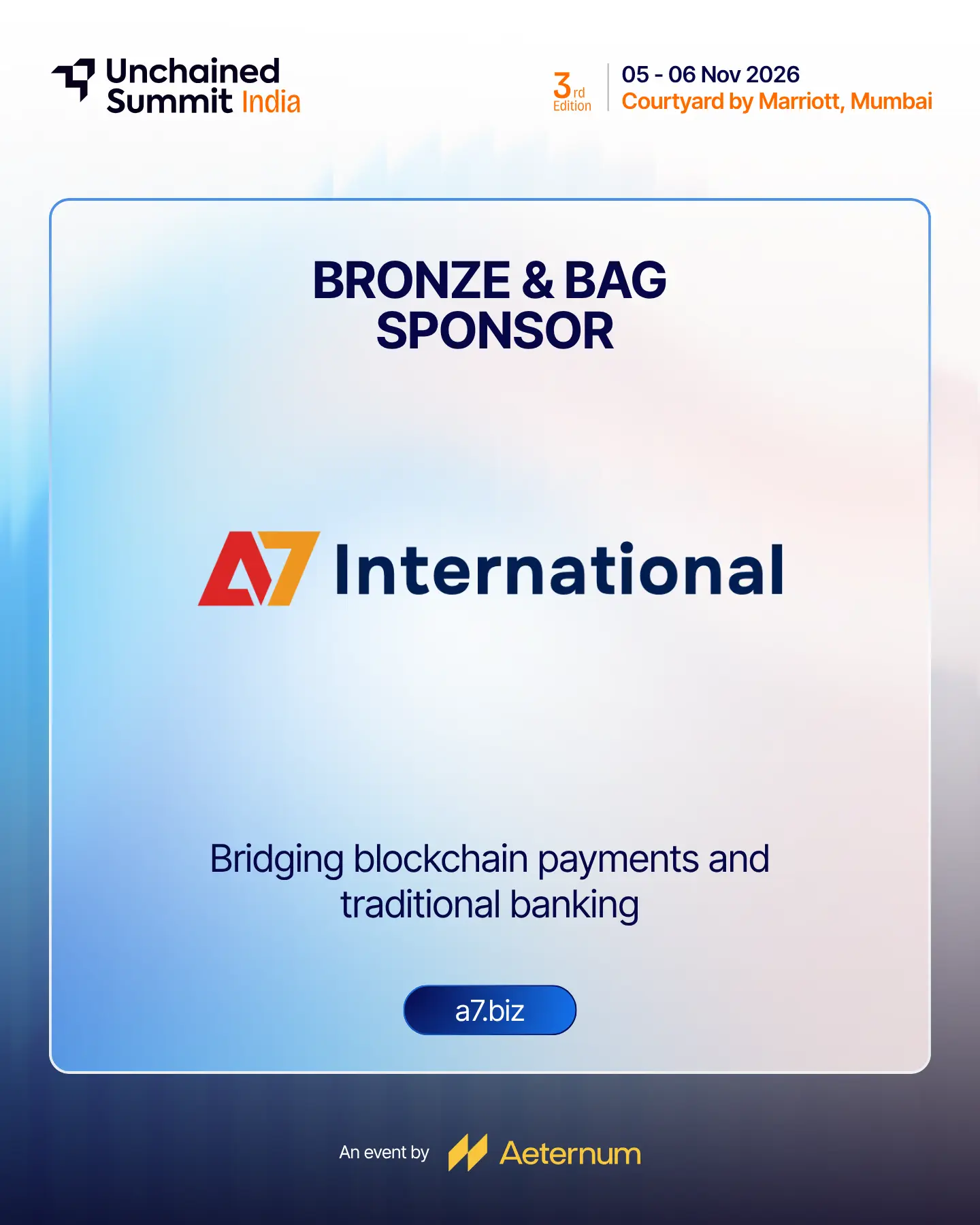
The financial landscape in India is undergoing a profound transformation as the nation positions itself at the intersection of traditional banking and emerging decentralized technologies. This evolution took center stage at the third edition of the Unchained Summit India, held on November 5–6, 2026, at the Courtyard by Marriott in Mumbai. The event, which serves as a critical nexus for policymakers, blockchain innovators, and financial institutional leaders, saw a significant development with the entry of A7 International as a Bronze Sponsor, underscoring the growing industry focus on cross-border payment efficiency and the integration of digital asset infrastructure.
The Strategic Importance of the Unchained Summit
The Unchained Summit has established itself as a premier venue for discourse on the future of Web3, following successful installments in Dubai and Vietnam. By choosing Mumbai as the host city for the 2026 edition, organizers, led by Aeternum Consulting Ltd, have signaled an acknowledgment of India’s rapidly expanding role in the global fintech ecosystem.
The event’s agenda was designed to address the most pressing questions surrounding the digital asset sector. Discussions spanned a wide array of topics, including the technical challenges of blockchain infrastructure, the regulatory frameworks required for stablecoin adoption, the mechanics of tokenization, and the ongoing shift toward institutional-grade digital asset management. For stakeholders, the summit is not merely a networking opportunity but a platform for setting the roadmap for financial integration in an increasingly digital world.
A7 International: Bridging the Gap in Cross-Border Finance
A7 International’s participation as a sponsor highlights a specific, high-growth niche within the industry: the reconciliation of digital assets with traditional banking rails. The company’s core offering focuses on facilitating international invoice payments by allowing users to leverage USDT (Tether). By providing a bridge that enables recipients to receive funds directly into their bank accounts in fiat currency, A7 International addresses one of the most significant barriers to digital asset adoption—the "last mile" problem of converting crypto-assets into usable local currency for businesses.
This model is particularly relevant for the Indian market, which remains one of the largest recipients of cross-border remittances globally. According to World Bank data, India consistently leads in remittance inflows, often exceeding $100 billion annually. The integration of blockchain-based payment rails into this high-volume environment could significantly reduce transaction costs and settlement times, moving away from the multi-day delays often associated with traditional SWIFT-based transfers.
Keynote Focus: Maharashtra’s Digital Ambitions
The summit featured a high-profile keynote address from Shri Ashish Shelar, the Cabinet Minister of Electronics, IT, AI, and Cultural Affairs for the Government of Maharashtra. His session, titled “Maharashtra’s Digital Future: Innovation, Investment and Financial Transformation,” provided a government-level perspective on the state’s strategy.
As a primary economic engine of India, Maharashtra’s focus on AI and fintech is expected to have a ripple effect across the country. Minister Shelar’s address emphasized the state’s commitment to fostering an environment where innovation is matched by robust, investor-friendly policy. By inviting global players and local startups to collaborate, the government aims to solidify Mumbai’s position not just as a traditional financial hub, but as a gateway for the next generation of digital-first financial services.
Market Context and Industry Evolution
The timing of this summit reflects a broader trend in the global financial market. As of late 2026, the appetite for institutional digital asset adoption has matured significantly compared to previous cycles. Institutional investors are shifting their focus from speculative trading to infrastructure development, seeking scalable solutions that offer transparency and compliance.
The industry is currently facing a dual-pronged evolution:
- Regulatory Maturation: Global jurisdictions are moving toward clearer frameworks for digital assets, which has encouraged financial institutions to pilot projects in tokenization and cross-border settlement.
- Infrastructure Resilience: The focus has moved toward creating high-throughput, secure, and interoperable blockchain networks that can handle institutional-grade volumes without the volatility risks of earlier generations.
Sharath Kumar, Founder and CEO of Aeternum, noted that the industry is at an inflection point. “Cross-border payments are among the areas where digital assets can have a practical impact on financial services,” Kumar stated during the summit. “As businesses explore faster and more accessible ways to move money internationally, companies like A7 International are contributing to this evolving landscape.”
Chronology of the 2026 Summit
The summit operated over two intensive days, with a structured flow designed to maximize knowledge transfer:
- Day One: Focused on high-level strategy and government policy. The morning sessions included the keynote by Minister Ashish Shelar, followed by a series of roundtables on the regulatory landscape in India and its influence on global standards.
- Day Two: Shifted to technical implementation and enterprise use cases. Panels examined the practicalities of tokenizing real-world assets (RWA) and the technical architecture of secure payment rails. The closing sessions were dedicated to networking and potential partnership announcements between Web3 startups and legacy financial service providers.
Analytical Perspectives: The Implications of Digital Finance
The integration of digital assets into the mainstream financial system carries several implications. First, it introduces competition into the remittance sector, forcing traditional banking institutions to upgrade their infrastructure to maintain cost competitiveness. Second, it necessitates a collaborative approach to regulation. The "Unchained" philosophy—that finance should be decentralized and accessible—is increasingly being reconciled with the realities of state-led financial monitoring and anti-money laundering (AML) protocols.
For companies like A7 International, success depends on maintaining compliance while providing the speed and lower costs that decentralized finance (DeFi) promises. The presence of such companies at a major industry event in Mumbai suggests that the Indian regulatory environment is viewed as a significant, albeit complex, market for future expansion.
Conclusion and Future Outlook
The Unchained Summit India 2026 underscored the reality that digital finance is no longer a peripheral interest but a core component of future economic planning. By bringing together the disparate worlds of government policy, institutional banking, and cutting-edge Web3 development, the summit provided a clear picture of the hurdles and opportunities ahead.
As the industry moves into the final months of 2026, the focus will likely remain on the practical deployment of the technologies discussed in Mumbai. The success of these initiatives will be measured by their ability to scale and their acceptance by both regulators and the general public. For India, the transition to a more digital, efficient, and interconnected financial framework appears not only possible but well underway, with events like the Unchained Summit serving as the catalysts for this systemic shift.
For those interested in the ongoing developments from the summit, Aeternum Consulting continues to facilitate knowledge sharing through its various platforms and future event cycles. Further details regarding the conference outcomes and technical whitepapers presented during the event remain available through the official summit channels. As the sector evolves, the collaboration between private innovators and public sector leadership will remain the primary driver of digital financial inclusion and institutional growth.