AMD Unveils Helios AI Rack System, Directly Challenging Nvidia’s Market Dominance and Targeting a $1.4 Trillion AI Accelerator Market by 2030

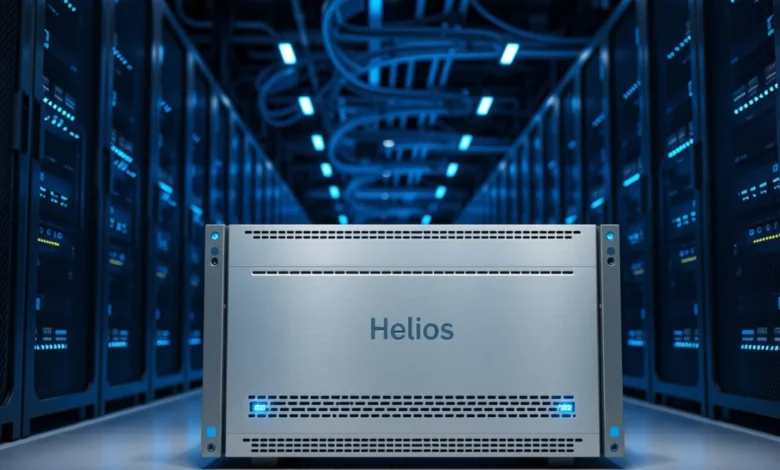
Advanced Micro Devices (AMD) has officially launched its highly anticipated Helios rack-scale AI system at the company’s Advancing AI conference in San Francisco, marking a pivotal moment in the escalating competition for high-performance computing in artificial intelligence. This move represents a direct and formidable challenge to Nvidia’s long-standing hegemony in the specialized hardware market essential for training and deploying large-scale AI models. With shipments slated to commence later this year and already backed by industry giants such as Microsoft, OpenAI, Meta, Oracle, and Anthropic, Helios is poised to reshape the competitive landscape of AI infrastructure.
The Genesis and Architecture of Helios
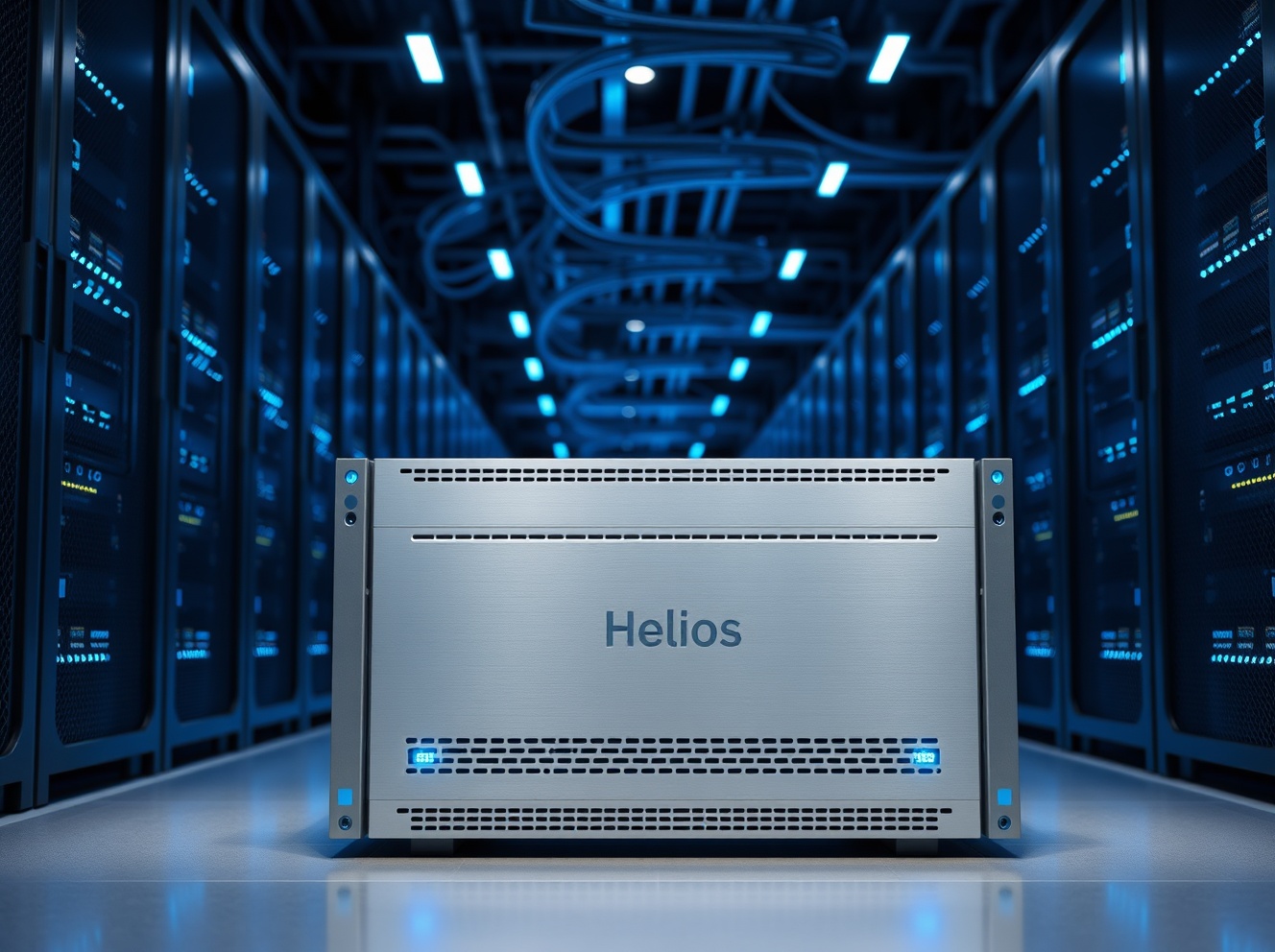
The Helios system is engineered as a comprehensive rack-scale solution, integrating a multitude of AMD’s most advanced processors into a singular, high-powered computing unit. Its design is meticulously optimized for the rigorous demands of training and running frontier AI models, which require immense computational throughput and efficient data transfer. Dr. Lisa Su, AMD’s Chair and CEO, heralded Helios as the tech industry’s "highest performance AI rack," a statement that directly pits it against Nvidia’s established Vera Rubin and upcoming Grace Blackwell rack-scale systems. Early performance benchmarks, as reported by industry observers like The Register, suggest that Helios demonstrates superior capabilities over Nvidia’s Vera Rubin in several key metrics, providing a compelling narrative for its market entry.
While the specifics of its internal architecture remain proprietary, it is understood that Helios leverages AMD’s latest generation of Instinct GPUs, likely incorporating the MI300X accelerators. These accelerators are designed to offer substantial memory bandwidth and capacity, crucial for handling the massive datasets and complex neural networks characteristic of contemporary AI. The rack-scale approach ensures seamless integration and optimized communication between hundreds or even thousands of individual processing units, minimizing latency and maximizing overall system efficiency—a critical factor for projects operating at "massive scale," as articulated by AMD. The strategic decision to offer a complete rack solution, rather than just individual components, simplifies deployment for data centers and hyperscalers, reducing integration complexities and accelerating time-to-value for AI initiatives.
Strategic Alliances and Unprecedented Customer Validation
A critical aspect of AMD’s Helios launch is the robust lineup of major customers and strategic partnerships already secured, providing significant market validation even before widespread availability. Microsoft, a titan in cloud computing, has publicly committed to expanding its Azure infrastructure with Helios deployments. This partnership is particularly impactful, as it positions AMD’s technology at the heart of one of the world’s largest cloud platforms, making it accessible to a vast ecosystem of developers and enterprises. Microsoft CEO Satya Nadella’s confirmation underscores the strategic importance of diversifying AI hardware suppliers for resilient and high-performing cloud services.
Further bolstering AMD’s position, Anthropic, a leading AI safety and research company known for its Claude models, announced a strategic partnership to deploy up to two gigawatts of GPUs utilizing the new Helios rack system. This commitment from a prominent AI research firm highlights Helios’s capability to meet the demanding computational needs of cutting-edge AI development. The scale of this deployment—two gigawatts—is staggering, indicative of the immense power requirements for future AI endeavors and Anthropic’s confidence in AMD’s hardware.
Beyond these foundational partnerships, OpenAI, the creator of ChatGPT and a pioneer in generative AI; Meta, the parent company of Facebook and a significant investor in AI research; and Oracle, a major enterprise software and cloud provider, have also pledged to deploy Helios. This trifecta of commitments from companies at the forefront of AI innovation, social media, and enterprise solutions firmly establishes AMD’s foothold in diverse segments of the enterprise AI market. These partnerships are not merely transactional; they represent a collaborative effort to push the boundaries of AI, with AMD providing the foundational compute power. For these companies, diversifying their hardware supply chain away from a single dominant vendor like Nvidia also carries strategic benefits, including negotiating leverage and ensuring greater supply security.
The Incumbent: Nvidia’s Dominance and the AI Hardware Landscape

For years, Nvidia has maintained an almost unassailable lead in the AI hardware market, largely due to its early investment in GPU computing for parallel processing, its proprietary CUDA software platform, and a comprehensive ecosystem of tools and libraries. CUDA, in particular, has become the de facto standard for AI development, creating a significant "moat" around Nvidia’s hardware. Developers, researchers, and companies have invested heavily in CUDA-based applications, making the transition to alternative platforms a considerable undertaking. Nvidia’s continuous innovation with its Tensor Core GPUs and NVLink interconnect technology has consistently pushed performance boundaries, further solidifying its position.
The AI accelerator market, a specialized segment within the broader semiconductor industry, has seen explosive growth driven by the proliferation of large language models (LLMs), deep learning algorithms, and the increasing complexity of AI workloads. Data centers and cloud providers are in a constant race to acquire more powerful and efficient accelerators to meet escalating demand. In this environment, Nvidia’s A100 and H100 GPUs have become the gold standard, often commanding premium prices and experiencing supply constraints due to overwhelming demand. This dominance has allowed Nvidia to capture an estimated 80-90% market share in AI accelerators, making it a critical bottleneck for many AI companies.
AMD’s Broader AI Strategy and Future Hardware
The launch of Helios is not an isolated event but a cornerstone of AMD’s comprehensive, multi-year strategy to penetrate and eventually lead the AI compute market. Complementing Helios, AMD also announced the Venice-X CPU, a data center processor specifically designed for high-computing workloads, with its launch anticipated in 2027. This move signals AMD’s intent to offer a holistic portfolio of AI-optimized hardware, including both GPUs and CPUs, to cater to the diverse needs of modern data centers. The Venice-X CPU will likely integrate closely with the Instinct GPU ecosystem, providing a balanced architecture for various AI and high-performance computing (HPC) tasks.
Central to AMD’s long-term strategy is the development and promotion of its open-source software platform, ROCm (Radeon Open Compute platform). ROCm serves as AMD’s direct alternative to Nvidia’s CUDA, offering tools, libraries, and compilers that enable developers to program AMD GPUs for AI and HPC workloads. While ROCm has historically lagged behind CUDA in terms of maturity and developer adoption, AMD is making significant investments to bridge this gap. The widespread deployment of Helios by major AI players will undoubtedly accelerate ROCm’s development and encourage more developers to port their applications, fostering a more diverse software ecosystem. The success of Helios will, to a large extent, depend on the continued maturation and ease of use of the ROCm platform.

The $1.4 Trillion AI Accelerator Market and Agentic AI
During her keynote address, Dr. Lisa Su delivered a bold projection for the future of the AI accelerator market, forecasting it to reach an astounding $1.4 trillion by 2030. This figure is nearly equivalent to the size of the entire semiconductor market today, underscoring the transformative impact AI is expected to have on global technology infrastructure. Su emphasized that graphics processing units (GPUs) will constitute the vast majority of this market. This is primarily due to the nascent stage of AI algorithm development, which necessitates highly programmable hardware capable of adapting to rapidly evolving workloads and new research paradigms.
The unprecedented demand for compute power is significantly driven by the emergence of "agentic AI." Agentic AI systems are characterized by their ability to perform multiple reasoning steps, engage in complex planning, and make numerous "tool calls" (interactions with external software or data sources) to complete a single task. Unlike simpler, single-shot inference models, agentic AI dramatically increases the computational requirements per task, pushing the boundaries of current GPU capabilities. As these intelligent agents become more sophisticated and widely adopted across industries, the need for advanced, high-performance accelerators like Helios will only intensify. This trend validates AMD’s investment in rack-scale systems designed for "massive scale," anticipating a future where AI workloads are not only large but also deeply iterative and resource-intensive.
Broader Industry Implications and the Road Ahead
The introduction of AMD’s Helios system carries profound implications for the AI industry and the broader technology sector.
Firstly, it signals a significant intensification of the "AI hardware arms race." For years, Nvidia has been the undisputed champion, but AMD’s entry with a credible, high-performance solution backed by top-tier customers injects much-needed competition. This rivalry is likely to spur greater innovation from both companies, leading to faster advancements in chip design, interconnect technologies, and software ecosystems.
Secondly, increased competition could lead to more favorable pricing for AI accelerators. The current scarcity and premium pricing of Nvidia GPUs have been a concern for many AI labs and cloud providers. AMD’s ability to offer a competitive alternative could alleviate these pressures, potentially lowering compute costs and making advanced AI research and deployment more accessible to a wider range of organizations.
Thirdly, it promotes supply chain diversification. Relying on a single vendor for critical hardware components carries inherent risks, including potential supply disruptions and limited negotiating power. AMD’s emergence as a strong second source provides greater resilience and flexibility for companies building out their AI infrastructure.
Finally, the architectural choices and performance metrics of Helios could influence future data center designs. As AI workloads continue to grow, the efficiency of rack-scale systems becomes paramount, and AMD’s innovations in this space could set new industry benchmarks.
Despite the promising launch, AMD faces significant challenges. Nvidia’s CUDA ecosystem remains deeply entrenched, and convincing developers to transition or embrace a dual-ecosystem approach will require sustained effort and continuous improvement of ROCm. Building a loyal customer base and demonstrating consistent performance and reliability at scale will be crucial for AMD’s long-term success. However, with strong customer commitments and a clear roadmap, AMD is well-positioned to capture a substantial share of the rapidly expanding AI accelerator market. The company’s focus on integrated, high-performance solutions like Helios, coupled with its strategic investments in an open software platform, underscores its ambition to become a central and indispensable player in the future of AI infrastructure.
Conclusion
AMD’s Helios launch represents a watershed moment in the AI hardware landscape. By unveiling a high-performance rack-scale AI system that directly challenges Nvidia’s market dominance and securing commitments from the most influential players in AI, AMD has unequivocally declared its intent to be a leader in the next era of computing. The audacious projection of a $1.4 trillion AI accelerator market by 2030, driven by the insatiable demands of agentic AI, provides a clear target for AMD’s strategic endeavors. As shipments commence later this year, the industry will keenly observe the impact of Helios on competition, innovation, and the overall trajectory of artificial intelligence development, signaling a potentially transformative shift in the foundational technology powering our increasingly intelligent world.