Critical Zimbra Collaboration Suite Vulnerability Exploited by Threat Actors to Deploy Web Shells and Exfiltrate Mailbox Data

Cybersecurity analysts from the Microsoft Security Research team have uncovered a sophisticated exploitation campaign targeting a high-severity, now-patched vulnerability in the widely used Zimbra Collaboration Suite (ZCS). Threat actors have weaponized this security flaw to compromise internet-facing mail servers, deploy persistent web shells, and harvest sensitive mailbox and authentication data across multiple organizations and industry sectors.
The security defect, officially tracked as CVE-2026-73570 and carrying a critical CVSS v3.3 severity score of 8.9, stems from an unauthenticated operating system command injection vulnerability. The flaw can be triggered when Simple Network Management Protocol (SNMP) notifications are enabled and the optional zimbra-snmp package is installed on the target environment. Attackers are able to exploit this weakness by transmitting specially crafted SMTP requests—essentially standard email traffic—directly to exposed Zimbra servers without requiring prior authentication or any form of user interaction.
Chronology of Events and Discovery
The unfolding threat landscape surrounding CVE-2026-73570 began to take shape during the summer of 2026, marking a period of intense scanning and targeted exploitation by unknown threat actor groups.
The timeline of the vulnerability and subsequent attacks unfolded across several key milestones:

- July 20, 2026: Zimbra officially released version 10.1.20, containing crucial security patches designed to remediate the command injection flaw.
- Late July to Early August 2026: Telemetry data analyzed by Microsoft revealed that between July 28 and August 7, 2026, two distinct out-of-band scanning tools actively probed the injection path on various servers to validate remote command execution capabilities without initially deploying follow-on payloads.
- August 2026: The Polish Computer Emergency Response Team (CERT Polska) first highlighted active exploitation of the flaw in the wild, urging administrators to audit system logs and check temporary and application directories for suspicious files.
- August 13, 2026: Technical details regarding the vulnerability and its exploitation were publicly disclosed to the broader security community.
- August 24, 2026: Recognizing the severe risk posed by active threat campaigns, the U.S. Cybersecurity and Infrastructure Security Agency (CISA) added CVE-2026-73570 to its Known Exploited Vulnerabilities (KEV) catalog, mandating that all federal civilian executive branch agencies apply the necessary updates by this deadline.
- September 30, 2026: Microsoft published a comprehensive threat intelligence report detailing the full attack chains, secondary payloads, and data exfiltration techniques observed across multiple victims.
Anatomy of the Attack Chain
According to Microsoft’s telemetry, the attacks occurred during the vulnerable window between the release of the patch on July 20 and the public disclosure on August 13. While various compromises exhibited differing methodologies, a typical successful intrusion followed a distinct multi-stage progression.
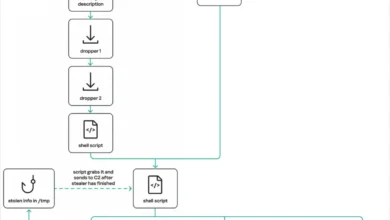
Upon gaining initial access via unauthenticated SMTP commands, the attackers executed arbitrary commands with the privileges of the underlying zimbra service account. To ensure long-term persistence and redundancy, the threat actors deployed multiple JavaServer Pages (JSP) web shells across Jetty and mailboxd application paths. Furthermore, attackers utilized native administrative utilities such as wget or curl to pull down external malicious payloads directly into the compromised environment, alongside establishing interactive reverse shells for real-time command and control (C2).
To maintain access even if primary web shells were discovered and removed, the operators leveraged native operating system mechanisms, including cron jobs, systemd service configurations, and memfd_create for memory-backed execution. In several instances, forensic investigators noted that attackers temporarily granted write permissions to public directories to facilitate the drop of a web shell, promptly restoring the original permission settings afterward to minimize forensic visibility during basic administrative checks.
Advanced Tooling and Remote Access Agents
In at least one observed campaign, the threat actors utilized a specialized lightweight shell downloader designed to fetch a custom Go-based binary named Zimdown2. This binary subsequently functioned as an installer for a more advanced remote-access agent known as Zimclient2.
Zimclient2 is engineered to provide comprehensive post-exploitation capabilities, offering attackers interactive shell access, bidirectional file manipulation, and built-in SOCKS5 proxying functionality. To ensure robust communication with command-and-control infrastructure and bypass traditional network monitoring controls, the agent supported multiple transport protocols, including WebSockets, Transport Layer Security (TLS), and raw TCP streams. This multi-transport capability not only guaranteed resilient remote access but also enabled lateral movement and network pivoting deeper into the internal corporate networks of compromised organizations.

To further solidify their footprint within the infected hosts, the actors established diverse persistence mechanisms associated with the Zimclient2 payload. These included the registration of new systemd services, OpenRC configurations, scheduled cron tasks, modifications to shell startup files, the addition of unauthorized SSH public keys, and the creation of clandestine local user accounts.
Data Harvesting and Exfiltration Techniques
Beyond establishing persistent backdoors, the threat actors focused heavily on gathering sensitive information stored within the email infrastructure. A core component of this intelligence-gathering phase involved the deployment of a tailored Go-based executable. This tool targeted the /opt/zimbra/conf/localconfig.xml configuration file to extract internal Zimbra service-account credentials.
Armed with these credentials, the utility constructed precise MySQL and Lightweight Directory Access Protocol (LDAP) connection strings to interact directly with the underlying database instances. The malware then exported the contents of critical database tables, systematically harvesting authentication tokens, digital certificates, LDAP secrets, mail-routing rules, and system configuration artifacts.
Once collected, the harvested files were compressed into local ZIP archives to prepare them for exfiltration. In one particularly notable incident documented by Microsoft, an attacker compiled recent mailbox backup contents into an archive located at /opt/zimbra/final.tar.gz. The threat actor then downloaded the legitimate Microsoft Azure storage management utility, AzCopy, from a remote repository and invoked it using an operator-supplied Azure Blob Shared Access Signature (SAS) URL pointing to an external cloud storage container.
While telemetry confirmed the mailbox-data collection, local staging, and the invocation of cloud-storage exfiltration tools, available digital forensics did not conclusively confirm whether the final data transfer completed successfully before remediation actions were taken.

Mitigation and Defensive Recommendations
The widespread exploitation of CVE-2026-73570 underscores the critical necessity for swift patch management, particularly for internet-facing email infrastructure that remains a primary target for sophisticated threat groups.
Security organizations and system administrators managing Zimbra Collaboration Suite deployments are strongly advised to take immediate remediation steps:
- Apply Patches Immediately: Upgrade all ZCS instances to version 10.1.20 or later, where the command injection vulnerability has been fully addressed.
- Alternative Mitigations: If immediate patching is not operationally feasible, administrators should uninstall the optional
zimbra-snmppackage and explicitly disable SNMP notifications to neutralize the attack vector. - Network Segmentation: Restrict network access to SNMP and SMTP services exclusively to trusted internal hosts and known administrative IP addresses.
- Credential Rotation: Rotate all Zimbra authentication secrets, service account passwords, and LDAP secrets to prevent persistent unauthorized access using harvested credentials.
- Threat Hunting and Forensic Audits: Review system log files—specifically
/var/log/zimbra.log—for anomalous service restarts, inspect temporary directories and web application paths for unauthorized JSP web shells, and audit system configurations for newly created user accounts, unexpected cron jobs, or modified SSH authorized keys.
As threat actors continue to weaponize zero-day and newly disclosed vulnerabilities against enterprise communication systems, proactive monitoring and rapid vulnerability response remain the cornerstone of effective organizational defense.