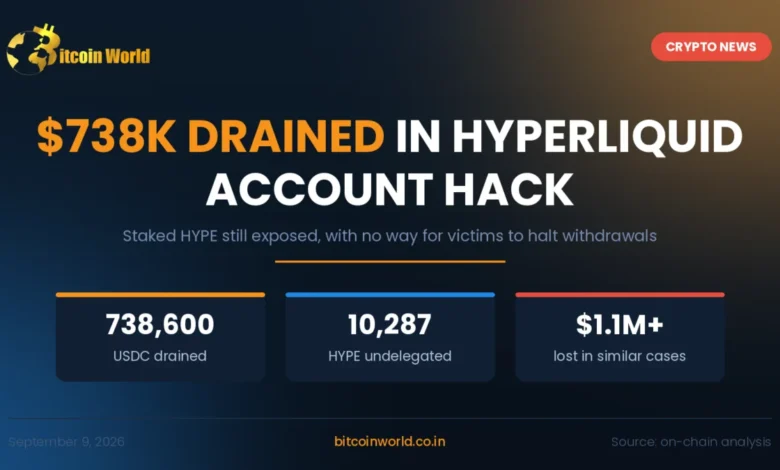
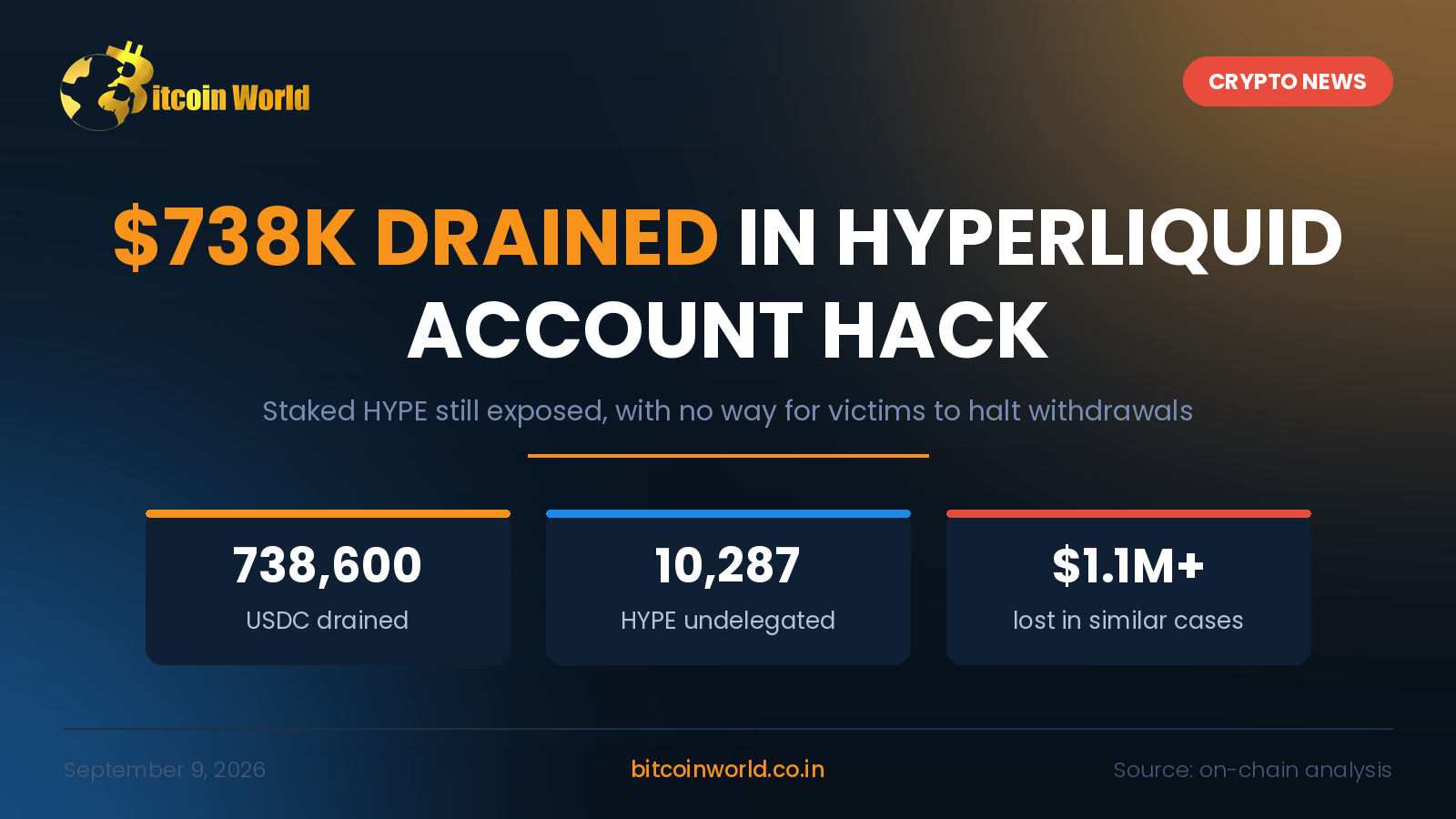
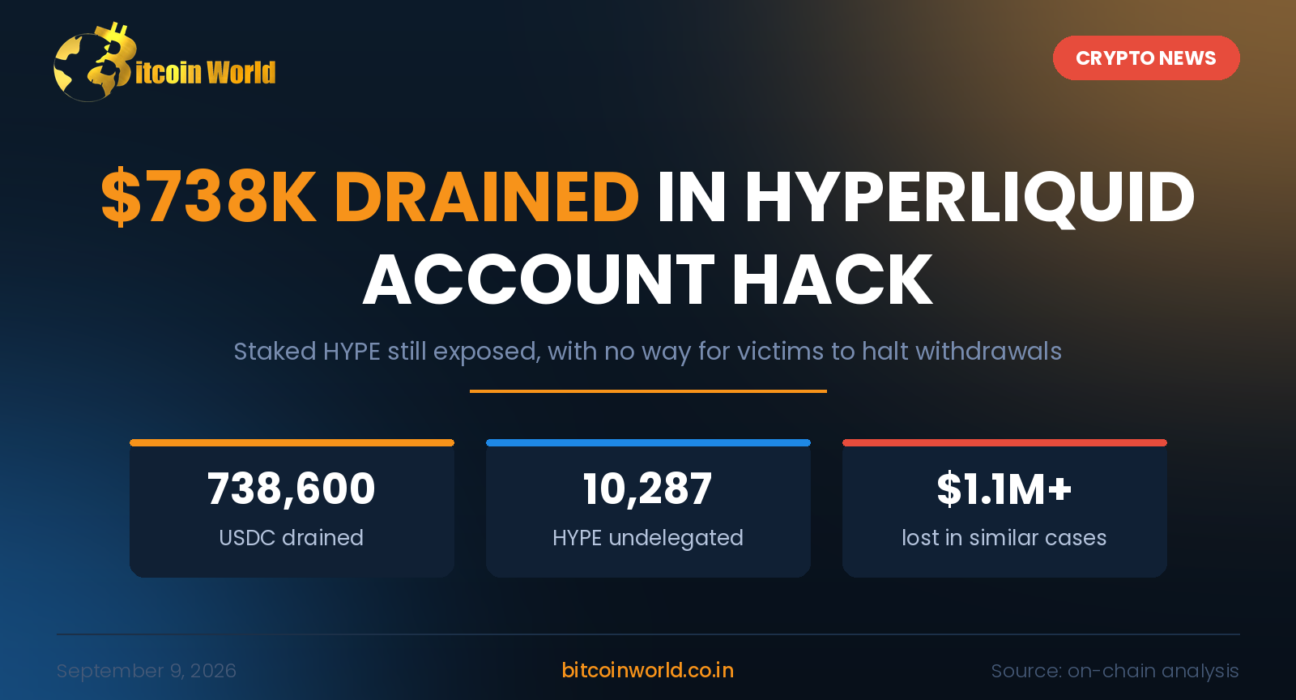
The decentralised finance (DeFi) sector has once again been shaken by a sophisticated security breach involving the Hyperliquid exchange. A user recently fell victim to a targeted account takeover, resulting in the theft of approximately $738,600 in USDC. While account compromises are an unfortunate, recurring reality in the cryptocurrency ecosystem, this specific incident has ignited a heated debate regarding platform design, the limitations of self-custody protocols, and the dangerous gap between user security features and the rigid mechanics of staked assets.
The Anatomy of the Breach
The incident began when an attacker gained unauthorized access to the wallet address 0x5b6d236e39a4723a8f79db93cfd1af4d228f9c60. Upon compromising the private keys, the perpetrator immediately moved to liquidate the accessible, liquid assets. However, the most critical aspect of the theft involved the victim’s staked assets. Specifically, 10,287 HYPE tokens remained in a staking position.
Under Hyperliquid’s current protocol architecture, the unstaking process necessitates a mandatory seven-day waiting period before a "cWithdraw" function can effectively release the underlying funds. This mechanism, while intended to provide stability to the network’s staking pool, inadvertently acted as a cage for the victim. Once the attacker initiated the unstaking process, the victim was effectively powerless. Because there is currently no user-triggered mechanism to pause withdrawals, freeze the account, or initiate a social recovery path, the legitimate owner was forced to watch a digital countdown toward the final theft of their locked capital.
Chronology of the Attack
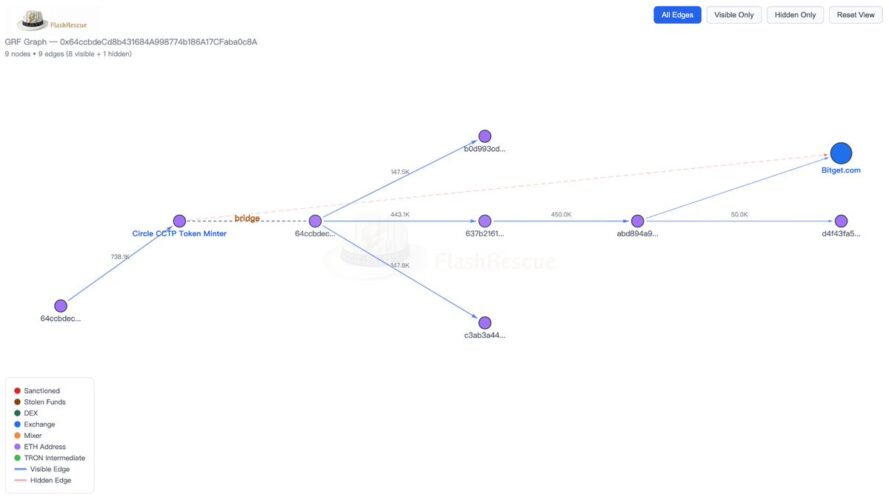
The attack followed a pattern consistent with professional-grade cyber-theft. Following the initial account takeover, the perpetrator moved swiftly to obfuscate the origin of the funds. Analysts tracking the movement of assets identified that the thief utilized the Cross-Chain Transfer Protocol (CCTP) to migrate the stolen USDC across chains.
The choice of CCTP is significant; by utilizing native burn-and-mint transfers rather than wrapped bridge assets, the attacker ensured that the flow of funds was cleaner and significantly harder to trace through traditional on-chain analysis. Once the funds reached their destination, the attacker engaged in a “peel-chain” strategy, splitting the total stolen amount into unequal, smaller denominations. This tactic is a textbook method designed to bypass automated fraud detection and anti-money laundering (AML) thresholds.

Within a remarkably short window, the funds were funneled into centralized exchanges. This rapid movement indicates a calculated gamble by the attacker, who prioritized speed and the potential latency of compliance departments at major exchanges over the use of complex, time-consuming obfuscation tools like privacy mixers.
Technical Analysis and Vulnerabilities
Blockchain security experts suggest that the incident highlights a fundamental structural issue in how modern decentralized derivatives exchanges (DEXs) manage user custody. Hyperliquid, like many other high-performance platforms, prioritizes the "absolutism" of self-custody. While this is a core tenet of the crypto ethos, it leaves little room for error when a user’s primary authentication method—their private key—is compromised.
In contrast, Ethereum-based smart accounts have spent the last several years evolving to include advanced security layers, such as social recovery modules and multi-signature guardian setups. These features allow users to regain access to their accounts or freeze assets in the event of a security breach. Currently, Hyperliquid’s infrastructure lacks an equivalent, leaving accounts holding significant delegated stakes in a precarious position. When a platform offers an exchange-grade, high-leverage product, the lack of "emergency brakes" creates a liability that is increasingly unacceptable to institutional and high-net-worth retail users.

Industry Implications and Proposed Solutions
The fallout from this incident has prompted calls for immediate improvements to the Hyperliquid protocol. A proposal currently circulating within the community suggests the introduction of an "Opt-in Guardian" system. Under this framework, a pre-configured, trusted entity—or a set of pre-selected addresses—would have the limited authority to temporarily halt critical functions, including cWithdraws, asset transfers, and changes to multisig settings.
Crucially, this guardian would possess no ability to move or withdraw funds, ensuring that the protocol remains decentralized and that the guardian cannot unilaterally seize capital. Any attempt to replace a guardian or execute a major protocol change would be subject to an on-chain timelock and a validator-governed review process.
Proponents of this system argue that such measures are essential for the long-term viability of the platform. However, the proposal has faced immediate pushback from privacy purists and decentralization advocates. Many argue that any mechanism allowing for a temporary halt of assets, even under strict parameters, introduces a vector for censorship and fundamentally undermines the "code is law" philosophy. Despite these objections, analysts suggest that as the value locked on decentralized exchanges grows, the frequency of such hacks will necessitate a compromise between pure self-custody and user-safety features.
The Broader Context of Crypto Security
This hack serves as a stark reminder that the security of a platform is often only as strong as its weakest user interface. While Hyperliquid’s code functioned exactly as intended—executing the seven-day unstaking period without error—that functionality proved to be a design flaw in the context of a malicious actor.
For the broader crypto market, the event underscores a critical trend: the shift toward professionalized, exchange-grade security. As decentralized platforms compete with centralized giants like Binance or OKX, the expectation for high-level security features—such as hardware wallet integration, granular permissions, and emergency recovery options—will only intensify.
The victims of such attacks often find little recourse. With the funds moved into centralized exchange channels, recovery is dependent on the cooperation of exchange compliance teams and international law enforcement—a process that is notoriously slow and frequently unsuccessful. As of this writing, there have been no reports of the stolen funds being frozen by centralized platforms, further emphasizing the urgency for decentralized, on-chain solutions.
Conclusion and Future Outlook
The incident involving the $738,600 USDC drain on Hyperliquid is not merely a story of individual loss; it is a case study in the inherent risks of current DeFi design. The seven-day unstaking period, while theoretically designed for protocol health, served as a "waiting room" for the thief, highlighting a gap in security design that allowed the crime to be completed without interference.
As the decentralized derivatives market continues to expand, platforms will be forced to reconcile the tension between absolute self-custody and the safety measures required to protect users from sophisticated account takeovers. Until account-level recovery, guardian modules, or similar safety nets become industry standard, high-value staked balances on any decentralized venue will remain inherently vulnerable.
For the average user, this event serves as a sobering reminder to employ rigorous security practices, such as utilizing hardware wallets, maintaining cold storage for long-term stakes, and being hyper-vigilant regarding smart contract approvals. Whether or not Hyperliquid and similar protocols move to implement the suggested Guardian modules, the industry as a whole is clearly reaching an inflection point where the cost of "pure" decentralization may soon be outweighed by the necessity of institutional-grade security.