Why Driving an Older Car Provides More Peace of Mind Than Purchasing a New Vehicle

The automotive retail landscape is currently navigating a complex period characterized by elevated interest rates, fluctuating inventory levels, and a shifting consumer preference toward vehicle longevity. While the allure of a new car remains a staple of modern consumer culture, an increasing number of vehicle owners are conducting rigorous cost-benefit analyses that favor maintaining existing assets over acquiring depreciating liabilities. This financial prudence is particularly evident when examining the total cost of ownership, opportunity costs, and the psychological burden associated with preserving pristine, high-value assets.
To understand the macro-level reluctance toward new vehicle acquisitions, one must examine the broader economic environment. Average transaction prices for new automobiles have hovered near historic highs, frequently exceeding $48,000. When combined with prevailing auto loan interest rates—which have routinely remained elevated above 6% for standard 60-month financing terms—the cost of borrowing has significantly increased the monthly commitment for prospective buyers. Consequently, consumers are increasingly weighing the utility of a brand-new purchase against the pragmatic alternative of servicing and repairing a fully depreciated vehicle.
Financial Mechanics: New Vehicle Depreciation Versus Maintenance Outlays
When evaluating the acquisition of a luxury vehicle, the financial realities extend far beyond the initial sticker price. Taking a benchmark luxury SUV priced at approximately $110,000, the immediate transaction costs in high-tax jurisdictions can be substantial. For instance, in San Francisco, an 8.625% sales tax rate introduces nearly $9,500 in upfront state and local levies, alongside initial registration fees exceeding $1,000. These mandatory expenditures bring the total out-the-door capitalization close to $120,000 prior to operational use.
Depreciation schedules for luxury automotive segments dictate that a vehicle typically sheds approximately 20% of its market value within the first twelve months of ownership, followed by an additional 10% to 15% reduction in the second year. On a $110,000 asset, this depreciation trajectory represents a capital loss ranging between $33,000 and $38,500 over a 24-month horizon. Factoring in non-recoverable sales tax, the total cost of operating the vehicle for a two-year period approaches $45,000, translating to an effective monthly expenditure of roughly $1,800 to $2,000, exclusive of comprehensive insurance premiums and fuel consumption.
Conversely, maintaining an older vehicle—such as an eleven-year-old luxury utility vehicle—presents a starkly different economic profile. Even assuming elevated annual maintenance and repair outlays of $3,000, the monthly expenditure drops to approximately $250. Even under adverse scenarios featuring consecutive years of major mechanical interventions, the cumulative operational expenditure remains tens of thousands of dollars below the steep depreciation curve of a new showroom purchase. Furthermore, logistical considerations, such as future relocation plans or inter-state shipping expenses, further diminish the financial viability of short-term vehicle ownership cycles.

The Psychological Impact of Asset Preservation
Beyond direct monetary calculations, automotive economists and consumer psychologists point to the hidden psychological tax exacted by high-value assets. The acquisition of a new vehicle fundamentally alters driver behavior. Parking decisions become calculated risk assessments; parallel parking on dense urban thoroughfares transforms from a routine transit requirement into a stress-inducing scenario.
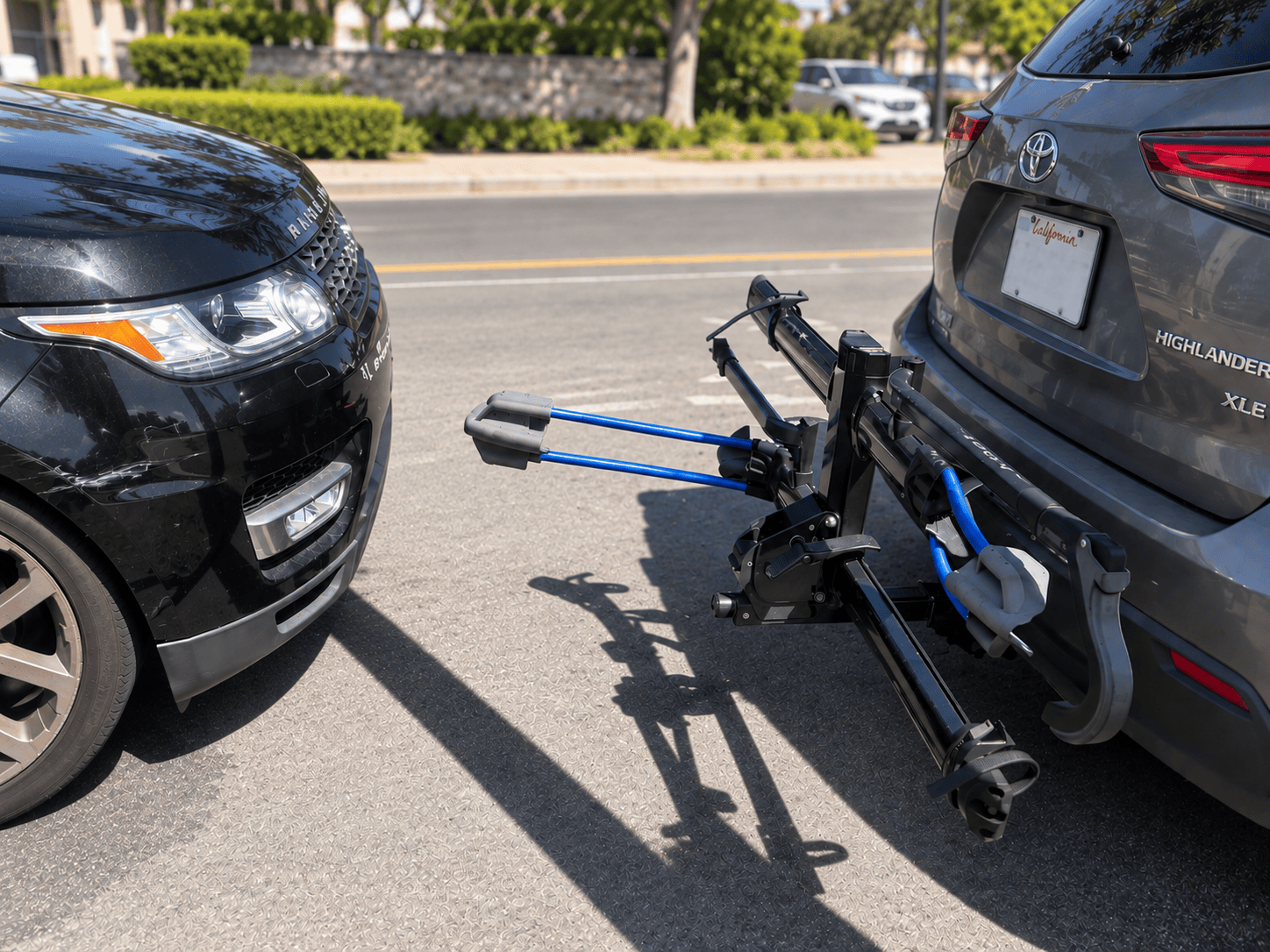
This phenomenon was recently highlighted in a localized incident involving a minor parking maneuver in an urban corridor. The driver of an aging, well-utilized vehicle attempted a standard parallel parking procedure, inadvertently contacting an extended, unladen bicycle hitch protruding from a preceding automobile. The resulting impact caused localized indentation and abrasion to the bumper assembly—damage estimated at several thousand dollars to repair professionally.
For an owner of a newly acquired, six-figure vehicle, sustaining such damage within weeks of purchase typically induces significant frustration and financial distress. However, for the owner of an older vehicle already bearing the aesthetic patina of daily use, the incident yielded a rapid transition from initial agitation to psychological relief. This dynamic illustrates the core value proposition of driving older transportation assets: the mitigation of anxiety. The accumulation of minor cosmetic imperfections diminishes the marginal psychological cost of subsequent dings, liberating the owner from the persistent pressure of pristine asset preservation.
Demystifying Dealership Pricing Structures
For consumers who nevertheless proceed with a new vehicle acquisition, navigating dealership pricing structures requires a clear understanding of the four primary layers of automotive commerce. Industry experts advise that comprehending these distinct tiers is essential for effective negotiation.
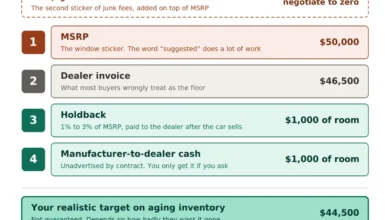
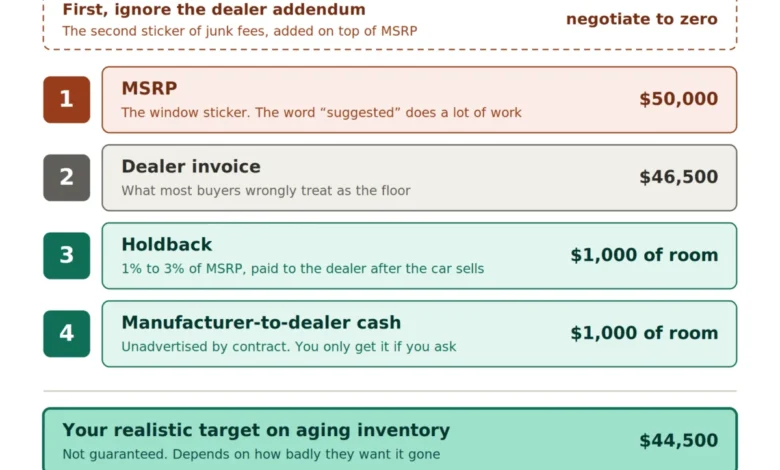
Layer one is the Manufacturer’s Suggested Retail Price (MSRP), prominently displayed on the federally mandated Monroney window sticker. This figure includes baseline destination and delivery charges. Surrounding the MSRP, consumers frequently encounter dealer addendum stickers, which incorporate high-margin auxiliary items such as paint protection, fabric sealants, nitrogen tire fills, and vehicle identification number (VIN) etching. These addendums represent significant dealership profit margins and are largely negotiable.
Layer two represents the dealer invoice price, which is frequently misunderstood by retail buyers as the absolute cost baseline for the dealership. In practice, dealer invoice does not account for subsequent manufacturer incentives.
Layer three encompasses dealer holdbacks. Manufacturers routinely reimburse dealerships an amount equivalent to 1% to 3% of the vehicle’s MSRP following a completed retail sale. This mechanism ensures that a dealership selling a vehicle precisely at the invoice price retains a margin of profitability. Consequently, the invoice price does not represent a hard economic floor.
Layer four consists of unadvertised manufacturer-to-dealer cash incentives. These are discrete financial bonuses provided by automakers to dealerships to stimulate the movement of specific slow-moving or end-of-year inventory. Because these programs are frequently excluded from public advertising directives, consumers must explicitly inquire about applicable dealer cash programs during the negotiation process to capture optimal pricing concessions.
Strategic Purchasing Frameworks and Consumer Metrics
Industry analysts recommend decoupling the core vehicle purchase negotiation from trade-in valuations and financing terms. Blending these three distinct transactions obfuscates the true cost of the acquisition. Furthermore, financial planners advocate adherence to disciplined affordability metrics, such as the established "1/10th rule," which suggests that the total purchase price of a personal automobile should not exceed ten percent of the buyer’s gross annual household income. This guideline acts as a financial buffer, ensuring that transportation costs do not compromise broader household liquidity or long-term wealth accumulation objectives.
Ultimately, the decision to retain an aging vehicle or invest in a new model transcends simple arithmetic. It represents a fundamental evaluation of lifestyle priorities, balancing the tactile appeal of modern automotive engineering against the enduring peace of mind derived from financial detachment and unburdened asset utilization.