U.S. Appeals Court Rules Against Kalshi in Landmark Sports Betting and Prediction Market Battle

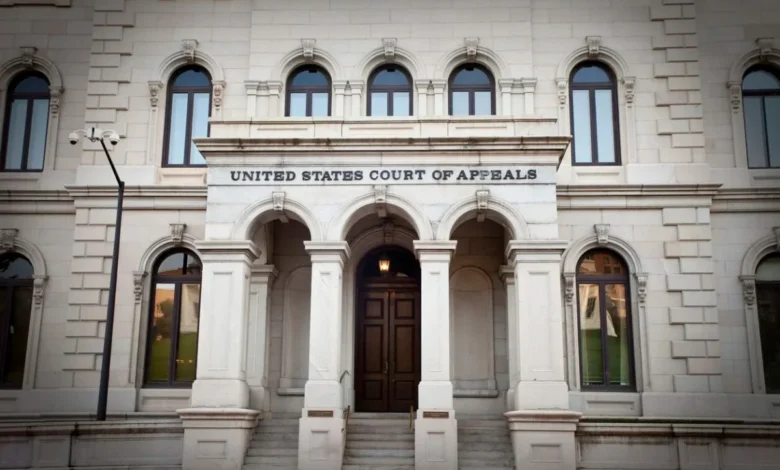
The legal battle over the regulation of prediction markets reached a critical juncture following a unanimous ruling by the 6th U.S. Circuit Court of Appeals against prediction-market operator Kalshi. The court’s decision allows the states of Ohio and Tennessee to enforce their respective state gambling laws against Kalshi’s sports-event contracts. This major judicial development deepens an already profound split among federal circuit courts regarding financial derivatives and state gaming oversight, setting the stage for what many legal experts believe will inevitably become a landmark showdown before the U.S. Supreme Court.
At the core of the dispute is whether event contracts offered by modern prediction platforms qualify as federally regulated financial instruments or as traditional, state-regulated gambling products. The 6th Circuit’s unequivocal rejection of Kalshi’s arguments underscores the escalating tension between federal market regulators and state-level gaming commissions as alternative financial products continue to blur the lines between traditional trading and sports wagering.
The Legal Battleground: Federal Commodities Law Versus State Gaming Authority
The central disagreement in the litigation revolves around federal jurisdiction granted to the Commodity Futures Trading Commission (CFTC) versus the traditional police powers of individual U.S. states to regulate gaming and gambling within their borders.
Kalshi had argued before the 6th Circuit that its sports-event contracts legally qualify as financial "swaps" under the Commodity Exchange Act (CEA). Under this interpretation, the company maintained that its products are subject exclusively to federal oversight by the CFTC, which would preempt state-level authorities from intervening or applying local gambling statutes.
However, a three-judge panel of the 6th Circuit unanimously disagreed. The court held that the statutory framework of federal commodities law does not preempt or prevent Ohio and Tennessee from enforcing state gambling laws against the platform’s sports-related prediction offerings. The judges concluded that offering contracts tied directly to the outcomes of athletic competitions functions functionally and legally as sports betting, which falls squarely within the regulatory jurisdiction of state governments.
This ruling directly challenges the operational model of federally licensed designated contract markets (DCMs) that attempt to offer event contracts nationwide under a single federal umbrella, bypassing state-by-state licensing requirements.
A Growing Federal Circuit Split
The decision by the 6th Circuit does not exist in a vacuum; rather, it compounds a rapidly expanding division across various federal appellate courts regarding prediction markets and sports betting regulations:
- April 2026 (3rd U.S. Circuit Court of Appeals): In a case involving the state of New Jersey, the 3rd Circuit reached a conclusion favorable to prediction markets, finding that certain federal frameworks limited the state’s ability to interfere with specific derivative contracts. Following this decision, New Jersey formally petitioned the U.S. Supreme Court to review the case and deliver a definitive ruling on whether states possess the authority to regulate sports-based prediction products.
- August 2026 (9th U.S. Circuit Court of Appeals): Mirroring the logic later adopted by the 6th Circuit, the 9th Circuit ruled that the state of Nevada possesses the full legal authority to regulate Kalshi’s sports contracts under its established gaming laws, rejecting the notion of sweeping federal preemption.
- September 2026 (6th U.S. Circuit Court of Appeals): The latest unanimous decision regarding Ohio and Tennessee reinforces the 9th Circuit’s stance, solidifying a clear jurisdictional divide between different geographic regions of the United States.
This patchwork of conflicting appellate decisions has created a volatile operational environment for fintech and prediction-market startups. Companies now face radically different legal realities depending on which federal circuit court holds jurisdiction over a given state.

Broader Crackdown on Alternative Prediction and Crypto Platforms
The legal pressure on Kalshi is part of a broader, coordinated wave of regulatory and legal actions targeting prediction markets and cryptocurrency exchanges offering event-based derivatives across the United States. State attorneys general and financial regulators have increasingly ramped up enforcement actions under the banner that wagering on real-world events constitutes unregulated gambling.
In April 2026, the state of New York made headlines by filing lawsuits against prominent cryptocurrency exchanges Coinbase and Gemini. New York officials argued that the platforms were facilitating unauthorized event-based derivatives, famously summarizing their legal stance with the assertion that "gambling by another name is still gambling."
Similarly, in September 2026, New York State regulators initiated legal proceedings against Polymarket, another major prediction-market platform, accusing the company of operating an illegal gambling enterprise within the state. These actions reflect an aggressive stance by state-level regulators who view decentralized and blockchain-adjacent prediction platforms as an end-run around strict state gaming laws and consumer protection safeguards.
Conversely, federal authorities have occasionally stepped in with conflicting directives. Notably, the CFTC invoked emergency powers in August 2026 to order Kalshi to continue operating amid a separate New York lawsuit, highlighting the ongoing turf war between federal market watchdogs attempting to foster innovation and state regulators seeking to protect local gaming monopolies and consumer interests.
Industry Implications and the Road to the Supreme Court
The implications of the 6th Circuit ruling extend far beyond Ohio and Tennessee. If allowed to stand, the decision empowers state regulators nationwide to pursue enforcement actions, issue cease-and-desist orders, and levy penalties against prediction-market operators that offer sports contracts without state-level gaming licenses.
Legal experts note that Kalshi’s overarching business model relies heavily on nationwide uniformity. Executives and legal counsel for the platform have repeatedly argued that complying with a fragmented, state-by-state regulatory system is practically and financially unfeasible for digital-first prediction markets. If every state can impose its own licensing regime, compliance costs skyrocket, and the core utility of a centralized national prediction exchange is severely undermined.
Conversely, state gaming regulators and traditional sports-betting operators—who pay substantial licensing fees and tax revenues to state governments—argue that allowing prediction markets to offer sports wagers unchecked creates an uneven playing field. They contend that exempting prediction platforms from state oversight bypasses critical consumer protections, age verification standards, and problem-gambling prevention programs enforced by state gaming commissions.
With appellate courts in the 3rd, 6th, and 9th Circuits reaching starkly divergent conclusions on the intersection of federal commodities regulation and state gaming laws, the legal uncertainty has reached a tipping point. Because the federal circuits are now directly split on the fundamental question of preemption, legal scholars agree that Supreme Court intervention is virtually guaranteed.
As New Jersey’s prior petition sits before the nation’s highest court seeking a definitive review, the entire prediction market and sports betting industry waits with bated breath. The eventual Supreme Court ruling will not only determine the immediate fate of Kalshi and its sports contracts but will permanently define the boundaries of federal financial oversight versus state sovereignty in the digital age.