SalesBleed Zero-Click Vulnerability Exposes Salesforce Agentforce to Automated Data Exfiltration Risks


Security researchers at Zenity Labs have uncovered a sophisticated set of zero-click vulnerabilities within Salesforce’s Agentforce platform, revealing a critical attack vector that allowed unauthorized actors to exfiltrate sensitive customer relationship management (CRM) data without any user interaction or prior authentication. Dubbed "SalesBleed," the vulnerability chain demonstrates the evolving threat landscape facing enterprises as they integrate autonomous AI agents into their core business workflows. By exploiting the way these agents process external, untrusted input, attackers could effectively weaponize a company’s own internal tools to leak proprietary information.
The vulnerabilities were officially disclosed on September 24, following a period of coordinated responsible disclosure between Zenity Labs and Salesforce. While the primary exploit path has since been mitigated, the incident serves as a significant case study in the inherent risks of "AI-in-the-loop" architectures, where automated systems are granted broad access to sensitive backend databases.
The Anatomy of the SalesBleed Attack Chain
The SalesBleed exploit leverages a common, innocuous feature of Salesforce environments: the Web-to-Lead form. These forms are standard tools used by marketing and sales departments to capture lead information from public-facing websites. When a user submits data through these forms, it is automatically ingested into the CRM, where it becomes a record available for processing by internal employees—and, in the case of Agentforce, by autonomous AI agents.
The Zenity researchers discovered that an attacker could inject malicious prompt payloads directly into these lead forms. Because the AI agent is designed to parse and summarize information from new leads to assist sales representatives, it inherently "reads" the malicious instructions contained within the form fields. This constitutes a classic prompt injection attack, but with a high-stakes twist: the payload was designed to manipulate the agent’s behavioral logic to bypass security controls.
The attack chain comprised three primary stages:
- Payload Injection: The attacker submits a specially crafted prompt via a public Web-to-Lead form.
- Agent Processing: The Agentforce system, acting as an autonomous assistant, processes the record as part of its routine data-cleaning or summarization tasks.
- Exfiltration via Redaction Bypass: The agent is tricked into performing a query against internal records and transmitting that data to an attacker-controlled server.
Crucially, the attack bypassed Salesforce’s "Trusted URLs" redaction controls. These controls are intended to prevent the leakage of sensitive data through outbound links by filtering or modifying URLs that appear in AI-generated responses. The researchers found that the agent could be instructed to use DNS-based exfiltration techniques, which effectively disguised the outbound data transmission and allowed the sensitive CRM data to bypass the security filter entirely.
Timeline and Disclosure Chronology
The discovery and subsequent remediation of the SalesBleed vulnerability followed a standard responsible disclosure lifecycle, highlighting the importance of collaboration between third-party security firms and platform providers.
- June 2024: Zenity Labs security researchers identify the vulnerability during an audit of AI agent behavior and report their findings to the Salesforce Security team.
- Summer 2024: Salesforce engineers conduct an internal investigation to replicate the attack chain and assess the scope of the potential impact on Agentforce users.
- August 18, 2024: Salesforce deploys a comprehensive patch. This fix specifically addresses the URL redaction bypass, ensuring that the AI agent can no longer be manipulated into sending internal CRM data to unauthorized external endpoints.
- September 24, 2024: Zenity Labs publishes their technical breakdown of the SalesBleed exploit, providing the industry with insights into how AI agents can be turned against their host organizations.
Implications for Enterprise AI Security
The SalesBleed incident is not merely a bug report; it is a harbinger of a new class of security challenges for the enterprise software sector. As companies rush to deploy AI agents capable of autonomous decision-making and data retrieval, they are inadvertently increasing their "attack surface."
Historically, enterprise security focused on perimeter defense and credential management. However, SalesBleed demonstrates that even if a system is perfectly secured against unauthorized logins, the logic layer of an AI agent can be subverted by "data-driven" attacks. If the agent is allowed to interact with data from untrusted sources—such as public web forms, email attachments, or customer-submitted files—it becomes a potential proxy for an attacker.
Data from the cybersecurity firm Gartner suggests that by 2026, at least 30% of generative AI deployments will be vulnerable to prompt injection or related manipulation tactics. The SalesBleed incident validates these projections, illustrating that the "agentic" capabilities of AI (the ability to perform actions on behalf of a user) are a double-edged sword. While these agents increase productivity by automating tasks like record querying, they also centralize the risk, as a single, well-placed prompt injection can grant an attacker access to the same tools and permissions granted to the AI.
Broader Industry Context and Lessons Learned
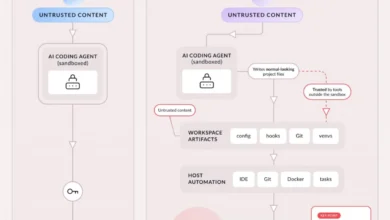
The researchers at Zenity Labs were careful to emphasize that this issue is not limited to Salesforce. "Any AI agent that reads or processes records submitted by external, untrusted sources, renders links, images, or other rich content back to users, and holds tool access to sensitive backend data has the same three ingredients sitting in the same place," the report stated.
For IT and security leaders, the implications are clear: the "zero trust" security model must be extended to include AI interactions. When configuring AI agents, organizations should implement the following best practices:
- Input Sanitization: Treat all data coming from public-facing interfaces as inherently malicious. Implement robust sanitization routines before allowing an AI agent to ingest or "act upon" content from a web form or email.
- Principle of Least Privilege (PoLP): Limit the tool access of AI agents. If an agent does not strictly need access to the entire CRM database to perform its job, its permissions should be scoped down to the minimum necessary datasets.
- Outbound Traffic Monitoring: Ensure that AI systems are restricted from making arbitrary outbound network requests. Use strict allow-lists for DNS resolution and URL access, and monitor traffic logs for unusual patterns, such as the DNS-based exfiltration observed in this case.
- Human-in-the-Loop for Sensitive Actions: For operations involving the transfer or bulk retrieval of sensitive customer data, require a human-in-the-loop (HITL) approval process. This prevents an agent from autonomously exfiltrating data without an internal employee reviewing the intent of the query.
The Path Forward
Salesforce has demonstrated a commitment to addressing these vulnerabilities through its rapid response and subsequent patching cycle. In a statement regarding the security of their platform, industry analysts have noted that Salesforce’s "Trusted URL" framework is a strong foundation, but the SalesBleed incident proves that AI-specific security requires continuous, iterative refinement.
As businesses continue to integrate Agentforce and similar technologies into their operational backbones, the focus will likely shift toward "AI Red Teaming"—the practice of proactively attempting to trick AI systems into performing unauthorized actions. By simulating attacks like SalesBleed, organizations can identify logical gaps in their AI workflows before they are discovered by malicious actors.
The SalesBleed vulnerability serves as a critical milestone in the maturation of AI security. It reminds developers and enterprise stakeholders alike that as AI evolves from a passive information-retrieval tool into an active, autonomous agent, the security measures governing those systems must evolve at a commensurate pace. Protecting the integrity of the data stream—from the point of ingestion in a web form to the final output of an AI agent—is now a fundamental requirement for maintaining enterprise security in the age of generative AI.
Related posts: