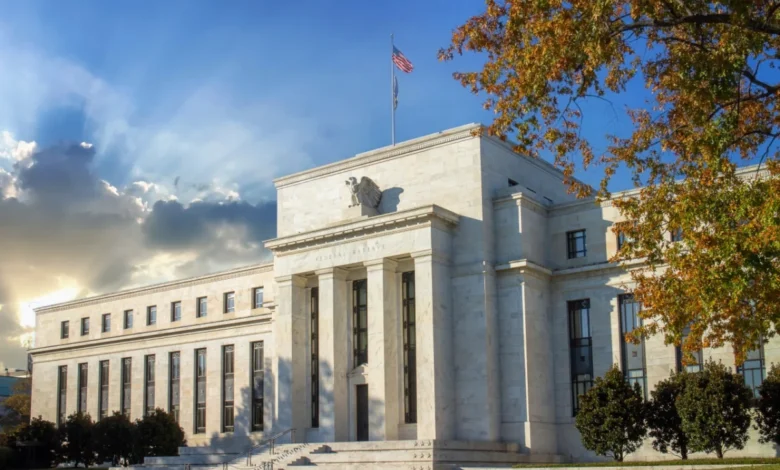
Cryptocurrency markets experienced a wave of cautious optimism following the Federal Reserve’s monetary policy announcement on October 28, 2026. Bitcoin successfully inched closer to the pivotal $81,000 threshold, while major altcoins tracked upward momentum despite a divided central bank leaving benchmark interest rates unchanged. The macroeconomic landscape, defined by persistently sticky inflation and surprisingly robust domestic economic expansion, continues to cast a long shadow over digital asset valuations. While immediate market reactions favored buyers attempting to engineer a recovery from a string of weak sessions, underlying derivatives positioning and looming options expiries suggest that volatility is far from extinguished.
Market Snapshot: Immediate Price Action Across Digital Assets
In the wake of the Federal Open Market Committee (FOMC) rate decision, digital assets registered modest relief rallies. Bitcoin reached $80,941.21 according to the latest CoinMarketCap snapshot, ticking upward from an earlier reading of $80,752.16. This incremental gain of $189.05, representing roughly 0.23%, mirrored broader positive movements across the cryptocurrency ecosystem.
Ethereum, Solana, and XRP all recorded gains in the immediate rolling hour following the statement, up 0.82%, 0.88%, and 1.00% respectively. BNB and TRON also showed stability, though absolute numbers masked a deeper week-long correction that left most top-tier assets nursing negative seven-day returns. Bitcoin’s seven-day performance, for instance, sat at -4.47%, while Ethereum and Solana endured drops exceeding 6% over the same weekly interval.
Total cryptocurrency market capitalization hovered near $2.71 trillion, buoyed by a 0.50% 24-hour advance in the CoinMarketCap 20 Index. Meanwhile, the Crypto Fear & Greed Index registered a reading of 45, firmly placing market sentiment in neutral territory. Analysts noted that while these modest gains indicate a tentative return of buyers, distinguishing organic capital inflows from the routine closing of bearish short positions remains a challenge for market observers.
Chronology of Events and the October 28 FOMC Decision
The Federal Reserve’s October 2026 meeting concluded with a benchmark interest rate holding steady in the 3.75% to 4.00% range. However, the decision was far from unanimous, marking a notable shift in consensus among central bankers. A 10–2 vote revealed internal friction, with Federal Reserve Governors Lisa Cook and Beth Hammack dissenting in favor of a 25-basis-point rate hike.
This dissent underscores the central bank’s ongoing internal debate regarding how aggressively to combat lingering price pressures. Accompanying the rate decision was an upgraded economic assessment. The Fed characterized U.S. economic activity as expanding at a "strong pace"—a subtle yet important rhetorical escalation from the "solid pace" phrasing used in previous communications.
Data cited in the policy statement pointed to resilient domestic consumer spending, robust capital investments, and a remarkably stable unemployment rate. For the wider financial ecosystem, these indicators signaled that the Federal Reserve retains ample leeway to maintain restrictive monetary policy for an extended duration. As policymakers wait for inflation metrics to definitively converge toward the central bank’s mandated 2% target, the timeline for potential monetary easing continues to recede.
Derivatives Landscape: Open Interest and the October 30 Options Expiry
While spot prices captured the immediate attention of retail traders, institutional metrics and derivatives data painted a far more complex picture of structural market health. According to a market report published by Bitfinex on October 26, aggregate futures open interest stood at approximately 669,253 BTC. This massive volume of open contracts demonstrated that substantial leveraged exposure persisted within the market, even after Bitcoin’s recent sharp correction.
Compounding this structural vulnerability was a major options expiry date scheduled for October 30. Approximately 136,165 BTC in options contracts—carrying an estimated notional value of $11 billion—were hurtling toward expiration. Bitfinex analytics placed the maximum-pain strike price near $78,000, framing a one-standard-deviation implied volatility price range between $77,800 and $83,800.
These pre-decision metrics provided a vital roadmap for understanding why Bitcoin’s recovery toward $80,940 encountered gravitational pull. Sitting comfortably within the options-implied volatility band, the asset’s price sensitivity was profoundly heightened by delta hedging and market maker repositioning ahead of the multi-billion-dollar settlement.
The fragility of excessive leverage had already been violently demonstrated earlier in the month. During a punishing 24-hour liquidation cycle ending October 24, approximately $687 million in long positions were forcefully unwound across major exchanges. While those liquidations predated the Fed’s October 28 announcement, they served as a stark reminder of how quickly leveraged froth can be purged from the ecosystem, leaving spot markets vulnerable to cascading sell-offs.
Dissenting Voices and Macroeconomic Implications for Crypto
The presence of two hawkish dissenters at the October FOMC meeting carries profound implications for risk-on asset classes, including cryptocurrencies. Historically, digital assets have thrived in low-interest-rate environments characterized by abundant global liquidity. When the Federal Reserve signals that borrowing costs could remain elevated—or that further tightening remains an active option—speculative capital often faces higher opportunity costs.
The policy divergence between a market hoping for rate cuts and a central bank wary of premature victory over inflation creates a delicate tightrope for digital asset valuations. Persistent high interest rates directly influence perpetual futures funding rates, dampening speculative leverage demand and tightening the broader dollar liquidity pool.
Furthermore, macroeconomic headwinds intersect with regulatory and structural developments within the crypto industry itself. Institutional allocators are increasingly forced to weigh the risk-adjusted returns of decentralized assets against risk-free yields available in traditional fixed-income instruments, such as U.S. Treasuries yielding upwards of 4%. In this context, Bitcoin’s ability to reclaim the $81,000 neighborhood despite hawkish undercurrents from the Fed speaks to a resilient underlying bid, though it does not guarantee immunity from broader liquidity contractions.
Fact-Based Analysis of Market Implications
Evaluating the sustainability of Bitcoin’s current recovery requires a clinical separation of market mechanics from sentiment. The immediate post-announcement price action demonstrated a familiar pattern: risk assets absorbing a status-quo macroeconomic update by catching a relief bounce. Yet, structural risks remain embedded in the order books.
- Leverage Purity: Market analysts emphasize the necessity of determining whether current upward momentum is fueled by genuine spot accumulation—such as corporate treasury acquisitions or exchange-traded fund (ETF) inflows—or merely short covering by overextended derivatives traders.
- Derivatives Stabilization: With the massive October 30 options expiry clearing the books, the market stands to shed a significant layer of artificial price suppression or acceleration tied to delta-hedging obligations. Post-expiry price discovery will offer a cleaner read on fundamental supply and demand dynamics.
- Liquidity Horizons: As long as the Federal Reserve’s internal consensus remains split on the necessity of additional hikes, cryptocurrency traders must price in an environment where cheap capital is scarce. Consequently, sustained rallies will likely require structural catalysts native to the crypto sector—such as shifting regulatory frameworks or organic adoption milestones—rather than reliance on central bank pivots.
What Traders and Investors Are Watching Next
As the dust settles from the October 28 FOMC meeting, market participants have turned their attention toward several critical upcoming catalysts. The immediate hourly price oscillations following Federal Reserve statements frequently represent noise rather than trend confirmation.
Primary areas of focus moving forward include:
- Post-Expiry Volatility: Observing how Bitcoin and major altcoins behave in the immediate aftermath of the October 30 options settlement.
- Exchange Inflows and Outflows: Monitoring whale wallet movements and exchange reserve balances to gauge whether spot buyers are taking custody of their assets or positioning them for near-term liquidation.
- Upcoming Macro Data Prints: Anticipating upcoming U.S. employment reports, personal consumption expenditures (PCE) inflation readings, and subsequent speeches by Fed officials for further clues regarding the December policy meeting.
Bitcoin’s resilient push back toward $81,000 illustrates the tenacity of digital asset bulls in the face of macroeconomic ambiguity. However, with a divided Federal Reserve keeping the door open to restrictive monetary policy, and trillions in derivatives positioning testing market depth, the path forward will demand rigorous risk management from institutional and retail participants alike.