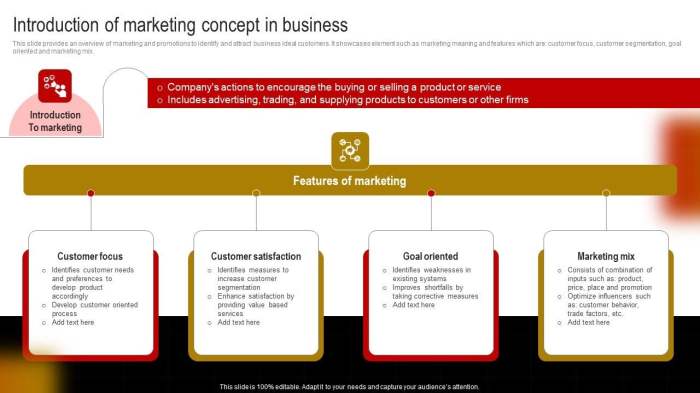
A comprehensive guide to creating a successful marketing strategy provides a roadmap for businesses to achieve their goals. This guide dives deep into crucial elements, from understanding your target audience and setting clear objectives, to selecting effective channels, crafting a compelling value proposition, and building a strong brand identity. It also covers measuring results, adapting to changes, and optimizing campaigns for maximum impact.
The guide explores various facets of marketing, including detailed audience analysis, SMART objective setting, channel selection, value proposition development, content strategy, brand building, and result measurement. It emphasizes the importance of a data-driven approach and continuous improvement to ensure sustained success.
Defining the Target Audience
Knowing your target audience is paramount to crafting a successful marketing strategy. It’s not enough to simply have a great product or service; you need to connect with the right people in the right way. This section delves into the crucial steps of defining your ideal customer, understanding their needs, and building a marketing strategy that resonates with them.Understanding your target audience is akin to having a roadmap for your marketing efforts.
A comprehensive guide to creating a successful marketing strategy needs to consider more than just catchy slogans and eye-catching visuals. Modern businesses are increasingly relying on tools like Salesforce automation to streamline processes, and understanding how these systems work is crucial. For example, salesforce automation revolutionizing modern business processes can significantly impact lead generation, customer relationship management, and ultimately, sales conversions.
Ultimately, a solid marketing strategy must adapt to these technological advancements to stay competitive and achieve its goals.
Without a clear understanding of who you’re trying to reach, your campaigns will likely fall flat, wasting resources and failing to achieve your desired outcomes.
Target Audience Profile for a Sustainable Clothing Brand
This profile Artikels the characteristics of a potential customer for a sustainable clothing brand, “EcoThreads.” This brand focuses on ethically sourced, eco-friendly materials and designs.
- Demographics: Women aged 25-45, residing in urban areas (e.g., major cities). They are likely to have a household income above the national average and express interest in social responsibility.
- Psychographics: They are environmentally conscious and actively seek out sustainable products. They are value-driven, placing importance on ethical practices and social impact. They are likely to be digitally savvy, active on social media, and interested in learning about eco-friendly fashion.
- Online Behavior Patterns: They actively research brands’ sustainability efforts, follow environmentally focused influencers, and participate in online discussions related to ethical consumption. They frequently visit blogs and websites dedicated to sustainable living and fashion.
Importance of Understanding Target Audience Needs
A deep understanding of your target audience’s needs, pain points, and motivations is crucial for developing a successful marketing strategy. Knowing their desires allows you to tailor your message, products, and services to resonate with them on a deeper level. For example, if your target audience is struggling with a specific problem, your marketing message can address that problem directly.
- Needs: EcoThreads customers value quality, durability, and transparency in their clothing choices. They want to know where their clothes come from and how they were made.
- Pain Points: They might struggle to find clothing that is both stylish and sustainable. They may also be overwhelmed by the variety of sustainable brands and struggle to make informed purchasing decisions.
- Motivations: Customers are motivated by the desire to make a positive impact on the environment and society. They seek brands that share their values and align with their personal beliefs.
Survey Questionnaire
This survey aims to gather crucial information about the target audience’s preferences and purchasing habits for EcoThreads.
| Question | Type | Example Responses |
|---|---|---|
| What are your top three priorities when purchasing clothing? | Multiple Choice | Style, Sustainability, Affordability |
| How often do you research a brand’s sustainability practices before making a purchase? | Rating Scale (1-5) | 1-Never, 5-Always |
| What are your biggest concerns regarding sustainable fashion? | Open-ended | High prices, limited availability, lack of transparency |
| How important is ethical sourcing to your clothing purchases? | Rating Scale (1-5) | 1-Not important, 5-Very important |
| How often do you purchase clothing from brands focused on sustainability? | Frequency Scale | Weekly, Monthly, Yearly |
User Persona for EcoThreads
This persona represents a typical customer for EcoThreads.
- Name: Amelia Green
- Age: 32
- Location: New York City
- Occupation: Marketing Manager
- Goals: To find stylish and durable clothing that aligns with her values of sustainability and ethical production. She wants to make conscious choices that positively impact the environment and supports ethical labor practices.
- Motivations: Amelia feels a strong sense of responsibility towards the environment and wants to contribute to a more sustainable future. She values transparency and authenticity in brands.
Setting Clear Marketing Objectives

A successful marketing strategy hinges on well-defined objectives. These aren’t just vague aspirations; they’re the roadmap guiding your efforts towards specific, measurable results. Without clear objectives, your marketing initiatives risk becoming aimless and ineffective, ultimately wasting valuable resources. This section will detail how to craft SMART objectives, align them with your overall business goals, and establish key performance indicators (KPIs) to track progress.Defining clear marketing objectives is crucial for focusing your efforts and measuring success.
Effective objectives are specific, measurable, achievable, relevant, and time-bound. This approach ensures that your marketing initiatives are aligned with your business’s overall strategic direction, allowing for focused efforts and demonstrable results.
Defining SMART Marketing Objectives
SMART objectives are the bedrock of effective marketing. They ensure your efforts are focused, measurable, and achievable within a defined timeframe. A SMART objective is more than just a wish; it’s a concrete plan with clear parameters.
- Specific: Objectives should clearly state what you want to achieve. Instead of “increase brand awareness,” a specific objective might be “increase brand mentions in relevant online communities by 15% within the next quarter.” Vague objectives lead to vague results.
- Measurable: Objectives must be quantifiable. You need a way to track progress. “Increase website traffic” is not measurable. “Increase website traffic by 20% within Q3” is.
- Achievable: Objectives should be realistic and attainable given your resources and constraints. Setting overly ambitious targets can lead to frustration and demotivation.
- Relevant: Objectives should directly support your overall business goals. A marketing objective that doesn’t contribute to your company’s bottom line is irrelevant.
- Time-bound: Objectives should have a specific timeframe. This creates a sense of urgency and ensures you stay on track.
Aligning Marketing Objectives with Business Goals
Your marketing objectives should be intrinsically linked to your overall business goals. This alignment ensures that your marketing efforts are contributing directly to the success of your company. If your business goal is to increase market share, your marketing objectives should be focused on strategies that achieve this, such as acquiring new customers or increasing brand loyalty.
- Consider your company’s mission statement and long-term vision when defining your marketing objectives. How will your marketing strategies contribute to achieving these goals?
- Develop marketing strategies that support your business objectives. If your business objective is to increase revenue by 10%, your marketing objectives should include tactics to generate more leads and close more sales.
- For example, if your company’s objective is to expand into a new market, your marketing objectives might include increasing brand awareness in that target area, developing targeted advertising campaigns, and establishing a strong online presence within that region.
Key Performance Indicators (KPIs) for Tracking Progress
KPIs are the metrics you’ll use to monitor the effectiveness of your marketing campaigns. They provide concrete data on how well you’re performing against your objectives. Choosing the right KPIs is essential for accurate assessment.
- Website traffic: This measures the number of visitors to your website. A significant increase could indicate a successful marketing campaign.
- Conversion rates: This measures the percentage of visitors who take a desired action, such as making a purchase or signing up for a newsletter.
- Customer acquisition cost (CAC): This measures the cost of acquiring a new customer. A lower CAC indicates greater efficiency in your marketing efforts.
- Customer lifetime value (CLTV): This measures the total revenue a customer is expected to generate throughout their relationship with your company. A higher CLTV indicates a successful customer acquisition strategy.
Evaluating Marketing Campaign Effectiveness
Evaluating your campaigns is crucial for learning from successes and failures. A robust evaluation process helps you understand what worked, what didn’t, and how you can improve future campaigns.
- Analyze the data collected through KPIs. Identify trends and patterns to determine which marketing strategies are most effective.
- Compare the results against your initial objectives. How well did you meet your goals?
- Identify areas for improvement. What could you do differently to enhance the effectiveness of future campaigns?
Selecting the Right Marketing Channels
Knowing your target audience is crucial, but equally important is understanding the best ways to reach them. This section delves into the world of marketing channels, exploring the diverse options available and how to choose the most effective ones for your specific needs and budget. From the digital realm to traditional methods, we’ll analyze the pros and cons of various approaches, helping you create a comprehensive and impactful marketing strategy.Choosing the right marketing channels is not a one-size-fits-all endeavor.
A comprehensive guide to creating a successful marketing strategy needs to consider many factors, including website performance. Crucially, you need to ensure your site loads quickly, and checking your website speed is vital. Tools like Google Lighthouse can help you pinpoint areas for improvement, like optimizing images or reducing HTTP requests. For a detailed walkthrough on how to test your website speed with Google Lighthouse, check out this helpful resource: how to test your website speed with google lighthouse.
Ultimately, a solid marketing strategy hinges on a fast, user-friendly website, making this a key component to consider.
The most successful strategies are tailored to the specific characteristics of the target audience and the industry. Consider the platforms where your ideal customers spend their time, and match your marketing efforts to those channels.
Identifying Suitable Marketing Channels
Understanding your target audience’s online and offline behavior is essential to selecting the right channels. A thorough analysis of their media consumption habits and preferred communication styles helps tailor your strategy. This includes looking at their demographics, interests, and online activity patterns. For instance, a younger audience might be highly engaged on social media, while a more mature demographic might respond better to print advertising.
Comparing Channel Effectiveness, A comprehensive guide to creating a successful marketing strategy
Different channels offer varying degrees of reach and impact. Cost is another critical factor to consider. Free channels, such as social media, can offer significant reach without substantial upfront investment. Paid advertising provides more control over targeting and messaging but carries a cost. Traditional methods, like print or radio, may have limited reach in the digital age, but they still hold relevance for certain target demographics.
The key is to evaluate each channel’s potential return on investment (ROI) in relation to your budget and objectives.
Channel Comparison Table
This table provides a concise overview of the pros and cons of common marketing channels, focusing on a hypothetical SaaS (Software as a Service) company targeting small businesses.
| Marketing Channel | Pros | Cons |
|---|---|---|
| Social Media (e.g., LinkedIn, Twitter) | High reach, cost-effective, direct engagement, targeted advertising, brand building | Requires consistent effort, algorithm changes impact visibility, managing multiple platforms, potential for negative feedback |
| Email Marketing | Targeted communication, direct relationship building, measurable results, cost-effective | Requires building an email list, potential for spam complaints, requires a well-crafted subject line and email content |
| Content Marketing (e.g., blog posts, articles) | Builds credibility, attracts organic traffic, positions as thought leader, long-term benefits | Requires significant time investment, results may take time to materialize, requires optimization and promotion |
| Paid Advertising (e.g., Google Ads, social media ads) | Targeted reach, quick results, high control over messaging, immediate visibility | High costs, requires constant monitoring and optimization, potential for wasted ad spend if not targeted effectively |
| Public Relations (e.g., press releases, media outreach) | High credibility, broad reach, positive brand image, cost-effective for generating media coverage | Difficult to control media messaging, time-consuming, may not always yield immediate results, dependent on media interest |
Multi-Channel Approach
A successful marketing strategy often involves leveraging a combination of channels. This multi-channel approach allows for a more comprehensive and impactful campaign. For example, a SaaS company could use social media to generate leads, email marketing to nurture those leads, and content marketing to establish thought leadership. This integrated approach increases brand awareness, improves lead generation, and drives conversions more effectively than relying on a single channel.
By using a multi-channel approach, the SaaS company can increase their visibility and reach a broader audience, resulting in higher customer acquisition and brand recognition.
Developing a Compelling Value Proposition
Crafting a compelling value proposition is the cornerstone of a successful marketing strategy. It’s not just about listing features; it’s about articulating the unique benefits a product or service offers to customers. A strong value proposition clearly communicates why a customer should choose your offering over competitors, highlighting the problem it solves and the positive impact it delivers. This crucial step sets the stage for resonating with your target audience and driving conversions.A well-defined value proposition differentiates your business by focusing on customer needs.
It clearly explains how your product or service provides a superior solution compared to alternatives. This clarity of purpose fosters customer trust and loyalty, which translates into long-term growth. By emphasizing the benefits, you create a compelling reason for customers to choose you.
Articulating Unique Benefits
A compelling value proposition clearly articulates the unique benefits a product or service offers. It focuses on what the customer gains, not just what the product does. This is a critical distinction. For example, instead of stating “Our software has a user-friendly interface,” a strong value proposition might say, “Our software streamlines your workflow, saving you valuable time and increasing productivity.” This shift from feature to benefit resonates with the customer’s needs.
Differentiating from Competitors
A robust value proposition clearly highlights the unique selling points that set a business apart from competitors. It emphasizes the specific advantages and benefits that customers gain from choosing your product or service over alternatives. This differentiation is achieved by understanding your target audience’s specific needs and pain points and aligning your offering with those solutions. Competitive analysis is crucial in identifying what competitors lack or fail to address, allowing you to highlight your unique value proposition.
Effective Value Proposition Examples
Several industries have demonstrated effective value proposition strategies. For example, in the software industry, a company offering project management software might highlight the benefit of increased team collaboration and streamlined workflows. In the healthcare industry, a telemedicine service might emphasize the convenience and accessibility of remote consultations. In the financial services industry, a company offering robo-advisors might emphasize the personalized and automated investment management options available.
These examples demonstrate how focusing on customer benefits and differentiating factors is critical for success.
Key Features and Benefits Table
This table Artikels the key features and benefits of a hypothetical online learning platform. Understanding the relationship between features and benefits is essential for a strong value proposition.
| Feature | Benefit |
|---|---|
| Interactive lessons | Engaging learning experience, improved knowledge retention |
| Personalized learning paths | Tailored instruction to individual needs, faster skill acquisition |
| Expert instructors | High-quality content, in-depth knowledge sharing |
| Progress tracking and reporting | Motivational feedback, data-driven learning |
| Flexible scheduling | Convenient learning options, accommodates various lifestyles |
Crafting a Content Strategy
A strong content strategy is the cornerstone of any successful marketing campaign. It’s more than just creating pretty posts; it’s about understanding your audience, providing value, and building a lasting relationship. A well-defined content strategy ensures your message resonates with your target audience, driving engagement and ultimately, conversions. It’s the engine that fuels your marketing efforts and keeps your brand top-of-mind.A successful content strategy isn’t a one-time event; it’s an ongoing process of creation, adaptation, and refinement.
Understanding your audience’s needs and interests, coupled with consistent delivery of high-quality content, is crucial for building brand authority and trust. This section delves into the specifics of crafting a content strategy, from planning to execution, emphasizing the importance of valuable and engaging content.
Content Calendar Design
A content calendar is a roadmap for your content creation efforts. It Artikels the topics, formats, and publication schedule for your content. This strategic planning tool helps maintain consistency and ensures you’re delivering the right message at the right time. By meticulously planning your content, you can effectively reach your target audience and achieve your marketing objectives.
- Topic Selection: Choose topics relevant to your target audience’s interests and needs. Research current trends and industry insights to identify high-demand subjects. For example, if your target audience is small business owners, explore topics like “social media marketing for small businesses,” “budgeting for startups,” or “customer service best practices.”
- Content Format Variety: Don’t limit yourself to just blog posts. Explore diverse formats like infographics, videos, podcasts, webinars, and social media updates. This variety caters to different learning styles and preferences, broadening your reach and audience engagement. For example, a video demonstrating a product’s usage can be paired with a blog post that provides in-depth information on the same product.
- Scheduling Consistency: Establish a consistent posting schedule. This predictability helps build anticipation and ensures your audience receives a regular stream of valuable content. For example, a weekly newsletter keeps your audience engaged and informed.
- Content Promotion Strategy: Artikel a plan to promote your content across various channels. This could involve social media shares, email marketing, and paid advertising. For example, use relevant hashtags to increase your content visibility on platforms like Twitter and Instagram.
Importance of Valuable and Engaging Content
Creating valuable and engaging content is essential for attracting and retaining your target audience. It establishes your brand as a trusted source of information and builds relationships. Engaging content encourages interaction and fosters a sense of community around your brand.
A comprehensive guide to creating a successful marketing strategy needs to delve into the nitty-gritty of customer relationships. Understanding metrics like gross retention vs net retention is crucial for truly grasping customer loyalty. For a deeper dive into this, check out this helpful resource on gross retention vs net retention understanding customer loyalty. Ultimately, a robust marketing strategy hinges on understanding and nurturing those customer relationships.
- Building Brand Authority: High-quality content positions your brand as a knowledgeable and reliable source of information in your industry. For example, a well-researched blog post on a specific topic can establish your brand as a leader in the field.
- Driving Engagement: Engaging content encourages interaction, such as comments, shares, and likes. This interaction boosts your content’s visibility and builds a community around your brand. For example, running a contest or Q&A session on social media can encourage audience participation.
- Generating Leads: Valuable content can attract potential customers and generate leads. For example, a downloadable ebook offering insights into a specific industry topic can be used as a lead magnet.
Different Types of Content
Diverse content formats can be employed in a marketing strategy to cater to different audience preferences and learning styles.
- Blog Posts: In-depth articles exploring specific topics, offering valuable insights. They can address industry trends, product updates, or customer service tips.
- Social Media Updates: Short-form content tailored for platforms like Twitter, Instagram, or LinkedIn. They can include engaging visuals, updates on company news, and interactive questions.
- Videos: Visual content can effectively communicate complex information or showcase products in action. Videos can range from product demonstrations to explainer videos or interviews.
- Infographics: Visual representations of data and information. They simplify complex concepts and make them easily digestible for your audience.
Steps Involved in Content Marketing Strategy
A structured approach is crucial for developing a successful content marketing strategy.
- Define Your Goals: What do you hope to achieve with your content marketing? Increase brand awareness, generate leads, or drive sales? Clearly defining your goals provides direction for all subsequent steps.
- Identify Your Target Audience: Understanding your audience’s needs, interests, and pain points is essential. This knowledge helps you create content that resonates with them.
- Create a Content Calendar: A content calendar Artikels your content schedule, formats, and topics. This planning ensures consistency and helps you stay organized.
- Create High-Quality Content: Focus on creating valuable, engaging, and informative content that aligns with your goals and target audience.
- Promote Your Content: Utilize various channels to promote your content and reach a wider audience. This may involve social media, email marketing, or paid advertising.
- Analyze and Adapt: Track your content’s performance and make adjustments to your strategy based on the results. This iterative process ensures ongoing improvement.
Building a Strong Brand Identity
A strong brand identity is more than just a logo; it’s the emotional connection your customers feel with your company. It’s the consistent voice, visual language, and overall experience that sets you apart in a crowded marketplace. A well-defined brand identity builds trust, fosters loyalty, and ultimately drives sales. This section delves into the critical elements of a compelling brand identity and how to maintain consistency across all your marketing channels.Brand identity is the sum total of all the elements that make your company recognizable and memorable to your target audience.
It’s about creating a unique personality for your business that resonates with your customers and sets you apart from competitors.
Logo Design
A logo is the visual cornerstone of your brand. It’s the first thing people see and often the most enduring image associated with your company. Effective logo design is about creating a mark that is both memorable and representative of your brand’s values and personality. A well-designed logo should be easily recognizable, scalable across various sizes and mediums, and adaptable to different applications.
Consider using a combination of typography and imagery, or a purely abstract form, based on the nature of your brand and target market.
Color Palette
Color plays a crucial role in evoking emotions and associations. A carefully chosen color palette can create a specific mood or feeling, reflecting your brand’s personality and values. For instance, blues often convey trust and reliability, while reds can suggest excitement and energy. Your color palette should be consistent across all your marketing materials.
Typography
Font choices are essential to conveying your brand’s personality. A formal brand might opt for a serif font, while a modern brand might choose a sans-serif font. Consistent typography strengthens brand recognition and helps establish a cohesive visual identity. Select fonts that complement your logo and color palette, and maintain consistency in their use across your website, marketing materials, and social media.
Brand Voice
Brand voice is the personality and tone of your brand. It dictates how you communicate with your audience. A friendly and approachable voice might use casual language and humor, while a sophisticated brand might employ a more formal and authoritative tone. Your brand voice should be reflected in all your written and verbal communications, ensuring a consistent message and experience across all platforms.
Brand Consistency
Maintaining consistency across all marketing channels is critical to building a strong brand identity. A unified brand presence strengthens recognition, reinforces your message, and fosters trust with your audience. Visual consistency (logo, colors, typography) and verbal consistency (brand voice) are both essential components of this strategy.
Examples of Strong Brand Identities
Numerous brands have successfully cultivated strong brand identities. Consider Apple, known for its sleek design and minimalist aesthetic, or Coca-Cola, with its instantly recognizable red and white color scheme. Nike’s iconic swoosh and focus on athleticism are key elements of its brand identity. Each of these brands consistently applies their brand elements across all marketing channels, creating a powerful and memorable impression.
Brand Style Guide
A brand style guide is a crucial document outlining all the essential elements of your brand identity. This document serves as a reference point for everyone involved in your brand’s communication.
| Key Component | Description |
|---|---|
| Logo | Visual representation of the brand |
| Color Palette | Set of colors used across all materials |
| Typography | Fonts used in various applications |
| Brand Voice | Tone and style of communication |
| Imagery | Visuals used to support the brand |
| Brand Values | Core principles that guide the brand |
Measuring and Analyzing Marketing Results: A Comprehensive Guide To Creating A Successful Marketing Strategy
So, you’ve meticulously crafted your marketing strategy, defined your target audience, and chosen your channels. Now, the real test begins: measuring the effectiveness of your efforts. This isn’t just about looking at pretty graphs; it’s about understanding what’s working, what’s not, and how to optimize for future success. Accurate measurement provides invaluable feedback, allowing you to adapt your strategy and maximize your return on investment (ROI).Understanding the metrics that truly matter is crucial for success.
You need to go beyond simply tracking vanity metrics and focus on quantifiable results that directly impact your business goals. This involves establishing clear Key Performance Indicators (KPIs) that align with your overall objectives. Then, you must consistently track and analyze the data to identify trends, pinpoint areas for improvement, and celebrate your successes.
Methods of Measuring Campaign Success
Various methods exist for measuring marketing campaign success. They range from simple website analytics to more sophisticated tools that provide detailed breakdowns of customer behavior. A well-rounded approach often uses a combination of methods to gain a holistic view of campaign performance.
- Website Analytics: Tracking website traffic, bounce rates, conversion rates, and time spent on pages provides insights into user engagement and the effectiveness of your website as a marketing tool. Google Analytics is a popular and powerful free tool for this purpose. Analyzing these metrics helps you understand which pages are performing well, which need improvement, and how your marketing efforts are driving traffic to your site.
- Sales Data: Closely examining sales figures during and after a marketing campaign is critical. Comparing sales data from the period before the campaign to the period after provides a clear picture of its impact. Tracking specific sales from targeted marketing channels allows for detailed analysis of their effectiveness.
- Social Media Engagement: Social media platforms offer a wealth of data on user engagement. Metrics like likes, shares, comments, and follower growth provide valuable insights into how your content resonates with your target audience. Analyzing these metrics can guide you in optimizing your content strategy for maximum impact.
- Customer Feedback: Surveys, feedback forms, and reviews are invaluable sources of direct customer insights. These allow you to understand customer satisfaction, identify areas for improvement, and gain a more profound understanding of how your marketing messages are perceived. Collecting feedback and responding to it demonstrates your commitment to customer satisfaction and builds stronger relationships.
Importance of Tracking Key Performance Indicators (KPIs)
KPIs are the essential metrics that track the performance of your marketing campaigns. Choosing the right KPIs is critical to understanding whether your campaigns are achieving the desired results. They provide a quantitative measure of progress and help you to make data-driven decisions. Without tracking KPIs, you are essentially flying blind.
- Conversion Rate: The percentage of visitors who complete a desired action, such as making a purchase or filling out a form, is a vital metric for measuring campaign effectiveness. A high conversion rate indicates that your marketing messages are effectively motivating users to take the desired action.
- Click-Through Rate (CTR): This metric measures the percentage of people who click on a specific link or advertisement. A higher CTR indicates that your marketing materials are engaging and relevant to the target audience.
- Return on Investment (ROI): The ROI is the ratio of net profit to the total cost of a marketing campaign. Calculating ROI allows you to assess the financial impact of your marketing efforts and determine the efficiency of your spending.
Framework for Analyzing Marketing Data
A structured approach to analyzing marketing data is essential for extracting actionable insights. This framework ensures that you are consistently evaluating your campaigns and making informed adjustments.
- Define Objectives: Clearly articulate the specific goals of your marketing campaign. This will serve as the basis for selecting relevant KPIs and evaluating campaign performance.
- Collect Data: Gather data from various sources, including website analytics, sales figures, social media engagement, and customer feedback. This requires meticulous record-keeping and efficient data collection methods.
- Analyze Data: Identify patterns and trends in the collected data. Look for correlations between marketing activities and desired outcomes. Use appropriate analytical tools and techniques to uncover valuable insights.
- Identify Trends: Analyze the data to pinpoint trends and patterns that suggest what is working and what isn’t. This will enable you to make adjustments to your strategy and optimize campaign performance.
- Draw Conclusions: Based on the analysis, determine whether the campaign objectives have been met. Document the conclusions, noting successes and areas for improvement.
Reporting Marketing Campaign Results
Regular reporting is vital for keeping stakeholders informed and demonstrating the value of your marketing efforts. A clear and concise report communicates campaign performance, identifies key findings, and suggests actions for improvement.
- Frequency: Establish a reporting schedule that suits your needs and the complexity of your campaigns. Regular updates ensure that stakeholders are aware of campaign progress and performance.
- Visualizations: Use charts, graphs, and other visual aids to effectively communicate complex data. This makes the report more engaging and easier to understand.
- Actionable Insights: Ensure that the report provides specific recommendations for improving future campaigns. This makes the reporting process valuable and actionable.
Adapting and Optimizing the Strategy
Marketing is a dynamic field. What works today might not work tomorrow. A successful strategy requires constant monitoring, adaptation, and optimization. This section dives into the crucial elements of keeping your marketing campaigns effective and aligned with evolving market conditions.Successful marketing isn’t a one-and-done project. It’s an ongoing process of refinement and adjustment.
Just like a gardener tends to their plants, marketers need to nurture their strategies, observing their growth and making necessary adjustments to maximize results. The key is to understand the metrics, identify areas needing improvement, and embrace iterative testing to achieve the best possible outcomes.
Monitoring Performance Data
Regular monitoring of key performance indicators (KPIs) is fundamental to understanding campaign effectiveness. This involves tracking metrics such as website traffic, conversion rates, customer engagement, and sales figures. These metrics provide valuable insights into what’s working and what isn’t, allowing for timely adjustments to maximize returns. Regular reporting and analysis are crucial to identifying trends and patterns in performance.
Identifying Areas for Improvement
Identifying areas for improvement in a marketing strategy often requires a critical review of performance data. Look for inconsistencies in campaign results, comparing different channels and tactics. Are certain channels underperforming? Are there particular demographics or customer segments not responding to the current messaging? Detailed analysis of the data will uncover the root causes of underperformance, leading to targeted adjustments and optimized results.
The Significance of A/B Testing
A/B testing is a powerful tool for optimizing marketing campaigns. It involves creating variations of marketing materials, such as headlines, calls-to-action, or images, and then testing which version performs better. By systematically testing different elements, marketers can identify the most effective approaches and tailor their campaigns to resonate with their target audience.
A Framework for Data-Driven Decisions
A structured approach to data-driven decision-making is essential for optimizing marketing campaigns. This framework should include:
- Defining clear objectives: Clearly articulate the desired outcomes of each marketing campaign. For example, increase brand awareness, generate leads, or boost sales.
- Establishing key performance indicators (KPIs): Identify the metrics that will measure the success of each campaign. Examples include website traffic, conversion rates, and customer acquisition cost.
- Analyzing campaign data regularly: Conduct thorough analyses of performance data, identifying trends and patterns.
- Formulating hypotheses and testing variations: Develop hypotheses about what might improve campaign performance. Test different variations to validate these hypotheses and refine the strategy.
- Iterative refinement: Continuously refine the marketing strategy based on the insights gained from data analysis and testing.
Final Summary
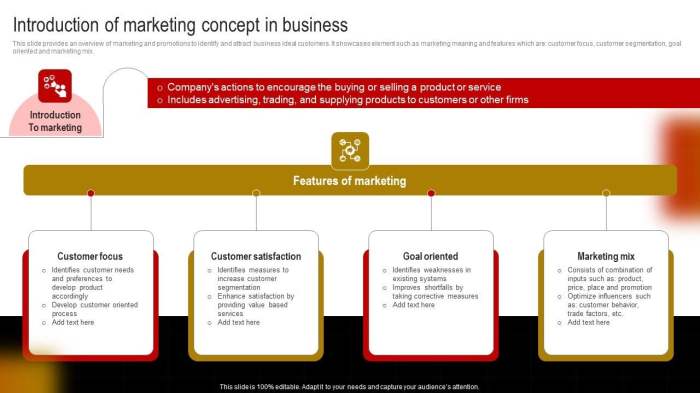
In conclusion, this comprehensive guide to creating a successful marketing strategy provides a complete toolkit for businesses seeking to elevate their marketing efforts. By understanding and implementing the strategies discussed, businesses can significantly improve their reach, engagement, and ultimately, profitability. This isn’t just a guide, it’s a dynamic resource for building a robust and adaptable marketing machine.