Central Bank of Nigeria Introduces Strict Licensing, Multi-Million Dollar Capital Requirements, and Bans Algorithmic Stablecoins

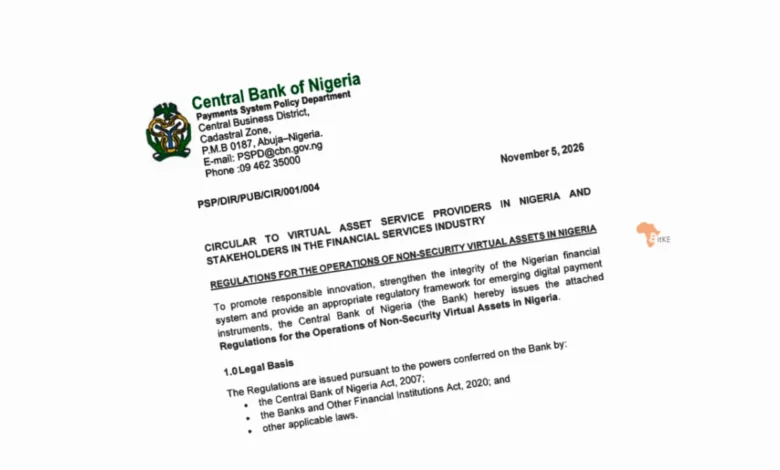
The Central Bank of Nigeria has officially stepped up its oversight of the country’s rapidly expanding digital asset ecosystem by introducing comprehensive regulatory frameworks for non-security virtual assets. Issued on November 5, 2026, the new directive specifically targets stablecoins—digital tokens pegged to fiat currencies—introducing rigorous licensing categories, hefty capital thresholds, and a complete prohibition on algorithmic stablecoin models. This landmark regulatory shift arrives as Nigeria solidifies its position as one of the world’s most active markets for cryptocurrency adoption, driven largely by retail demand for stablecoins like USDT as a hedge against inflation and local currency devaluation.
Under the newly enacted Regulations for the Operations of Non-Security Virtual Assets, the Central Bank of Nigeria (CBN) aims to balance financial innovation with systemic risk mitigation. The framework draws a sharp distinction between fiat-referenced stablecoins backed by the Nigerian naira and those tied to foreign currencies. By imposing substantial entry barriers, the monetary authority intends to weed out undercapitalized operators and ensure that any digital asset circulating within the Nigerian economy enjoys robust, verifiable backing.
Capital Requirements and Licensing Categories
The core of the CBN’s new regulatory architecture relies on segmented capital requirements designed to reflect the perceived risks associated with different fiat pegs. Issuers of foreign-currency-backed stablecoins face the most stringent financial hurdles, mandated to maintain a minimum paid-up capital of approximately $11.1 million. Meanwhile, institutions seeking to issue naira-backed stablecoins are required to maintain a paid-up capital of roughly $7.4 million.
These financial thresholds are structured to ensure that stablecoin issuers possess sufficient shock-absorbing buffers against sudden market downturns or liquidity crunches. Furthermore, the regulations do not offer leniency to international players. Foreign stablecoin issuers aiming to distribute, offer, or facilitate the redemption of their tokens within Nigeria cannot rely on licenses acquired in other jurisdictions. Instead, they are legally required to establish a dedicated, incorporated entity within Nigeria and successfully obtain a Class 2 Foreign Currency Issuer Licence before conducting any commercial operations in the country.
Beyond capitalization and localization mandates, the regulatory framework imposes strict operational constraints. Issuers must secure formal written approval from the central regulatory body for every individual token introduced to the market. This token-specific approval process requires exhaustive disclosures covering operational mechanics, redemption rights, underlying reserve asset compositions, and technological infrastructure. Significantly, the CBN has enacted an absolute ban on algorithmic stablecoins—tokens that maintain their pegs through algorithmic supply adjustments rather than direct reserve backing—citing their heightened vulnerability to structural collapses and systemic financial contagion.
Strict Compliance, AML, and CTF Mandates
In alignment with global financial standards and recommendations set by bodies like the Financial Action Task Force (FATF), the CBN’s directive places heavy emphasis on anti-money laundering (AML) and counter-terrorism financing (CTF) enforcement. The guidelines mandate rigorous compliance mechanisms across all peer-to-peer (P2P) services, remittance channels, and custodial wallet providers operating within the Nigerian jurisdiction.
Virtual asset service providers and stablecoin issuers must implement robust Know Your Customer (KYC) protocols, transaction monitoring systems, and suspicious activity reporting frameworks. Given Nigeria’s heavy reliance on informal remittance corridors and P2P crypto platforms to bypass traditional banking friction, these new rules effectively bring a vast grey market into a formalized, highly scrutinized regulatory perimeter. Non-compliance risks severe penalties, including the immediate revocation of licenses and potential criminal prosecution for corporate entities and their directors.

Background Context and the Rise of Stablecoins in Nigeria
To understand the weight of the Central Bank of Nigeria’s November 2026 directive, one must examine the socio-economic backdrop that fostered the country’s digital asset boom. Over the preceding half-decade, Nigeria experienced severe macroeconomic headwinds, characterized by double-digit inflation, multiple devaluations of the naira, and stringent foreign exchange controls imposed by the central bank.
These economic pressures catalyzed an unprecedented pivot toward cryptocurrencies among everyday citizens and businesses alike. Rather than utilizing volatile speculative assets like Bitcoin for daily commerce, the Nigerian populace increasingly embraced stablecoins—predominantly USDT—as a digital dollar substitute. These tokens offered a reliable store of value, expedited cross-border trade settlements, and provided a lifeline for freelancers and small businesses dealing with international clients.
Recognizing this seismic shift, the CBN initially adopted a cautious, observational stance. In late 2025, the central bank established a dedicated working group specifically tasked with studying stablecoin adoption trends and assessing their implications for monetary sovereignty. Concurrently, local financial innovators attempted to bridge the regulatory gap. Notably, February 2025 marked the launch of cNGN, widely touted as Africa’s first regulated, naira-pegged stablecoin designed to operate natively on local cryptocurrency exchanges.
Despite these domestic innovations, the dominance of foreign stablecoins persisted, posing perceived challenges to monetary policy transmission and foreign exchange management. The South African Reserve Bank and other regional monetary authorities similarly raised alarms regarding the systemic risks posed by unregulated digital tokens, setting the stage for coordinated or parallel regulatory clampdowns across the African continent.
Broader Economic Impact and Strategic Implications
The introduction of the CBN’s stablecoin regulations carries profound implications for the domestic fintech sector, international crypto enterprises, and ordinary Nigerian users. On one hand, the clarity provided by a formal legal framework removes the perpetual regulatory ambiguity that previously plagued digital asset businesses in Africa’s largest economy. Institutional investors and fintech companies that previously shied away from the Nigerian market due to regulatory unpredictability may now find a viable pathway to entry, provided they can meet the steep capital requirements.
Conversely, the stringent capital thresholds and localization mandates threaten to squeeze out smaller startups and indigenous innovators. Requiring $7.4 million to $11.1 million in paid-up capital creates a high barrier to entry, potentially centralizing the stablecoin market in the hands of well-funded banking institutions, established fintech giants, or heavily capitalized foreign entrants.
Furthermore, the strict enforcement of AML and CTF protocols across P2P services may temporarily disrupt informal liquidity channels, which many Nigerians rely on for rapid value transfer. While designed to protect the financial system from illicit activities, these friction points could drive some trading activity deeper underground if compliance costs become excessively burdensome for retail participants.
Ultimately, the Central Bank of Nigeria’s regulatory framework marks a definitive transition from hostility and prohibition to structured integration. By acknowledging the permanence of stablecoins while demanding rigorous accountability, capital adequacy, and consumer protection, Nigeria is attempting to harness the benefits of digital asset innovation while safeguarding its national monetary framework against systemic instability. As the digital asset landscape continues to evolve across Africa, the success or failure of Nigeria’s model will likely serve as a crucial blueprint for neighboring economies grappling with similar financial transformations.