Justin Sun Launches One Million Dollar Decentralized Academic Prize to Accelerate AI-Driven Mathematical Discovery

GENEVA, SWITZERLAND — September 16, 2026 — The Office of Justin Sun has officially inaugurated the Justin Sun Prize, a groundbreaking decentralized bounty mechanism designed to catalyze breakthroughs in fundamental mathematics and machine formal verification. By bridging the gap between traditional academic rigor and the computational power of artificial intelligence, the initiative introduces a new paradigm for scientific incentivization. With a top prize of $1 million per solved problem, the program aims to redefine how humanity approaches the "Millennium" class of scientific challenges in an era increasingly defined by human-AI collaboration.
The inaugural round of the prize has already made history, with the OpenAI research team securing the $1 million award for their successful formalization and proof of the Existence and Smoothness of the Three-Dimensional Navier-Stokes Equations. According to documentation released by the prize committee, the proof was generated by an internal OpenAI model, while the complex Lean formalization—a crucial step for mathematical verification—was finalized using the GPT-6 Astra model. This landmark achievement represents the first time an AI-driven solution has successfully claimed a major, historically significant mathematical bounty.
The Evolution of the Navier-Stokes Challenge
The Navier-Stokes equations, which govern the motion of fluids and gases, have remained one of the most formidable obstacles in physics and mathematics since their formulation in the 19th century. Named after French physicist Claude-Louis Navier and British mathematician George Gabriel Stokes, these non-linear partial differential equations are essential for understanding everything from weather patterns and ocean currents to aerodynamic flight and blood flow.
Despite their ubiquity in modern engineering, a rigorous mathematical proof regarding the existence and smoothness of their solutions in three dimensions has eluded mathematicians for nearly two centuries. In 2000, the Clay Mathematics Institute (CMI) designated the Navier-Stokes Existence and Smoothness problem as one of seven "Millennium Prize Problems," offering a $1 million reward for a correct, peer-reviewed solution. The success of the OpenAI team, verified through the Justin Sun Prize’s machine-centric protocols, underscores a tectonic shift in the velocity of mathematical discovery.
A New Framework for Scientific Merit
The Justin Sun Prize diverges sharply from traditional academic awards, which often rely on subjective peer review, lifetime achievement metrics, or multi-year cycles. Instead, the prize operates on a "zero-trust" model that prioritizes objective verifiability. Under this system, the "problem list" serves as a immutable ledger of scientific hurdles. Once a problem is listed, it is never removed, and the criteria for success remain tethered to machine-verifiable proofs—ensuring that the reward is based strictly on the validity of the code and the logic, rather than the prestige of the researcher.
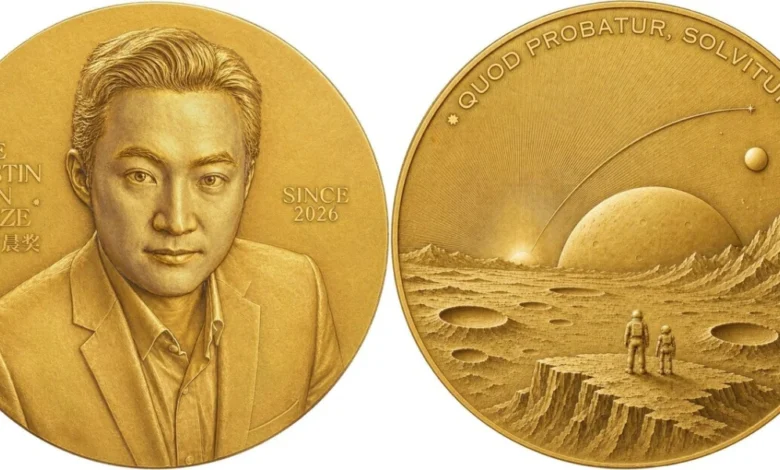
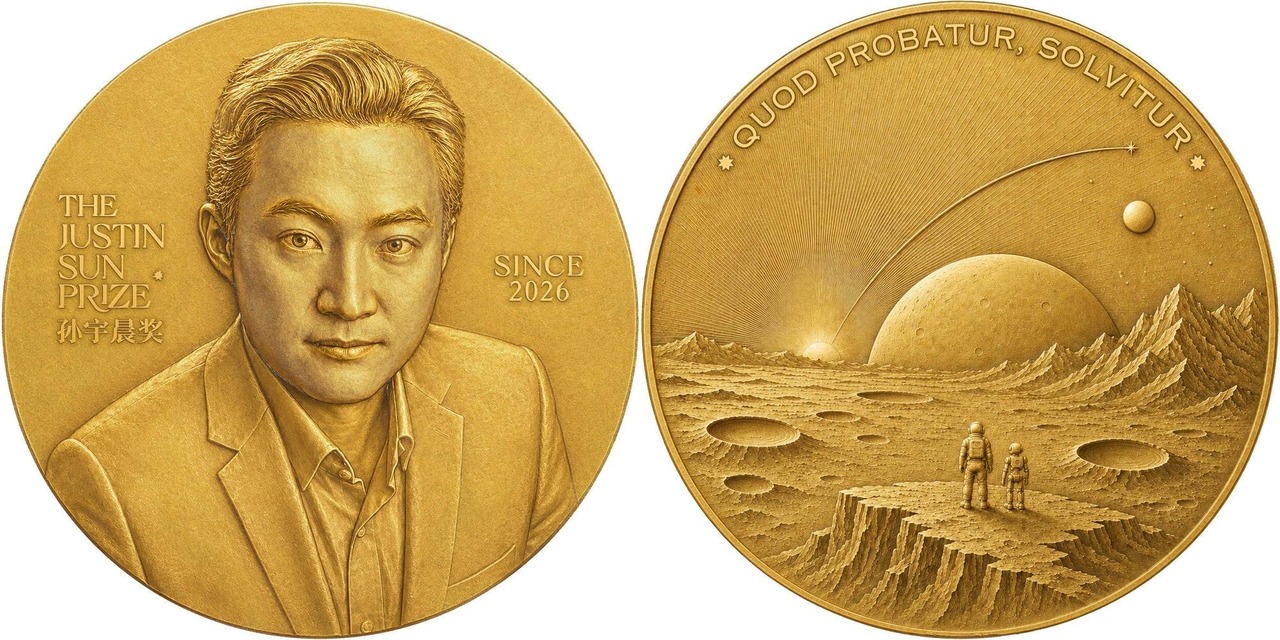
This model is intended to address the "reproducibility crisis" that has long plagued academic research. By mandating that all proofs be submitted in machine-readable formats, the prize ensures that every breakthrough is instantly and objectively verifiable by anyone with access to the necessary computational tools. The medal awarded to winners bears the Latin inscription "Quod probatur, solvitur"—meaning "Proved, then paid"—encapsulating the initiative’s commitment to objective, immediate resolution.
Core Principles and Governance
The governance of the Justin Sun Prize is built upon three fundamental pillars: openness, public benefit, and open-source transparency. To ensure the integrity of the process, the initiative has adopted the following operational guidelines:
- Inclusivity: There are no barriers based on nationality, institutional affiliation, or identity. The prize is equally open to individual human researchers, academic institutions, and AI-driven entities.
- Non-Profit Motivation: The funds are strictly allocated for prize disbursements and the support of open-science initiatives. All operational assets are sequestered from the private business interests of the founder.
- On-Chain Accountability: All prize disbursements are recorded on-chain, providing a permanent, immutable audit trail of every dollar awarded. Furthermore, all problem sets, verification materials, and formalization code are hosted on public repositories like GitHub, ensuring that the knowledge gained is accessible to the global scientific community.
Future Implications for Mathematics and AI
The current problem list includes several of the most difficult challenges in modern mathematics, such as the Riemann Hypothesis, the Poincaré Conjecture, Goldbach’s Conjecture, and a variety of unsolved problems once championed by the late Paul Erdős. By providing a sustained, multi-million dollar incentive structure, the Justin Sun Prize aims to accelerate the adoption of formal verification languages like Lean, which allow computers to assist in the construction of logically sound mathematical proofs.
Analysts suggest that this approach could significantly reduce the time required to verify complex proofs, which currently can take human mathematicians years of intensive review. By incentivizing the creation of "formalized code," the prize is effectively building a foundational library of verified mathematical knowledge that will serve as the scaffolding for future AI research.
A Personal Commitment to Scientific Advancement
Justin Sun, the founder of TRON and a former diplomat, has framed this initiative as an extension of his personal philosophy regarding wealth and intellectual legacy. "An award named after a person is the least political thing in the world," Sun remarked during the announcement. "More importantly, it gives me an answer to myself—my wealth is rooted in mathematics. It came from mathematics, and it will return to mathematics."
Sun’s philanthropic track record is extensive, with over $45 million previously donated to causes ranging from space exploration and disaster relief to environmental sustainability. The Justin Sun Prize represents a pivot toward long-term, high-impact scientific investment. By aligning his philanthropic efforts with the rigorous requirements of fundamental science, Sun aims to foster an environment where the most difficult problems are no longer gated by human cognitive limitations or institutional biases.
The Logistics of the Bounty
The decentralized nature of the prize extends to its payout mechanism. Winners have the option to receive their awards in either USDT on the TRON network (TRC-20) or USDC on the Ethereum network (ERC-20). This choice offers immediate, global liquidity, bypassing the bureaucratic delays often associated with traditional grant funding and international prize distributions.
For researchers looking to participate, the process is streamlined:
- Submission: Researchers submit their formalized proofs through the official portal.
- Verification: The submission undergoes an automated verification process using established formal proof assistants.
- Audit: The results are cross-referenced with the public repository to ensure the problem has not been previously solved or verified.
- Disbursement: Once verified, the prize is triggered on-chain, and the proof is permanently archived as a contribution to human knowledge.
Looking Toward the Future
The launch of the Justin Sun Prize arrives at a critical junction in the history of technology. As artificial intelligence models become increasingly adept at logical reasoning and pattern recognition, the traditional boundaries of scientific discovery are being redrawn. The prize does not merely reward the solution to a problem; it rewards the development of the methodology by which such problems are solved.
By establishing a "Nobel Prize of the AI Era," the Office of Justin Sun is positioning itself at the center of a new scientific renaissance. Whether this mechanism will successfully spur the next generation of mathematical giants remains to be seen, but the immediate success of the Navier-Stokes proof indicates that the marriage of decentralized finance and machine-verified logic is a potent catalyst for progress.
The scientific community is expected to watch the ongoing updates to the prize’s problem repository with keen interest. With the integration of AI-assisted discovery, the pace at which humanity solves the "unsolvable" may soon accelerate from the timescale of centuries to that of years, or even months. As the repository grows, so too will the public archive of human—and machine—ingenuity, creating a legacy that transcends individual wealth and enters the realm of permanent, open-source scientific infrastructure.
For further information regarding the problem list, submission criteria, or the historical record of verified proofs, researchers and the public are encouraged to visit the official portal at www.hejustinsun.com/prize. As the initiative matures, the Office of Justin Sun intends to expand the scope of the prize, potentially incorporating biological, chemical, and physical challenges that align with the core mission of using technology to expand the horizons of human understanding.