Quantitative Analysis of Insider Purchase Filings Reveals Short-Term Market Association and Long-Term Uncertainty

The practice of monitoring insider trading activity has long served as a cornerstone of fundamental market analysis, yet the sheer volume and complexity of SEC Form 4 filings present significant hurdles for systematic researchers. By examining over 7,000 public signals derived from C-suite insider purchases between January 2022 and June 2026, researchers have established a clearer, albeit more modest, understanding of how these disclosures impact market behavior. While headline returns often suggest that insider buying is a "surefire" signal, a rigorous event study indicates that while short-term price appreciation is statistically observable, the long-term predictive power of these transactions is frequently overstated by less granular methodologies.
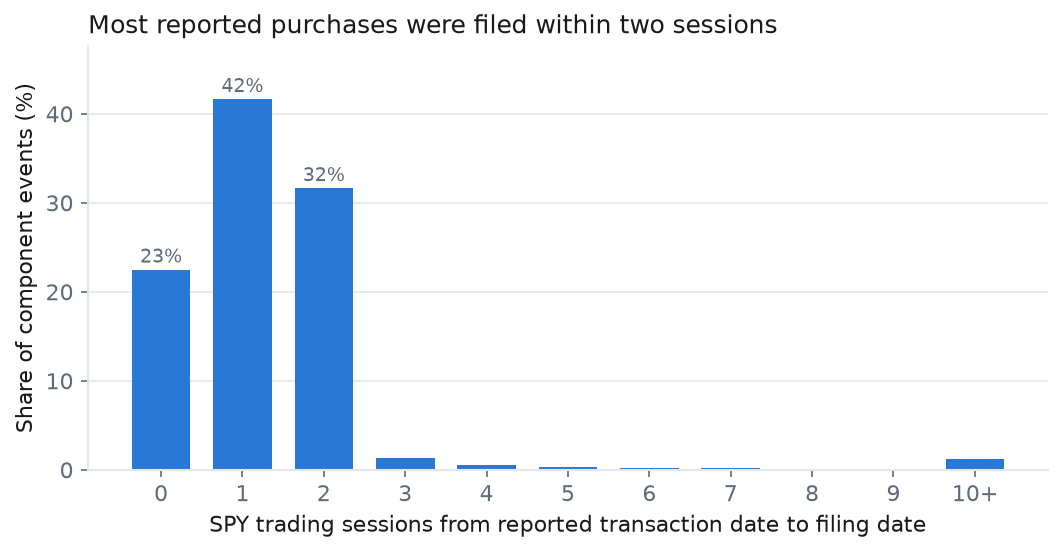
The regulatory environment governing these disclosures is rooted in Section 16 of the Securities Exchange Act of 1934, which mandates that officers, directors, and beneficial owners of more than 10% of a company’s registered equity must report changes in their ownership status. Following the implementation of strict reporting deadlines—typically within two business days of a transaction—Form 4 has become a primary data source for market participants. However, the raw data is rife with potential pitfalls, including joint filings, multiple price tranches, and private transactions that do not occur on public exchanges. By stripping away these confounding variables and focusing on a clean, validated sample of "Code-P" (purchase) filings, the recent study provides a blueprint for how data scientists should approach SEC disclosures to avoid the common trap of over-optimistic backtesting.
Historical context provides the necessary framing for these findings. Seminal work by Lakonishok and Lee in 2001 demonstrated that insider purchases—unlike sales—tended to be more informative, particularly in smaller-capitalization firms. Subsequent research by Jeng, Metrick, and Zeckhauser highlighted the positive abnormal returns earned by insiders themselves, though they cautioned that these gains do not necessarily translate to the outside investor. The recent analysis builds upon these foundations by explicitly separating "routine" transactions from those not flagged as Rule 10b5-1 plan trades, thereby isolating a more discretionary subset of purchases.
The methodology employed to filter the raw SEC data is a testament to the necessity of data hygiene. The study processed 1,345,036 transaction rows, ultimately narrowing the scope to 11,957 component events after filtering for officer status, common stock, and the exclusion of multi-owner filings. A crucial innovation in this process was the use of a two-level aggregation system: first, normalizing transactions at the component level (accession, issuer, owner, and date), and second, collapsing those components into a single "issuer-filing-day" signal. This prevents a single, highly active insider from artificially inflating the weight of a specific day’s signal, a common flaw in less sophisticated models.
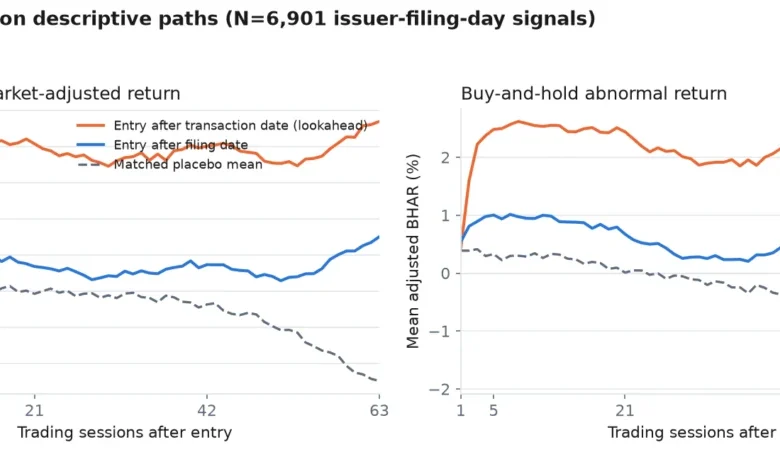
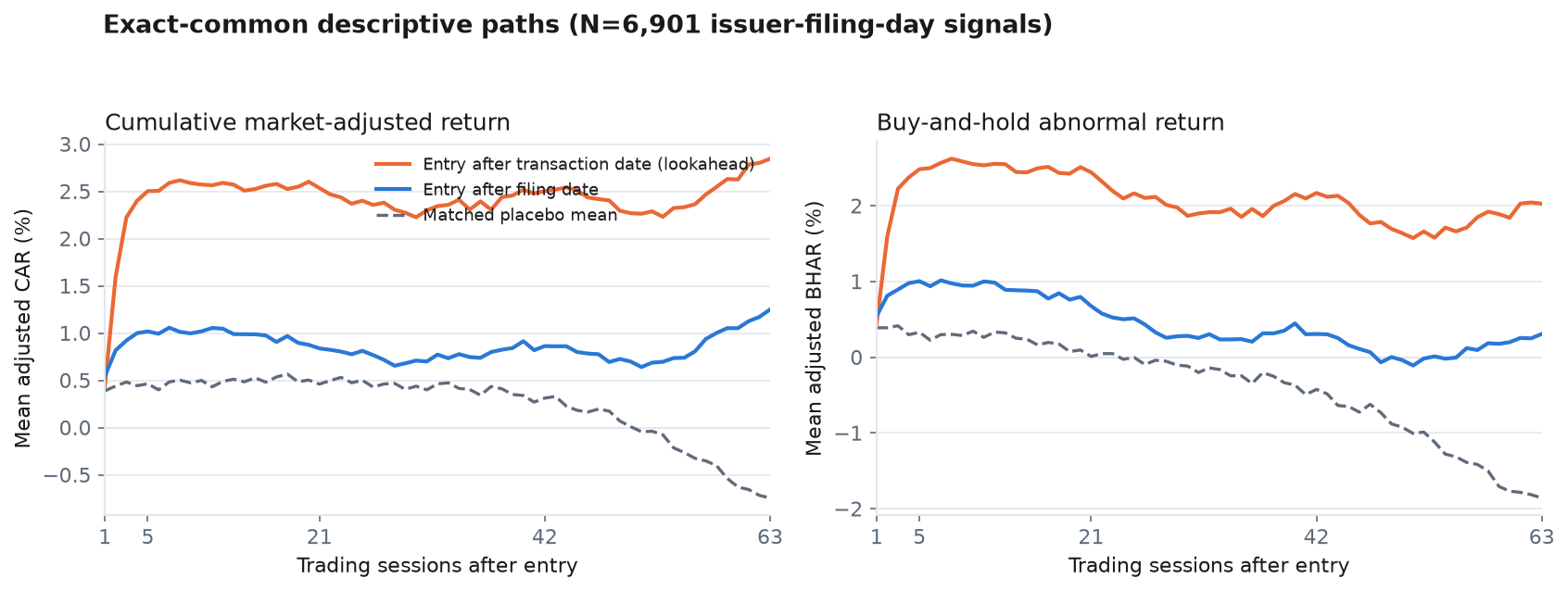
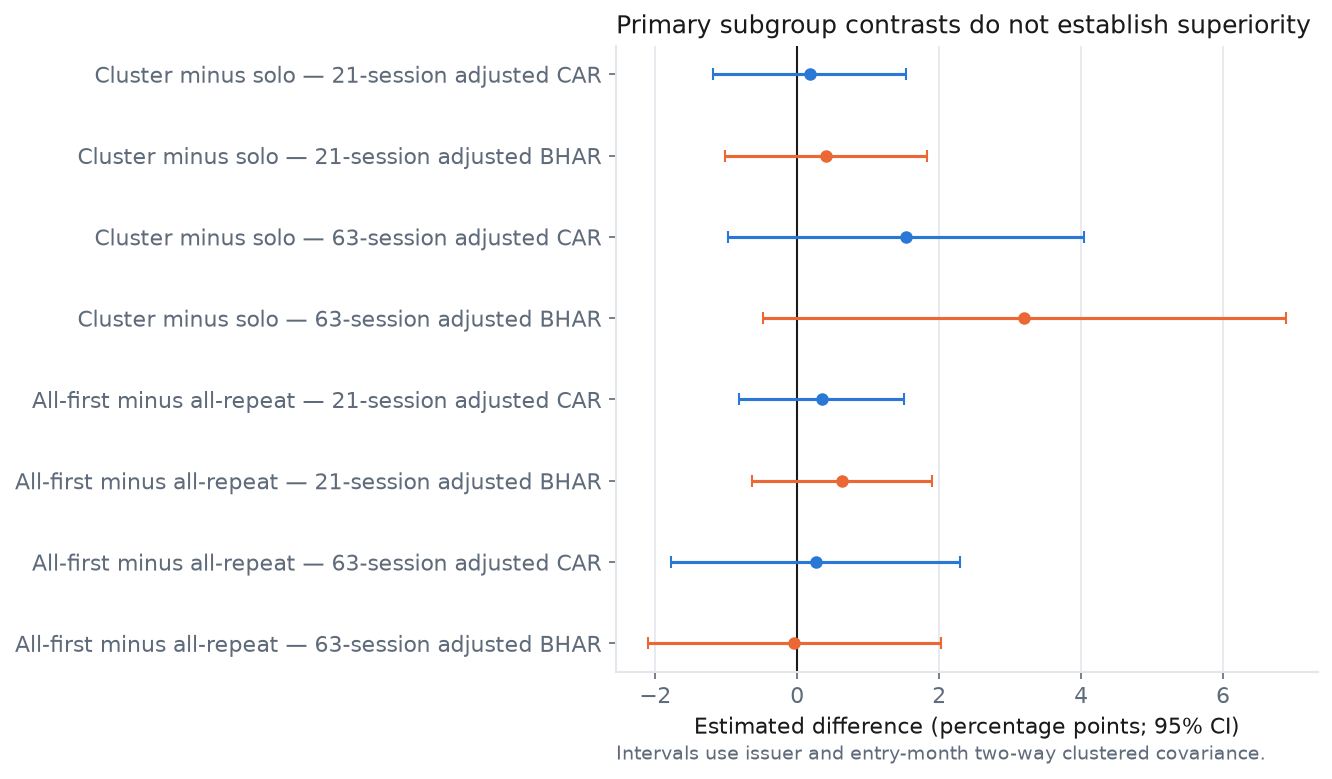
The results of this analysis paint a precise picture of market reaction. For the next trading session following a disclosure, the primary SPY-adjusted mean cumulative abnormal return (CAR) stood at +0.534%. Over a five-session window, this mean climbed to +1.009%. These figures, backed by robust two-way clustered t-statistics, suggest a genuine, if fleeting, market adjustment to the news of insider buying. However, the data becomes significantly more ambiguous as the timeframe extends. At the 21-session and 63-session horizons, the confidence intervals for both CAR and buy-and-hold abnormal returns (BHAR) frequently include zero, suggesting that the "insider effect" dissipates rapidly after the initial public disclosure.
The implications for institutional and retail investors are profound. The study underscores that "buying what the CEO buys" is not a guaranteed alpha-generating strategy. The observed returns are associative rather than causal; the analysis cannot confirm whether the market is reacting to the insider’s private information or to other concurrent events, such as earnings reports or corporate financing updates that often accompany insider activity. Furthermore, the analysis of matched-placebo samples—designed to test whether similar market conditions would produce similar returns regardless of the filing—revealed no statistically significant "honest" outperformance, suggesting that the timing of the market may be as important as the filing itself.
Liquidity remains a critical, yet often overlooked, limitation. In approximately 9.58% of the analyzed cases, the disclosed purchase value exceeded 100% of the pre-entry median daily dollar volume. While this does not preclude smaller retail investors from following the signal, it highlights a significant capacity constraint for institutional strategies. The study serves as a stern warning against the assumption that raw insider data can be directly converted into a deployable, high-capacity investment strategy without accounting for market impact and transaction costs.
Official reactions from market data observers and academic circles have emphasized the rigor of the "funnel" approach used in the study. By providing a clear record of how data is filtered—and by making the full pipeline, including price snapshots and validation artifacts, available via open-source repositories—the research promotes a standard of reproducibility that is often absent in financial literature. The author notes that "preserving filing time and clustering inference along dependence dimensions" is essential to keeping public-data research interpretable.
The broader impact of this research is a sobering check on the "insider trading alpha" narrative. By using a conservative, two-way clustered covariance estimator, the study accounts for the fact that issuers and market months are not independent, thereby reducing the likelihood of false positives that often plague quantitative studies. The findings demonstrate that while insiders do occasionally exhibit a predictive edge, the "drift" that many investors look for is often non-existent or statistically indistinguishable from noise once proper controls are applied.

As the financial industry moves toward more sophisticated, AI-driven parsing of SEC filings, the lessons from this study remain vital. Automated systems must be trained to recognize the difference between a routine plan trade and an opportunistic, discretionary purchase. Furthermore, researchers must be wary of "lookahead bias," where information that was not public at the time of a transaction is inadvertently included in the model. By anchoring the study to the filing date rather than the transaction date, the research ensures that the results reflect real-world accessibility, providing a more honest appraisal of potential returns.
In conclusion, while the allure of following corporate insiders remains high, the empirical reality is defined by short-term association rather than long-term predictive power. The findings suggest that the market processes the information contained in Form 4 filings with extreme speed, effectively pricing in the signal within a few business days. For the average participant, the study reinforces the necessity of skepticism; high-frequency, automated, or "smart" trading based on insider filings requires not only access to the data but a deep, granular understanding of the structural and statistical limitations inherent in the SEC’s reporting system. Future research will likely continue to explore the nuances of these signals, but for now, the data suggests that the most reliable lesson from insider filings is the importance of methodological discipline.