Russia and China Expand Bilateral Settlement Mechanisms to Bypass Western Financial Infrastructure Amid Heavy Sanctions

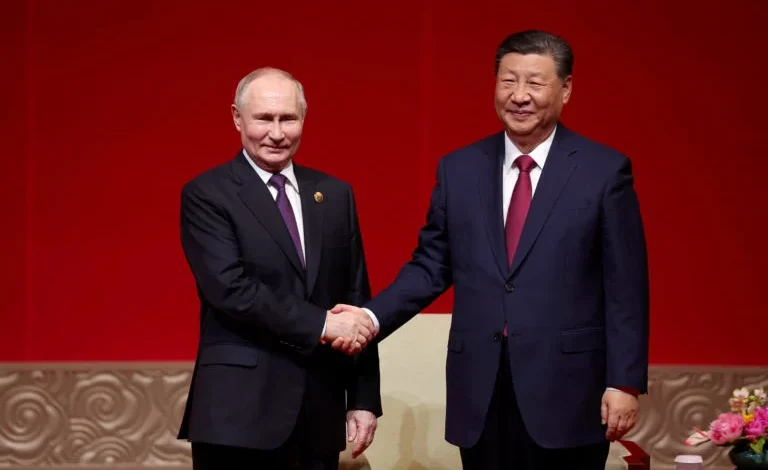
In an aggressive effort to insulate their economies from Western sanctions and eliminate reliance on traditional international banking networks, Russia and China are dramatically scaling up alternative financial arrangements. At the core of this transformation is an advanced bank netting system designed to settle bilateral trade balances entirely outside the SWIFT messaging network and without the involvement of Western correspondent banks. This strategic shift not only reconfigures trade flows between two of the world’s largest economies but also signals a broader, systemic fragmentation of the post-Second World War global financial architecture.
The centerpiece of this decoupling strategy is a proprietary clearing mechanism informally dubbed the China Track. Established by major Russian financial institutions, the system utilizes designated payment agents and a centralized domestic clearing framework to reconcile outstanding trade obligations between Russian and Chinese entities. By shifting the settlement process inward, exporters and importers can effectively clear transactions without physical capital crossing borders through conventional, monitored international banking channels.
The mechanics of this system rely on bilateral netting, a process that drastically minimizes the need for foreign exchange transfers. For example, if Chinese importers purchase $100 million worth of Russian petroleum products while Russian firms import $80 million in specialized Chinese industrial machinery, the respective obligations are offset domestically. Under this arrangement, only the residual balance—in this case, $20 million—requires actual settlement. By reducing cross-border currency transfers to mere fractions of total trade volume, Moscow and Beijing have created a resilient conduit capable of withstanding heavy scrutiny from international regulators and sanctions enforcement agencies.
The Origins and Evolution of the China Track
The architecture of the China Track did not emerge overnight; it is the culmination of years of escalating financial restrictions imposed by the United States, the European Union, and their allies. Following the escalation of the conflict in Ukraine in 2022 and the subsequent expulsion of major Russian banks from the SWIFT network, Moscow faced an immediate crisis regarding how to pay for critical imports and receive revenues for energy exports.
While initial workarounds involved greater reliance on bilateral currency swaps and direct settlement in Chinese yuan (CNY) and Russian rubles (RUB) via local banks, these channels quickly encountered bottlenecks. Secondary sanctions threatened Chinese commercial banks dealing with sanctioned Russian entities, leading to severe payment delays and frozen transactions in late 2023 and early 2024.
To overcome these roadblocks, financial authorities in both countries fast-tracked internal messaging and netting solutions. The contours of the China Track became increasingly visible by April 2025, when international financial reporters highlighted how Russian banks were bypassing Western oversight. By July 2025, the system’s operational success was deemed significant enough to be formally presented to Russian President Vladimir Putin by Yury Chikhanchin, the head of Russia’s financial watchdog agency, Rosfinmonitoring. During their briefing, Chikhanchin detailed how domestic exporters were instructed to pool their foreign proceeds to directly finance national import needs, leaving the central reconciliation to be managed entirely within secure, domestic jurisdictions.
The Gold Connection: Bullion as a Residual Settlement Asset
As trade volumes between Moscow and Beijing continue to scale new heights, financial analysts and trade data monitors have identified a complementary, albeit opaque, development: a massive surge in Russian gold exports destined for Hong Kong, much of which subsequently makes its way into mainland China.

Trade statistics from the first seven months of 2026 reveal that Hong Kong imported approximately 100 tonnes of Russian gold. This figure represents a staggering threefold increase compared to the volume recorded during the exact same period in 2025. This dramatic acceleration coincides precisely with the wider deployment of the China Track and the growing necessity to clear residual trade balances that cannot be easily settled through traditional fiat currency channels due to ongoing compliance fears among commercial lenders.
While the primary transactional currencies for the trade corridor remain the yuan and the ruble, precious metals experts suggest that physical commodities—specifically gold bullion—may be playing a critical role as a residual settlement asset. In scenarios where bilateral netting leaves an unhedged balance between trade partners, gold can be transferred physically or via unallocated accounts to extinguish debt obligations without triggering alarms in Western financial messaging systems.
Official Stances and Fiscal Realities
Despite mounting circumstantial evidence linking the surge in gold shipments to alternative trade settlement, neither Moscow nor Beijing has officially confirmed a gold-backed bilateral clearing arrangement. Governments on both sides have maintained strategic ambiguity regarding the exact mechanisms used to balance trade ledgers outside of fiat currency frameworks.
Furthermore, domestic fiscal pressures in Russia provide a parallel explanation for the liquidation of gold reserves. In September 2026, Russian Central Bank Governor Elvira Nabiullina addressed the noticeable decline in the nation’s sovereign gold reserves, attributing the reduction directly to ongoing operations managed by the Finance Ministry. Under Russia’s domestic fiscal rule, the Ministry utilizes the National Wealth Fund to offset federal budget deficits caused by fluctuating energy revenues and wartime expenditures.
Economic analysts note that these two motivations are not mutually exclusive. The sale and export of Russian gold can simultaneously fulfill sovereign fiscal financing requirements while serving as a confidential medium of exchange for international trade imbalances. Whether utilized explicitly for trade balancing or general state financing, physical gold provides a sanction-proof store of value that completely circumvents the dollar-centric global financial grid.
Implications for the Global Financial Order
The institutionalization of the China Track and the concurrent rise in cross-border bullion movements carry profound implications for the future of international trade and geopolitics. For decades, the global financial system has operated under the unassailable dominance of the U.S. dollar, anchored by Western-controlled institutions such as SWIFT, the International Monetary Fund (IMF), and major New York- and London-based correspondent banks.
By successfully establishing closed-loop trade ecosystems that rely on domestic netting, local currency invoicing, and hard asset settlements, Russia and China are pioneering a blueprint that other sanctioned or non-aligned nations are watching closely. According to global economic data, over 60 percent of low-income countries and nearly half of the global population are currently subject to some form of financial penalties or trade restrictions originating from the United States and its allies.
As more emerging economies seek to insulate themselves from the weaponization of the dollar and Western financial infrastructure, bilateral clearing mechanisms like the China Track threaten to permanently fracture global commerce into regional, ideologically aligned economic blocs. The era of frictionless, universal globalization is rapidly receding, giving way to a fragmented multipolar financial order where resilience against sanctions supersedes integration into the traditional Western-led market economy.