The power of outbound marketing a complete guide dives deep into the world of reaching out to potential customers. This comprehensive guide explores the strategies, tactics, and ethical considerations necessary to craft successful outbound campaigns. We’ll cover everything from defining your target audience to measuring results and adapting to future trends. Get ready to unlock the full potential of outbound marketing and propel your business forward.
Outbound marketing, unlike inbound, actively seeks out potential customers. This approach, often involving paid advertising and direct outreach, can yield quick results but demands a strategic approach. Understanding the key differences between inbound and outbound is crucial for maximizing effectiveness. This guide will arm you with the knowledge to create impactful outbound campaigns, focusing on both immediate and long-term results.
Introduction to Outbound Marketing
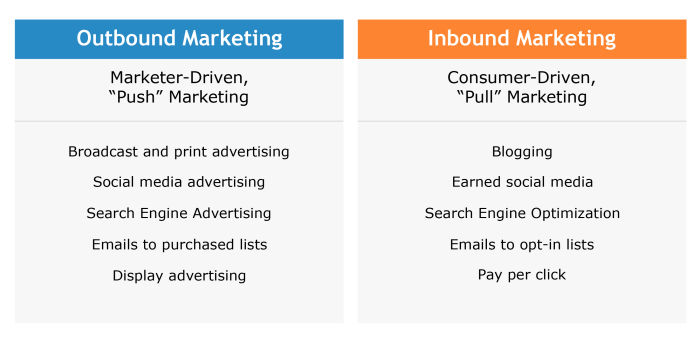
Outbound marketing is a traditional approach to reaching potential customers. It involves actively seeking out prospects and presenting your products or services to them. This contrasts with inbound marketing, which focuses on attracting customers through valuable content and engagement. Outbound marketing tactics are often employed to generate immediate leads and drive sales, although long-term customer relationships can be cultivated with strategic outbound campaigns.Outbound marketing hinges on a proactive approach, pushing messages to a wider audience.
So, you’re diving deep into outbound marketing? It’s a powerful tool, and this complete guide is your key. But navigating the current business landscape means understanding the unique challenges, like the impacts of the COVID-19 crisis on woman-owned businesses. For a closer look at the specific hurdles these entrepreneurs faced, check out this insightful article: the impacts of the covid 19 crisis on woman owned businesses.
Understanding these challenges helps us tailor our outbound strategies to better support women-owned businesses and their success, which, in turn, strengthens the entire economy. Ultimately, mastering outbound marketing in today’s environment demands a nuanced understanding of the wider business context.
This proactive strategy aims to reach a large number of potential customers, regardless of their current interest in the product or service. Key strategies often involve paid advertising, direct mail, cold calling, and targeted email campaigns. The effectiveness of outbound marketing depends heavily on the precision of targeting and the compelling nature of the message.
Defining Outbound Marketing
Outbound marketing is a promotional strategy that involves reaching out to potential customers directly. It’s a proactive method of getting your message in front of a large audience. This contrasts with inbound marketing, which relies on attracting customers to your brand. Outbound marketing often involves paid advertising, direct mail, and other techniques designed to generate immediate leads.
Core Principles and Strategies
Outbound marketing strategies are built on several core principles. Targeting the right audience is paramount. A well-defined target market allows for the most effective use of resources and budget. Effective messaging is crucial; a clear and compelling message that resonates with the target audience increases the chances of conversion. Tracking and measuring results is essential to optimize future campaigns.
Outbound marketing, a powerful tool, is all about getting your message out there. But, a complete guide to its effectiveness also needs to consider the importance of strong customer relationships. To build those, excellent customer service is key, as outlined in this helpful resource on customer service building strong relationships for success. Ultimately, outbound marketing is more impactful when it’s built on a foundation of positive customer experiences.
It’s about building a lasting impression, not just a fleeting sale.
A well-structured tracking system allows for detailed analysis and improvement of future campaigns. Understanding the customer journey is important for crafting effective campaigns that meet customer needs.
Key Differences Between Inbound and Outbound Marketing
The core difference between inbound and outbound marketing lies in their approach. Inbound marketing attracts customers by providing valuable content and engaging with them on their terms. Outbound marketing, conversely, actively seeks out prospects. This difference manifests in various ways, from the methods used to the cost structure and ROI timelines.
Examples of Outbound Marketing Tactics Across Industries
Outbound marketing tactics are widely used across numerous industries. In the technology sector, companies might use targeted ads on social media platforms. In retail, direct mail campaigns are still effective for promoting sales and special offers. In finance, cold calling and targeted email campaigns can be used to reach potential investors.
Inbound vs. Outbound Marketing Strategies
| Feature | Inbound Marketing | Outbound Marketing |
|---|---|---|
| Goal | Attract customers | Reach out to prospects |
| Focus | Providing value | Pushing products/services |
| Methods | Blogs, , social media | Ads, cold calling, email |
| Cost | Lower in the long run | Higher upfront costs |
| Return on Investment | Often longer to see ROI | Potential for quicker ROI |
Key Strategies and Tactics
Outbound marketing is a powerful tool for reaching a wider audience and driving conversions. It involves actively seeking out potential customers through various channels, rather than passively waiting for them to find your business. Effective outbound campaigns require a strategic approach, blending targeted messaging with compelling calls to action.Outbound marketing strategies are essential for businesses aiming to expand their reach and generate leads.
This involves actively engaging with potential customers through various channels, maximizing brand visibility, and fostering relationships with prospects. These strategies often involve direct interaction and communication, providing opportunities for immediate engagement and feedback.
Effective Outbound Marketing Strategies
Outbound marketing strategies encompass a diverse range of tactics, each with its own strengths and weaknesses. A successful approach blends various strategies to achieve comprehensive coverage and maximize results. A well-defined strategy aligns marketing efforts with business objectives, ensuring that each tactic contributes to the overall goals. Different businesses may need to prioritize certain strategies based on their industry, target audience, and resources.
Outbound Marketing Tactics
Outbound marketing employs a range of tactics, each serving a unique purpose in reaching and engaging with potential customers. A balanced approach utilizes multiple tactics, each contributing to a broader outreach strategy.
- Paid Advertising: Paid advertising, such as online display ads, social media ads, and search engine ads, allows businesses to target specific demographics and interests. These campaigns often yield high reach and visibility, but require careful budget allocation to avoid wasted spend. A well-defined budget and clear targeting criteria are essential for maximizing the return on investment.
- Cold Outreach: Cold outreach involves contacting potential customers who haven’t expressed prior interest. This can include email campaigns, phone calls, or direct mail. While potentially intrusive, it can be effective in reaching new prospects and generating leads, especially when tailored to specific needs and pain points.
- Content Marketing: Content marketing involves creating and distributing valuable, relevant, and consistent content to attract and retain a clearly defined audience—and, ultimately, to drive profitable customer action. This strategy aims to establish thought leadership and authority within a specific industry. This method can be time-consuming, but it establishes credibility and attracts high-quality leads over time. Examples include blog posts, articles, infographics, and videos.
- Email Marketing: Email marketing involves sending targeted emails to potential customers. This tactic is valuable for nurturing leads and keeping them informed about company updates and promotions. It allows for personalized communication and detailed information delivery.
- Events and Webinars: Hosting industry events and webinars allows businesses to connect directly with potential customers, generate leads, and showcase their expertise. These interactive platforms offer opportunities for lead generation, lead nurturing, and audience engagement. A well-planned event can generate significant interest and brand visibility.
Personalization in Outbound Campaigns
Personalization is crucial for outbound marketing success. Tailoring messages to individual customer needs and preferences enhances engagement and conversion rates. This can be achieved through various techniques, such as using customer data to segment audiences and crafting targeted messaging. Personalized messaging builds stronger relationships with prospects and fosters a sense of connection.
Tracking and Analytics for Optimization
Tracking and analyzing campaign performance is essential for optimizing outbound marketing efforts. This involves monitoring key metrics such as click-through rates, conversion rates, and cost per lead. Data analysis allows for adjustments and refinements to strategies, ensuring that campaigns remain effective and efficient. Regular tracking allows for a data-driven approach, optimizing campaign performance and ROI.
Outbound Marketing Tactics Table
| Outbound Marketing Tactic | Advantages | Disadvantages |
|---|---|---|
| Paid Advertising | High reach, targeted audience, measurable results | High cost, potential for wasted ad spend, requires ongoing optimization |
| Cold Outreach | Direct engagement with prospects, potential for high conversion rates | Can be perceived as intrusive, requires careful planning and execution, high potential for rejection |
| Content Marketing | Establish authority, attract leads, long-term benefits | Requires consistent effort, takes time to see results, potentially slow lead generation |
Building an Effective Outbound Strategy
Outbound marketing, while often perceived as a blunt instrument, can be incredibly powerful when executed strategically. It’s crucial to move beyond generic blasts and instead build a targeted approach that resonates with your ideal customer. This involves understanding your goals, knowing your audience intimately, and meticulously planning every step of the campaign.Outbound strategies aren’t about overwhelming potential customers; they’re about connecting with them in a meaningful way that helps them solve problems and meet their needs.
A well-crafted outbound campaign can be a cornerstone of your overall marketing efforts, driving leads and ultimately boosting sales.
Defining Clear Objectives and Goals
Establishing clear objectives and goals is paramount to any successful outbound strategy. These aren’t just vague aspirations; they need to be measurable, achievable, relevant, and time-bound (SMART). A well-defined objective provides direction for every subsequent step, ensuring all efforts contribute to the overarching aim.
- Clearly articulate the desired outcome. Is it to generate leads, increase brand awareness, or drive sales? Specificity is key.
- Quantify your objectives. Instead of “increase brand awareness,” aim for “increase brand mentions on social media by 20% in the next quarter.”
- Establish realistic timelines. A goal to “double website traffic in a week” is likely unrealistic. A more achievable goal would be to “increase website traffic by 15% in the next three months.”
- Align objectives with overall business goals. Outbound efforts should support the broader strategic vision of the company.
Identifying the Target Audience
Understanding your target audience is critical for outbound success. It’s not enough to simply know who you’re selling to; you need to deeply understand their needs, motivations, and pain points. This information will inform every aspect of your campaign, from the messaging to the channels used.
- Create detailed buyer personas. These aren’t just demographic profiles; they represent ideal customer archetypes, encompassing their job titles, industry, company size, challenges, and motivations.
- Research their online behavior. Where do they spend their time online? What kind of content do they consume? Understanding this will help you tailor your messaging and choose the right channels.
- Analyze competitor strategies. Look at how your competitors are targeting their audience. This can offer insights into effective approaches and potential areas to differentiate yourself.
Effective Buyer Personas
Buyer personas are fictional representations of your ideal customers. They go beyond basic demographics to encompass psychographics, motivations, and pain points. Creating realistic personas is key to understanding your audience and tailoring your messaging accordingly.
| Scenario | Buyer Persona Example |
|---|---|
| Software Sales | “Sarah, a marketing manager at a mid-sized tech company, is looking for a CRM solution to improve customer communication and streamline workflow. She is data-driven and values efficiency. She’s busy and prioritizes solutions that save her time.” |
| B2B SaaS | “John, a project manager at a construction firm, is looking for project management software that integrates seamlessly with their existing tools. He’s a highly organized individual, values user-friendliness, and is concerned about data security.” |
| E-commerce | “Emily, a stay-at-home mom, is looking for an online store that offers a wide variety of products, secure payment options, and reliable shipping. She’s looking for convenience and values customer service.” |
Developing an Outbound Marketing Campaign
A flowchart, while not a rigid step-by-step process, can help illustrate the flow of a comprehensive outbound campaign. 
Measuring and Optimizing Results
Outbound marketing campaigns, while powerful, require meticulous tracking and analysis to ensure they’re achieving desired results. Without proper measurement, you’re essentially flying blind, making it difficult to identify what’s working, what’s not, and how to improve. This section delves into the crucial aspects of evaluating and refining your outbound efforts.Effective outbound marketing is not a one-and-done process; it’s an ongoing cycle of testing, learning, and adaptation.
By carefully tracking key metrics and analyzing the data, you can fine-tune your strategies to maximize ROI and achieve significant business growth.
Tracking Campaign Performance
Understanding how to track campaign performance is paramount to successful outbound marketing. It’s not enough to simply launch campaigns; you need to meticulously monitor their progress and identify areas for improvement. Robust tracking allows for a data-driven approach, enabling you to adapt strategies based on real-time insights. This continuous optimization process is key to maximizing the effectiveness of your outbound initiatives.
Metrics for Campaign Success
A variety of metrics can provide insights into the performance of your outbound campaigns. These metrics offer a comprehensive view of campaign effectiveness, allowing you to understand how your efforts translate into tangible results. Careful selection and consistent monitoring of these metrics are crucial for optimization.
- Click-Through Rate (CTR): This metric measures the percentage of people who click on your ad or link. A high CTR indicates that your messaging is compelling and effectively capturing attention. Tracking CTR helps identify which ads or calls to action resonate best with your target audience.
- Conversion Rate: This measures the percentage of leads who convert into paying customers. A higher conversion rate signifies effective lead nurturing and persuasive sales strategies. Analyzing conversion rates across different campaigns reveals areas where your approach needs enhancement.
- Cost Per Acquisition (CPA): This critical metric represents the cost of acquiring a new customer. A lower CPA indicates greater efficiency in your campaigns. By comparing CPA across different channels or campaigns, you can optimize your budget allocation.
Analyzing Data for Improvement
Analyzing the collected data is crucial for pinpointing areas needing improvement. Data analysis is the cornerstone of optimizing outbound marketing campaigns. By examining trends and patterns, you can gain valuable insights into what’s working and what’s not. Regular analysis allows for continuous improvement, making your campaigns more effective over time.
Methods for Optimizing Campaign Performance
Optimizing campaign performance is a continuous process of refinement and adjustment. It involves using the insights gleaned from data analysis to modify strategies and tactics. Experimentation and adaptation are key to achieving consistent success.
- A/B Testing: This method involves creating variations of ads, landing pages, or calls to action to determine which performs better. By testing different elements, you can identify what resonates most with your target audience and tailor your campaigns accordingly.
- Segmentation: Dividing your audience into segments based on demographics, interests, or behaviors allows for more targeted messaging. This personalized approach can significantly improve campaign performance by focusing your efforts on the most receptive audiences.
- Refining Messaging: Regularly review and refine your messaging to ensure it remains relevant and compelling. Analyzing what resonates with your audience and adapting your approach accordingly is crucial.
Key Metrics Table
This table summarizes the key metrics for evaluating outbound marketing campaign performance.
| Metric | Description | How to Track |
|---|---|---|
| Click-Through Rate (CTR) | Percentage of people who click on an ad | Monitor ad platform data |
| Conversion Rate | Percentage of leads who convert into customers | Track website analytics |
| Cost Per Acquisition (CPA) | Cost of acquiring a new customer | Divide total campaign cost by total conversions |
Ethical Considerations in Outbound Marketing
Outbound marketing, while powerful for reaching potential customers, requires a strong ethical foundation. Ignoring ethical considerations can damage a company’s reputation, erode customer trust, and even lead to legal repercussions. A focus on ethical practices ensures long-term success and builds a positive brand image.Building trust and maintaining a positive relationship with your audience are paramount. Ethical outbound marketing isn’t just about avoiding blatant harm; it’s about demonstrating respect for customers’ time and preferences.
Transparency, consent, and a clear understanding of the boundaries are crucial for ethical campaigns.
Diving into the power of outbound marketing, a complete guide, is crucial for any business. Understanding how to effectively reach your target audience is key, and that’s where figures like Xenia Muntean come in, democratizing social media marketing for a wider audience. Xenia Muntean democratizing social media marketing offers valuable insights that help us think strategically about how to connect with our ideal customers.
Ultimately, mastering outbound marketing strategies, like those explored in a complete guide, is essential for success.
Ethical Boundaries of Outbound Marketing Tactics
Outbound marketing tactics vary, and each comes with its own set of ethical considerations. Understanding these boundaries is vital for creating responsible campaigns. Some tactics, while seemingly harmless, can cross the line if not executed with care.
- Email Marketing: Respecting opt-in procedures and providing clear unsubscribe options are essential. Sending unsolicited emails, or “spam,” is unethical and can lead to reputational damage. Ensuring emails are relevant and valuable to the recipient is critical.
- Telemarketing: Clear identification of the caller and purpose of the call is necessary. Respecting caller preferences, such as not calling at inconvenient times, is paramount. Avoid aggressive or intrusive sales pitches.
- Direct Mail: Avoiding irrelevant or misleading content is crucial. Consider the environmental impact of your mailers and opt for sustainable materials when possible. Avoid targeting individuals known to be sensitive to such communications.
- Paid Advertising: Maintaining accuracy and transparency in advertising claims is essential. Avoid misleading or deceptive practices in your ads. Targeting vulnerable populations with inappropriate products or services is unethical.
Unethical Practices in Outbound Marketing
Unethical practices in outbound marketing can damage a company’s reputation and lead to legal issues. Recognizing these practices is key to creating responsible campaigns.
- Spamming: Sending unsolicited emails, texts, or other messages to individuals who haven’t opted in. This is a serious ethical breach.
- Deceptive Advertising: Using false or misleading information to persuade customers to buy products or services. Exaggerating product benefits or concealing drawbacks is unethical.
- Harassment: Using aggressive or intrusive tactics to contact customers. This includes persistent calls, emails, or texts, even after explicit requests to stop.
- Violation of Privacy: Collecting or using customer data without consent or in a way that violates privacy laws. This is a severe ethical breach and can lead to legal penalties.
Strategies for Ensuring Ethical Outbound Practices
Implementing ethical practices in outbound campaigns is vital for long-term success. These strategies help maintain a positive brand image and build trust with your audience.
- Transparency and Disclosure: Clearly state the purpose of your communication and how customer data will be used. Providing clear and concise opt-out options is vital.
- Consent and Opt-in: Always obtain explicit consent before contacting customers. Implement robust opt-in procedures for email marketing and other channels.
- Customer Preference Management: Implement systems for managing customer preferences and allowing them to opt out of communications. Respect their preferences, even if they decline.
- Regular Audits and Reviews: Periodically review your outbound marketing campaigns for ethical compliance. Look for areas where you could improve or modify practices to align with evolving standards.
Respecting Customer Preferences and Avoiding Spam
Understanding and respecting customer preferences is critical for ethical outbound marketing. Avoiding spam is crucial to maintain a positive brand image.
- Honoring Opt-Out Requests: Promptly and completely honor opt-out requests from customers. This demonstrates respect for their preferences.
- Providing Clear Opt-Out Mechanisms: Make it easy for customers to opt out of communications. Use clear and prominent unsubscribe links or buttons.
- Analyzing Data for Relevance: Use customer data to tailor your communications to their interests and preferences. This helps avoid irrelevant messages.
- Prioritizing Value over Intrusion: Focus on providing value to customers through relevant content, not just trying to make a sale. Respect their time and attention.

Case Studies and Examples
Outbound marketing, when done right, can be a powerful engine for growth. Real-world examples demonstrate how successful campaigns leverage specific strategies and tactics to achieve tangible results. Understanding these case studies provides valuable insights into optimizing your own outbound efforts and achieving similar successes.Outbound marketing isn’t just about sending emails or making cold calls; it’s about strategically targeting the right audience with the right message at the right time.
Successful campaigns demonstrate a clear understanding of the customer journey, enabling them to connect with prospects effectively and drive conversions.
Successful Campaign: Lead Generation for SaaS
This campaign focused on generating leads for a software-as-a-service (SaaS) company offering project management tools. The strategy involved targeted advertising on LinkedIn, focusing on specific job titles and industries known to benefit from their solution. They also implemented a targeted email outreach program to nurture leads and provide valuable content.
- Targeted Advertising on LinkedIn: The campaign used LinkedIn’s advanced targeting options to reach decision-makers in companies with project management teams. The ads highlighted specific pain points addressed by the software and offered a free trial. This targeted approach ensured the ads were seen by the right people.
- Email Nurturing: The campaign employed a multi-step email nurture sequence. This included educational content about project management best practices, case studies, and webinars, building trust and positioning the SaaS company as a thought leader.
- Free Trial and Demo Offers: The campaign incentivized engagement with clear calls to action. This encouraged potential customers to sign up for a free trial or schedule a demo, allowing the sales team to follow up with qualified leads.
The campaign resulted in a 45% increase in qualified leads over the previous quarter. This success demonstrates the power of combining targeted advertising with strategic email nurturing and value-driven content.
Campaign Analysis: Key Success Factors
Several factors contributed to the success of this SaaS campaign. Firstly, meticulous targeting ensured the message reached the right audience. Secondly, providing valuable content through webinars and case studies built credibility and trust. Thirdly, a well-defined call to action and incentives, such as free trials, drove engagement and conversions.
- Precise Targeting: Using specific criteria, such as job titles, industries, and company size, ensures ads and emails reach the most qualified prospects.
- Value-Driven Content: Educational resources, webinars, and case studies demonstrate expertise and address specific pain points, fostering trust and engagement.
- Clear Call to Action: Encouraging immediate action with clear and concise calls to action (e.g., “Schedule a demo,” “Try our free trial”) maximizes conversions.
This analysis reveals that successful outbound campaigns are built on a foundation of strategic targeting, valuable content, and clear calls to action.
Metrics and Goal Achievement
The campaign’s success was measured by key performance indicators (KPIs), such as click-through rates (CTR), conversion rates, and lead volume. The campaign’s goal was to generate a specific number of qualified leads.
- Lead Generation Metrics: Tracking the number of leads generated, their source, and their engagement level provided a clear picture of campaign performance.
- Conversion Rates: Measuring the percentage of leads who converted into paying customers indicated the effectiveness of the sales process.
- Return on Investment (ROI): Comparing the cost of the campaign to the revenue generated allowed for a comprehensive assessment of its profitability.
By monitoring these metrics, campaign managers can refine strategies and maximize their return on investment (ROI).
Future Trends in Outbound Marketing
Outbound marketing, while traditionally reliant on direct outreach, is undergoing a significant transformation. Emerging technologies and evolving consumer behavior are reshaping how businesses connect with their target audiences. This evolution requires marketers to adapt their strategies and embrace innovative approaches to maintain relevance and effectiveness.The future of outbound marketing will be characterized by a greater emphasis on personalization, automation, and data-driven decision-making.
Companies that effectively leverage these trends will not only achieve higher conversion rates but also foster stronger, more meaningful relationships with their customers.
Personalization at Scale
The ability to personalize marketing messages at scale is becoming increasingly critical. No longer are generic campaigns effective; consumers expect tailored experiences reflecting their individual needs and preferences. Sophisticated data analytics and AI-powered tools are enabling marketers to segment audiences with greater precision and deliver highly personalized content, offers, and messaging across various channels. This involves leveraging data from CRM systems, website interactions, social media activity, and purchase history to create targeted campaigns.
The use of machine learning algorithms is also essential to continuously refine and optimize personalization efforts.
AI-Powered Automation and Chatbots, The power of outbound marketing a complete guide
Artificial intelligence (AI) and automation are revolutionizing outbound marketing processes. AI-powered tools can automate tasks like lead generation, email marketing, and social media engagement, freeing up marketers to focus on higher-level strategic initiatives. Moreover, chatbots are becoming increasingly sophisticated, capable of handling customer inquiries, providing support, and guiding potential customers through the sales funnel. This automation significantly increases efficiency and allows for real-time engagement with prospects.
For example, a chatbot can quickly answer basic questions about a product, schedule a demo, or provide personalized recommendations.
Video Marketing and Interactive Content
Video marketing is rapidly gaining traction as a powerful outbound marketing tool. Videos offer a compelling and engaging way to communicate brand messages, showcase products, and educate consumers. Interactive content, such as quizzes, polls, and surveys, also boosts engagement and provides valuable insights into customer preferences. Businesses can use videos and interactive elements to create more immersive and personalized experiences for prospects.
For instance, a short explainer video can introduce a product’s features, followed by a quiz that assesses the viewer’s needs, leading them to the relevant product page.
Omnichannel Strategies and Seamless Experiences
Outbound marketing is evolving beyond a single channel approach. Businesses are now adopting omnichannel strategies that integrate various channels—email, social media, messaging apps, and even in-app notifications—to deliver a consistent and cohesive customer experience. Omnichannel strategies create a seamless customer journey, enabling personalized messaging across different platforms. For example, a customer who engages with a social media ad might receive a targeted email with more detailed information about the product.
Later, they could receive a personalized message within a relevant app.
Data-Driven Decision Making
The future of outbound marketing relies heavily on data-driven decision-making. Marketers need to collect, analyze, and interpret data from various sources to understand customer behavior, preferences, and campaign performance. By utilizing data analytics tools and dashboards, businesses can identify what works and what doesn’t, enabling them to optimize campaigns in real-time and achieve better results. Tools that allow marketers to track and analyze campaign performance across different channels are crucial.
Last Point: The Power Of Outbound Marketing A Complete Guide
In conclusion, mastering outbound marketing requires a blend of strategic planning, meticulous execution, and ongoing optimization. This guide has provided a comprehensive framework for developing effective campaigns, from defining your goals to measuring success and adapting to future trends. By understanding the nuances of various tactics and ethical considerations, you can create campaigns that not only reach your target audience but also build lasting relationships and drive significant results.
Now you’re equipped to take your outbound marketing to the next level.