Treasury Yields Snap Back on Ugly Inflation, Rough 10-Year & 30-Year Treasury Auctions. Bond Bloodbath Returns


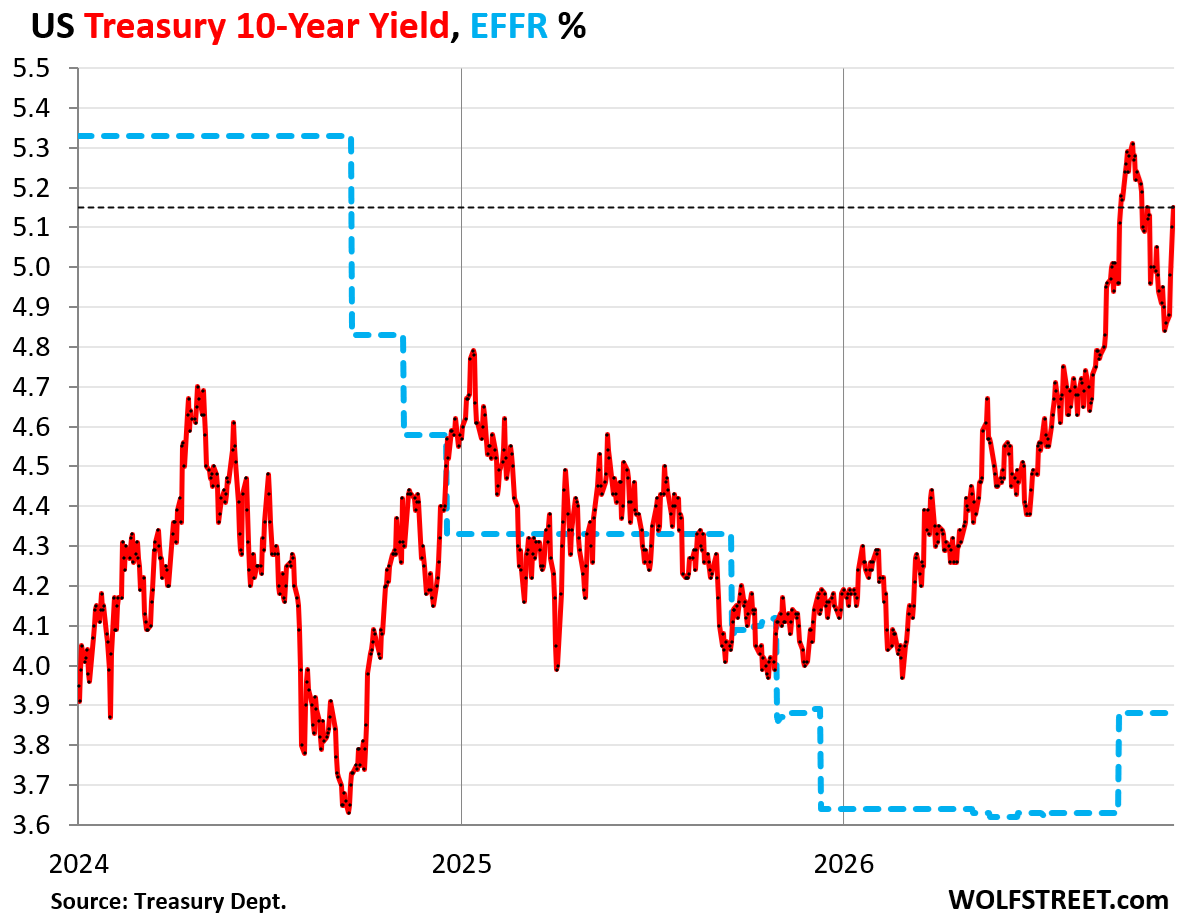
The bond market endured a turbulent week, with the 10-year Treasury yield climbing by 29 basis points to close at 5.15%. This surge in yields, which reflects a commensurate decline in bond prices, was particularly notable given the speed of the movement. Within just six trading days, the 10-year yield rose by 33 basis points, effectively erasing two-thirds of the gains observed between October 5 and November 5. The market is now trading near the recent high of 5.31%, signaling a persistent trend of rising borrowing costs for the federal government.
A Chronology of Market Volatility
The week’s downward pressure on bond prices was not a singular event but a series of reactions to macroeconomic data and auction performance. The instability began in earnest on Tuesday, November 10, following the release of Consumer Price Index (CPI) data, which indicated that inflation remains stubbornly embedded in the economy. Core services inflation, in particular, provided a catalyst for the sell-off.
The subsequent 10-year Treasury auction on Tuesday underscored this pessimism. To clear the $51 billion offering, the Treasury was forced to accept a yield of 5.02%, which was 14 basis points higher than the prevailing secondary market yield immediately preceding the CPI announcement. This "tail"—the difference between the expected yield and the actual auction yield—served as a warning sign to market participants that demand for government debt is softening at current price levels.
The pressure intensified on Thursday with a lackluster 30-year bond auction, where the yield settled at 5.44%. The week concluded with the release of Producer Price Index (PPI) data on Friday, which revealed that businesses are grappling with 6.5% inflation, the highest level recorded since November 2022. These inputs created a "perfect storm" for fixed-income assets, as investors recalibrated their expectations for Federal Reserve monetary policy.
The Fed’s Stance and Market Expectations
The rising yields have been punctuated by hawkish rhetoric from Federal Reserve officials. Federal Reserve Governor Christopher Waller recently signaled a preference for a 50-basis-point rate hike at the upcoming December Federal Open Market Committee (FOMC) meeting. This stance is bolstered by the latest core CPI data, which showed a month-to-month increase of 0.30%, a figure that directly influences the Fed’s calculation of the "real" policy rate.
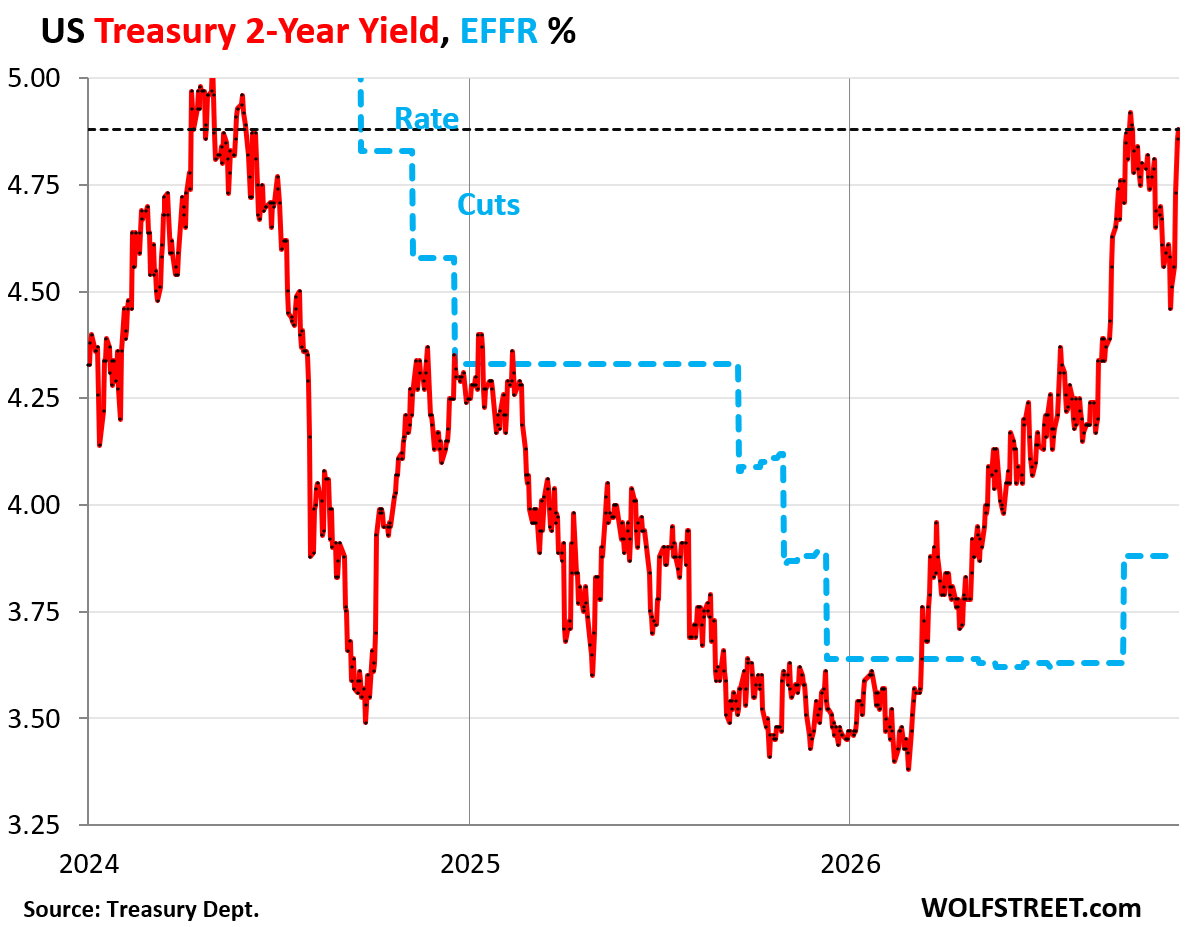
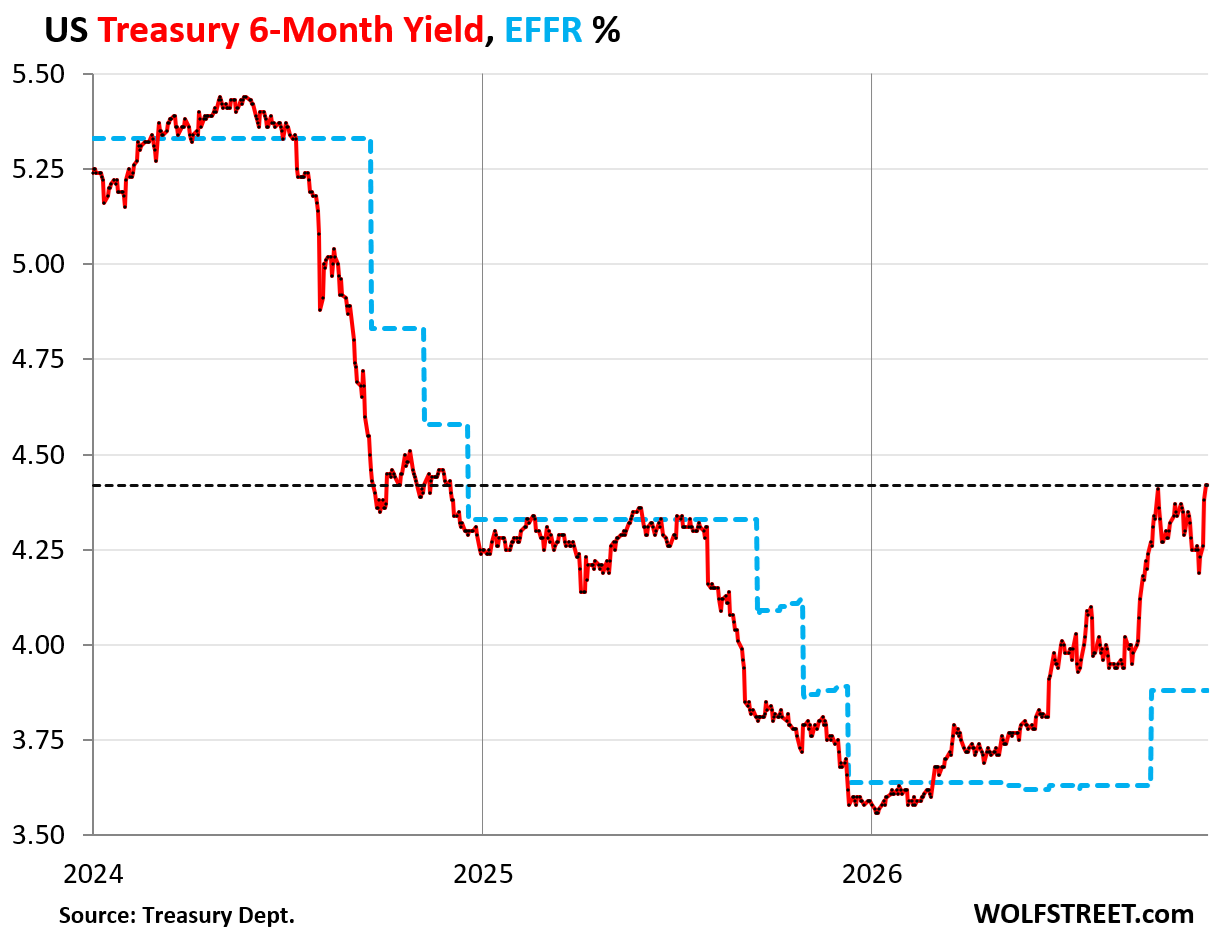
Market participants have responded by aggressively pricing in multiple rate hikes. The 2-year Treasury yield, which is highly sensitive to Fed policy, spiked by 37 basis points over the week. Currently, the 2-year yield sits 100 basis points above the Effective Federal Funds Rate (EFFR), a clear indicator that the market expects the central bank to maintain a contractionary stance well into the future. The 6-month Treasury yield, which reached 4.42% in the secondary market by Friday—the highest level since December 2024—further reflects expectations of at least two additional rate increases in the coming months.
Analysis of Treasury Issuance
The government’s liquidity operations this week were staggering in scale. Between Monday and Thursday, the Treasury conducted nine separate auctions, moving $766 billion in debt. While the $150 billion in long-term notes and bonds dominated headlines due to the yield volatility, the bulk of the activity—$616 billion—was concentrated in Treasury bills.
This volume of issuance suggests that the Treasury is under significant pressure to fund federal obligations as the fiscal year progresses. The composition of the auctions was as follows:
- Notes & Bonds ($150 Billion): Included a $70 billion 3-year note auction, a $50 billion 10-year note auction, and a $30 billion 30-year bond auction.
- T-Bills ($616 Billion): Comprised of various maturities ranging from 4-week to 26-week instruments.
The consistent rise in auction yields across all maturities suggests that the government must offer higher premiums to entice buyers in an environment where inflation is eroding real returns.

Long-Term Trends and Structural Risks
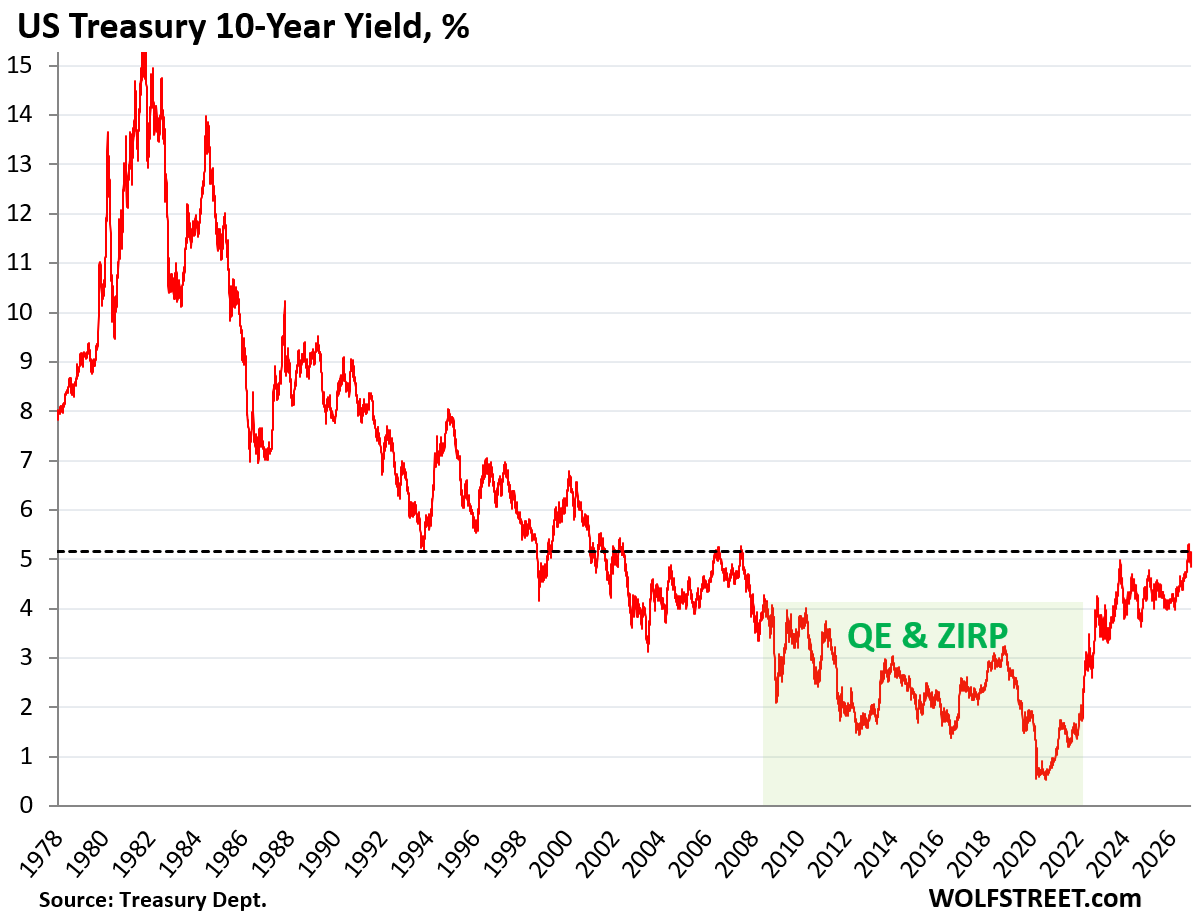
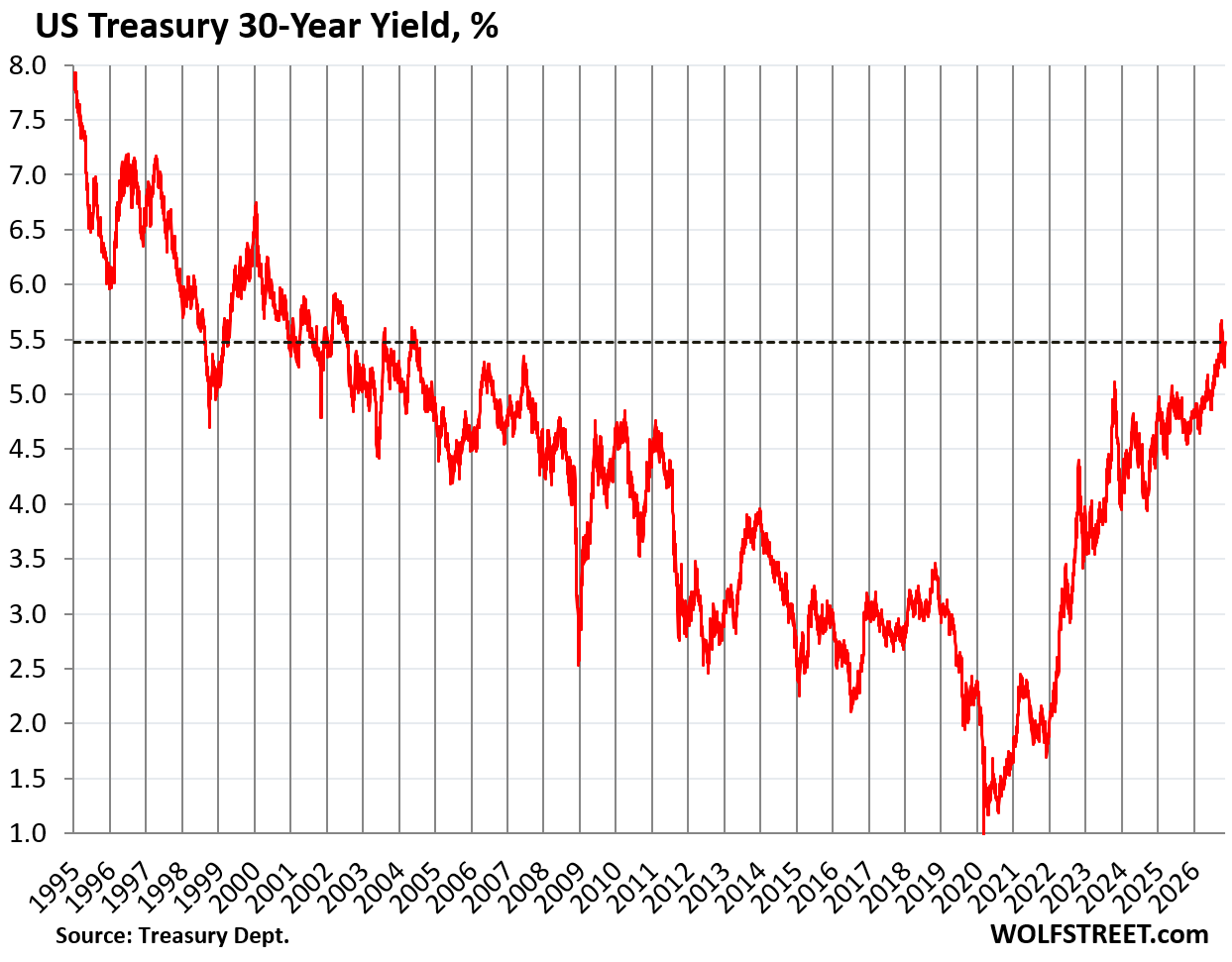
We are currently six years into a pronounced bear market for bonds, a stark reversal of the 40-year bull market that persisted from 1981 through August 2020. During that long cycle, falling yields were the norm, fueling asset price inflation across equities and real estate. Today, the reversal of that trend represents a fundamental shift in the cost of capital.
The 10-year Treasury yield’s current trajectory remains firmly upward. While brief periods of respite occurred in October, these rallies have proven ephemeral. When viewed against the historical backdrop, today’s 5.15% yield is reminiscent of levels seen in 2006 and 2007, though significantly higher than the near-zero interest rate environment that characterized the 2010s.
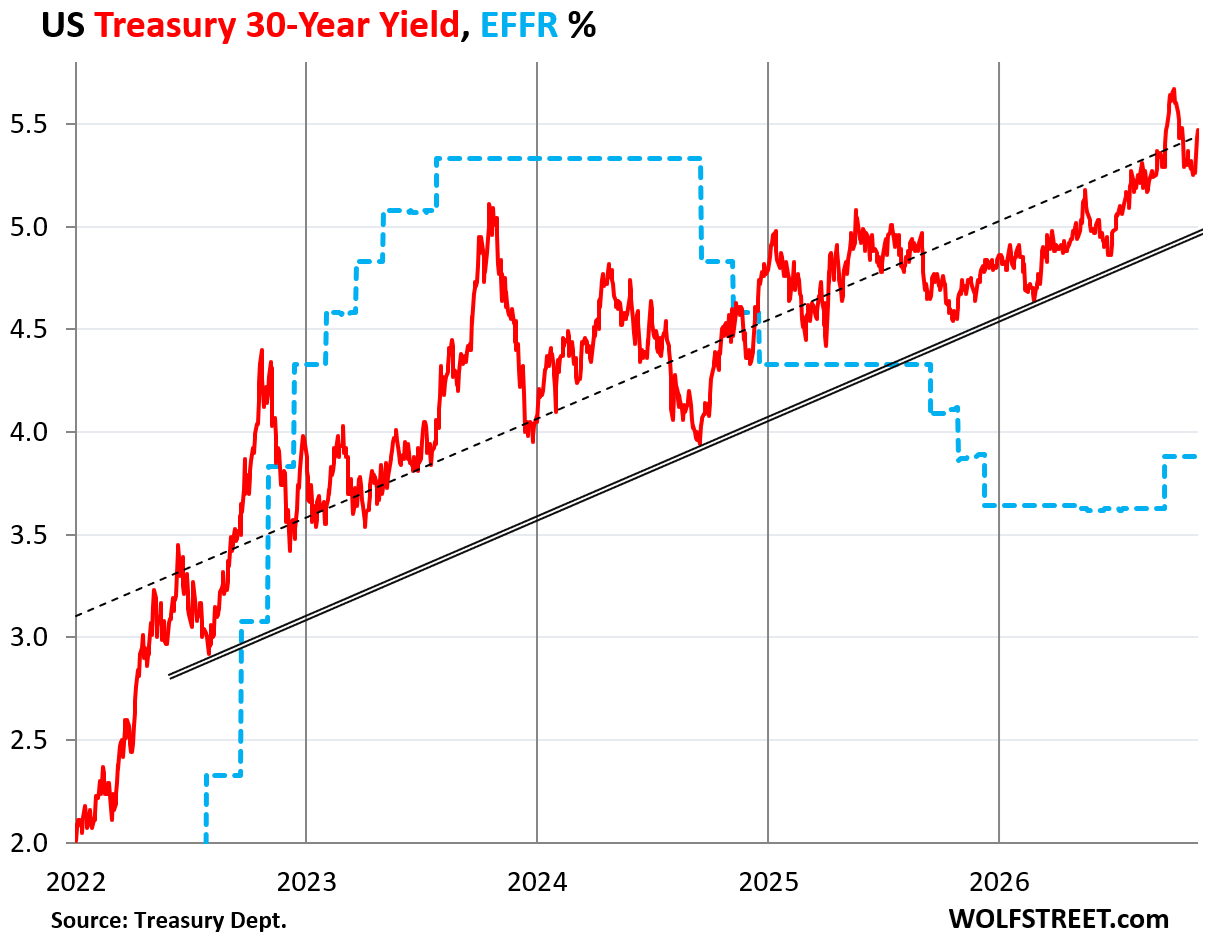
The 30-year Treasury yield, which rose 21 basis points this week to 5.47%, highlights the "duration risk" that investors are increasingly hesitant to hold without adequate compensation. In the view of many market analysts, the current yield on the 30-year bond is insufficient to compensate for the additional 10 years of inflation risk compared to the 20-year bond.
Market Liquidity and Investor Implications
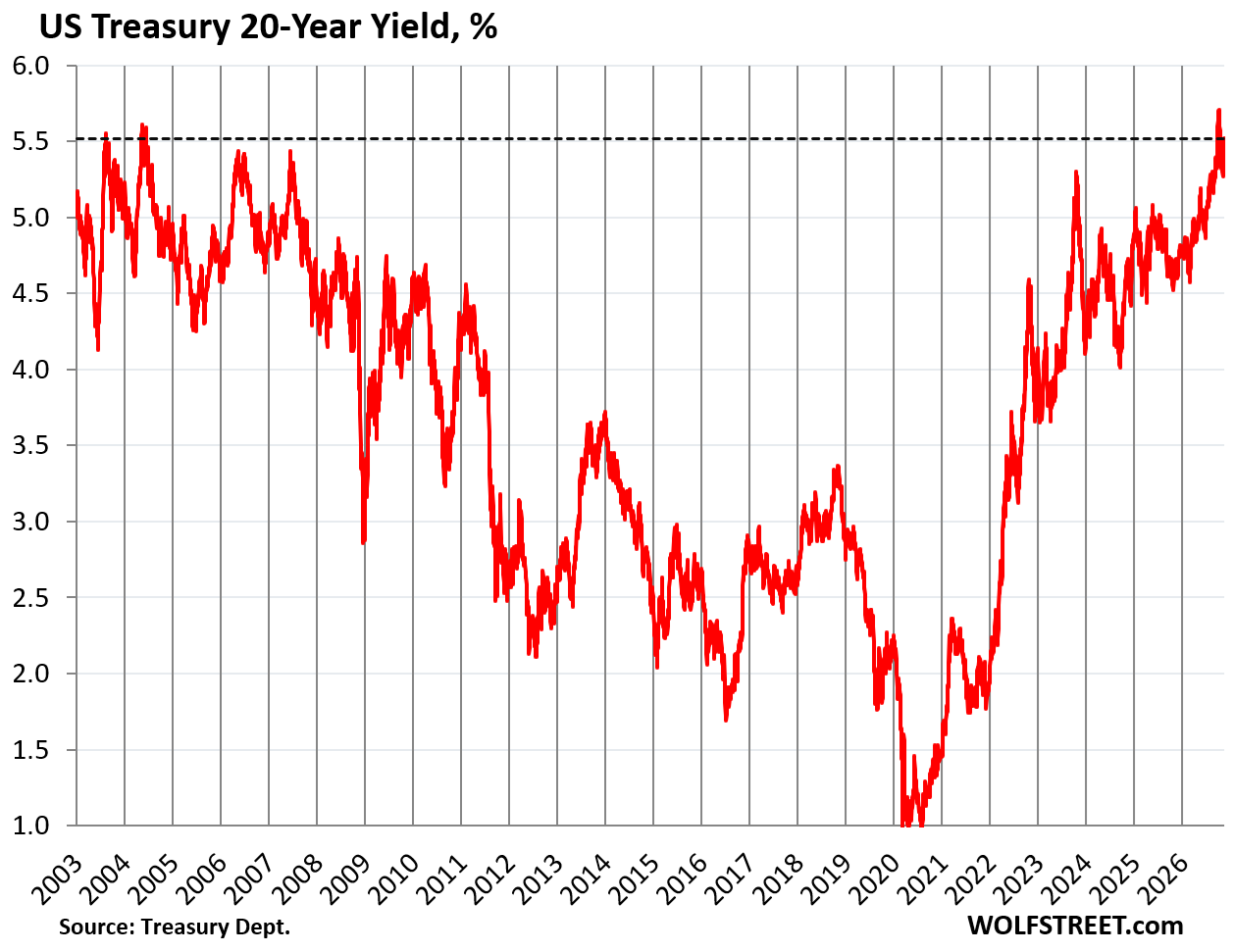
The 20-year Treasury bond presents a unique case study in market liquidity. Trading at 5.52% on Friday, the 20-year bond often carries a higher yield than the 30-year bond, a phenomenon driven by lower liquidity and smaller auction sizes. For institutional investors, this lack of depth makes the instrument difficult to trade in large quantities. However, for "buy-and-hold" investors, these liquidity concerns are largely secondary to the yield potential.
The broader implication of this week’s data is clear: the era of "easy money" has been replaced by a market that is increasingly volatile, inflation-conscious, and demanding of higher returns. As the Treasury continues to flood the market with debt to finance the federal deficit, the competition for capital between the government and private sector borrowers will likely keep upward pressure on yields.
Broader Implications for the Economy
The rise in Treasury yields serves as the benchmark for interest rates throughout the broader economy. Mortgages, corporate loans, and consumer credit lines are all tethered to the movement of these bonds. As the 10-year and 30-year yields climb, the cost of financing homes and business expansion rises, which acts as a natural brake on economic activity.
Should the current trend of rising yields continue, the Federal Reserve will face an increasingly complex balancing act. On one hand, the central bank must tighten policy to combat the 4% CPI inflation rate; on the other, it must be mindful of the impact that high borrowing costs have on the stability of the financial system and the federal government’s ability to service its own debt.
In conclusion, the events of this week have reaffirmed that the bond market is in a state of recalibration. With inflation proving to be more persistent than many had hoped, and the Treasury’s supply of debt showing no signs of abating, the upward pressure on yields appears to be a structural reality for the foreseeable future. Investors and policymakers alike will be watching the upcoming Treasury auctions and Federal Reserve communications closely for signs of whether this trend will stabilize or continue its relentless ascent.