U.S. Bank Launches Historic 60-Role Expansion to Capture the Booming National Middle-Market Banking Sector

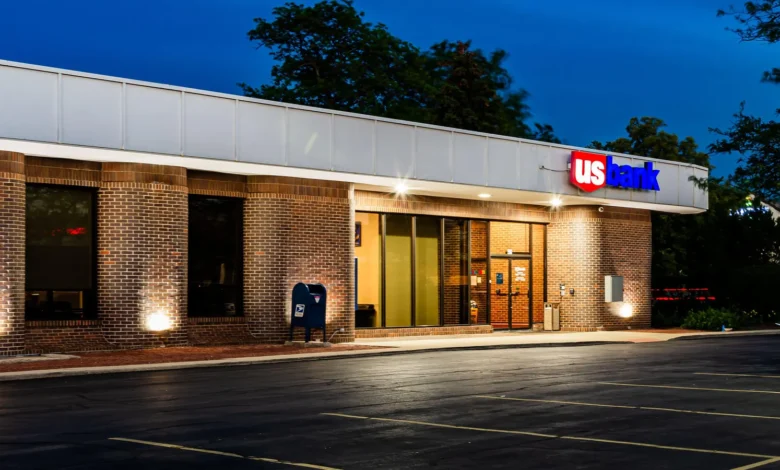
Minneapolis-based U.S. Bank has officially initiated the most extensive hiring campaign in its corporate history dedicated specifically to the middle-market banking segment. The nationwide expansion introduces approximately 60 new specialized roles, strategically deploying relationship managers, commercial lenders, and business development executives into high-growth commercial corridors across the United States. While the Minneapolis financial institution intends to reinforce its footprint in regions where it already maintains an established physical branch presence, a significant portion of this talent acquisition targets non-branch territories—most notably Florida and Texas. This bold maneuver highlights a broader paradigm shift in modern commercial banking, where digital infrastructure, specialized financial expertise, and proactive talent deployment increasingly supersede the necessity of traditional brick-and-mortar storefronts.
The Strategic Imperative of Middle-Market Growth
The middle-market segment, generally defined by U.S. Bank as commercial enterprises generating between $50 million and $1 billion in annual revenue, represents a critical engine of the American economy. These businesses often require sophisticated treasury management, syndicated lending, foreign exchange, equipment financing, and wealth management services that surpass the offerings of traditional retail banking units, yet they operate on a scale distinct from Fortune 500 conglomerates.
Hassan Salem, head of middle market for the U.S. Bank Institutional Client Group, emphasized that capturing greater market share within this demographic is a paramount priority for the institution. By recruiting seasoned bankers who possess deep, localized knowledge of regional industries, U.S. Bank aims to bridge the gap between localized client service and the extensive balance-sheet capabilities of a major national institution.
"Being close to clients matters, but proximity alone isn’t enough," Salem explained in a statement detailing the strategic rollout. "Our opportunity is to pair strong local relationships with the full strength of U.S. Bank. That means understanding where our clients want to go, bringing them the right expertise, and executing for them every day."

This philosophy underpins the bank’s decision to plant flags in booming economic hubs like Texas and Florida without first investing capital in physical branch networks. By utilizing a hybrid model of mobile commercial bankers, regional offices, and advanced digital platforms, U.S. Bank can service high-value corporate clients efficiently while minimizing overhead costs associated with retail real estate.
Timeline and Chronology of the Expansion
The November 2026 announcement marks the culmination of a multi-year strategic pivot toward national commercial business banking under the leadership of executive management, including CEO Gunjan Kedia.
Throughout recent quarters, U.S. Bank has systematically laid the groundwork for expanded business and commercial banking operations. In late 2025 and early 2026, internal risk and institutional client groups evaluated geographical coverage gaps, identifying the Southeast and Texas as primary zones of capital concentration and corporate relocation. Corporate migration trends—characterized by thousands of businesses and individuals relocating from high-tax, northeastern and midwestern states to the Sun Belt—created an urgent commercial banking demand that local institutions alone could not entirely satisfy.
By the third quarter of 2026, U.S. Bank signaled its intention to aggressively pursue small-business and mid-market segments. CEO Gunjan Kedia outlined plans during third-quarter earnings calls to accelerate small-business and middle-market growth trajectories heading into 2027. The current recruitment drive represents the immediate execution phase of those forward-looking directives, positioning specialized lenders on the ground to capture upcoming corporate loan demand, treasury migration, and advisory mandates.
Industry-Wide Competition and Surging Business Confidence
U.S. Bank is not alone in aggressively scaling its middle-market infrastructure. The competitive landscape for commercial banking talent has intensified significantly throughout 2026 as financial institutions race to capture lucrative fee income and interest yields from resilient mid-sized companies.

KeyBank, another prominent midwestern-headquartered lender, has similarly ramped up its commercial operations. In March 2026, KeyBank deployed a high-impact five-person middle-market team in Atlanta, following similar strategic launches in Chicago, Southern California, and the Kansas City metropolitan area. This industry-wide race for talent reflects a shared belief among financial executives that middle-market companies represent the most reliable source of loan growth and deposit acquisition in a fluctuating macroeconomic environment.
Underlying this aggressive banking expansion is a notable surge in optimism among corporate leaders. According to internal data from the U.S. Bank Fall CFO Insights survey released in late 2026, approximately 71% of surveyed finance chiefs expressed a positive outlook regarding their businesses’ financial prospects over the ensuing three-year horizon. This figure represents a marked improvement from the 64% recorded during the spring of the same year.
Similar data compiled by KeyBank in August 2026 corroborate this sentiment, indicating that middle-market executive confidence has held near record highs. Despite persistent economic uncertainties, supply chain recalibrations, and interest rate adjustments, corporate leaders continue to allocate capital toward expansion, technology upgrades, and operational scaling, creating a fertile environment for commercial lenders equipped to provide flexible financing solutions.
Fact-Based Analysis of Market Implications
The decision by U.S. Bank to augment its middle-market team by 60 roles—while modest relative to the bank’s total workforce of tens of thousands—carries profound strategic implications for the competitive dynamics of American commercial banking.
First, it signals the accelerating maturation of branchless commercial banking. Historically, corporate lenders insisted on establishing a dense local branch network before attempting to court commercial clients in a new state. However, modern enterprise software, secure digital onboarding, and remote executive mobility have effectively decoupled commercial lending from retail branch density. By targeting Texas and Florida—two states experiencing historic population growth, corporate relocations, and booming infrastructure development—U.S. Bank is directly challenging regional banking incumbents on their home turf without bearing the capital expenditure of building out consumer branch networks.

Second, the expansion underscores a strategic pivot toward fee-generating relationship banking. As net interest margins face compression from changing interest rate cycles, major banks are increasingly reliant on non-interest income derived from treasury management services, foreign exchange hedging, corporate advisory, and capital markets access. Middle-market enterprises requiring these sophisticated services provide a reliable, sticky source of recurring fee revenue that helps insulate banks against retail deposit volatility.
Finally, the hiring blitz highlights the enduring value of human capital in corporate finance. While financial technology and automated lending algorithms have streamlined the approval processes for small loans, complex middle-market transactions ranging from $50 million to $1 billion demand nuanced structuring, personalized risk assessment, and trusted advisory relationships. By recruiting veteran bankers who maintain deep-rooted connections within local business communities, U.S. Bank is betting that human expertise remains the ultimate differentiator in winning corporate clients.
Broader Economic Impact and Future Outlook
As these 60 newly appointed relationship managers and business development executives onboard and begin deploying capital into the market, their impact will likely ripple through regional economies in California, Texas, Florida, and other key financial centers. Access to flexible commercial credit and sophisticated treasury solutions enables mid-sized manufacturing firms, logistics providers, healthcare networks, and technology startups to accelerate their own hiring, capital expenditures, and regional expansions.
For U.S. Bank, the success of this hiring initiative will serve as a bellwether for its broader ambition to establish an inescapable national presence in commercial banking. With CEO Gunjan Kedia already signaling continued focus on adjacent segments like small-business banking heading into 2027, the current middle-market expansion may well serve as a blueprint for future institutional scaling.
As corporate migration patterns continue to reshape the American economic landscape, financial institutions that successfully combine localized expertise with national balance-sheet muscle—all while bypassing traditional geographic constraints—will ultimately define the next era of commercial banking leadership.