U.S. Justice Department Secures Over $1.2 Billion in North Korean Crypto Heist Linked to Binance Exploit

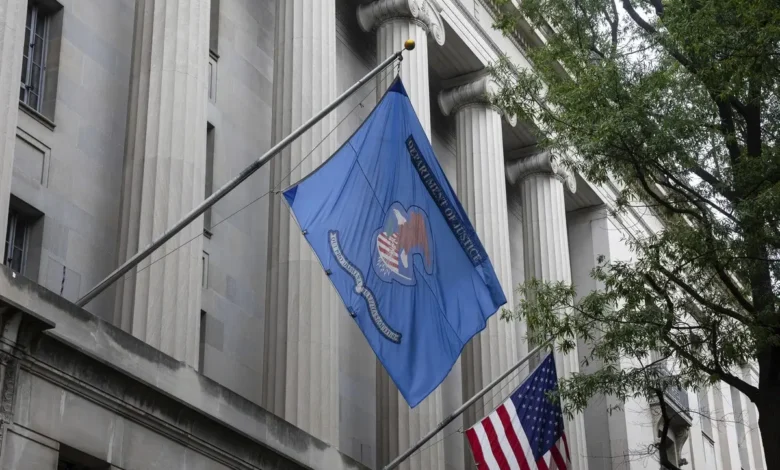
The United States Department of Justice has formally announced a major court-authorized enforcement operation involving more than $1.2 billion in cryptocurrency. This digital currency was stolen during a massive October cyberattack targeting the Binance exchange, marking a watershed moment in the ongoing fight against state-sponsored financial crimes. The operation represents the largest known cryptocurrency theft recovery effort in history, highlighting the intersection of international geopolitics, advanced blockchain forensics, and decentralized finance security.
In a comprehensive public disclosure on November 12, federal authorities revealed that coordinated international and domestic efforts have successfully frozen upwards of $2.7 billion in illicit
ly obtained digital assets. The specific assets covered by the latest batch of seizure and restraint orders form a vital component of this broader multi-billion-dollar pool. The operation underscores how traditional law enforcement agencies are adapting to the borderless, fast-paced nature of blockchain transactions to combat cyber operations originating from hostile nation-states.
Anatomy of the $6.3 Billion Binance Exploit and TraderTraitor Operation
The landmark enforcement action follows a staggering security breach estimated at approximately $6.3 billion, which the Federal Bureau of Investigation (FBI) has formally attributed to North Korea’s notorious state-sponsored hacking collective, known within the cybersecurity community as TraderTraitor. This sophisticated operation demonstrates the immense capabilities of Pyongyang’s cyber warfare divisions, which increasingly rely on cryptocurrency theft to circumvent international economic sanctions and fund state programs.
According to forensic findings published by blockchain analytics firm Chainalysis, the attackers moved swiftly following the initial breach to obfuscate their digital footprint and evade controls embedded within issuer-controlled stablecoins. The investigative timeline reveals that the threat actors executed a rapid conversion sequence: approximately $325 million in frozen stablecoins was systematically swapped for roughly $285 million in Ethereum (ETH) over a compressed window of just 20 minutes.
By sacrificing a portion of the asset value through decentralized exchanges, the attackers successfully acquired an asset class that could not be frozen directly by centralized stablecoin issuers. Furthermore, investigators uncovered automated laundering patterns characterized by repetitive transactions through newly funded cryptocurrency wallets. Notably, several destination addresses initially received exact increments of 1 TRX (Tron) before processing secondary, high-volume transfers. This technical quirk strongly suggested a scripted, programmatic approach to distributing illicit proceeds across a sprawling network of intermediary accounts.
On October 31, the FBI issued a high-priority TraderTraitor alert containing specific Ethereum addresses associated with the malicious operation. For corporate compliance teams, cryptocurrency exchanges, and financial institutions, these identifiers serve as an indispensable baseline for transaction screening and wallet monitoring. However, regulatory experts emphasize that screening alone is insufficient; investigators must rigorously analyze complete transaction histories and counterparty behavior to accurately distinguish between direct criminal exposure and incidental, secondary market transfers.
The Three-Stage Framework of U.S. Asset Recovery
To understand the practical impact of the Justice Department’s announcement, stakeholders must examine the rigid, multi-stage legal framework governing the recovery of stolen digital assets in the United States. Federal guidelines delineate asset reclamation into three distinct legal phases, each offering vastly different rights and protections to victims and affected entities.
The initial phase is the Freezing stage, wherein stablecoin issuers, centralized cryptocurrency exchanges, and private blockchain analytics firms coordinate rapidly to prevent stolen assets from moving across public ledgers. During this phase, transfers are blocked, but victims retain no automatic legal claim to the trapped funds.
The second phase involves Seizure, where federal authorities obtain formal court-authorized warrants to take legal control or place legal restraints over the identified property. While this prevents the perpetrators from accessing the capital, victims must still navigate extensive legal proceedings to assert ownership.
The final phase is Forfeiture. Once a court orders a formal forfeiture, the confiscated assets can theoretically be made available for eligible victim compensation processes, such as remission or restoration petitions. However, even at this advanced stage, distribution is strictly subject to stringent eligibility criteria established by the Department of Justice. Consequently, the government’s recent $1.2 billion security action cannot be instantly appended to the industry-wide freeze total as an immediate, liquid payout; rather, it represents a crucial preliminary step toward eventual legal forfeiture.
The Unique Position of Binance and the Question of Corporate Compensation
A complex dimension of the recent enforcement action involves the financial position of Binance itself. Unlike traditional retail bank hacks where account holders bear the immediate brunt of a frozen or unsecured loss, Binance enacted an aggressive, swift corporate bailout strategy in the immediate aftermath of the October breach.
On November 4, the exchange released a recovery update indicating that approximately 98% of affected customer assets had been fully replenished using corporate reserves, its Secure Asset Fund for Users (SAFU)—an emergency insurance reserve financed by trading fees—and a dedicated portion of its futures insurance reserves. By November 12, Binance reported that coverage of all impacted customer balances was fully complete, though its comprehensive proof-of-reserves verification audit remained pending at the time of publication.
This proactive replenishment fundamentally alters the legal and economic dynamics of victim compensation. Because Binance absorbed the overwhelming majority of the financial damage using its own balance sheet, standard retail customers whose balances were restored do not possess an outstanding financial loss equal to the amount originally stolen. Consequently, Binance—and any other institutional entities that absorbed the economic shock—may hold a stronger economic and legal interest in pursuing subsequent recoveries through U.S. forfeiture proceedings.
Legal experts note that establishing an economic interest does not automatically guarantee a successful legal claim. Under DOJ victim-compensation guidelines, remission petitions require exhaustive documentation, including proof of direct financial loss, comprehensive supporting records, and formal disclosure of any compensation already received from third-party sources. Thus, the ultimate destination of the seized cryptocurrency remains tied up in complex accounting and legal questions regarding who truly suffered the unhedged loss.
FaceStealer: How North Korean Operatives Weaponized Trusted Identities
Beyond the direct Binance exploit, the Justice Department’s November 12 disclosure also highlighted the official disruption of FaceStealer, a separate, highly sophisticated North Korean cyber campaign that allegedly siphoned more than $400 million in cryptocurrency over an 18-month operational window.
Government findings indicate that federal investigators successfully seized more than 900 recorded victim videos utilized in the scheme. Unlike traditional phishing attacks that rely on poor grammar or clumsy spoofed emails, FaceStealer utilized advanced deepfake technology and previously recorded audio-visual data to impersonate trusted colleagues, executives, and business partners during live video calls.
One of the most alarming aspects of the FaceStealer operation was the strategic operational delay employed by the hackers. In numerous instances, attackers captured video recordings during routine business meetings but waited more than a year before executing the final theft. This prolonged timeline thoroughly undermines a foundational assumption in modern corporate cybersecurity: that seeing and hearing a familiar face on a video conference is absolute proof of identity.
By weaponizing archival footage from ordinary professional interactions, operatives successfully convinced targets to approve high-value transactions, install malicious software, or grant privileged network access long after the original meeting concluded. Furthermore, these extended timelines severely complicate incident response investigations, as the initial social-engineering event often appears entirely disconnected from the subsequent financial theft.
Mitigating Deepfake Vulnerabilities in Corporate Treasury Operations
In response to the escalating sophistication of campaigns like FaceStealer and TraderTraitor, cybersecurity professionals and financial compliance officers are urging organizations to overhaul their internal authorization controls, particularly within corporate treasury departments handling high-value digital asset transfers.
Security architects recommend moving away from reliance on visual and auditory verification during remote communications. Instead, institutions managing substantial crypto holdings must implement hardware-backed authentication protocols, independently verified transaction channels, and mandatory multisignature approval workflows.
Deploying FIDO2 or WebAuthn security keys provides robust protection for account-level authentication, while hardware wallets and institutional cryptographic signing systems ensure that transaction-specific approvals cannot be bypassed by social engineering alone. Organizations should treat video conferencing tools strictly as communication mediums rather than authoritative approval mechanisms for sensitive financial movements.
Additionally, corporate security teams are advised to institute rigorous monitoring of dormant privileged access accounts, unusual software deployments, and lingering backend permissions. Given the long dwell times demonstrated by campaigns like FaceStealer, security audits must extend far beyond the immediate hours following a suspicious interaction to catch latent threats before they manifest.
Broader Implications and Next Steps for the Seized Assets
As the legal proceedings unfold, the $1.2 billion in court-authorized restraints will prevent the contested digital assets from circulating while federal prosecutors pursue civil forfeiture and related legal actions. For Binance, the ultimate resolution of these proceedings will determine the extent to which the exchange can recover the substantial capital it deployed from corporate reserves and the SAFU fund to make its user base whole. Binance has separately pledged to restore its SAFU reserve to a robust $1 billion threshold, maintaining that its internal accounting recovery remains entirely distinct from ongoing U.S. government litigation.
Federal authorities have also issued an urgent advisory to the public regarding potential fraud. In light of the high-profile recoveries, individuals and entities should remain hyper-vigilant against fraudulent actors posing as recovery agents. The Justice Department and the FBI’s Internet Crime Complaint Center (IC3) have reiterated that legitimate government victim-compensation petitions and asset remission processes never require advance recovery fees. As global law enforcement continues to tighten the net around state-sponsored hacking syndicates, the outcome of this unprecedented case will likely set vital legal and operational precedents for the future of digital asset security worldwide.