How employment changed by industry amid big structural shifts in the US economy.

The American labor market is currently navigating a period of profound structural transformation, driven by the dual forces of rapid technological advancement and a recalibration of post-pandemic economic priorities. Data released by the Bureau of Labor Statistics (BLS) highlights a complex landscape where traditional industries are shedding roles in favor of automation, while emerging sectors, specifically those tied to artificial intelligence and domestic infrastructure, are experiencing significant shifts in labor demand. This evolution is not merely a cyclical trend but a fundamental reordering of where, how, and why Americans are employed.
The Dynamics of Modern Manufacturing
Manufacturing, once the backbone of the American middle class, has spent decades contending with the dual pressures of globalization and intense automation. While the offshoring of production to lower-labor-cost nations—particularly China—defined the early 21st century, the narrative in 2026 is one of resilient domestic output. Despite the loss of total headcount in certain sub-sectors, the United States remains the world’s second-largest manufacturing powerhouse by value added.
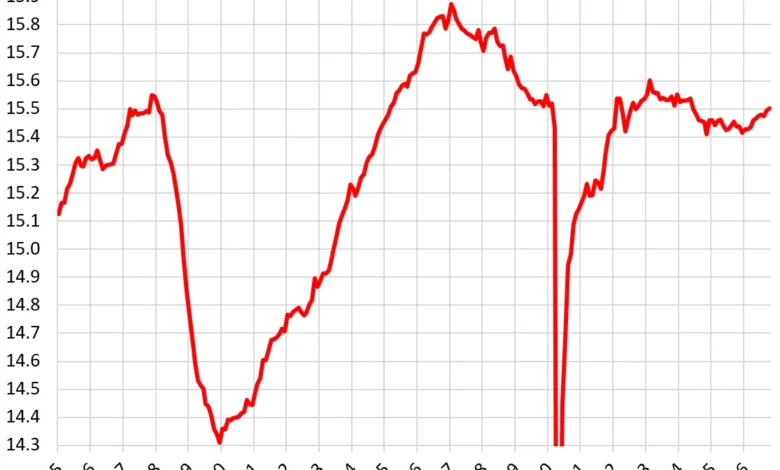
The sector has shifted its focus toward high-value, capital-intensive production. The semiconductor industry serves as the primary example of this evolution: these facilities require a smaller, highly specialized workforce proficient in STEM disciplines rather than traditional manual labor. While automation is designed to reduce labor costs, the recent trend shows a stabilization and even a slight increase in manufacturing employment, suggesting that the drive for domestic supply chain security is offsetting the efficiency gains of robotics.
Construction and the AI-Driven Infrastructure Boom
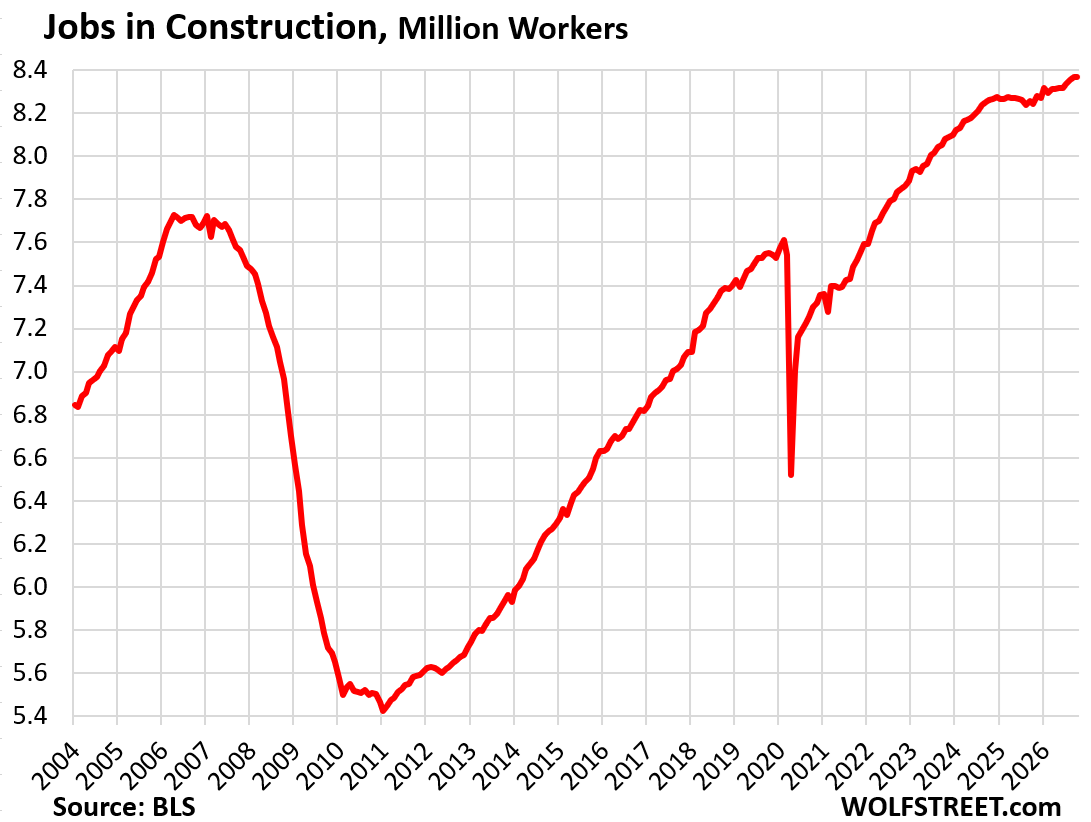
The construction industry is currently experiencing a bifurcated reality. Residential construction, particularly in the single-family and multi-family sectors, has faced headwinds due to ballooning inventories and softening demand. Simultaneously, the commercial real estate (CRE) sector continues to struggle with the aftermath of pandemic-era shifts in office usage, with delinquency rates in office-based commercial mortgage-backed securities (CMBS) reaching levels that exceed those seen during the 2008 financial crisis.
However, these declines are being counterbalanced by a historic surge in specialized construction. The rapid development of AI data centers and the ongoing expansion of domestic factory infrastructure have created a "second wave" of demand for skilled tradespeople. Electricians, structural steel workers, and systems engineers are in short supply, as projects related to power grid modernization and high-tech facility construction receive massive capital inflows. This creates a tight labor market for specific niches, even as traditional building sectors stagnate.
Professional Services and the Post-Pandemic Adjustment
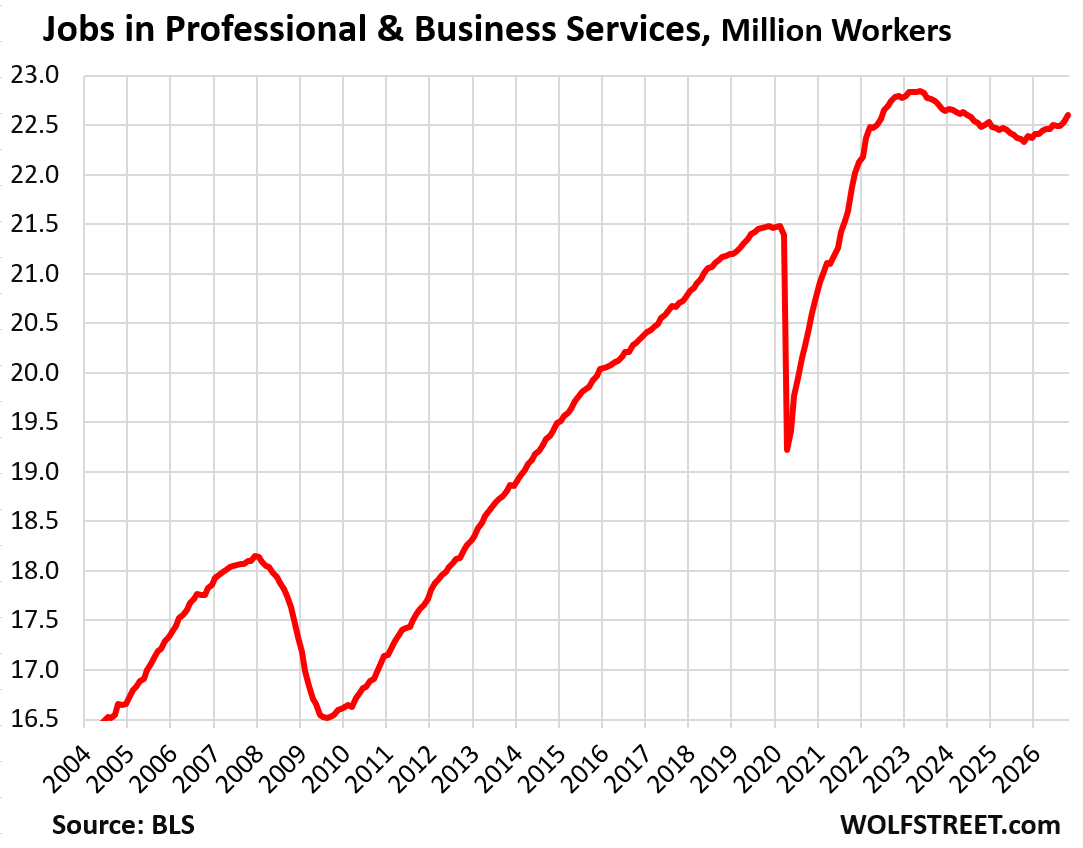
The professional and business services sector, encompassing everything from technical consulting to administrative support, is currently emerging from a period of "pandemic over-hiring." Between 2021 and 2022, companies in the tech, social media, and professional services space aggressively expanded their headcounts. The subsequent correction, which reached its trough in late 2025, represents a necessary realignment to sustainable growth models.
Further complicating this sector is the role of federal contracting. Recent federal budget austerity measures, colloquially referenced as "DOGE cutbacks," have significantly reduced the workforce requirements for many government contractors. Consequently, this sector has become a bellwether for both private-sector corporate discipline and the changing priorities of federal fiscal policy.
The Erosion of the Information Sector
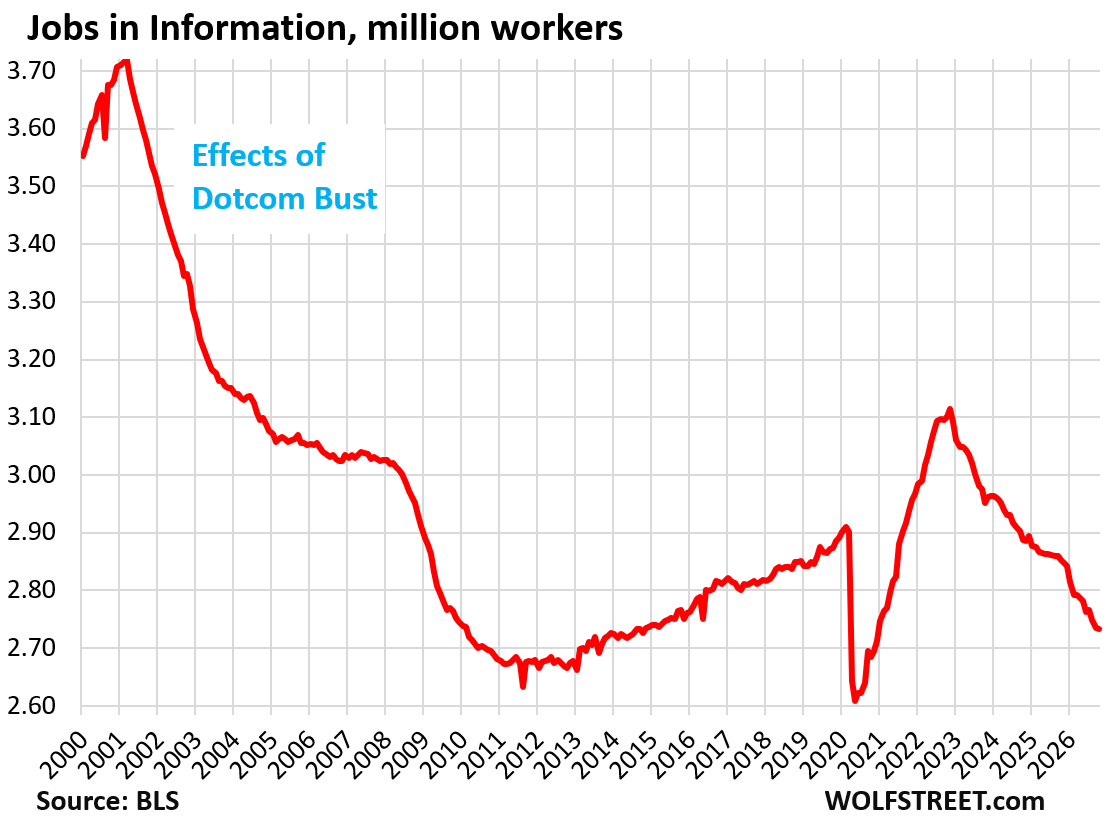
The "Information" category—which includes telecommunications, software publishing, data processing, and media—has seen employment figures retreat to 2015 levels. This decline is attributed to a combination of AI integration and the post-pandemic labor correction. However, analysts note that the decline in this specific NAICS classification does not necessarily equate to systemic unemployment.
Many workers previously categorized under "Information" have been absorbed into other sectors. For instance, a software developer who once worked for a media conglomerate might now be employed by a financial services firm or a scientific research laboratory. The skills once exclusive to the information industry have become ubiquitous, essentially democratizing the digital workforce across the broader economy.
Healthcare, Retail, and Consumer-Facing Industries
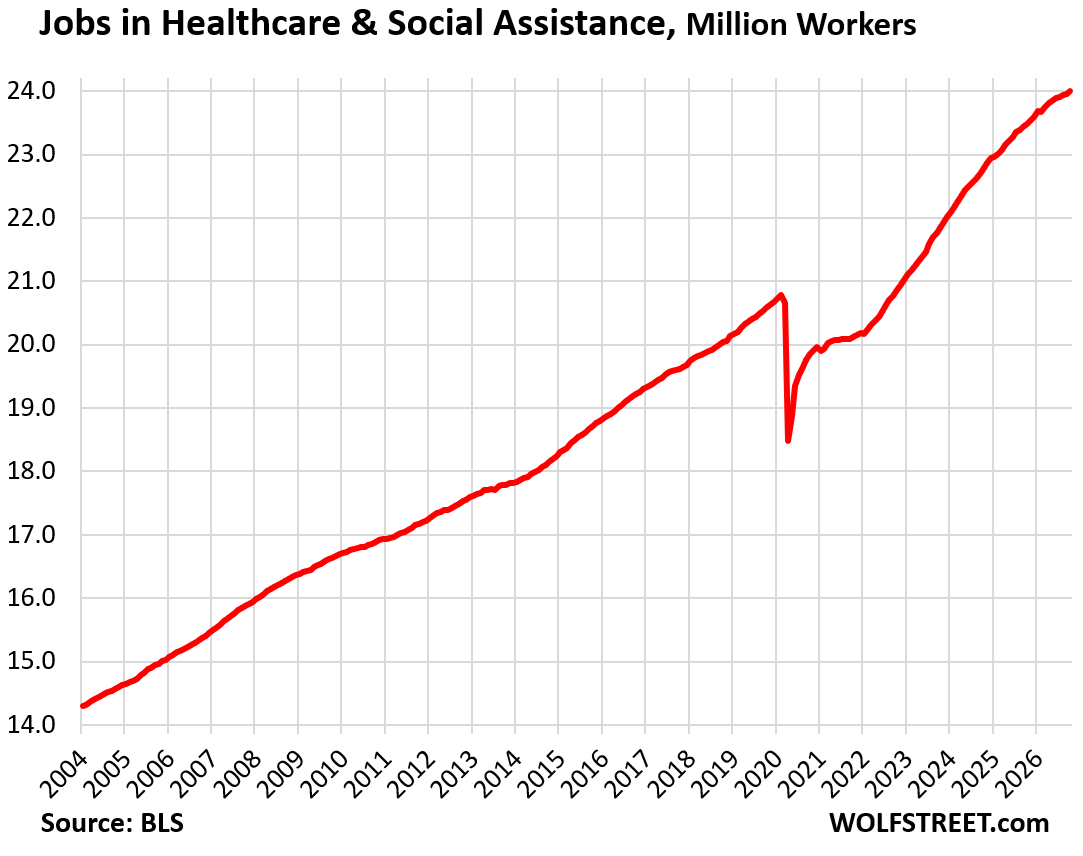
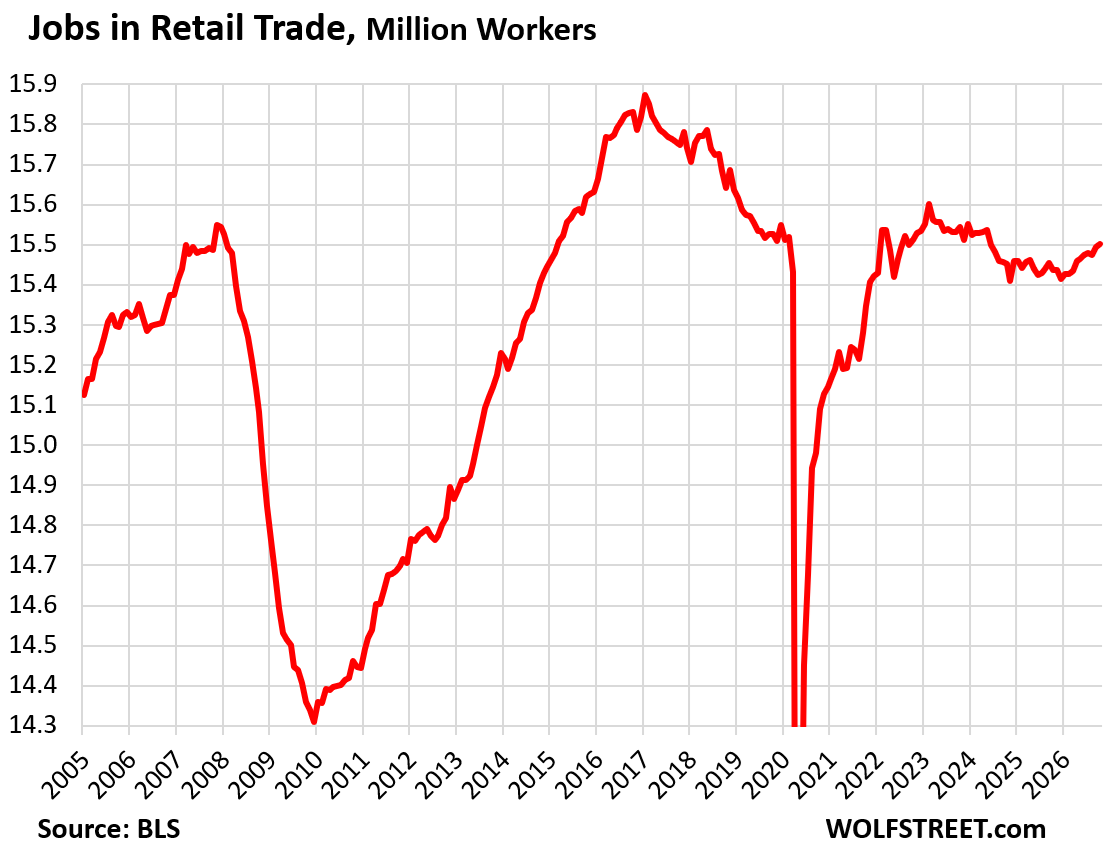
Healthcare and social assistance remain the most consistent growth engines in the labor market. Driven by an aging population and increased demand for specialized care, this sector has maintained a steady upward trajectory in hiring. Conversely, the retail sector continues to reflect the long-term "brick-and-mortar" decline. While food, fuel, and automotive retailers show stability, traditional general merchandise retail remains under pressure from e-commerce giants.
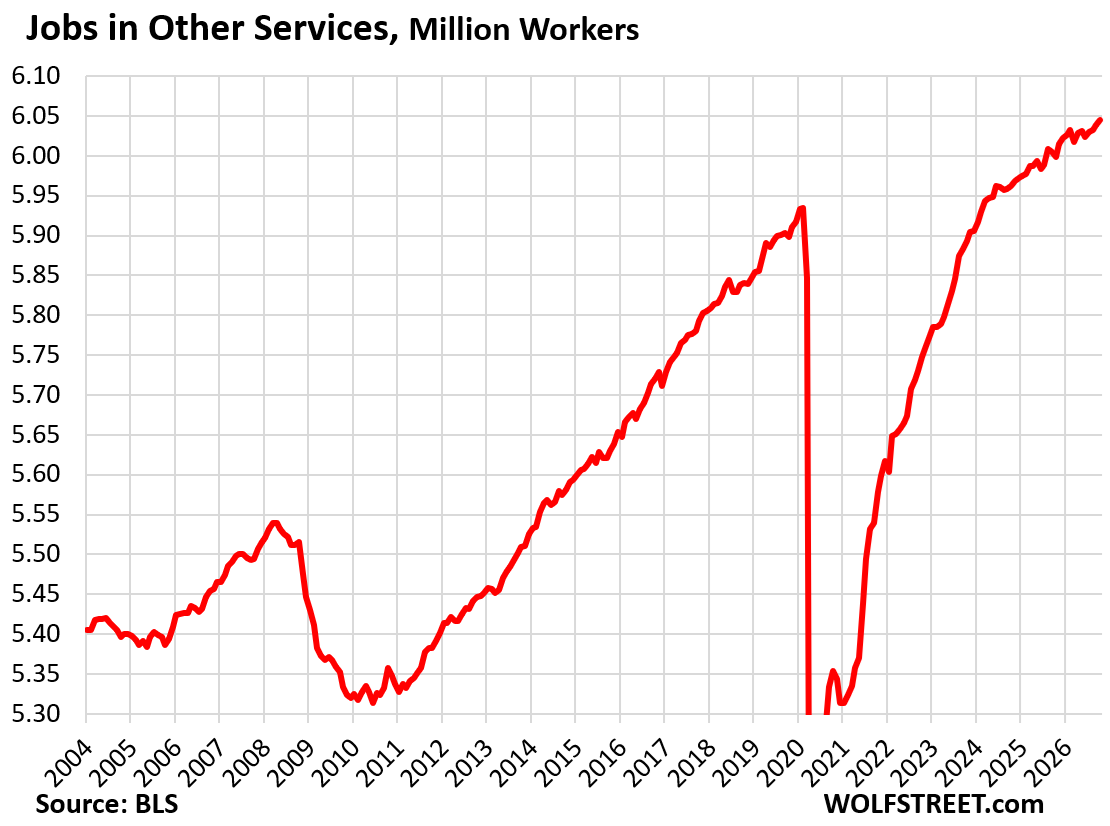
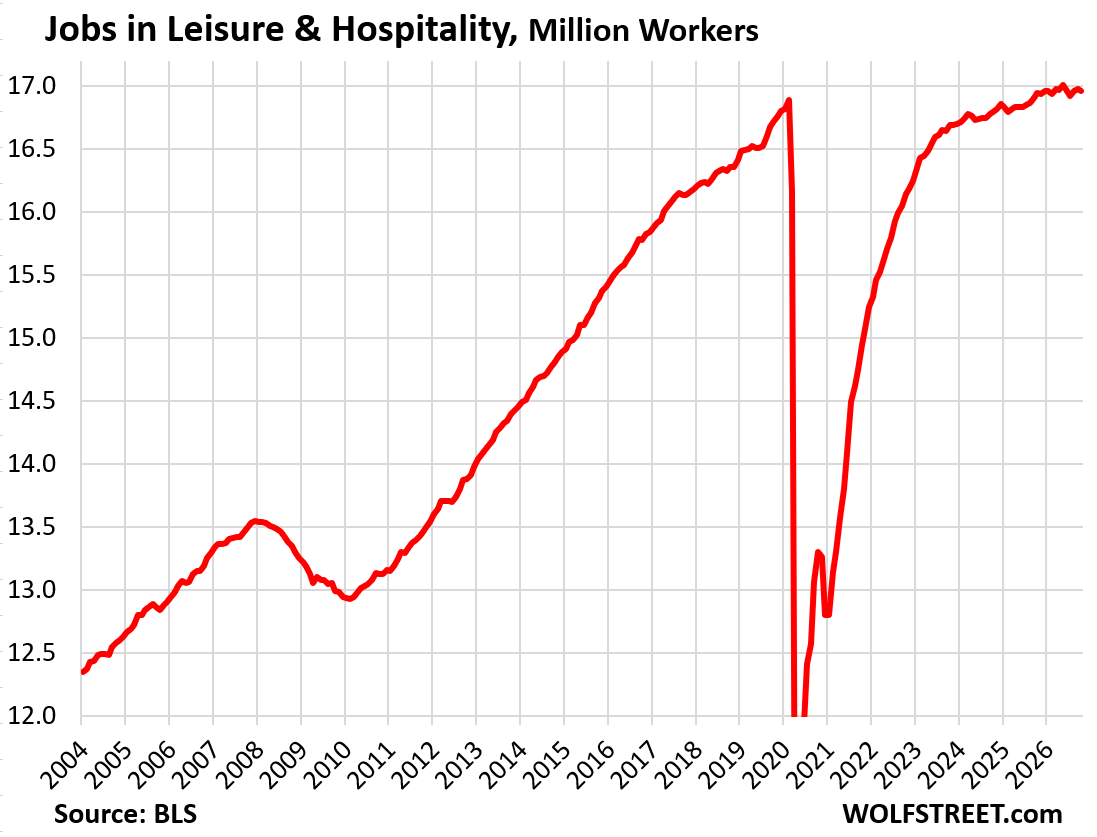
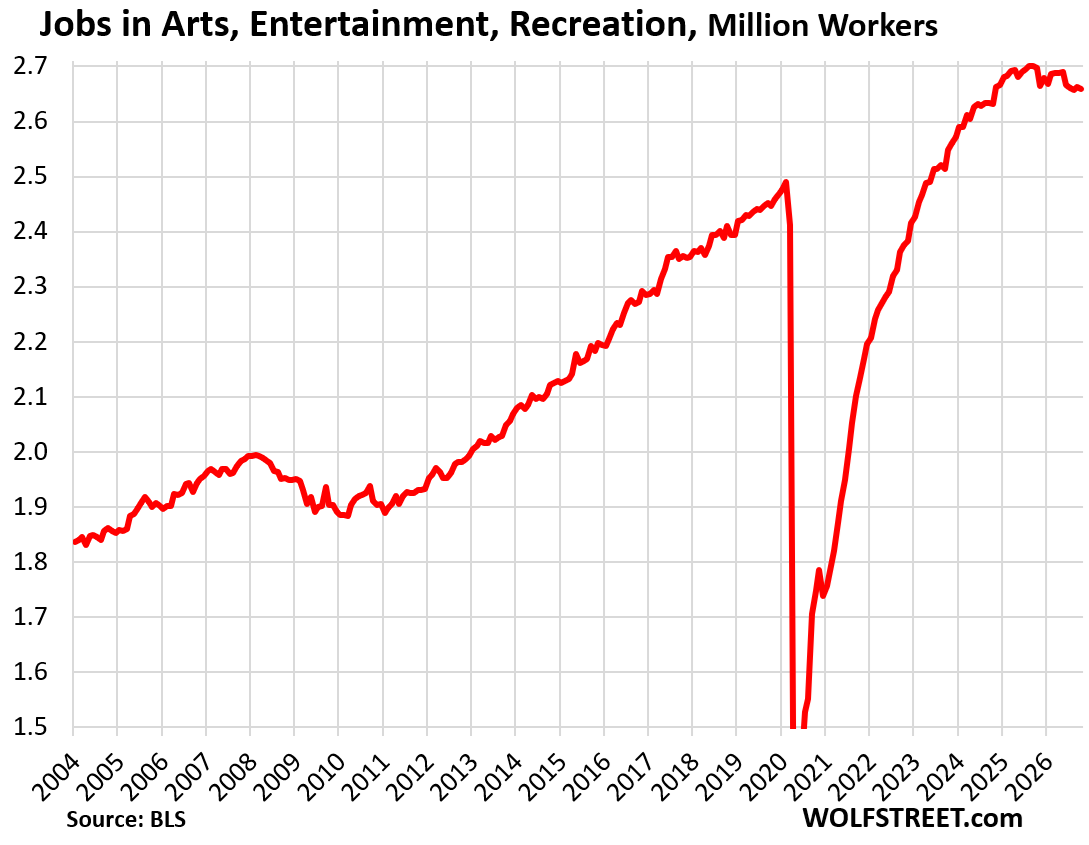
The leisure and hospitality sector, encompassing restaurants, lodging, and tourism, has largely recovered from the 2020 lockdowns, though it remains sensitive to fluctuations in consumer discretionary spending. In these service-oriented roles, the challenge has shifted from a lack of demand to a persistent struggle for labor retention in an era of higher wage expectations.
Government Retrenchment
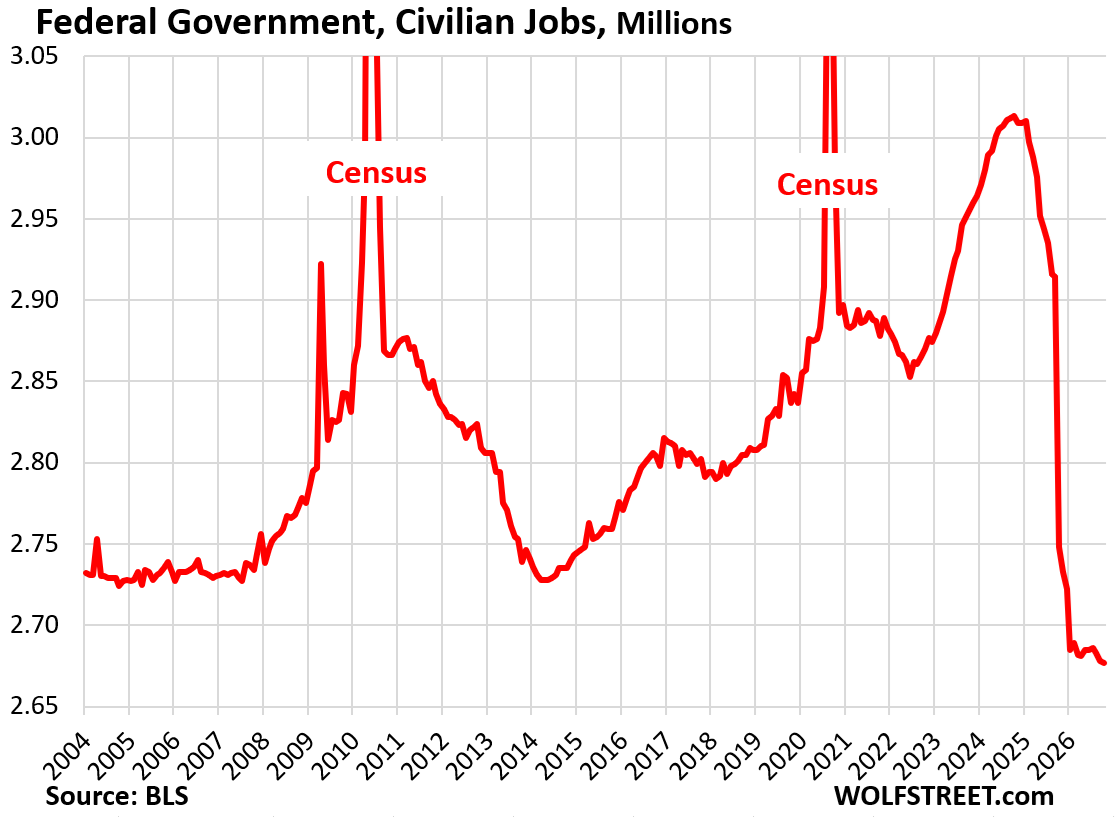
Perhaps the most notable trend in the 2026 data is the significant reduction in government employment at all levels. Since January 2025, the federal government has shed roughly 333,000 civilian jobs, representing an 11% reduction in payrolls. As a percentage of total nonfarm payrolls, federal employment has fallen to 1.68%, the lowest level recorded since data collection began in 1939.
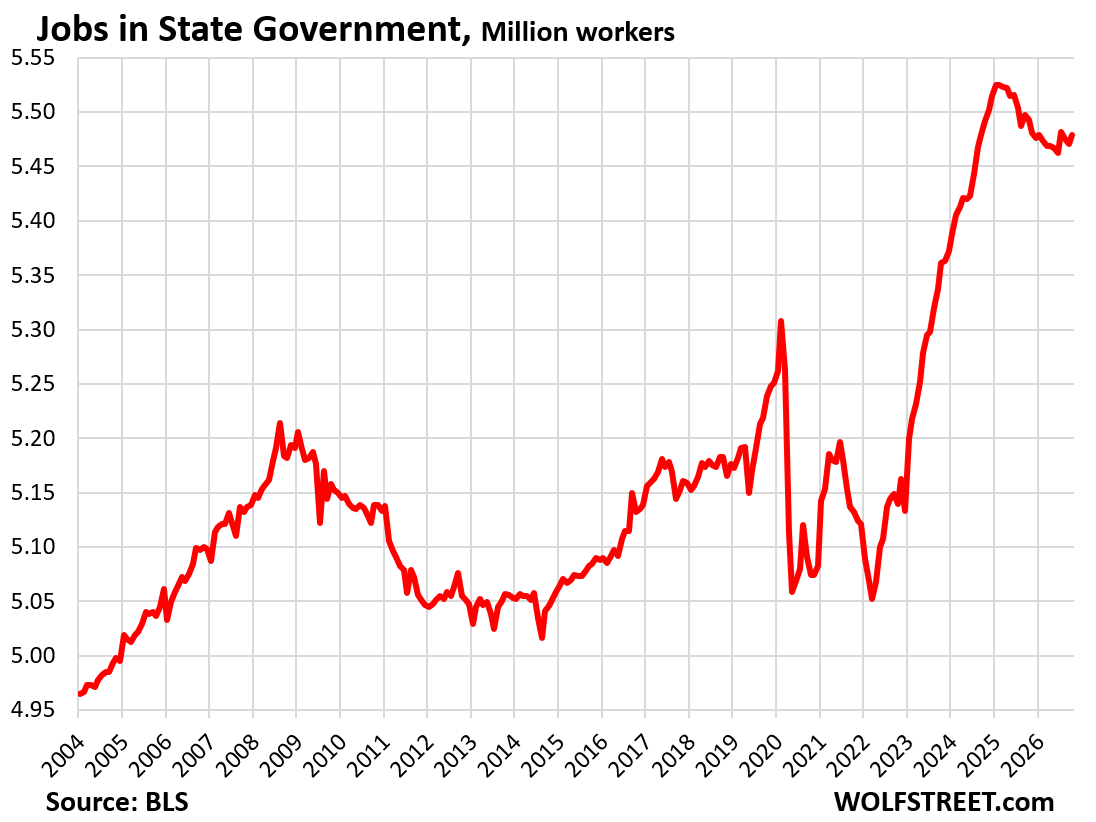
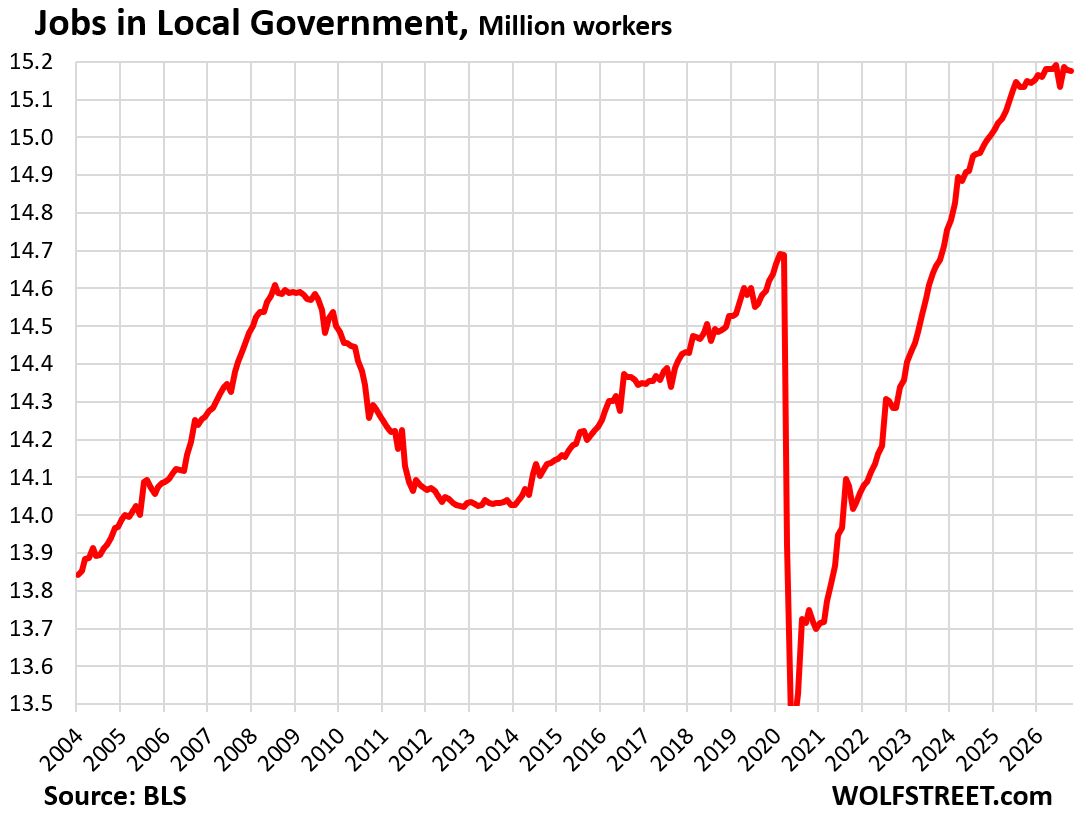
State and local governments are following a similar, if less aggressive, pattern. State university systems, which serve as the primary engine for state-level hiring, have faced declining enrollment, particularly among foreign students, leading to reduced staffing requirements. Local governments, responsible for essential services like education and law enforcement, have seen their share of total employment drop from 10.5% two decades ago to 9.5% today. This shift suggests a broader movement toward a smaller public sector, as governments attempt to navigate fiscal constraints and changing demographics.
Broader Economic Implications
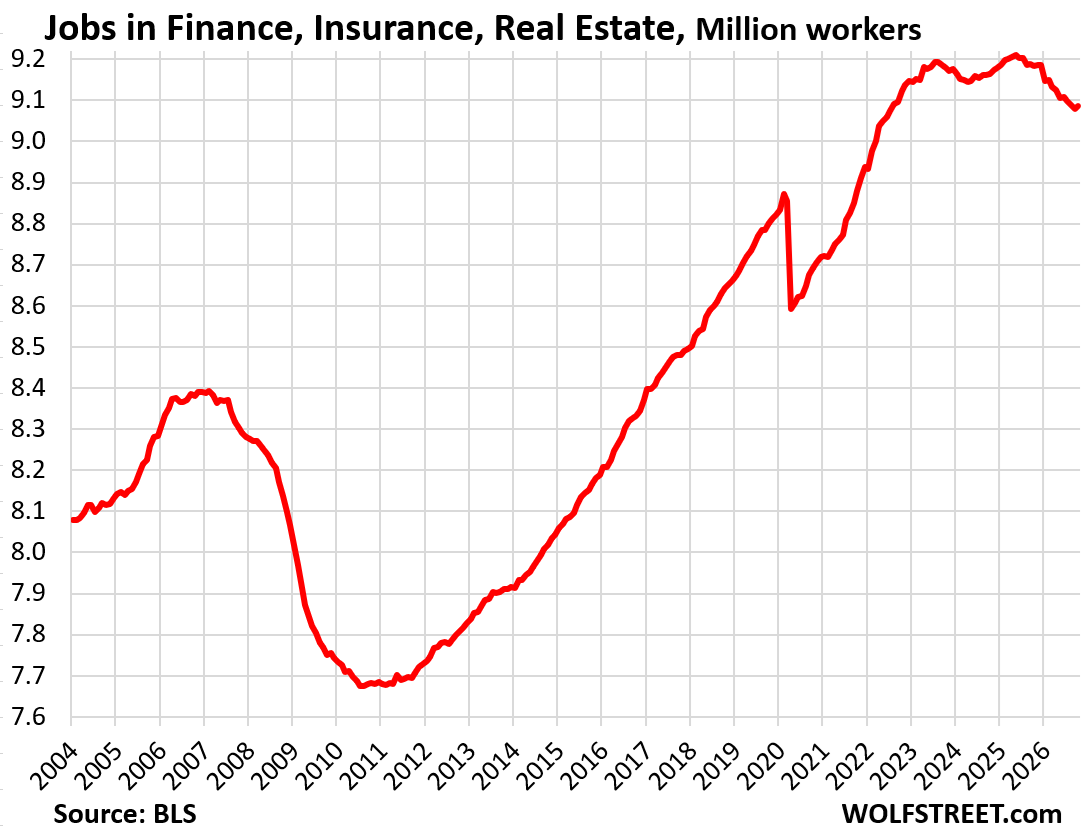
The current labor market data suggests that the American economy is transitioning away from the low-interest-rate environment that fueled the "over-hiring" of the early 2020s. We are witnessing a flight to efficiency. Companies are prioritizing AI-driven productivity gains over simple labor accumulation, and public entities are prioritizing fiscal consolidation.
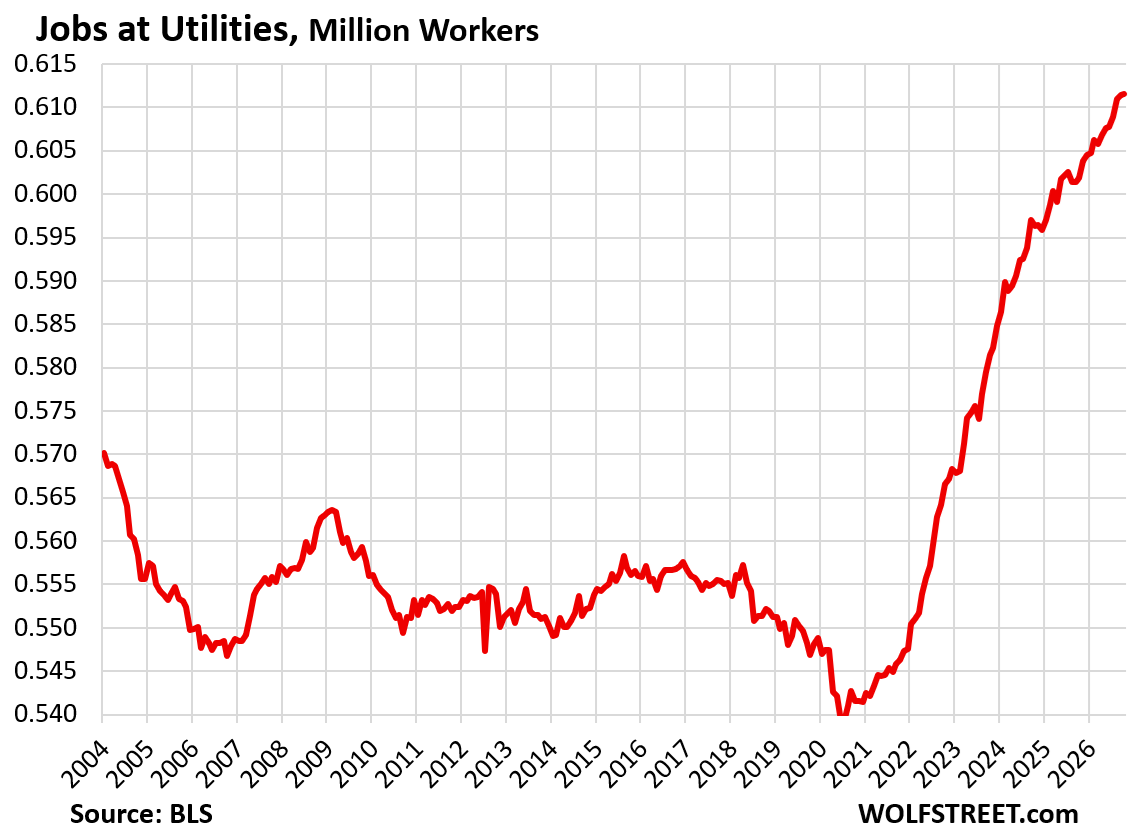
While the "tightening" of the labor market is often presented as a negative for job seekers, the current data paints a more nuanced picture. The demand for highly skilled labor in construction, utilities, and high-tech manufacturing remains exceptionally high, creating opportunities for those with the appropriate technical training. The challenge for the broader economy remains the reallocation of workers from declining sectors—such as traditional retail and administrative support—into these high-growth, high-demand areas.
As 2026 concludes, the primary indicator of economic health is no longer the total number of jobs added, but the quality and stability of those roles. The structural shifts documented by the Bureau of Labor Statistics suggest that the American workforce is becoming more specialized, more efficient, and more responsive to the demands of a modernized, technology-driven industrial base. While these transitions often bring short-term volatility, they are indicative of a deeper, ongoing effort to maintain American competitiveness in an increasingly complex global landscape.