The Rise of the Global Oligarch: How Billionaire Leaders and Super-Wealthy States Are Reshaping the International Order

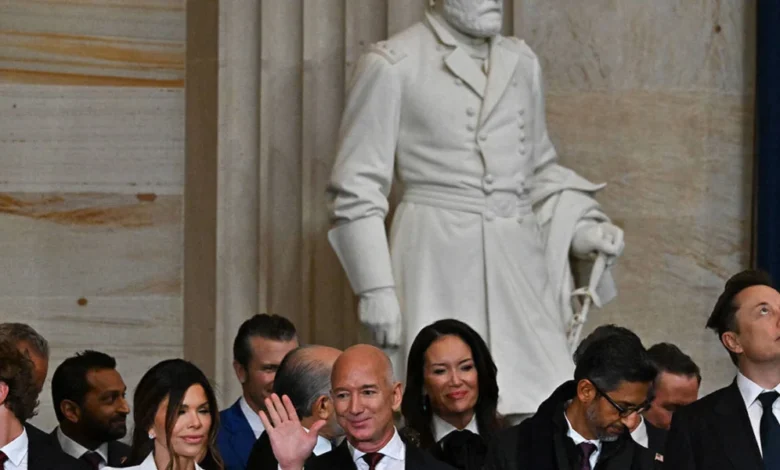
BALTIMORE AND BOGOTÁ — For the average observer, the term “oligarch” frequently evokes a specific set of cultural archetypes: the post-Soviet tycoons who capitalized on the chaotic privatization of state assets following the collapse of the Soviet Union, or, more recently, the Silicon Valley executives and domestic tech magnates occupying prominent seats at high-level political inaugurations in Western democracies. Yet, contemporary political reality extends far beyond these narrow stereotypes. Oligarchs are not merely influential lobbyists or shadowy financiers pulling strings from behind the scenes; they are global, systemic, and increasingly entrenched at the very apex of state power.
According to recent political and economic assessments, approximately 64 heads of state or government currently govern as oligarchs—individuals who combine immense personal wealth, corporate control, or ownership of strategic industries with supreme political office. Together, the nations led by these wealthy potentates account for roughly 60 percent of global Gross Domestic Product (GDP). Consequently, the fundamental question facing political scientists, economists, and international relations experts is no longer whether oligarchs will exert dominance over global governance, but rather what kind of world order they are actively constructing.
The Evolution of Oligarchic Power: From Feudalism to the Modern Era
To understand the current resurgence of oligarchic rule, one must examine the historical continuum of concentrated wealth and political authority. Historically, oligarchies—rule by the few—predate modern democratic institutions. From the merchant princes of Renaissance Italy to the industrial robber barons of the late 19th-century United States, wealth has consistently sought to translate itself into political leverage.
However, the late 20th and early 21st centuries catalyzed a fundamental transformation in how wealth is accumulated and leveraged. Globalization, the deregulation of international financial markets, the privatization of national infrastructures, and the explosive growth of the digital economy have allowed individuals to accumulate fortunes that rival the GDPs of sovereign states.
A critical chronological turning point occurred in the final decade of the 20th century:
- 1989–1991: The dissolution of the Soviet Union leads to rapid, poorly regulated privatizations, giving rise to the original modern archetype of the post-Soviet oligarch.
- 2008–2009: The global financial crisis triggers massive government bailouts, concentrating capital further among elite financial institutions and cementing the perception that certain economic actors are "too big to fail" or regulate.
- 2010s: The rise of the platform economy accelerates the wealth accumulation of tech monopolists, whose global reach transcends traditional national borders and regulatory frameworks.
- 2020s: A convergence of pandemic-era economic policies, supply chain realignments, and geopolitical fragmentation establishes a new political paradigm where economic nationalism and personal autocracy merge seamlessly.
Quantitative Realities: Data Behind the New World Order
The intersection of extreme personal wealth and executive political power is reshaping international relations, trade agreements, and regulatory standards. Data compiled from international economic monitors illustrates the sheer scale of this phenomenon.
Today, the 64 nations led by oligarchic figures control the vast majority of global manufacturing output, energy reserves, and technological supply chains. Unlike traditional career politicians or ideologically driven revolutionaries, oligarch-leaders typically approach statecraft through a commercial lens. National policies are frequently aligned with corporate balance sheets, personal asset portfolios, and monopolistic protections.
Furthermore, economic inequality within these nations has reached historic highs. While global GDP has expanded over the past three decades, the distribution of that growth has skewed heavily toward the top fractions of a percent. When those who control the commanding heights of the economy also hold absolute executive power, the traditional checks and balances designed to prevent conflicts of interest effectively disintegrate. Independent regulatory agencies are captured by political appointees whose primary loyalty is to the ruling executive’s financial ecosystem.
Responses and Institutional Anxiety
International bodies, pro-democracy watchdogs, and diplomatic circles have grown increasingly alarmed by the normalization of oligarchic leadership. Representatives from multilateral institutions, speaking on condition of anonymity due to diplomatic sensitivities, note that traditional diplomatic frameworks are ill-equipped to negotiate with leaders whose personal financial interests are directly intertwined with state policy.
"When you sit across the negotiating table from a head of state whose personal fortune depends on the very same commodity cartel or monopoly you are attempting to regulate, conventional diplomacy breaks down," observed a senior policy analyst based in Washington, D.C. "The boundary between public duty and private enrichment ceases to exist."
Civil society organizations in both developed and developing nations have pushed back through investigative journalism, legal challenges, and anti-corruption advocacy. However, these efforts often face severe headwinds as oligarch-leaders frequently deploy state apparatuses—including libel laws, tax audits, and media consolidation—to suppress dissent and cripple investigative reporting.
Implications for Global Security and Economics
The consolidation of power by oligarchs has profound implications for the future of international stability, economic fairness, and democratic norms.
First, international trade is increasingly governed by bilateral, transactional deals rather than multilateral rules-based frameworks. Oligarch-leaders favor arrangements that yield immediate, quantifiable benefits for their domestic political coalitions and personal networks, often undermining institutions like the World Trade Organization (WTO) and international human rights conventions.
Second, the erosion of democratic norms within these 64 nations creates a permissive global environment for authoritarian governance. When citizens observe that immense wealth guarantees impunity and political supremacy, public trust in democratic institutions collapses. This cynicism fuels populism, political apathy, and social polarization.
Finally, the security implications are profound. Resource-rich nations governed by oligarchs frequently experience the "resource curse," where national wealth enriches a tiny ruling clique while the broader population remains impoverished. This structural inequality can lead to internal instability, civil unrest, and, in severe cases, aggressive foreign policies designed to distract domestic populations from economic stagnation.
As the global order continues to fracture along geopolitical and economic lines, the supremacy of the oligarchic leader appears set to define the geopolitical landscape for decades to come. The central challenge for the international community will be finding viable mechanisms to cooperate with these regimes without validating the systemic dismantling of transparency, accountability, and the rule of law.
Related posts: