Microsoft Declares Code Red Following Historic Outage Highlighting Fragile Dependencies in Digital Infrastructure


Microsoft has officially initiated a company-wide Code Red, a high-priority directive aimed at fundamentally restructuring its engineering practices and disaster response protocols. This decision follows a catastrophic global service outage that persisted for nearly 24 hours between November 12 and November 13, 2026. The disruption, which paralyzed critical business operations, government services, and major financial institutions, has sent shockwaves through the technology sector. While the incident was rooted in traditional enterprise cloud architecture, the implications for the cryptocurrency industry—which markets itself on the promise of decentralized resilience—are profound and increasingly difficult to ignore.
The internal memos reviewed by Reuters indicate that Microsoft’s leadership is no longer treating infrastructure failures as isolated technical glitches. Instead, the company is re-evaluating the entire stack of its cloud computing architecture to identify systemic vulnerabilities. For the blockchain and cryptocurrency sector, this development serves as a stark reminder that despite the ideological focus on decentralization, the practical reality of modern finance remains tethered to a remarkably thin layer of centralized providers.
The Anatomy of a Cloud-Dependent Crisis
The crypto industry often champions the concept of self-sovereignty and distributed networks. However, the operational reality is that the vast majority of digital asset exchanges, wallet providers, and decentralized application (dApp) front-ends rely on the same hyperscale cloud providers—Amazon Web Services (AWS), Google Cloud, and Microsoft Azure—that recently faltered.
The fragility of this arrangement was laid bare in May 2026, when a significant infrastructure failure at an AWS data center brought Coinbase, one of the world’s largest cryptocurrency exchanges, to a standstill. The incident was not caused by a flaw in the blockchain protocols themselves, but by a mechanical failure in the cooling systems at an AWS facility.

According to the official post-mortem report published on June 1, 2026, the failure was compounded by a lack of redundancy in Coinbase’s architecture. Five critical matching engine nodes were housed within the same physical building. When the cooling systems failed, three of these nodes went offline simultaneously, leaving the exchange without the quorum necessary to process trades. Crucially, the company had not implemented an automated failover mechanism to migrate these matching engines to a different availability zone.
The resulting outage persisted for eight hours of severe disruption, followed by an additional 12 hours of recovery time. This was not an isolated event. An earlier AWS outage in October 2025 resulted in over three hours of degraded performance, demonstrating a recurring pattern of dependency that persists despite the industry’s rapid maturation.
Chronology of Infrastructure Vulnerability
The current climate of concern stems from a series of high-profile incidents that have forced engineers to reconsider the "cloud-first" development mantra:
- October 2025: An AWS regional outage impacts multiple crypto-adjacent services, leading to a three-hour window of performance degradation for major exchanges.
- May 7, 2026: A mechanical cooling failure at an AWS facility triggers a 20-hour total and partial service outage for Coinbase, preventing thousands of traders from accessing their assets.
- June 1, 2026: Coinbase releases a formal post-mortem, acknowledging that the duration of the outage was "unacceptable" and pledging a pivot toward more robust, multi-zone failover architecture.
- November 12-13, 2026: Microsoft suffers a historic global outage. While not directly crypto-related, the scope of the disruption forces a massive shift in corporate "Code Red" internal policy, triggering a industry-wide review of cloud reliance.
The Mirage of Decentralization: The RPC Problem
Moving assets from a centralized exchange to a non-custodial wallet is often touted as the ultimate solution for risk mitigation. However, this shift merely moves the point of failure from the exchange’s server to the Remote Procedure Call (RPC) provider.
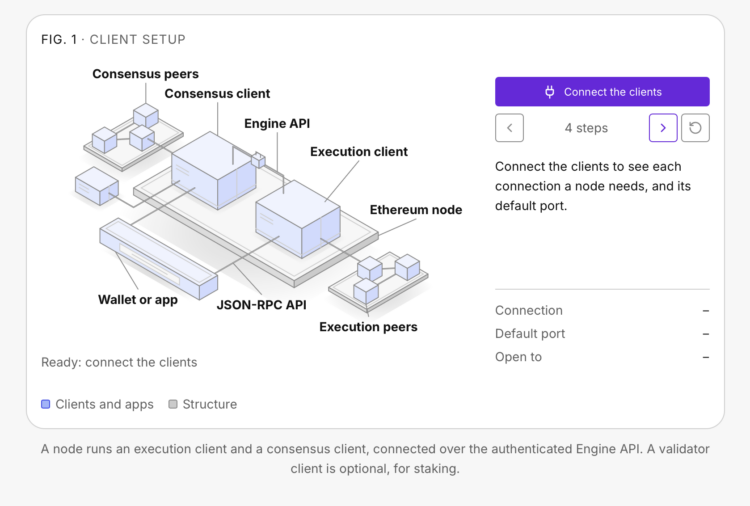
An RPC provider acts as a gateway between a user’s digital wallet and the blockchain. When a user checks their balance or initiates a transaction, the wallet app sends a query to these providers. If the provider is offline—whether due to a cloud outage or a targeted denial-of-service attack—the user is effectively cut off from their funds, even if the underlying blockchain is functioning perfectly.
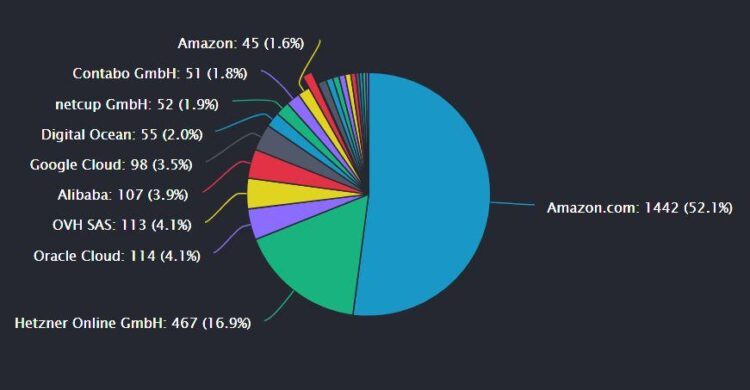
The distribution of Ethereum nodes provides a quantitative look at this concentration. While there are thousands of nodes globally, a significant percentage are hosted by a small cohort of centralized cloud providers. This creates a "common point of failure" scenario. If an outage affects the data centers of a dominant cloud provider, a massive portion of the network’s access points could theoretically go dark simultaneously.
Ethereum’s own developer documentation explicitly warns against this concentration, advising users to run their own nodes to ensure true network participation. Yet, for the average retail investor, the technical barrier to running a full node remains prohibitively high, ensuring that most remain dependent on third-party infrastructure.
Engineering Trade-offs and the Cost of Resilience
Critics of crypto exchanges often overlook the legitimate engineering constraints that lead to centralization. As Coinbase noted in its post-mortem, matching engines require extremely low latency. To achieve the high-speed trading environments that users demand, nodes must be placed in close physical proximity.
Distributing these nodes across multiple, geographically dispersed availability zones introduces "jitter" and communication delays that can negatively impact trading performance. Furthermore, maintaining redundant, real-time synchronized infrastructure across multiple global regions is an expensive and complex endeavor that most startup-stage crypto firms cannot afford.
The industry is currently caught in a classic engineering trilemma: balancing performance, cost, and absolute decentralization. For now, most firms have opted for performance and cost-efficiency, banking on the statistical reliability of major cloud providers. The Microsoft "Code Red" initiative serves as a reality check for this strategy, proving that even the largest and most well-funded providers in the world are not immune to catastrophic, multi-region failures.
Broader Implications for Tokenized Finance
As traditional financial institutions continue to push forward with tokenized assets—such as real-world assets (RWA) and institutional-grade stablecoins—the infrastructure question becomes an existential one for the entire financial system.
A tokenized bond may exist on a distributed ledger, but if the interface used to verify ownership or execute the transfer relies on an API layer hosted by a single provider, the "decentralized" nature of the asset is largely cosmetic. Regulatory bodies are beginning to take note. If these assets are to be considered "safe" or "liquid," regulators will likely demand proof of operational resilience that goes beyond the capabilities of the blockchain itself.
The Path Forward: Redundancy and Recovery
The lessons from the recent Microsoft and Coinbase outages are clear: industry participants must transition from "optimistic uptime" to "resilient design." This includes:
- Multi-Cloud Strategies: Moving away from reliance on a single provider to a distributed model where critical services can hop between AWS, Azure, and Google Cloud in real-time.
- Edge Redundancy: Developing wallet interfaces that can automatically switch between multiple, independent RPC providers without user intervention.
- Failover Exercises: Moving beyond the publication of recovery plans to conducting "chaos engineering" tests, where companies intentionally simulate infrastructure outages to ensure their systems can survive the transition.
Microsoft’s "Code Red" is a signal that the era of blind trust in cloud infrastructure is coming to an end. For the cryptocurrency sector, the message is even more urgent. The industry cannot continue to claim that blockchain technology provides systemic immunity to failure while simultaneously building its entire interface layer on top of a centralized stack that is currently undergoing a crisis of confidence. To achieve the next phase of institutional adoption, the "decentralized" world must build its own, equally resilient infrastructure—or accept that it is, and will remain, an extension of the very centralized systems it once sought to replace.