Highnote Files for National Bank Charter to Build a Dedicated Payments Infrastructure

Embedded finance and payments platform Highnote has formally
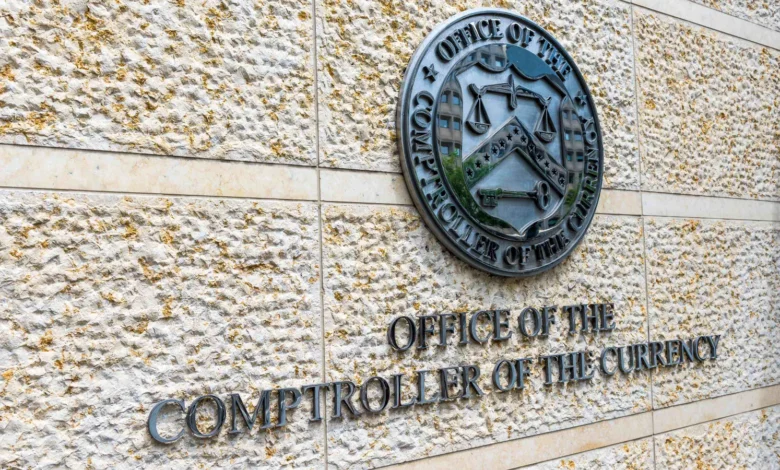
applied for a national bank charter, signaling a major strategic shift for the fintech as it seeks to bridge the gap between modern software development and traditional regulated banking. Filed on Monday with both the Office of the Comptroller of the Currency (OCC) and the Federal Deposit Insurance Corporation (FDIC), the application proposes the establishment of Highnote Bank N.A.
Described by company executives as "a national bank built for payments," the newly envisioned institution aims to streamline the complex web of compliance, ledgers, and money movement that modern businesses navigate. This move places Highnote among a growing wave of technology-driven financial service providers choosing to bring the banking charter in-house, bucking the traditional trend of partnering exclusively with legacy chartered sponsor banks.
The application marks a notable milestone for Highnote, which has operated primarily as an embedded finance infrastructure provider since its inception in 2020. By pursuing full banking status, the company intends to offer a vertically integrated suite of financial services, allowing commercial clients to issue payment cards, manage credit operations, settle transactions in real time, and oversee compliance within a single, unified programmatic architecture.
Leadership and Regulatory Guidance
To steer Highnote Bank N.A. through the rigorous approval process and subsequent operational launch, the company has tapped seasoned banking executive Tim Bogan to lead the venture. Bogan brings deep institutional experience to the role, having previously served as the chief risk officer, chief compliance officer, and chief audit executive at LendingClub. Notably, Bogan played a pivotal role at LendingClub through its transformative $185 million acquisition of Radius Bank in 2020—a transaction that converted the online lender into a fully functioning digital bank.
To assist with the intricate regulatory strategy required for a de novo national bank application, Highnote enlisted the services of regulatory consultancy Klaros Group alongside elite law firm Davis Polk & Wardwell.
Michele Alt, co-founder and partner at Klaros Group, noted that Highnote represents an ideal candidate for a national bank charter due to its established track record of serving enterprise business customers with advanced technology. "They are an established company serving business customers with innovative technology, and will be offering the full range of financial services to businesses through an insured full-service national bank," Alt observed.
Klaros Group has established a prominent advisory footprint in the recent wave of fintech charter applications. The firm successfully guided several other prominent financial technology companies through the complex regulatory pipeline this year. Among them is Nubank, which secured conditional OCC approval in January, and Checkout.com, which obtained a merchant acquirer limited-purpose bank charter from the Georgia Department of Banking and Finance.
The Evolving Landscape of Fintech Charters
Highnote’s application arrives amid a broader resurgence of interest in bank chartering among non-bank financial institutions, payments processors, and fintech startups. According to data provided by the OCC, the agency has received 56 de novo bank applications and approved 28 of them, highlighting a steady appetite for institutions seeking direct access to the federal safety net and the associated structural cost savings.
As regulatory frameworks evolve to accommodate digital-native business models, financial technology firms are weighing various chartering pathways based on their specific operational needs. While companies like Highnote are opting for full national bank charters governed by the OCC, others are exploring alternative routes. Rent-focused fintech Flex and credit card startup Upgrade have pursued industrial loan company (ILC) charters through regulatory bodies in Utah and Nevada, respectively. Meanwhile, at least two payments firms have applied for Georgia’s specialized merchant acquirer limited-purpose bank (MALPB) charter, designed specifically to cater to the unique risks and operational realities of payment processing networks.
This industry-wide pivot toward direct charter acquisition is largely driven by a desire for operational efficiency. By eliminating third-party sponsor banks from the equation, fintechs can streamline compliance programs, reduce the recurring costs of intermediated operations, and exercise greater control over their capital reserves and ledger systems.
Federal regulators have largely welcomed the influx of technology-forward applications, viewing them as a vital mechanism for modernizing the national financial architecture. Speaking last week at an industry forum, Comptroller of the Currency Jonathan Gould emphasized that maintaining a functional and accessible chartering process is essential for the health of the broader economy.
"Having a functional chartering process allows the banking system to renew itself and remain dynamic," Gould stated. "It brings new capital and new ideas into institutions subject to federal supervision. That is especially important as technology changes how Americans expect to receive financial services."
Background, Chronology, and Current Operations
Founded in 2020, Highnote has spent the past several years quietly building a robust enterprise client base by offering a comprehensive software stack designed to simplify card issuing and payment processing. Its current portfolio includes prominent enterprise clients such as financial giant BNY, home-improvement retail leader Lowe’s, and cross-border payments specialist PingPong.
In a public announcement shared via LinkedIn, company leadership explained the strategic rationale behind the charter application. "A national bank charter is the next logical step in building Highnote, grounded in what our customers value most: one integration, one ledger, one compliance program, and one home for every money flow."
Despite the enthusiastic public reception from corporate leadership and advisory partners, industry veterans emphasize that securing and operating under a de novo national bank charter is an exceptionally demanding undertaking. Alt cautioned that becoming a regulated banking institution is "not for the faint of heart."
"It is an expensive and complex undertaking," Alt explained. "It takes some years to gain market share and scale as a bank. It is, obviously, regulatorily and resource intensive."
Regulatory scrutiny for de novo applicants is rigorous, requiring meticulous capital planning, robust cybersecurity frameworks, anti-money laundering (AML) controls, and comprehensive risk-management systems capable of satisfying both the OCC and the FDIC. Highnote Bank N.A. will need to demonstrate that its technological infrastructure can meet the stringent safety and soundness standards expected of federally insured depository institutions.
Broader Economic Implications and Industry Outlook
The decision by a prominent embedded finance player like Highnote to pursue a national bank charter underscores a fundamental maturation of the fintech sector. Early-stage financial technology companies historically relied on regulatory arbitrage, partnering with legacy financial institutions to offer banking-like features without assuming the heavy regulatory burdens of a bank. However, increased regulatory scrutiny over fintech-bank partnerships in recent years—particularly regarding compliance oversight and deposit insurance parameters—has made direct charter ownership an increasingly attractive alternative.
Industry analysts suggest that the integration of modern, API-first technology platforms into the heavily regulated national banking system could reshape the competitive dynamics of commercial banking. By introducing agile, software-driven competitors into the federally supervised ecosystem, regulators hope to spark broader innovations across the sector.
"Where goes banking, so goes the economy," Alt noted, pointing out that the entry of innovative players into the traditional banking space inevitably pushes legacy institutions to modernize their infrastructure, accelerate transaction speeds, enhance operational efficiency, and offer more competitive pricing to end users.
As Highnote’s application moves through the initial administrative review stages, it joins a growing queue of non-bank financial firms testing the boundaries of traditional regulatory frameworks. While specific details of Highnote’s capitalization strategy and operating model have not yet been published on the OCC’s public filings portal, the formal submission signals that the boundaries between Silicon Valley technology firms and Wall Street banking institutions continue to blur at an accelerating pace. Representatives for Highnote did not immediately respond to requests for further comment regarding the precise timeline for the bank’s planned launch.