New York Lawmakers Propose FUTURES Act to Tax Prediction Markets and Fund Early Childhood Education


New York state lawmakers have introduced a legislative measure aimed at harnessing the rapid financial growth of prediction markets to support public education. Senate Bill S.10748, formally designated as the FUTURES Act, was put forward by State Senator Jeremy Cooney in November 2026. The legislation outlines a proposed 10 percent tax on the net trading fee revenue generated within the state by prediction market operators. Rather than taxing the individual wagers or the overall volume of bets placed by retail users, the framework specifically targets the corporate revenue accrued through platform transaction fees attributable to New York residents.
If enacted into law, the proceeds collected from this 10 percent levy would be directly earmarked for a dedicated state fund designed to expand universal early childhood education initiatives. Specifically, the capital would be funneled into foundational programs such as 2-K, 3-K, and pre-kindergarten education across New York. While the bill remains under active consideration and has not yet completed the legislative process to become law, its introduction signals a pivotal shift in how state regulators and policymakers view the burgeoning decentralized and alternative financial sectors. The proposed statute dictates that if the bill successfully passes through both legislative chambers and receives executive approval, it would officially take effect 180 days following its enactment, granting platform operators a half-year transition period to adapt compliance and reporting systems.
Background and Context of the Prediction Market Boom
The legislative push in New York does not occur in a vacuum; it arrives against the backdrop of an unprecedented surge in popularity and mainstream adoption for prediction markets. Over recent years, platforms that allow users to buy and sell shares based on the outcomes of real-world events—ranging from geopolitical elections and macroeconomic indicators to pop culture milestones and scientific breakthroughs—have transitioned from niche financial experiments into multi-billion-dollar ecosystems. Driven by technological innovations, accessible web interfaces, and integration with broader digital asset infrastructures, these platforms have captured the attention of retail traders globally.
However, this exponential growth has triggered intensive scrutiny from state and federal regulators across the United States. Traditional financial regulators, consumer protection advocates, and legal experts have increasingly grappled with the classification of these platforms. While operators maintain that prediction markets serve a vital economic purpose by aggregating information and forecasting probabilities, critics and state authorities frequently draw parallels to traditional sports betting and unregulated gambling. This tension between financial innovation and regulatory oversight has created a complex legal environment, particularly in states like New York, which maintain historically stringent controls over gaming, wagering, and financial services.
Chronology of Regulatory Friction in New York
The relationship between New York authorities and the alternative trading and prediction market sector has been marked by escalating legal and regulatory friction. The timeline of oversight in the state highlights a progressive hardening of the stance adopted by local regulators:
Early Regulatory Inquiries: As prediction markets gained traction alongside mainstream cryptocurrency adoption, state financial watchdogs began monitoring the cross-section between digital asset exchanges and event-based wagering products.
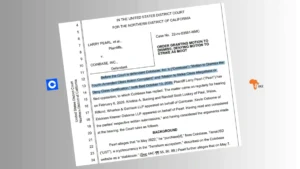
Legal Actions Against Major Exchanges: The friction intensified significantly when the state of New York took aggressive legal action against major cryptocurrency platforms. Notably, the New York Attorney General’s office filed lawsuits against prominent industry giants such as Coinbase and Gemini over their integration and offering of prediction market-related products. In announcing these actions, state officials famously reiterated the sentiment that "gambling by another name is still gambling."
Introduction of the FUTURES Act: Building upon this aggressive regulatory posture, Senator Jeremy Cooney introduced Senate Bill S.10748 in November 2026. This legislative maneuver shifted the strategy from pure prohibition and litigation to fiscal integration and monetization, attempting to extract public benefit from an industry that regulators have struggled to contain.
Mechanics of the Proposed Tax Structure
A critical component of the FUTURES Act is its distinct taxation mechanism. By focusing exclusively on net trading fee revenue rather than transactional volume or user stake sizes, the legislation attempts to establish a sustainable economic model that mirrors corporate income or gross receipts taxation within specific service sectors.
In practice, prediction market operators charge various fees for executing trades, maintaining accounts, or withdrawing funds. Under the provisions of S.10748, accountants and compliance officers would calculate the portion of net trading fees generated by users residing within New York State. A 10 percent assessment would then be levied upon that localized revenue stream. Financial analysts note that this approach avoids penalizing the everyday trader or diminishing market liquidity through a direct tax on bets, focusing instead on corporate profitability derived from the state’s consumer base. Nevertheless, industry representatives have privately expressed concern that such state-level taxes could create a fragmented compliance landscape, compelling operators to either absorb the costs or pass them down through adjusted fee schedules for New York-based participants.

Economic and Social Implications for Early Childhood Education
The primary selling point of the FUTURES Act among its legislative sponsors is its direct alignment with public welfare, specifically universal early education. New York, like many major metropolitan-centric states, has faced continuous budgetary debates regarding how to sustainably fund robust, universal early childhood education programs such as 3-K and 4-K without imposing heavier tax burdens on traditional middle-class taxpayers.
Proponents of the bill argue that tapping into emerging, high-margin digital industries offers a pragmatic solution to chronic funding shortfalls in public education. By tying the variable, high-growth revenue of prediction markets directly to the expansion of classrooms, teacher salaries, and infrastructural support for toddlers, lawmakers are attempting to build a populist coalition in favor of the bill. Supporters suggest that if alternative financial markets are to operate within the state, it is entirely reasonable for them to contribute meaningfully to the societal infrastructure that supports New York families.
Industry Reactions and Broader Market Responses
The introduction of the FUTURES Act has elicited a mixed array of responses from legal experts, consumer advocates, and financial technology stakeholders.
Industry advocates and decentralized finance proponents have voiced caution regarding the potential precedent set by state-level taxation of digital contract platforms. Many argue that prediction markets function more akin to derivatives exchanges or information networks than traditional casinos or state lotteries. Consequently, subjecting them to specialized state levies—while traditional financial brokerages face different tax regimes—could stifle technological innovation and drive emerging companies to relocate operations to more permissive jurisdictions. Furthermore, questions remain regarding how operators will accurately geolocate net trading fee revenue, given the decentralized and pseudonymous nature of many web3-native platforms.
Conversely, consumer protection advocates and public education coalitions have largely welcomed the initiative. Organizations focused on the regulation of digital assets and gambling have long argued that platforms offering event-based contracts operate in a regulatory gray area that bypasses consumer safeguards. By introducing formal legislative frameworks like the FUTURES Act, lawmakers are implicitly acknowledging the existence and persistence of these markets while demanding a tangible dividend for the public good.
Broader National Impact and Future Outlook
As the legislative session progresses, the fate of New York’s Senate Bill S.10748 is being closely monitored by lawmakers across the United States. Other states grappling with the rapid rise of prediction markets, sports betting derivatives, and crypto-adjacent financial products view New York as a testing ground for regulatory experimentation.
If the FUTURES Act successfully navigates the legislative process and is signed into law, it could establish a blueprint for how state governments across the country choose to regulate and tax the intersection of modern fintech and public services. Rather than outright bans or protracted courtroom battles, targeted revenue extraction tied to vital social programs could become the prevailing policy trend for managing disruptive technologies.
For now, prediction market operators, legal scholars, and education advocates await further committee hearings on S
.10748. Whether the bill ultimately transforms from a legislative proposal into enforceable law will depend heavily on the lobbying efforts of the fintech sector, the unity of the state legislature, and the ongoing national debate concerning the legal boundaries of digital speculation in the modern economy.