Tesla Forges Autonomous Texas Triangle with Robotaxi Launches in Dallas and Houston

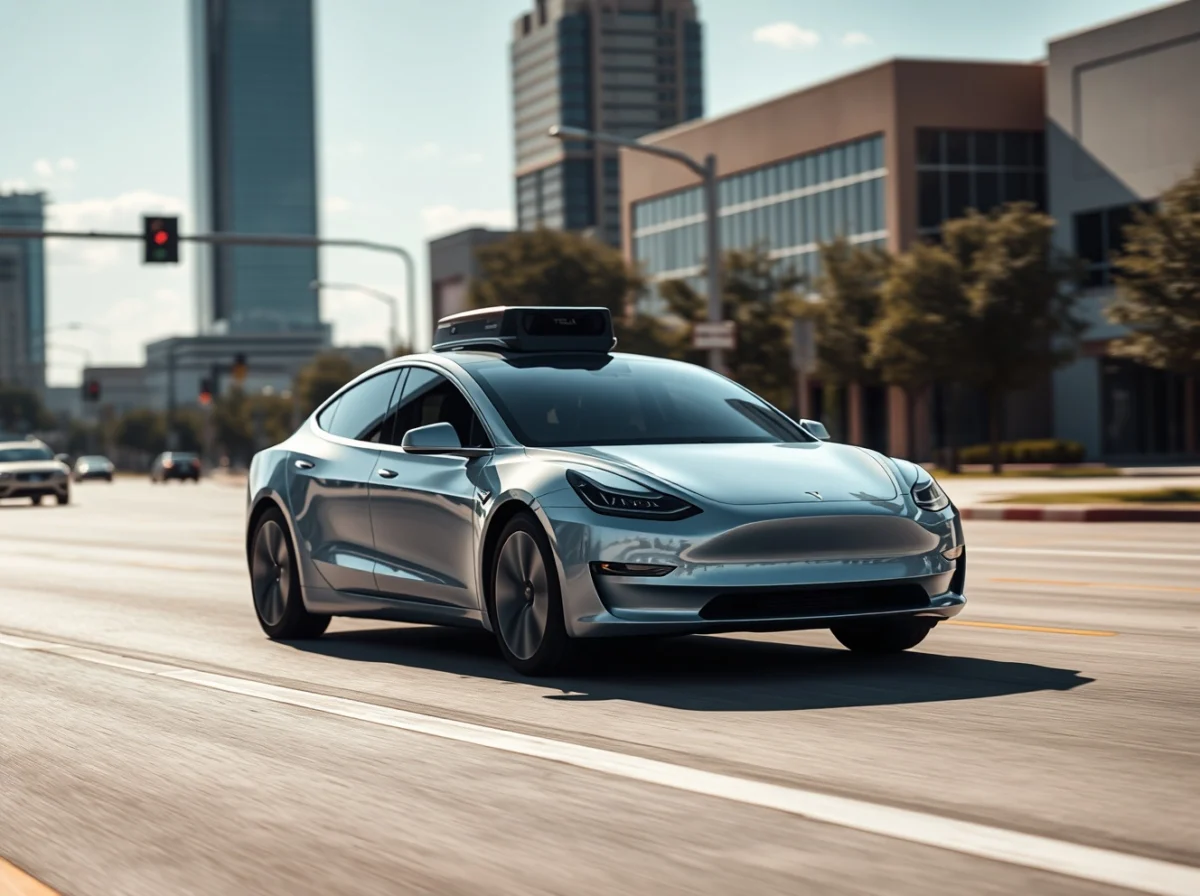
In a significant and strategically calculated move for the autonomous transportation sector, Tesla officially commenced its driverless robotaxi service in the major Texas metropolitan areas of Dallas and Houston on April 18, 2026. This pivotal expansion, communicated through a concise company social media post, represents a substantial growth in Tesla’s operational footprint, establishing a key "Texas triangle" of service zones that began with its inaugural launch in Austin. The announcement was accompanied by a brief yet impactful video, visually affirming the operation of Tesla vehicles without a human driver or safety monitor occupying the front seat—a clear demonstration of the company’s escalating confidence in its proprietary Full Self-Driving (FSD) technology. This latest development is not merely a geographic expansion; it signifies a critical stride in the commercialization of autonomous ride-hailing services and underscores the rapidly intensifying competition within the future mobility landscape.
A Deliberate Chronology of Tesla’s Autonomous Ambition
Tesla’s journey into fully autonomous operations has been characterized by a methodical, data-driven approach, evolving from its initial FSD beta program to commercial deployment. The company’s vision for a robotaxi network has been a long-held ambition, frequently articulated by CEO Elon Musk, positioning FSD as a cornerstone of Tesla’s future revenue streams. The first commercial robotaxi service in Austin was initiated in late 2025, a critical precursor to this broader Texas expansion. Following a period of data collection and system refinement, Tesla transitioned its Austin operations to fully driverless mode in January 2026, removing human safety operators from the vehicles. This Austin deployment served as a vital proving ground, allowing Tesla to validate its technology in a real-world urban environment and refine its operational playbook. The subsequent rollout to Dallas and Houston leverages the insights and technological advancements gained from Austin, mirroring that established phased approach.
The company’s FSD software, which has undergone years of development and extensive beta testing with hundreds of thousands of consumer vehicles, is central to this robotaxi initiative. The iterative improvements to FSD, driven by vast quantities of real-world driving data, have progressively enhanced its capability to navigate complex urban scenarios, respond to dynamic traffic conditions, and interpret diverse environmental cues. The decision to expand to Dallas and Houston signals Tesla’s belief that its FSD system has reached a level of maturity and reliability sufficient for commercial, driverless deployment in more challenging and diverse urban settings.
The Strategic Rationale Behind the Texas Triangle
Tesla’s choice of Texas as its primary launchpad for autonomous ride-hailing is no accident. The state has cultivated a notably favorable regulatory environment for autonomous vehicle testing and deployment, with state laws preempting more restrictive local regulations and notably not requiring a human safety driver in AVs. This progressive legislative framework has transformed Texas into a magnet for autonomous vehicle developers, offering a less encumbered path to commercialization compared to other states with more stringent requirements, such as California.
Dallas and Houston, alongside Austin, present a unique set of challenges and opportunities for an autonomous network. These sprawling Sun Belt cities are characterized by extensive highway systems, complex multi-lane interchanges, varied suburban and urban traffic patterns, and diverse weather conditions, including heavy rain and occasional fog, which can test the limits of vision-only autonomous systems. Houston, in particular, is known for its intricate network of freeways and its susceptibility to flash flooding, while Dallas presents its own blend of dense urban core and vast suburban sprawl. Successfully operating a driverless service in these environments would provide compelling validation for Tesla’s FSD technology and its underlying business thesis.
According to crowdsourced data from the independent Robotaxi Tracker website, the initial operational scale in Dallas and Houston appears modest. At launch, only a single active vehicle was logged in each new city, a stark contrast to the 46 vehicles reported in the more mature Austin market. This measured deployment strategy is typical for autonomous vehicle rollouts, allowing Tesla to gather critical real-world data across these new and diverse urban environments, identify specific local challenges, and manage operational complexity before a wider fleet deployment. This phased expansion also allows for a gradual scaling of infrastructure, charging solutions, and support services necessary for a robust robotaxi network.
Technological Divergence and Competitive Dynamics
Tesla’s approach to autonomous driving stands in stark contrast to many of its well-funded competitors, such as Waymo (Alphabet’s self-driving unit) and Cruise (General Motors’ AV subsidiary). While competitors typically employ a multi-sensor suite incorporating lidar, radar, and high-resolution cameras to create a comprehensive 3D understanding of their surroundings, Tesla relies primarily on a camera-based vision system, complemented by ultrasonic sensors and radar (though radar’s role has varied). Tesla’s "vision-only" strategy, powered by advanced artificial intelligence and neural networks, posits that the human visual system is sufficient for driving, and therefore, a robust AI system interpreting camera feeds can replicate and surpass human driving capabilities.
The core argument for Tesla’s vision-first approach centers on scalability and cost-efficiency. By utilizing existing vehicle hardware that is mass-produced for its consumer cars, Tesla aims to deploy autonomous capabilities more rapidly and at a significantly lower cost per vehicle than competitors who integrate expensive, specialized lidar and radar units. This strategy is critical to Tesla’s vision of creating a vast, profitable network of robotaxis, where millions of existing Tesla vehicles could potentially be leveraged to generate recurring revenue for their owners and the company. The success or failure of the Dallas and Houston operations will serve as a crucial stress test for this distinct technological and business model.
This expansion intensifies the competition within the nascent autonomous ride-hailing market. Waymo has established significant operations in Phoenix and San Francisco, while Cruise had made strides in San Francisco before facing regulatory setbacks and scaling back operations in late 2023. Tesla’s entry into major Texas markets places it in direct rivalry, albeit with a different technological philosophy and business model. The battle for market share and public trust will hinge on safety, reliability, cost, and the overall user experience.
Safety Metrics and the Imperative of Transparency
The deployment of driverless technology inherently raises questions of safety, and Tesla’s expansion occurs amidst increasing regulatory scrutiny and a growing demand for transparency from AV operators. In a February 2026 regulatory filing, Tesla disclosed that its Austin robotaxis had been involved in 14 crashes since the service’s launch. While the company did not detail the severity of these incidents, assign fault, or provide context regarding mileage driven, such disclosures are becoming standard for autonomous vehicle developers. The National Highway Traffic Safety Administration (NHTSA) mandates that all AV developers report certain crash incidents involving their autonomous test or deployed vehicles, contributing to a broader dataset that regulators use to inform safety standards.
For context, other leading AV companies like Waymo and Cruise have also publicly reported incidents during their extensive testing and commercial phases. These incidents range from minor fender-benders to more significant collisions, highlighting the inherent challenges of deploying complex technology in unpredictable public spaces shared with human drivers, pedestrians, and cyclists. The industry standard is moving towards more detailed reporting, including disengagement data (instances where the autonomous system requires human intervention) and a more comprehensive analysis of crash causation. Tesla’s continued operation and expansion will necessitate ongoing, robust safety data collection and transparent reporting to build and maintain public trust, which is paramount for the widespread adoption of autonomous mobility.
Local authorities in Dallas and Houston are expected to closely monitor the service’s impact on local traffic patterns, emergency response protocols, and overall public safety. City planning departments will evaluate potential infrastructure needs, while public safety officials will assess how autonomous vehicles integrate with existing emergency services. These municipal-level observations will be crucial in shaping future local policies and infrastructure investments related to autonomous transportation.
Public Perception and Adoption Hurdles
Consumer acceptance remains a critical and often underestimated factor in the success of autonomous services. While early adopters in tech-savvy cities may eagerly embrace the novelty, broader public trust in driverless technology is still evolving. High-profile incidents involving AVs from other companies, even if rare, have often garnered significant media attention, contributing to public skepticism and apprehension. Building confidence will require a consistent track record of safe and reliable operations, coupled with effective public education campaigns.
Tesla’s strategy of using familiar vehicle models (Models 3, Y, S, and X) rather than unique, purpose-built robotaxi pods could play a role in easing this transition. By presenting a less alien form factor, Tesla aims to normalize the concept of driverless travel and make the experience feel more akin to a traditional rideshare. The company’s announcement video, showing empty front seats, is a powerful marketing tool designed to demystify and normalize the concept of fully driverless operation. However, real-world rider experiences—encompassing not just safety, but also comfort, reliability, convenience, and cost-effectiveness—will ultimately determine the service’s long-term viability and growth rate in these new markets. Factors such as consistent pickup times, smooth ride quality, efficient routing, and competitive pricing will be key to attracting and retaining a broad user base.
Broader Economic and Societal Implications
The expansion of Tesla’s robotaxi service carries significant economic and societal implications. Economically, a successful robotaxi network could transform the ride-hailing industry, potentially offering lower costs due to the elimination of driver wages, and increasing vehicle utilization rates. This could, in turn, reduce personal car ownership in dense urban areas, alleviate traffic congestion, and lower carbon emissions. The business model hinges on achieving a high vehicle utilization rate, turning parked consumer vehicles into revenue-generating assets when not in personal use. The sparse initial fleet in Dallas and Houston suggests a cautious, data-gathering phase before a wider fleet deployment, which will be essential for realizing these economic benefits.
Societally, widespread autonomous transportation could lead to improved accessibility for individuals unable to drive, enhanced road safety by reducing human error, and new opportunities for urban planning that prioritize public spaces over parking lots. However, it also raises questions about potential job displacement for professional drivers, the need for robust cybersecurity measures, and ethical considerations in complex decision-making scenarios for autonomous systems. The integration of robotaxis will likely prompt renewed discussions at municipal levels about infrastructure readiness, equitable access to new mobility solutions, and the broader impact on urban design and public services.
Conclusion
Tesla’s expansion of its robotaxi service to Dallas and Houston marks a decisive and ambitious phase in the company’s autonomous driving journey. By establishing an operational "Texas triangle," Tesla gains a valuable and diverse proving ground for its unique vision-only technology and its scalable business model. The move significantly increases competitive pressure on other mobility providers and accelerates the timeline for mainstream exposure to driverless ride-hailing. While initial fleet numbers are small and safety performance will be meticulously scrutinized, this launch represents a tangible and impactful step toward a future where autonomous vehicles are an integrated, transformative part of urban transportation networks. The success of the Tesla robotaxi in these new, complex markets will provide critical insights into the scalability, economic viability, and societal readiness for widespread autonomous transportation, potentially reshaping urban mobility for decades to come.
FAQs
Q1: How do I hail a Tesla robotaxi in Dallas or Houston?
The service is primarily accessed through the Tesla mobile app, mirroring the existing functionality in Austin. Users would request a ride, and an available autonomous vehicle would navigate to their specified pickup location.
Q2: Are the Tesla robotaxis truly driverless?
Yes, according to Tesla’s official announcement and accompanying video, the vehicles operating in Dallas and Houston do not have a human safety driver or monitor in the front seat. They are designed to operate fully autonomously within their geofenced operational design domains.
Q3: How does Tesla’s robotaxi technology differ from competitors like Waymo?
Tesla’s system primarily relies on a camera-based vision suite and advanced artificial intelligence, arguing this approach is more scalable and cost-effective. Many competitors, such as Waymo, utilize a combination of cameras, lidar (Light Detection and Ranging), and radar sensors to build a more comprehensive environmental model.
Q4: What was the safety record of the Austin robotaxi service prior to this expansion?
Tesla disclosed in a February 2026 regulatory filing that its Austin robotaxis were involved in 14 crashes since the service’s launch. Specific details regarding the causation, severity, or fault in these incidents were not provided in the initial public report.
Q5: Will the robotaxi service expand to cities outside of Texas in the near future?
While not officially confirmed, Tesla’s long-term ambition, as articulated by CEO Elon Musk, is to establish a widespread robotaxi network globally. Any expansion to other states or countries will depend heavily on achieving sustained operational success, demonstrating robust safety performance in its initial Texas markets, and navigating the diverse and evolving regulatory landscapes in other jurisdictions.
Disclaimer: The information provided is not trading advice. Bitcoinworld.co.in holds no liability for any investments made based on the information provided on this page. We strongly recommend independent research and/or consultation with a qualified professional before making any investment decisions.