The Perils of Economic Forecasting and the Fallacy of Long-Term Market Predictions

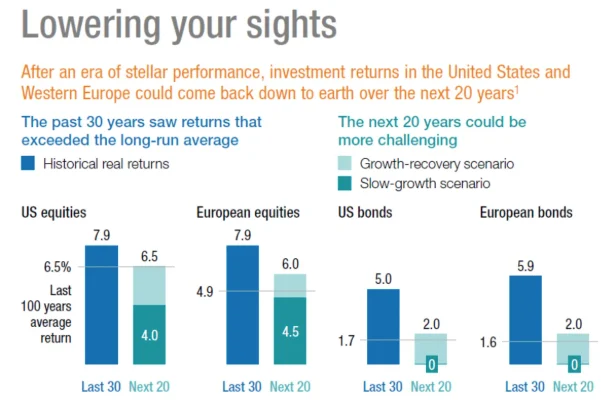
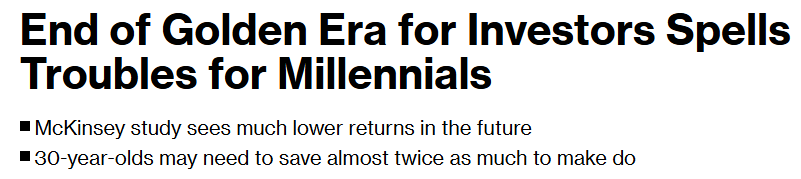
In the spring of 2016, the investment world was gripped by a sobering narrative: the "golden era" of financial returns had reached its expiration date. A widely publicized report from the research arm of McKinsey & Co. warned that the subsequent two decades would be defined by a significant collapse in investment performance. The firm posited that factors which had propelled markets for thirty years—namely falling inflation, declining interest rates, and expanding corporate profit margins—were unlikely to repeat. Consequently, the report suggested that thirty-year-olds at the time would need to work seven years longer or double their savings rate to achieve a retirement nest egg comparable to their predecessors.
Eight years later, this prophecy serves as a primary case study in the inherent difficulty of predicting macroeconomic trends. Rather than the projected stagnation, the decade that followed the McKinsey forecast witnessed one of the most robust bull markets in modern financial history.
A Chronology of Failed Predictions
The McKinsey forecast was merely one entry in a long catalog of bearish predictions issued by some of the most influential voices in finance. Throughout the post-2008 era, high-profile investors and institutions repeatedly signaled that equity valuations had decoupled from economic reality, suggesting that a major correction was imminent.
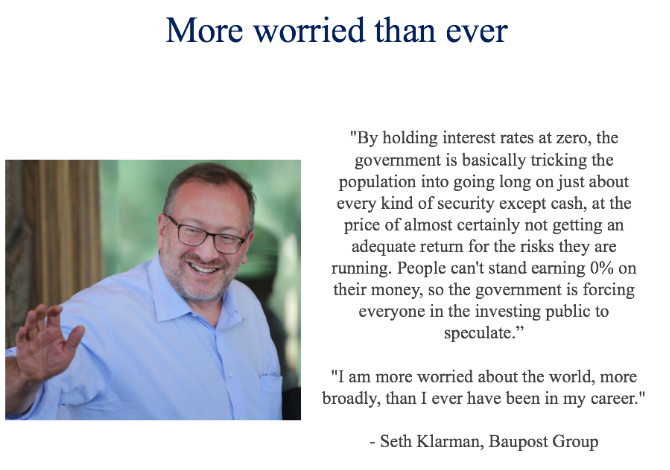
In May 2010, Seth Klarman, the renowned value investor and founder of the Baupost Group, expressed unprecedented concern regarding the state of the markets. Writing to investors, Klarman suggested that the risk-reward ratio had reached a point of extreme instability. However, in the years following his assessment, the U.S. stock market experienced an explosive rally, gaining more than 800% in the subsequent decade and a half.
This pattern of pessimism was echoed again in May 2020. During a presentation at the Economic Club of New York, billionaire investor Stanley Druckenmiller argued that the risk-reward profile for equities was among the most unfavorable he had encountered in his professional career. Yet, the markets defied this outlook, with the S&P 500 and broader indexes compounding at an annual rate of nearly 18% in the years following his comments.
Even as the global economy faced the dual pressures of post-pandemic supply chain constraints and an aggressive inflationary spike in 2022, the consensus among many analysts was that a recession was a foregone conclusion. Institutional models frequently cited the inverted yield curve and the Federal Reserve’s rapid interest rate hikes as catalysts for an inevitable economic contraction. Instead, the U.S. economy displayed remarkable resilience, maintaining growth and defying the widespread expectation of a hard landing.
Data Analysis: The Reality of the Past Decade
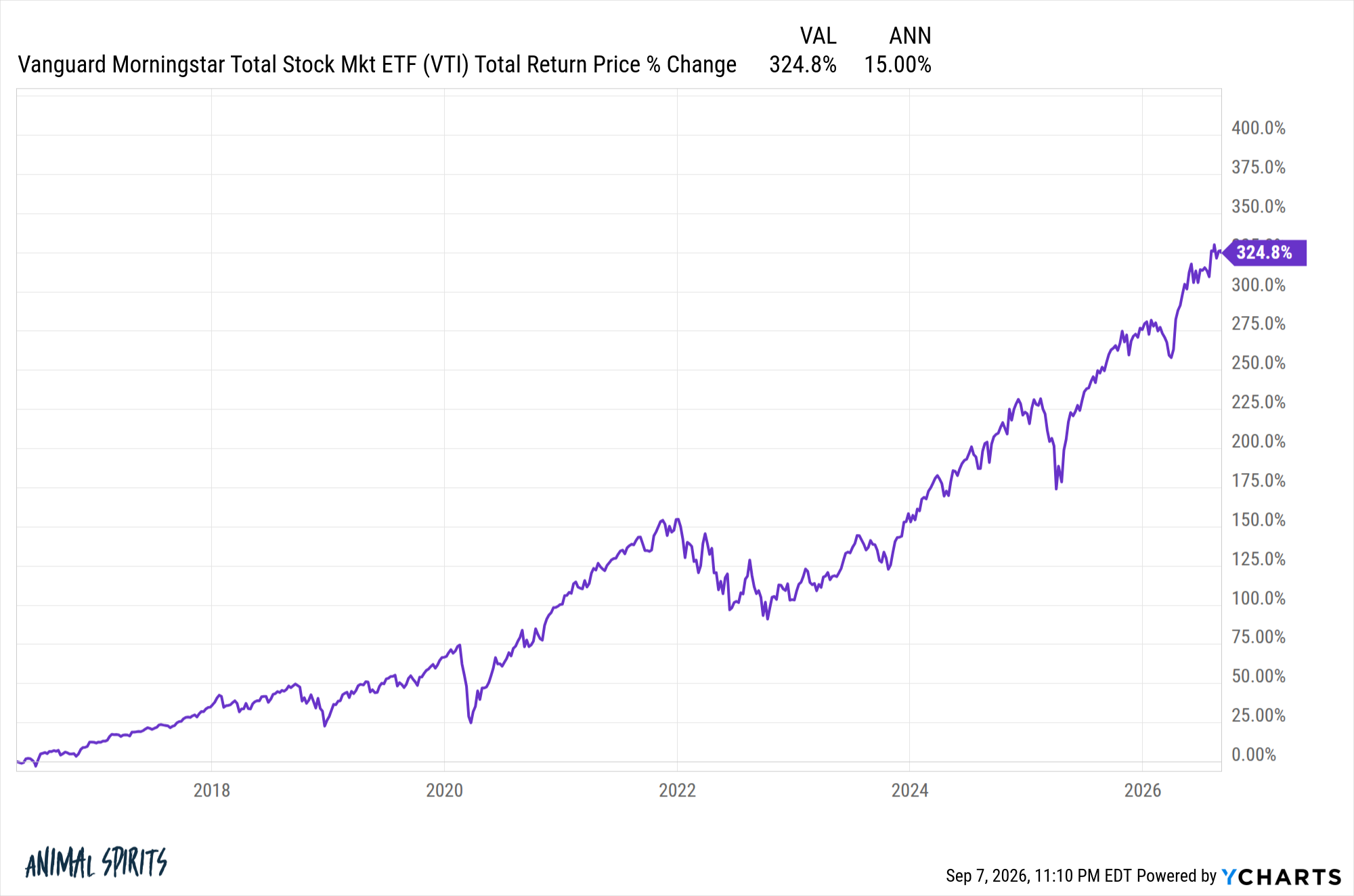
The divergence between the 2016 forecasts and realized market performance is stark. Since the publication of the McKinsey report, the U.S. stock market, as measured by total return metrics, has appreciated by more than 300%. This equates to an annualized return of roughly 15%, significantly outperforming the modest, single-digit growth scenarios envisioned by consultants in 2016.
When adjusting for inflation, the performance remains historically significant. While inflation averaged approximately 3.3% annually over the last decade, the real annual return for equities stood at roughly 11.7%. This performance trajectory not only eclipsed the "golden era" described by analysts but also challenged the premise that equity markets are inherently tethered to the slow-growth economic conditions of the post-2016 period.
It is important to note, however, that not all asset classes followed this upward trend. The fixed-income sector experienced a difficult period. As interest rates moved from historic lows to more normalized levels, the performance of traditional bonds lagged. The Bloomberg Aggregate Bond Index, for instance, saw annual returns hovering near 1.5%, which, when adjusted for inflation, resulted in a negative real return for investors who relied heavily on fixed-income securities for capital preservation.
The Institutional Bias Toward Caution
Why do sophisticated models, backed by extensive research, consistently fail to accurately forecast long-term market outcomes? Financial analysts often point to the "institutional bias" inherent in large consulting firms and hedge funds. These organizations are incentivized to provide risk-mitigation strategies. If a firm warns of a crash and the market continues to rise, the client is generally pleased with the performance of their assets. If a firm fails to warn of a crash, the reputational damage can be catastrophic.
Furthermore, historical data shows that market participants tend to project the immediate past onto the distant future. In 2016, the memory of the 2008 financial crisis and the subsequent period of slow recovery informed a cautious outlook. Investors often struggle to account for technological breakthroughs, such as the rapid integration of artificial intelligence, or the unprecedented fiscal and monetary stimulus measures that can fundamentally alter the velocity of money and corporate earnings power.
Implications for the Individual Investor
The disparity between these expert predictions and actual market results provides a vital lesson for long-term investors: the futility of market timing. The professional investment landscape is frequently populated by "soothsayers" who claim to have discovered the secret to predicting the next downturn or the next cycle. History suggests that such individuals do not exist in a consistent, reliable capacity.
For the individual investor, the primary risk is not a lack of foresight, but rather the attempt to act upon the foresight of others. When investors shift their portfolios in response to apocalyptic warnings, they often miss the very growth they were seeking to protect. The volatility of the market is the price paid for the potential of long-term returns; attempting to avoid that volatility by "going to cash" during periods of perceived risk has historically resulted in significantly lower wealth accumulation.
The Known Unknowns
As the global economy moves into the second half of this decade, new uncertainties have emerged to replace the old ones. Debates now center on the potential for an "AI-driven utopia" versus the risk of labor displacement, the sustainability of current capital expenditures by hyperscale technology companies, and the potential for a fiscal deficit-induced economic reckoning.
However, the inability to predict these outcomes should not be viewed as a failure of analysis, but as an inherent characteristic of complex systems. Markets are not static; they are reflexive, meaning that the act of predicting them can change the way participants behave, thereby altering the outcome itself.
The conclusion to be drawn from the last decade of financial history is one of humility. The most effective strategy for the long-term investor remains rooted in the principles of diversification, a consistent savings rate, and a recognition of one’s own limitations. The admission of "I don’t know" is not a sign of intellectual weakness; rather, it is a sophisticated acknowledgement of the reality that the future is unscripted.
In the final assessment, the 2016 warnings did not materialize because they failed to account for the adaptability of the global economic engine. The "golden era" was not a closed chapter but a continuing narrative that evolved in ways that even the most advanced econometric models could not foresee. Investors who remained committed to their strategies, regardless of the noise, were the ones who ultimately benefited from the continued growth of the global marketplace. As we look toward the future, the lessons of the past decade remain clear: the most dangerous risk is the illusion of certainty.