Bayesian Statistics and the Evolution of Algorithmic Trading Strategies

The landscape of algorithmic trading is undergoing a significant transformation as quantitative analysts increasingly shift away from rigid, deterministic models toward adaptive, probabilistic frameworks. At the center of this evolution is the application of Bayesian statistics, a methodology that allows traders to update their market beliefs dynamically as new data arrives. Unlike traditional frequentist models—which rely on large datasets to estimate fixed parameters—Bayesian approaches treat market variables as probability distributions, providing a more robust mechanism for navigating the inherent uncertainty and non-stationarity of global financial markets.
The Shift from Frequentist to Bayesian Frameworks
For decades, the standard approach to financial modeling was rooted in frequentist statistics, a school of thought that defines probability as the long-term frequency of events. In this paradigm, parameters such as asset returns or volatility are treated as static constants. However, market participants have long observed that financial conditions are rarely constant; they are subject to regime shifts, geopolitical shocks, and liquidity crises that render historical averages obsolete.
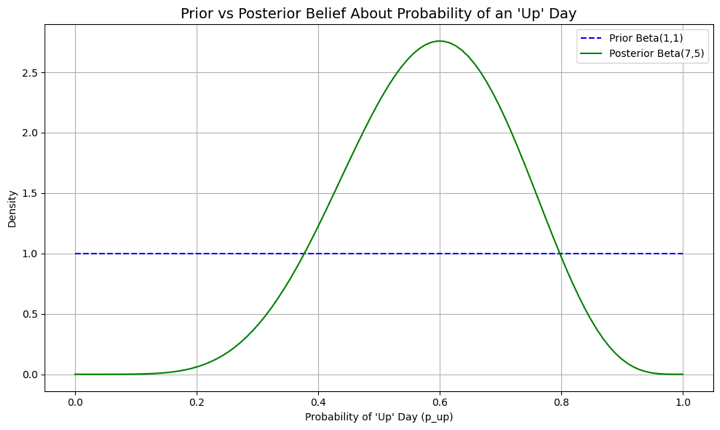
Bayesian statistics, by contrast, operates on the principle of conditional probability. It begins with a "prior"—an initial belief about a parameter—and updates this belief using new evidence (likelihood) to produce a "posterior" distribution. This iterative process mimics the cognitive adaptation of successful human traders, who continuously refine their outlook based on incoming price action, news, and macroeconomic data. The formalization of this process via Bayes’ Theorem provides a mathematically rigorous foundation for modern quantitative decision-making.
Historical Context and Theoretical Foundations
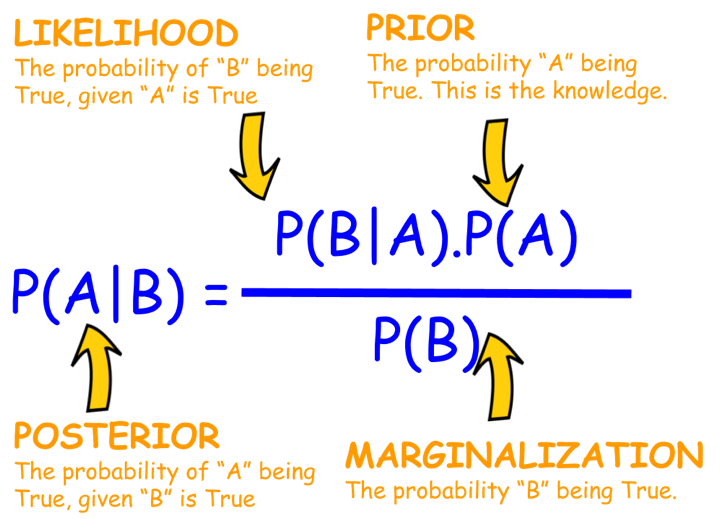
The core of this methodology is Bayes’ Theorem, formulated by the Reverend Thomas Bayes in the 18th century and later popularized by figures like Pierre-Simon Laplace. The theorem is expressed as:
P(H | E) = [P(E | H) * P(H)] / P(E)
In the context of algorithmic trading, H represents a hypothesis (e.g., "this asset is currently undervalued"), while E represents the incoming market evidence (e.g., a sudden increase in trading volume or a change in interest rate expectations). The posterior probability, P(H | E), represents the updated confidence in the hypothesis given the new evidence.
This framework gained traction in finance as computational power increased. In the early 2000s, the development of Markov Chain Monte Carlo (MCMC) simulations and variational inference allowed quants to compute complex posterior distributions that were previously intractable. Today, libraries such as PyMC and Stan enable developers to implement these models within high-frequency or medium-frequency trading pipelines, bridging the gap between theoretical statistics and real-world execution.
Practical Applications in Modern Quantitative Finance
The utility of Bayesian methods extends across the entire lifecycle of a trading strategy, from initial design to risk management.
1. Dynamic Parameter Estimation and Kalman Filters
Traditional models often fail because they assume parameters like mean-reversion speeds remain static. Bayesian inference allows these parameters to drift over time. Kalman filters, a hallmark of Bayesian signal processing, are frequently employed in pair trading to estimate the "true" spread between two assets in real-time. By treating the spread as a latent state that evolves, the algorithm can differentiate between market noise and a genuine structural breakdown in the relationship between assets.
2. Enhancing Risk Management via Bayesian VaR
Value at Risk (VaR) is a standard industry metric for estimating potential losses. However, conventional VaR models are notorious for failing during market "black swan" events because they rely too heavily on recent historical data. A Bayesian approach to VaR allows firms to incorporate subjective priors—such as stress test scenarios or expert economic outlooks—into their risk assessments. This results in more conservative, proactive margin and position-sizing requirements that adapt to rising volatility before a major drawdown occurs.
3. Bayesian Optimization for Strategy Tuning
One of the most resource-intensive aspects of algorithmic development is hyperparameter optimization. Traditional grid searches are computationally expensive and prone to overfitting. Bayesian optimization models the objective function—the performance of a strategy across different parameter sets—as a Gaussian Process. This allows the model to intelligently sample the parameter space, focusing on areas likely to produce optimal risk-adjusted returns while avoiding unproductive combinations.
Industry Adoption and Market Implications
Recent reports from major quantitative hedge funds suggest that Bayesian techniques are becoming standard in the integration of alternative data. As firms ingest non-traditional data sources—such as satellite imagery of retail parking lots or sentiment analysis from social media—the challenge lies in weighting this information against traditional price data. Bayesian frameworks provide a natural mechanism for this weighting; analysts can assign lower "prior confidence" to noisy alternative data sources and observe how the model automatically adjusts its reliance on that data as the performance history matures.
Despite these advantages, the implementation of Bayesian models is not without challenges. The "curse of dimensionality"—the difficulty of computing complex probabilities as the number of variables increases—remains a barrier. Furthermore, the selection of an inappropriate prior can lead to "model bias," where the algorithm ignores conflicting evidence because it is too anchored in its initial assumptions. Consequently, industry practitioners emphasize the need for rigorous backtesting and the use of "weakly informative" priors that allow the data to dominate the posterior as the sample size grows.
Comparative Analysis: The "Naive" Bayes Baseline
Even simple implementations, such as the Naive Bayes classifier, serve as essential tools in a quantitative toolkit. While the "naive" assumption—that all input features are independent—is often violated in the highly correlated world of finance, these classifiers are computationally efficient and highly effective as a first-line prediction tool for market direction. They provide a performance baseline that more complex deep learning models must beat to justify their increased computational cost and potential for overfitting.
Future Trajectory and Conclusion
The movement toward Bayesian algorithmic trading signifies a broader shift toward "intelligent" systems that learn rather than merely react. As computational costs decrease and specialized Bayesian software becomes more user-friendly, the ability to quantify and manage uncertainty will become a primary differentiator for trading desks.
The integration of expert judgment into machine-driven models represents the next frontier. By formalizing human experience—such as the intuition of a seasoned portfolio manager—into a prior distribution, firms can build hybrid systems that combine the speed of algorithms with the nuanced judgment of human market participants.
For the aspiring quantitative analyst, the path forward involves moving beyond static, rule-based systems. Mastering the nuances of posterior distributions, credible intervals, and probabilistic programming is no longer an academic exercise; it is an essential competency for developing strategies that can survive and thrive in the volatile, unpredictable environment of global finance. As markets continue to evolve, those who adopt a Bayesian mindset—one that treats every data point as an opportunity to refine and improve their understanding of the world—will be best positioned to capture alpha and mitigate systemic risk.