Bitcoin.org Launches Streamlined Wallet Selection Tool to Simplify Cryptocurrency Adoption for New Users

The official Bitcoin website, Bitcoin.org, has officially launched a redesigned wallet selection portal, marking a significant shift in how the platform facilitates user education and cryptocurrency accessibility. The new interface replaces a cumbersome, legacy system with an intuitive, step-by-step wizard designed to bridge the knowledge gap for the millions of users who visit the site annually. By prioritizing transparency and comparative analysis, the update aims to reduce the barrier to entry for individuals navigating the complexities of digital asset storage for the first time.
The Evolution of User Experience at Bitcoin.org
For years, the previous iteration of the Bitcoin.org wallet pages served as a functional repository for wallet options but suffered from significant design limitations. The user experience was characterized by a disjointed navigation process: to evaluate multiple wallets, a visitor was required to open individual landing pages, compare technical specifications manually, and navigate back and forth repeatedly. This fragmented approach often resulted in "information fatigue," particularly for newcomers who lacked the technical context to distinguish between various wallet categories, such as hardware, software, or mobile-based storage solutions.
The new design fundamentally changes this dynamic by introducing a centralized comparison table and a diagnostic wizard. This toolset allows users to input their specific requirements—such as operating system compatibility, preferred security features, and technical expertise level—to generate a curated list of recommendations. By consolidating this information, Bitcoin.org has moved from a passive directory model to an interactive, decision-support platform that aligns with modern web standards and user expectations for financial technology interfaces.
Addressing the Complexity of Bitcoin Custody
Choosing a bitcoin wallet is arguably the most critical step for any new user, as it dictates the level of security, control, and privacy one exercises over their digital holdings. The challenge is magnified by the sheer diversity of the market, where options range from highly secure "cold storage" hardware devices to convenient, feature-rich mobile applications.
The redesigned portal addresses this by implementing a standardized rating system across four distinct tiers: "good," "acceptable," "caution," and "neutral." These ratings are applied consistently across six fundamental categories, including security transparency, user interface design, and community backing. By providing this qualitative assessment, the site empowers users to make informed decisions without requiring them to possess deep expertise in cryptography or software development. Furthermore, the inclusion of nine distinct feature-filtering options—ranging from support for Segregated Witness (SegWit) to multi-signature capabilities—ensures that power users and beginners alike can filter for the specific technical requirements their use case demands.
Chronology and Development Roadmap
The project, which represents a culmination of months of collaborative development and community feedback, serves as a testament to the open-source ethos that defines the Bitcoin project. The development cycle for these pages began in early 2019, driven by identified pain points in the user journey.
- Q1 2019: Initial audits of the legacy wallet pages identified high bounce rates and user confusion as primary obstacles to conversion.
- Q2 2019: The development team, led by community contributors, began drafting the functional requirements for the new wizard, focusing on modularity and accessibility.
- Q3 2019: The beta design underwent rounds of community peer review via GitHub, where contributors reported bugs and suggested improvements for the feature-comparison matrix.
- September 24, 2019: The official launch of the new pages, accompanied by a comprehensive documentation update and a call for continued community feedback.
The project was largely financed by community donations, underscoring the decentralized nature of the site’s maintenance. Key contributors, including Craig Watkins, Cëbra, Natalia Kirejczyk, Alex Cherman, and Maxwell Mons, dedicated significant personal resources to ensure the technical architecture met the rigorous standards expected of the Bitcoin.org domain.
Historical Context and Governance of Bitcoin.org
To understand the significance of this update, one must consider the unique governance structure of Bitcoin.org. Originally registered and maintained by Satoshi Nakamoto and Martti Malmi, the domain serves as a neutral, community-governed resource. Upon the departure of its founder, ownership was transitioned to a distributed group of custodians to prevent the centralization of the project.
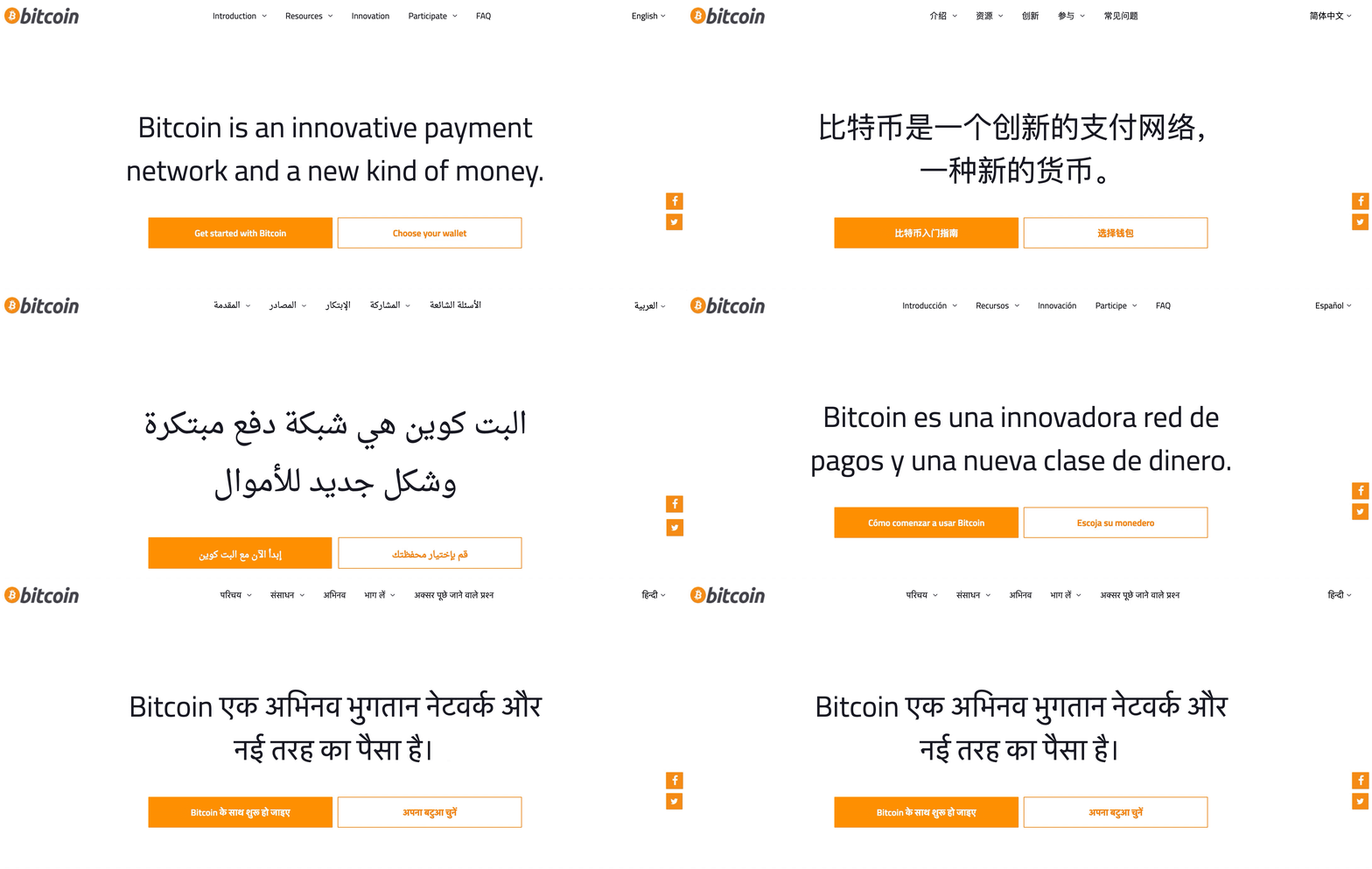
Today, the site operates as a non-profit, open-source entity. Its influence is global, with the interface translated into 25 languages, reflecting the borderless nature of Bitcoin itself. The platform processes millions of unique visitors per year, making it a critical "front door" for the cryptocurrency ecosystem. The decision to prioritize a better wallet-selection process is a direct response to the increasing influx of mainstream users who are often targeted by fraudulent websites or insecure wallet providers. By providing a "source of truth," the site mitigates the risk of financial loss caused by malicious actors.
Implications for the Broader Cryptocurrency Ecosystem
The launch of the new wallet pages carries broader implications for the adoption of digital assets. As Bitcoin continues to transition from a niche technical curiosity to a mainstream financial instrument, the quality of user-facing documentation becomes a competitive necessity.
- Security Standards: By setting clear criteria for what constitutes a "good" or "cautious" wallet, Bitcoin.org establishes an implicit industry standard that encourages wallet developers to prioritize security and user-friendly features to earn favorable ratings.
- Reducing User Error: Human error remains the most significant risk factor in Bitcoin custody. By guiding users through the selection process—explaining what features do and why they matter—the site serves as an educational tool that promotes self-sovereignty and risk management.
- Open-Source Participation: The reliance on GitHub for issue tracking and development feedback demonstrates the viability of large-scale, decentralized project management. It provides a model for how complex technical information can be curated and maintained by a global, volunteer-driven workforce.
The Future of Community-Driven Documentation
While the current update significantly enhances the user experience, the maintainers have indicated that the project remains iterative. The process for adding new wallets to the site is now governed by transparent documentation, ensuring that the directory remains objective and resistant to lobbying or corporate influence.
The emphasis on "community feedback" as a primary driver for development suggests that future updates will likely focus on even more granular wallet comparisons, potentially incorporating real-time data regarding network fees, transaction confirmation speeds, and evolving regulatory requirements in different jurisdictions.
As the digital landscape evolves, the role of portals like Bitcoin.org becomes increasingly vital. By stripping away the complexity of the underlying technology and focusing on the user’s need for clarity, safety, and agency, the site ensures that the Bitcoin network remains accessible to anyone with an internet connection, regardless of their technical background. The launch of these pages is not merely a design overhaul; it is a strategic effort to ensure that the foundational gateway to Bitcoin remains robust, informative, and aligned with the security-first philosophy that has defined the protocol since its inception in 2009.
In conclusion, the update serves as a model for how decentralized projects can improve their external communication and utility. Through the combination of community-sourced labor, transparent rating systems, and a commitment to user education, Bitcoin.org continues to serve as the definitive entry point for the next generation of digital asset participants. For those looking to participate in the ecosystem, the new wizard provides a reliable, vetted starting point in an otherwise overwhelming and often volatile market.