China is Simultaneously Booming and Stagnating Under the Weight of Structural Imbalances

CAMBRIDGE — The economic trajectory of the People’s Republic of China presents a profound paradox for global policymakers, financial markets, and international economists. On one side of the ledger, the nation stands as an unmatched titan in global manufacturing, dominating critical supply chains for green technology, electric vehicles (EVs), photovoltaic solar panels, and sophisticated hardware. Its artificial intelligence and high-tech sectors command a position second only to the United States, leaving European competitors trailing significantly behind in industrial scale and technological integration.
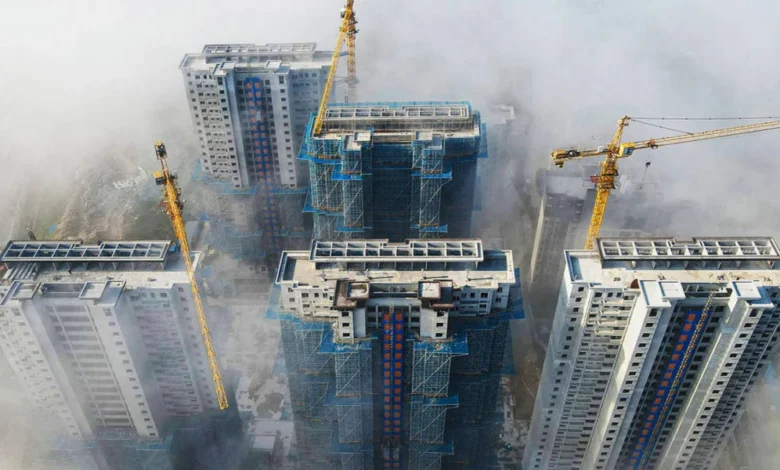
Conversely, the world’s second-largest economy finds itself mired in the sixth consecutive year of a severe, structural real-estate crisis reminiscent of Japan’s protracted post-bubble stagnation. This dual reality—where world-class industrial competitiveness coexists with depressed domestic consumption, a battered property market, and stark regional disparities—defines the modern Chinese economic landscape. Analysts and economists continue to debate whether Beijing’s development model is facing terminal exhaustion or merely undergoing a painful, state-managed transition to a new paradigm of high-tech growth.
The Dual-Track Economy: Manufacturing Might Versus Domestic Slump
The dichotomy of China’s economic performance is visible across every major metropolitan area and industrial belt. In coastal provinces like Guangdong, Zhejiang, and Jiangsu, factories operate at high capacity, churning out advanced electronics, machinery, and consumer goods destined for international markets. Chinese EV manufacturers have successfully upended traditional automotive markets across Europe, Latin America, and Southeast Asia, driven by aggressive state-backed industrial policies, economies of scale, and efficient supply chain integration.
However, this industrial prowess fails to translate into broad-based prosperity for the average household. Domestic consumption remains exceptionally weak, weighed down by the collapse of household wealth tied up in the real-estate sector. For decades, property served as the primary vehicle for Chinese household savings, accounting for roughly 70% of family assets. With property developers defaulting, construction stalled, and home values plummeting, consumer confidence has eroded significantly.
Stark regional disparities further complicate the macroeconomic picture. While tier-one cities like Beijing, Shanghai, and Shenzhen continue to attract high-value tech talent and venture capital, vast interior provinces and lower-tier municipalities face severe fiscal pressures, mounting local government debt, and sluggish job growth for young graduates. Hundreds of millions of Chinese citizens remain low-income earners, structurally excluded from the high-tech wealth generated along the coast.
Chronology of the Crisis: From the Debt Supercycle to the Property Collapse
To understand how China arrived at its current economic juncture, it is necessary to examine the timeline of events that transformed its growth model over the past decade:
- 2015–2016 (The Leverage Surge): Following a sharp economic slowdown, Beijing unleashed a massive credit expansion, heavily reliant on local government financing vehicles (LGFVs) and real-estate development to maintain high GDP growth targets. This fueled a massive property boom but laid the groundwork for dangerous levels of corporate and municipal debt.
- August 2020 (The "Three Red Lines" Policy): Seeking to curb systemic financial risk, the People’s Bank of China and the Ministry of Housing and Urban-Rural Development introduced the "Three Red Lines" policy. This regulatory framework strictly limited debt growth for developers, abruptly cutting off the liquidity oxygen supply to heavily leveraged firms.
- Late 2021 (The Evergrande Default): China Evergrande Group, once the country’s top-selling property developer, officially defaulted on its international debt obligations. The default triggered a contagion effect across the entire real-estate sector, freezing pre-sale markets and halting construction on millions of uncompleted apartments.
- 2022–2023 (Zero-COVID and Prolonged Real Estate Slump): Strict pandemic containment policies severely disrupted economic activity. Even after the reopening of the economy in late 2022, consumer demand failed to rebound meaningfully as the real-estate downturn deepened into a multi-year balance-sheet recession.
- 2024–2025 (The Pivot to Advanced Manufacturing): Acknowledging that traditional property-led stimulus would no longer work, Beijing pivoted aggressively toward "New Quality Productive Forces." Billions in state-directed credit and subsidies poured into advanced manufacturing, semiconductors, green energy, and artificial intelligence, triggering international trade friction.
- October 2026 (Persistent Stagnation and Deepening Disparities): Entering the sixth year of the property crisis, structural imbalances persist. While industrial exports break records, domestic demand remains subdued, forcing economists to reassess the long-term outlook for China’s growth trajectory.
Supporting Data and Macroeconomic Indicators
The underlying statistical profile of the Chinese economy underscores the severity of these structural imbalances. According to recent data from the National Bureau of Statistics of China and international financial institutions:
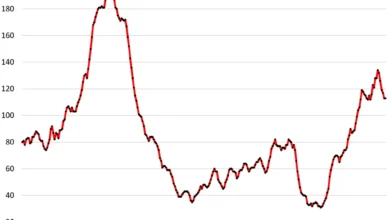
- Real Estate Contraction: Investment in real estate development has contracted for multiple consecutive years, with residential floor space started down by more than 50% from its 2021 peak.
- Export Dominance: China’s share of global manufacturing exports has risen to over 30%, with clean energy exports—including solar panels, lithium-ion batteries, and electric vehicles—surpassing $150 billion annually.
- Consumer Spending Deficit: Household consumption accounts for roughly 38% to 40% of China’s Gross Domestic Product (GDP), significantly lower than the global average of approximately 60% and far below the United States’ roughly 70%.
- Local Government Debt: Outstanding debt tied to LGFVs and regional administrations is estimated by the International Monetary Fund (IMF) and private rating agencies to exceed $9 trillion, posing a persistent risk to financial stability.
Official Responses and Policy Interventions
Beijing has not remained passive in the face of these challenges. China’s central bank and financial regulators have repeatedly introduced monetary easing measures, including cuts to reserve requirement ratios (RRRs), reductions in mortgage interest rates, and localized debt-swap programs designed to alleviate the fiscal distress of local governments.
However, top leadership has consistently resisted broad-based, consumption-focused stimulus packages—such as direct cash transfers to households—favoring instead supply-side interventions aimed at upgrading industrial capabilities. State media and Communist Party directives emphasize high-quality development, technological self-reliance, and national security, signaling that leadership is willing to tolerate slower headline growth rates if it secures dominance in future strategic industries.
International institutions, including the World Bank and the IMF, have consistently urged Beijing to rebalance its economy toward domestic consumption, strengthen social safety nets to reduce precautionary household savings, and allow market forces to clear non-performing assets in the property sector rather than relying solely on industrial subsidies.
Broader Global Impact and Economic Implications
The coexistence of a booming high-tech export sector and a stagnating domestic economy carries profound implications for the global trading system.
First, China’s massive industrial overcapacity has collided with protectionist measures worldwide. The European Union, the United States, and several emerging economies have implemented tariffs, anti-dumping investigations, and trade barriers to shield domestic industries from a wave of low-priced Chinese goods. This tension threatens to reshape global trade governance and accelerate the fragmentation of international supply chains into regional blocs.
Second, the structural slowdown in China has dampened commodity demand, affecting resource-exporting nations in Latin America, Africa, and Australia. Slower growth in the world’s second-largest economy acts as a persistent drag on global economic momentum, offsetting pockets of robust growth elsewhere.
Ultimately, China’s unique economic structure demonstrates that a nation can maintain global technological leadership and generate massive export surpluses even while grappling with severe domestic structural crises. Provided that political stability is maintained under the central leadership, China is well-positioned to remain an indispensable global economic powerhouse for decades to come—even if a substantial portion of its 1.4 billion citizens continues to navigate the realities of low-income status within a deeply divided domestic market.