Google’s Collapse Gives Hope for the Middle Class and Our Kids


The technology sector experienced a significant market correction as Alphabet Inc. shares plummeted by 12 percent following a quarterly earnings report that revealed massive capital expenditures and unexpected negative free cash flow. Long-term shareholders, institutional investors, and market analysts have expressed growing concern regarding Alphabet’s strategic positioning in the highly competitive artificial intelligence landscape, particularly as legacy search operations face mounting structural challenges from generative AI alternatives.
The recent financial disclosures underscore a critical juncture for the Silicon Valley titan. Despite pioneering foundational artificial intelligence architectures nearly a decade ago, Alphabet is currently struggling to secure market dominance in modern generative tooling, prompting questions regarding management efficiency, capital allocation strategies, and the long-term viability of its core business model.
Financial Disclosures and Capital Expenditure Realities
According to the latest quarterly financial report, Alphabet’s capital expenditures (CAPEX) have escalated dramatically, reaching a projected annualized run-rate of approximately $200 billion. This unprecedented spending spree—designed to secure advanced graphics processing units, expand global data center infrastructure, and scale proprietary tensor processing units—has heavily strained corporate liquidity.
Most notably, Alphabet’s quarterly free cash flow dropped into negative territory at approximately negative $9 billion. For a corporation historically celebrated for generating immense piles of unencumbered cash, this shift has unsettled conservative institutional investors. Financial analysts note that while aggressive infrastructure investments are necessary to compete in the generative artificial intelligence sector, the sheer scale of Alphabet’s spending has raised concerns about return on invested capital.
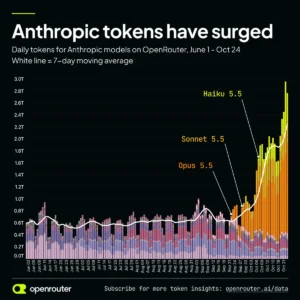
Despite the capital infusion, market consensus places Alphabet’s Gemini ecosystem behind competing offerings from rival firms such as Anthropic and OpenAI. Industry observers have pointed out that despite massive financial commitments that rival the gross domestic product of several sovereign nations, the tangible return in developer adoption and enterprise market share remains disproportionately low.
A Historical Review of Alphabet’s Strategic Missteps
Alphabet’s current struggles in the artificial intelligence race are particularly striking given the company’s profound historical advantage. In 2017, researchers at Google published the landmark academic paper introducing the transformer architecture—the foundational technology denoted by the "T" in prominent generative models across the industry. Furthermore, the acquisition of DeepMind, the development of custom tensor processing units, and access to an unparalleled distribution network comprising billions of active users via Android, Chrome, YouTube, and Search provided the company with an insurmountable head start.
Despite these advantages, the commercialization and developer adoption of Gemini have lagged behind nimble competitors. Software developers increasingly rely on alternative platforms, such as Anthropic’s Claude or OpenAI’s developer interfaces, for modern coding and application deployment.
Market analysts attribute this lag to organizational inertia within large technology conglomerates. Critics frequently compare the corporate culture within mature departments to the phenomenon of "resting and vesting," where employees accumulate equity compensation with diminished operational urgency. While Alphabet continues to employ thousands of highly skilled engineers, critics argue that the sheer scale of the organization has diluted corporate agility, allowing smaller, highly focused startups to outpace the search giant in rapid product iteration.

Competitive Pressures and the Generative AI Landscape
The artificial intelligence ecosystem has evolved into a high-stakes arena characterized by asymmetrical competition. While Alphabet operates with the security of a dominant search monopoly and immense cash reserves, rivals backed by massive cloud infrastructure providers—such as Microsoft’s financial and computational backing of OpenAI, and Amazon’s strategic investment in Anthropic—have aggressively captured developer mindshare.
Dario Amodei, co-founder and Chief Executive Officer of Anthropic, exemplifies the rising competitive force challenging established tech monopolies. Founded in 2021, Anthropic has rapidly ascended to become one of the most valuable private enterprises globally, driven by enterprise demand for its Claude model family. Ironically, Alphabet itself previously participated as an investor in Anthropic, highlighting a complex web of corporate venture investments where established market leaders fund their own disruption.
This dynamic has created a stark contrast in corporate motivations. Smaller, privately held artificial intelligence laboratories operate under intense financial pressures, requiring continuous product delivery and immediate technological breakthroughs to secure survival. Conversely, established incumbents with entrenched monopolies face the chronic risk of complacency, where vast legacy revenues cushion the urgency required to win emerging technological revolutions.
Regulatory Scrutiny and the Publisher Ecosystem
Beyond technological competition, Alphabet faces mounting friction with digital publishers, content creators, and regulatory bodies. For over two decades, the symbiotic relationship between Google Search and independent web publishers relied on an implicit agreement: publishers generated original reporting, analysis, and commentary, while Google organized the information and directed organic traffic back to source websites via advertising-supported referral links.
In recent years, this dynamic has shifted significantly. The introduction of featured snippets, structured knowledge panels, localized search widgets, and, most recently, AI Overviews has fundamentally altered search engine results pages. AI Overviews synthesize publisher content directly at the top of the search interface, providing users with comprehensive answers without requiring them to visit the underlying source website.
Independent publishers and digital media organizations have raised strong objections, characterizing these features as a systemic misappropriation of copyrighted material. While artificial intelligence companies across the industry rely on web scraping to train large language models, Alphabet’s transformation from a referral engine into a self-contained destination has strained its relationships with the broader digital publishing community.
Market Implications and Future Outlook
The 12 percent decline in Alphabet’s share price serves as a potent reminder that even the most profitable corporate empires are vulnerable to technological disruption and mismanaged capital allocation. Financial markets are increasingly demanding clarity from executive leadership regarding how multi-billion-dollar artificial intelligence investments will translate into sustainable top-line revenue growth without eroding operating margins.
Institutional shareholders and market analysts will monitor upcoming quarterly disclosures closely for signs of capital discipline, accelerated monetization of artificial intelligence products, and internal structural reforms. Whether Alphabet can successfully leverage its unmatched infrastructure and proprietary research capabilities to reclaim technological supremacy remains one of the defining questions of the contemporary technology landscape.