The financial fault lines running beneath the artificial intelligence infrastructure boom are rapidly widening, exposing a stark divergence in market health between high-flying boutique providers and the tech industry’s trillion-dollar behemoths. Recent volatility across global markets has cast a harsh spotlight on the neocloud business model—firms that rely heavily on debt financing to acquire specialized graphics processing units (GPUs) and lease out compute capacity. This structural vulnerability has triggered sharp pullbacks in public offerings, plunging credit values, and a fundamental reassessment of how capital flows into the AI economy.

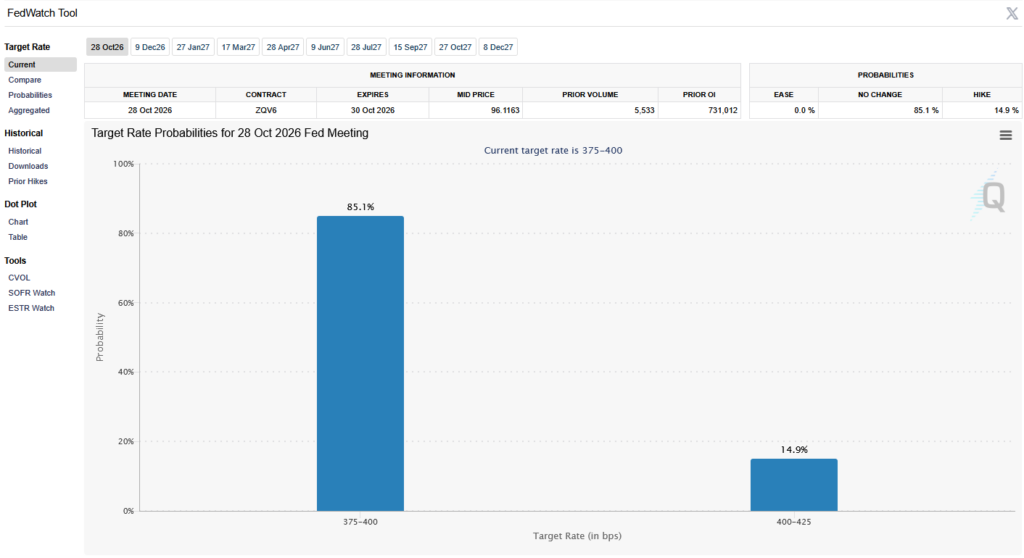
As major central banks grapple with sticky interest rates and corporations face an impending wall of debt maturities, the market is beginning to differentiate sharply between cash-rich hyperscalers and debt-dependent neoclouds. Observers note that while the broader equity markets have weathered macroeconomic pressures, the underlying mechanics of tech financing are undergoing a severe stress test.
The Neocloud Business Model Under Pressure
To understand the current turbulence, market analysts point to the fundamental mechanics of the neocloud sector. These companies operate primarily as spread businesses. They borrow capital, acquire high-performance chips—predominantly advanced GPUs—rent out this computing power to corporate clients, and extract a profit from the spread remaining after debt service and asset depreciation.
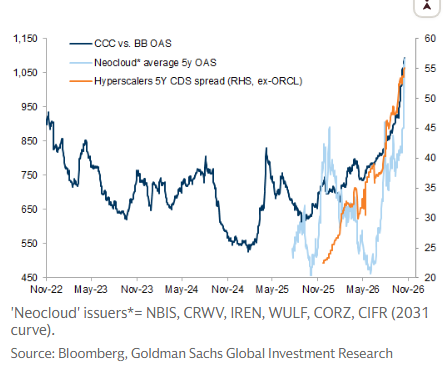
While this model thrives during periods of hyper-demand and low borrowing costs, it leaves firms acutely vulnerable to shifts in monetary policy. As global interest rates have climbed and remained elevated, financing has grown prohibitively expensive for neocloud entrants. Credit default swap (CDS) spreads for prominent neocloud entities have skyrocketed, exceeding 1,000 basis points. By contrast, credit default swaps for established hyperscalers hover near a modest 55 basis points, underscoring a profound disconnect in perceived default risk.
Recent market events have underscored these structural vulnerabilities. In South Korea, Elice Group experienced a severe market debut on the Kosdaq exchange, sliding roughly 30% in its initial trading session. Just a week prior, Nvidia-backed Firmus elected to shelve a planned $5 billion initial public offering, citing unfavorable market conditions. Concurrently, debt instruments tied to sector pioneer CoreWeave have experienced severe downward pressure, with its 2032 debt yielding near 15%—a sharp escalation from yields below 10% just weeks earlier.
Hyperscalers: Divergent Fortunes and Cash Reserves
In stark contrast to their neocloud counterparts, the market’s dominant hyperscalers—including Microsoft, Amazon, Alphabet, and Meta—operate from a position of immense financial fortification. Industry projections indicate these four enterprises will collectively allocate approximately $800 billion toward compute capacity expansion and infrastructure development.
Crucially, this unprecedented capital expenditure is largely funded through robust operating cash flows rather than reliance on volatile debt or equity markets. Furthermore, hyperscalers possess structural insulation against rental rate fluctuations because they primarily utilize their own infrastructure to power proprietary consumer services and enterprise cloud platforms. Their revenue streams are diversified across thousands of enterprise clients rather than concentrated among a handful of counterparties, buffering them against localized pricing shocks in the compute rental market.

Market strategists suggest that if neocloud competitors are eventually compelled to curtail operations or liquidate GPU inventories to service burdensome debt obligations, hyperscalers stand to capture significant strategic advantages. These industry giants could wield enhanced pricing power over future chip acquisitions and absorb distressed datacenter capacity at bargain valuations.
However, a sudden influx of secondary-market GPUs could also exert downward pressure on the resale value of existing hardware, signaling to investors that compute scarcity is finally easing—a dynamic that could carry significant repercussions for major semiconductor manufacturers.
Corporate Credit as Monetary Policy’s Sleeping Giant
The turmoil in neocloud debt markets is reviving a broader debate regarding the delayed transmission of monetary policy to the real economy. For nearly four years following the onset of the pandemic, many corporations locked in ultra-low interest rates. When central banks began aggressively hiking benchmark rates in 2022, the immediate impact on nonfinancial corporations was surprisingly muted. Enterprises frequently enjoyed higher yields on corporate cash balances while their long-term liabilities remained insulated until bonds matured.
According to data compiled by the Bureau of Economic Analysis, corporate net interest payments rose by roughly $86 billion over a five-year window, while nonfinancial corporate profits expanded by approximately $1.2 trillion. However, as pandemic-era debt approaches its maturity window, the lagging effects of higher interest rates are finally taking hold. Junk bond yields have climbed to their highest levels since 2025, while investment-grade yields sit near peaks not seen since 2023. Roughly a quarter of the Bloomberg U.S. High Yield index features debt maturing over the next one to three years, creating a critical junction for corporate borrowers.
Economists and market commentators emphasize that the distinction between orderly cooling and systemic distress will dictate the macroeconomic outlook. A controlled normalization of capital expenditure that allows semiconductor supply chains to catch up with demand could assist central banks in steering inflation toward target levels. Conversely, a disorderly widening of credit spreads risks turning routine debt refinancing into a widespread funding crisis.
Market Breadth and the Broader Equity Landscape
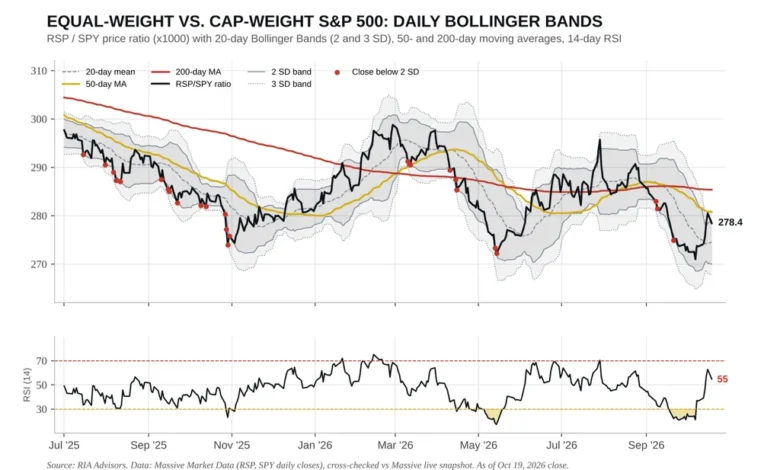
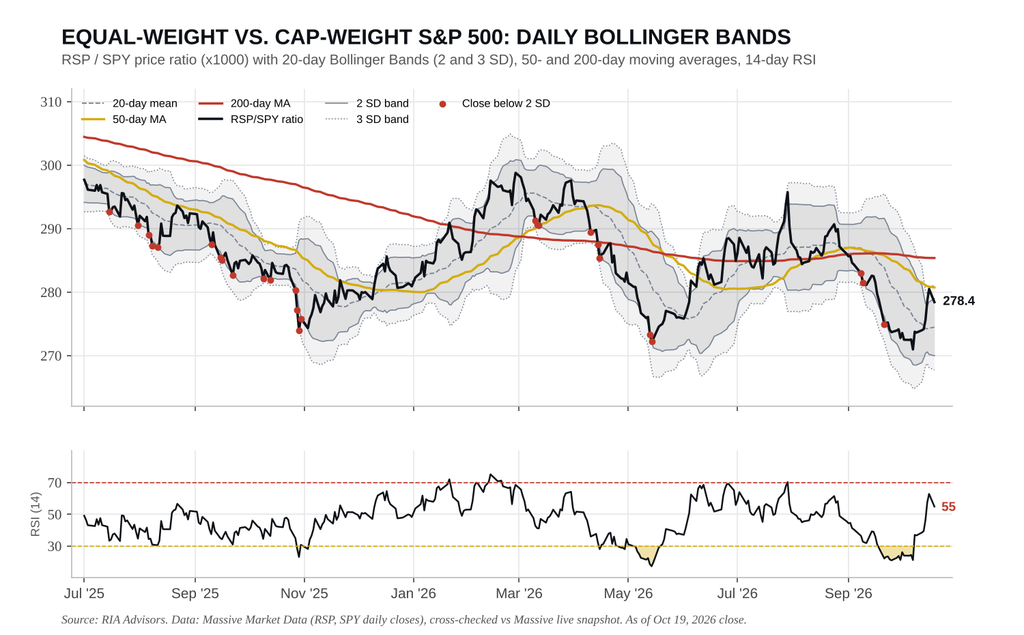
Against this macroeconomic backdrop, the broader U.S. equity market is exhibiting classic signs of mid-cycle rotation and internal digestion. While cap-weighted indices like the S&P 500 have remained relatively resilient, supported by elite megacap performers, the average stock has endured a much more substantial correction.

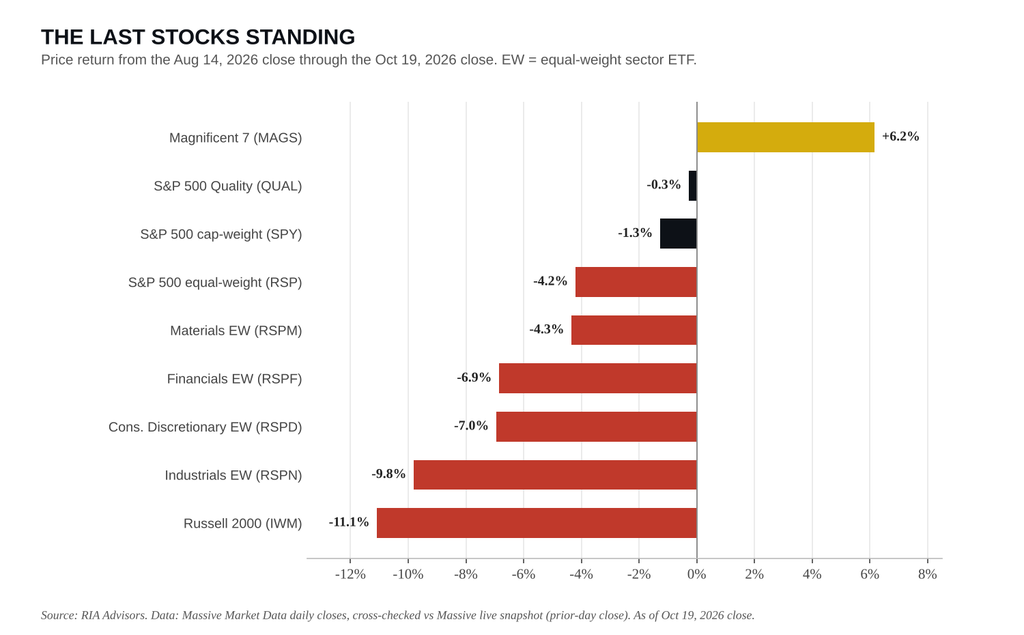
Data from mid-August through late October illustrates a clear divergence: the equal-weight S&P 500 slipped 4.2%, equal-weight industrials lost 9.8%, and the Russell 2000 small-cap index pulled back 11.1%. Over the same comparative stretch, the Magnificent Seven index advanced by over 6%, highlighting a narrow market leadership that investment strategists view as unsustainable over the long term.
Morgan Stanley equity strategists have argued that ongoing market corrections frequently fail to reach a definitive bottom until the last remaining market leaders experience a sympathetic pullback toward the rest of the index. This "convergence" theory suggests that true market washes are rarely complete until selling pressure reaches even the most resilient and closely guarded portfolio holdings.
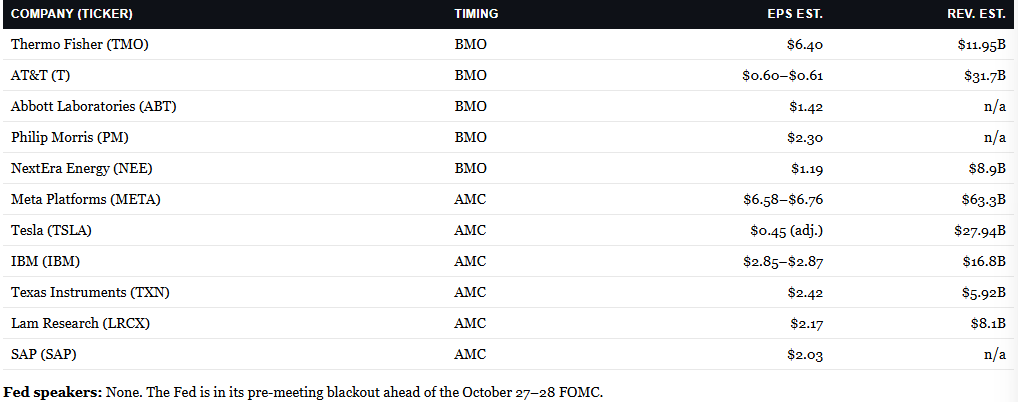
As corporate earnings season accelerates—with major reports scheduled from bellwether technology and industrial enterprises—market participants remain hyper-focused on sustaining key technical thresholds. Institutional managers continue to advocate for disciplined rebalancing, trimming overweight technology positions during periods of strength to accumulate shares in sectors that have already absorbed significant valuation resets.
Ultimately, the intersection of tightening credit conditions, distressed neocloud financing, and evolving central bank policy indicates that the transition toward a normalized interest rate environment will continue to test the structural resilience of capital-intensive industries. As these dynamics play out, market participants are watching closely to see whether the turbulence remains isolated to high-risk market segments or broadens into the wider financial ecosystem.
Related posts: