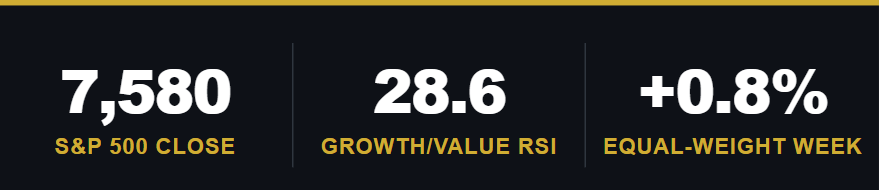
The financial markets experienced a decisive paradigm shift as surging artificial intelligence capital expenditures collided with a restrictive macroeconomic environment, triggering a sharp rotation away from mega-cap growth equities and into defensive value sectors. For the four-week period ending October 31, 2026, the S&P 500 endured a notable weekly decline, sinking 0.6% to close at 7,580. This marked its lowest settlement since mid-September and punctured critical technical support levels. The tech-heavy Nasdaq Composite dropped 2.9% in a single session, while the Dow Jones Industrial Average shed 1.1%, underscoring a broader reassessment of technology valuations and corporate spending discipline.
At the core of the market downturn was a fundamental questioning of capital efficiency within the artificial intelligence ecosystem. Mega-cap technology conglomerates reported robust top-line cloud growth, yet investors sharply punished companies for ballooning capital expenditures that failed to translate into immediate, positive free cash flow. Alphabet set the tone on Thursday with a negative free cash flow print of $9.1 billion, driven by quarterly capital spending of $51.4 billion. This triggered a 12.6% single-day selloff in Alphabet shares. Amazon echoed these concerns, reporting Amazon Web Services (AWS) growth of 39% alongside quarterly capital expenditures approaching $77 billion, which disappointed Wall Street expectations.
Hardware and manufacturing giants compounded the negative sentiment. Intel shares collapsed 28.6% following a dismal fourth-quarter outlook, while industrial bellwether Caterpillar fell 9.3%. Microsoft stood as a notable outlier among the mega-cap peers, absorbing less than a 2% two-day loss as its Azure cloud platform posted a 48% growth rate, demonstrating more resilient monetization of its infrastructure investments.
The macroeconomic backdrop further complicated equity valuations. During its monetary policy meeting, the Federal Reserve opted to hold interest rates steady in a target range of 3.75% to 4.00%. The decision, however, was far from unanimous, featuring a 10-2 vote split as dissenting officials advocated for a rate increase. Subsequent economic data released later in the week revealed third-quarter GDP growth running at an annualized rate of 3.4%, accompanied by September Personal Consumption Expenditures (PCE) inflation ticking up to 3.6%, with core inflation holding at 3.1%. Bond markets immediately priced in these inflationary pressures, keeping the benchmark 10-year Treasury yield anchored near 4.93%, while Brent crude oil futures hovered stubbornly high at approximately $118 per barrel.
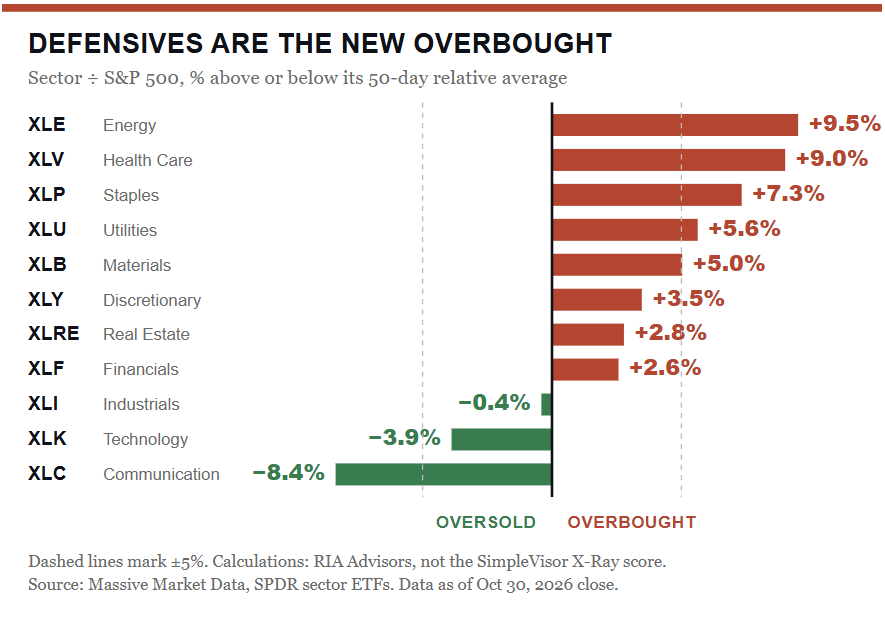
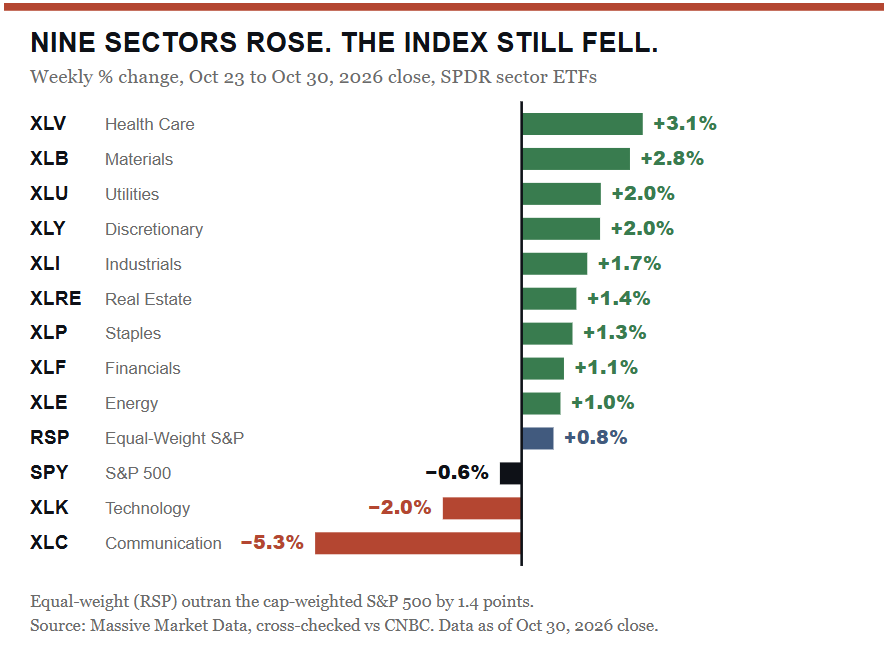
Despite the headline index declines, market internals revealed a complex underlying rotation rather than a blanket liquidation. Nine of the S&P 500’s eleven sectors finished the week in positive territory. The equal-weight S&P 500 index outperformed its cap-weighted counterpart by 1.4 percentage points, gaining 0.8% as broad participation cushioned the blow. Defensive and commodity-linked sectors absorbed the capital fleeing technology and communication services. Energy, healthcare, and consumer staples experienced robust inflows, driving respective sector deviations significantly above their historical 200-day moving averages. Energy sector equities, bolstered by persistent geopolitical supply shocks and elevated crude prices, pushed into historically overbought territory, outperforming the broader S&P 500 index by nearly 40 percentage points year-to-date.
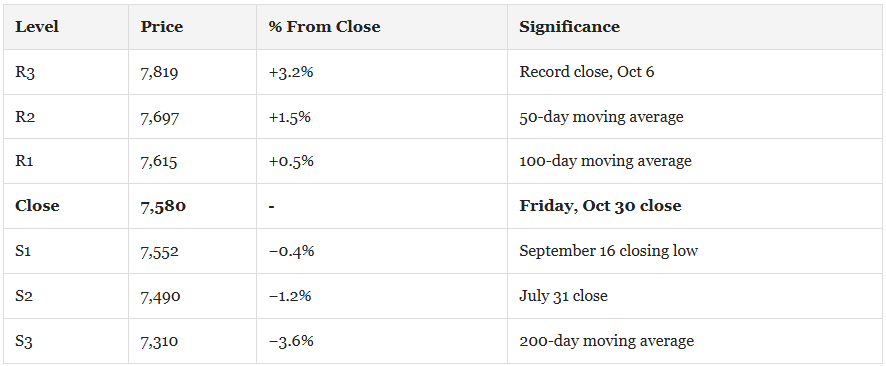
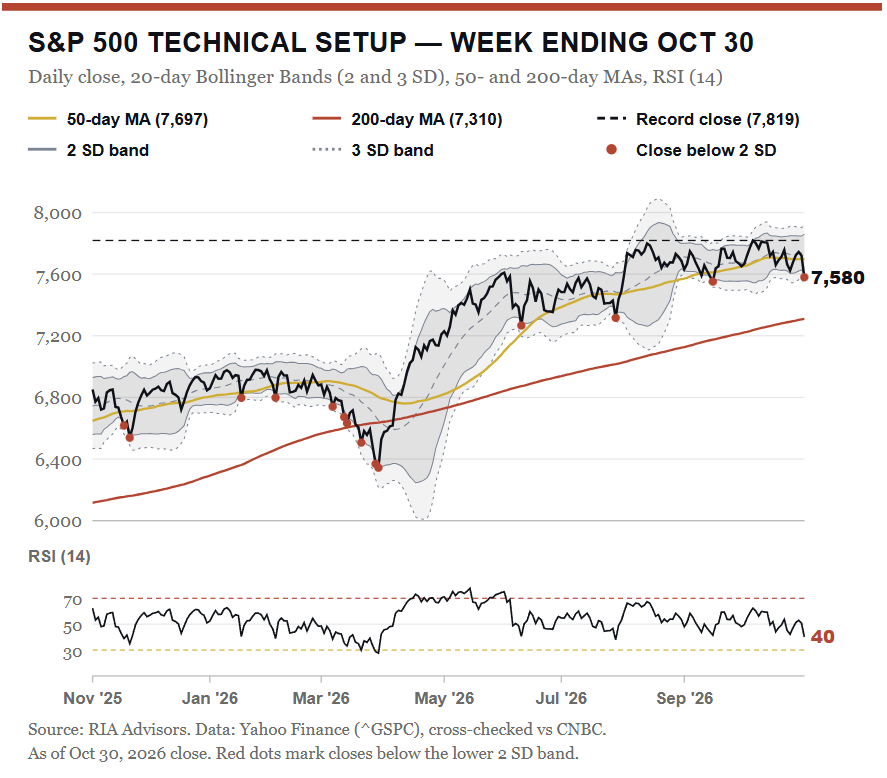
Technical analysts noted severe near-term damage to major equity indices. The S&P 500 closed below its 100-day moving average of 7,615 for the first time since April, resting 1.5% below its 50-day moving average of 7,697. Momentum indicators deteriorated rapidly, with the Relative Strength Index (RSI) tumbling from 50.8 to 40.1 in a single session, and the Moving Average Convergence Divergence (MACD) indicator turning downward below the zero line. Furthermore, index closes breached the lower Bollinger Band, a statistical threshold that historically signals short-term exhaustion, though analysts warned that persistent macroeconomic headwinds could prolong the correction before a durable market floor is established.
Portfolio managers and institutional allocators have responded to these technical extremes by staging defensive rebalancing protocols. Earlier in the month, systematic equity models trimmed exposure to high-beta growth leaders such as Apple, Nvidia, AMD, and Palantir, redirecting capital into cash-generative value stalwarts including Walmart, Costco, JPMorgan Chase, and Berkshire Hathaway. Tactical profit-taking in energy pipeline operators like Kinder Morgan and Williams further demonstrated a disciplined approach to managing sector overextension.
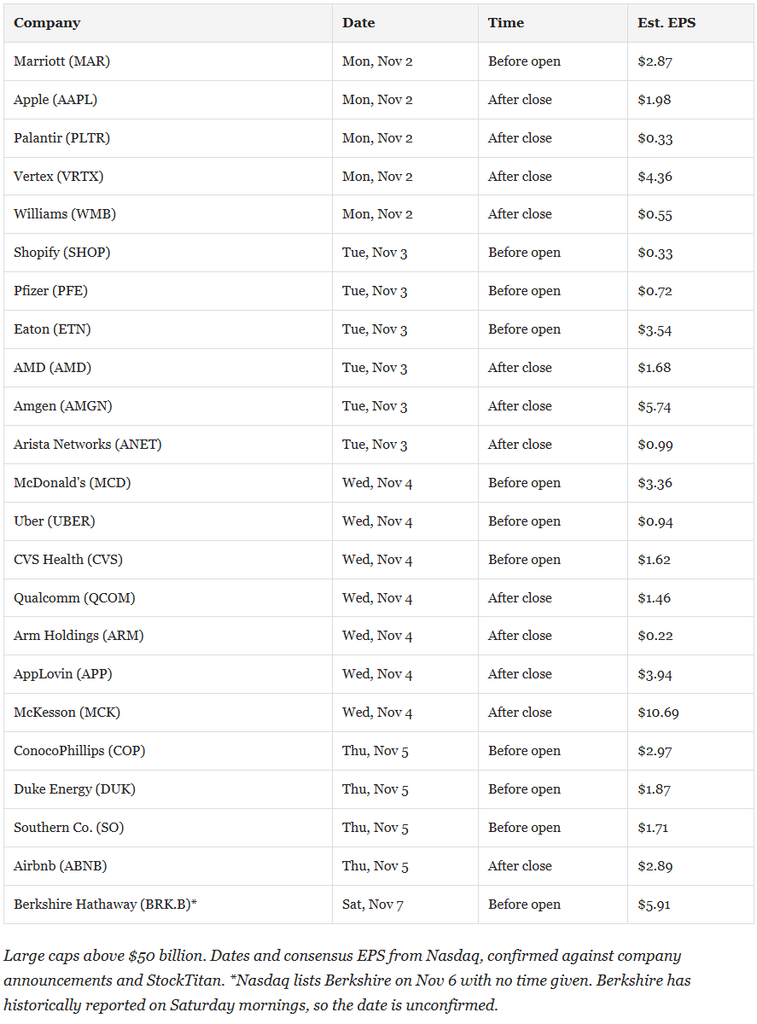
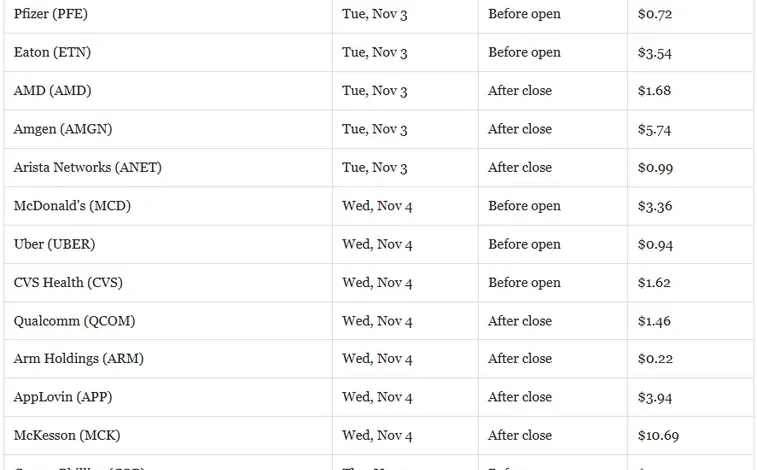
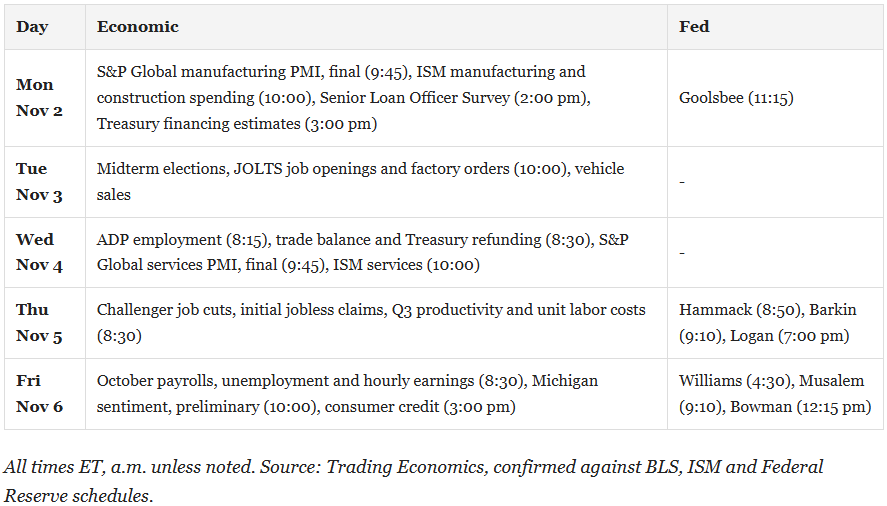
Looking ahead, market participants face a dense economic and political calendar loaded with potential catalysts. The upcoming schedule features the U.S. midterm elections, where legislative control of Congress hangs in the balance, alongside the monthly Nonfarm Payrolls employment report. Consensus estimates project modest job creation of 55,000 to 65,000 positions, with the unemployment rate steady at 4.2%. A weaker-than-expected payroll print combined with sticky inflation readings could complicate the Federal Reserve’s final policy meeting of the year, injecting fresh volatility into fixed-income and equity markets alike. Additionally, upcoming earnings reports from major semiconductor and enterprise software providers, including Advanced Micro Devices and Palantir, will provide critical insights into whether enterprise AI demand is finally translating into sustainable operational cash flow or merely continuing an expensive infrastructure arms race.