The Financial Reality of Upgrading to a Larger Home: A Three-Year Retrospective

In late 2023, the decision to acquire a larger residential property—often characterized as an upgrade beyond strict utilitarian necessity—sparked a multi-year financial and domestic experiment. Real estate transactions of this magnitude carry substantial opportunity costs, particularly when weighed against historical equity market returns. Three years after finalizing the purchase of a high-end, fully renovated home in San Francisco, an evaluation of the long-term utility, financial trade-offs, and maintenance realities offers key insights for prospective homeowners navigating similar decisions.
Unlike consumer discretionary items or luxury goods, residential real estate occupies a unique position in personal finance. As the single largest asset class for most households, a home functions simultaneously as a primary consumption good and an investment vehicle. Industry data indicates that the average citizen spends more than half of each day indoors, making the physical living environment one of the most heavily utilized expenditures in a household budget. While fine watches, jewelry, and luxury automobiles can appreciate in value, they lack the continuous daily utility and shelter value inherent to residential property. However, transitioning to an upscale home that exceeds immediate spatial requirements introduces distinct financial risks, particularly regarding opportunity costs and asset allocation.
Chronology of the Acquisition and Domestic Integration
The pathway to the late 2023 purchase involved a protracted deliberation regarding spatial optimization and long-term settlement. For roughly two decades—spanning from 2003 to 2023—the trajectory of many urban property owners was defined by continuous upward mobility along the real estate ladder. The decision to secure a permanent residence required overcoming significant domestic hesitation, ultimately anchored by a mutual agreement that this would represent the final real estate transaction within the San Francisco market.
Following the acquisition, the tangible benefits manifested primarily in family dynamics and child development. The inclusion of a secure, enclosed front and rear yard addressed safety concerns inherent to dense urban environments. Behavioral observations within the household indicated that active children, particularly young boys, derive substantial developmental benefits from expansive, usable lot sizes capable of absorbing high daily energy expenditures before transitioning to academic focus. Furthermore, settling into a permanent neighborhood eliminated the psychological friction and transaction costs associated with serial relocation, bringing a definitive end to decades of property cycling.
Financial Trade-Offs and Opportunity Costs
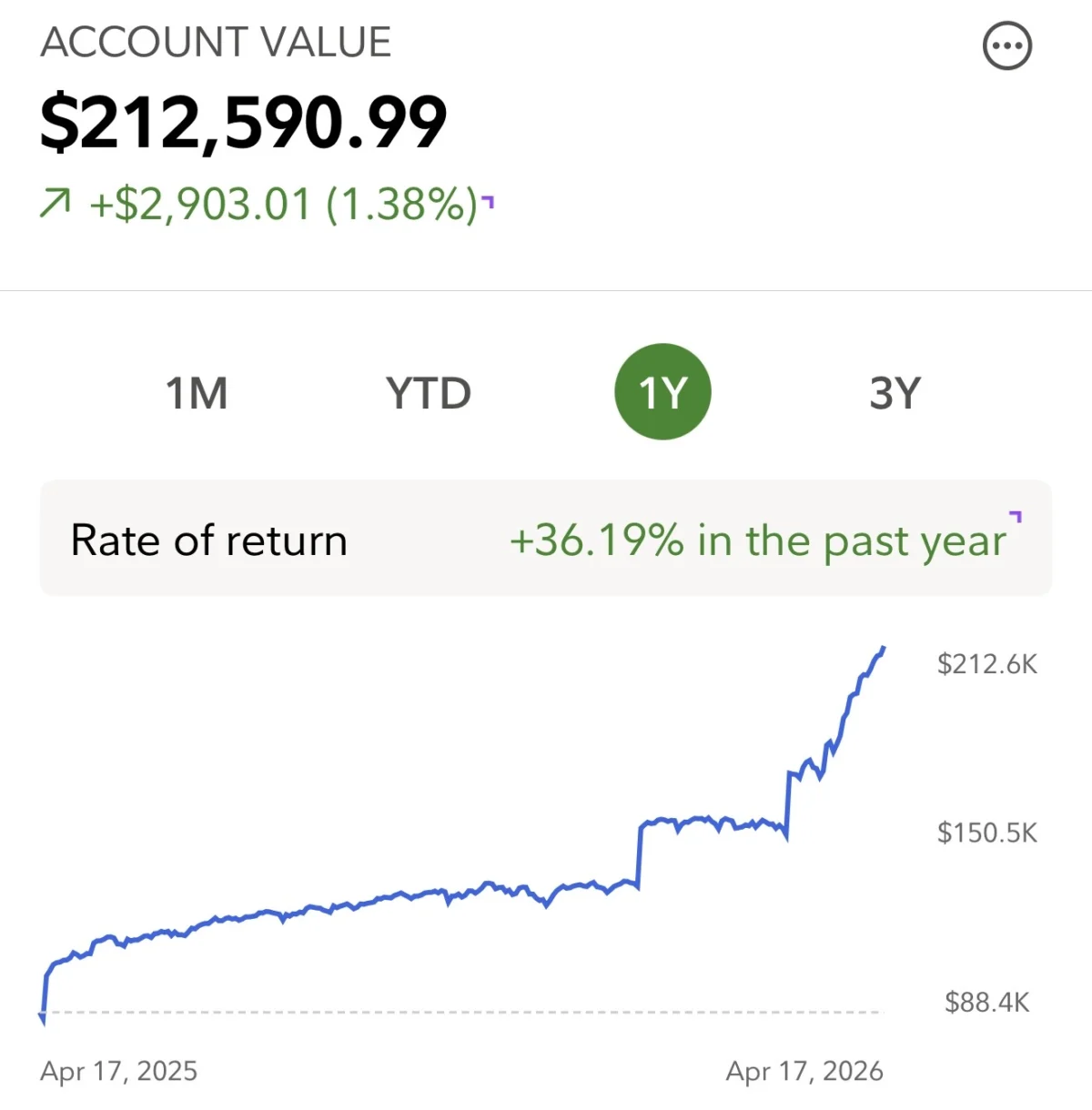
From a strict wealth-accumulation perspective, acquiring a high-value residential property involves substantial opportunity costs. The capital deployed toward the down payment or outright purchase price represents funds diverted from high-yielding public equities. Since the close of 2023, major benchmarks such as the S&P 500 have experienced significant upward momentum, driven heavily by technological sectors, artificial intelligence developments, and broad economic expansion.
When homeowners liquidate positions in equities or U.S. Treasury bonds to fund real estate acquisitions, the foregone gains can be substantial. Case studies among urban professionals illustrate this phenomenon vividly; individuals who liquidated concentrated stock positions in high-growth technology firms during prior decades to fund real estate purchases frequently discovered that their former equities appreciated at multiples significantly higher than local property values. In high-cost-of-living metropolitan areas like San Francisco, real estate appreciation has remained robust—bolstered by localized economic booms in artificial intelligence and tight housing inventory—yet public market indices frequently outpace residential gains over equivalent horizons. Consequently, buyers must quantify the subjective utility of enhanced living standards against millions of dollars in potential market appreciation left on the table.
Maintenance Realities Versus Industry Norms
A common point of financial anxiety in high-value real estate acquisition is the ongoing cost of structural upkeep. Conventional real estate wisdom dictates setting aside approximately 1% of a property’s market valuation annually for maintenance and capital expenditures. However, empirical tracking over a three-year observation window often challenges these generalized formulas.
For a fully renovated, turnkey property that underwent rigorous structural and mechanical inspection during an extended escrow period, actual maintenance outlays can remain exceptionally low. In this specific instance, cumulative maintenance expenditures over three years totaled approximately $4,700, translating to roughly $1,567 annually—a fraction of the standard 1% rule of thumb. This variance underscores the financial advantage of purchasing properties near the peak of their capital improvement cycles, rather than acquiring distressed or deferred-maintenance assets that require immediate systemic overhauls. Thorough pre-purchase inspections and leveraging extended escrow periods to mandate seller-funded repairs prior to closing serve as effective risk-mitigation strategies for controlling post-acquisition expenses.
Strategic Framework for Prospective Home Upgraders
Financial analysts and real estate experts recommend a disciplined, systematic evaluation process before committing to a major residential upgrade. To mitigate the risk of severe buyer’s remorse and long-term financial strain, prospective buyers should incorporate several foundational criteria:
-
Unanimous Domestic Alignment: Major financial commitments require genuine, enthusiastic consensus between partners. A reluctant or coerced agreement introduces chronic friction into household dynamics, transforming a residential asset into a source of ongoing interpersonal stress.
-
Application of Conservative Financial Formulas: Adhering to structured benchmarks—such as allocating at least 30% of the purchase price as liquid capital reserves, capping monthly housing debt service below 30% of gross household income, and restricting total home acquisition costs to between three and five times annual gross earnings—prevents overextension.
-
Strategic Neighborhood Positioning: Rather than engaging in hyper-competitive bidding wars within crowded, highly contested market segments (frequently termed "frenzy zones"), buyers often achieve better pricing leverage by exploring properties situated just outside these hyper-competitive radii.
-
Comprehensive Cash-Flow Stress Testing: Households must model worst-case fiscal scenarios, including the temporary loss of primary income streams for extended periods. Ensuring that fixed housing obligations do not induce a state of paycheck-to-paycheck dependency is critical for psychological well-being.
-
Capital Allocation Analysis: Deciding between all-cash purchases and mortgage financing requires balancing the psychological relief of eliminating monthly debt service against the liquidity advantages of maintaining diversified investments in public markets.
Broader Economic Implications and Alternative Real Estate Exposure
The concentration of significant net worth within a single residential property introduces asset concentration risk, reducing portfolio diversification. For investors seeking exposure to the real estate sector without the accompanying burdens of physical property management, direct capital outlays, and ongoing local taxation, alternative vehicles provide viable solutions. Platforms specializing in private market real estate, fractional commercial assets, and digital infrastructure—such as data centers powering modern technological expansions—offer passive participation in real estate appreciation.
Ultimately, residential real estate serves a dual purpose: it is both a financial asset and the physical infrastructure of daily human life. While mathematical models frequently favor retaining capital in public equities, the intangible value derived from a secure, stable, and spacious home environment remains a valid metric in holistic wealth management. When executed with financial discipline and realistic expectations regarding opportunity costs, upgrading to a long-term residential property can align successfully with broader life satisfaction goals.