Federal Investigators Uncover Deep Syndicate Ties Between Ransomware Negotiators and the Notorious ShinyHunters Hacking Group

Federal law enforcement agencies in the United States are aggressively expanding their ongoing investigation into the ShinyHunters cybercriminal collective, following a series of high-profile security compromises that culminated in the unauthorized exfiltration of sensitive data from the Federal Bureau of Investigation (FBI). According to sources close to the unfolding federal probe, investigators have identified executives at multiple distinct ransomware negotiation and cybersecurity firms who allegedly maintained unusually close, illicit relationships with the extortion ring. In at least one instance, a U.S.-based executive is accused of actively assisting the hacking syndicate in operating a specialized pressure website designed to coerce corporate and government victims into meeting ransom demands.
The escalating probe underscores a deeply troubling trend within the cybersecurity and incident response sector: the growing entanglement of intermediary firms with the very threat actors they are hired to mitigate. As authorities piece together encrypted communications, financial records, and operational infrastructure, the case has exposed profound structural vulnerabilities and misaligned financial incentives that threaten to undermine the integrity of global cyber extortion responses.
Evolution and Operational Scope of ShinyHunters
The ShinyHunters syndicate has maintained a dominant and destructive presence in the global threat landscape since 2019. Originally spearheaded by cybercriminals operating out of France, the group specialized in large-scale data thefts, compromising dozens of major corporate entities across various sectors. As law enforcement agencies systematically dismantled the original core membership through international arrests and extraditions, operational control over the ShinyHunters brand eventually shifted.
By late 2024 and into 2025, leadership of the collective had passed to an individual known by the online alias "Rey." Intelligence operations subsequently identified Rey as a teenage hacker residing in Amman, Jordan. According to official estimates provided by the FBI, the restructured ShinyHunters collective successfully extorted more than $70 million from corporate and institutional victims during the current calendar year alone.
The group’s ambitions escalated dramatically in late September when operatives successfully compromised the FBI recruitment portal, fbijobs.gov. To taunt federal law enforcement, the hackers threatened to publish stolen internal files containing deeply sensitive material, including employee Social Security numbers, home addresses, specialized unit designations, and comprehensive medical and psychological records.

Chronology of the Crackdown and International Arrests
The brazen breach of the FBI recruitment infrastructure triggered an unprecedented, rapid response from federal law enforcement, leading to a coordinated series of international raids, detentions, and interrogations of individuals suspected of communicating with Rey and his co-conspirators.
On October 3, international media reports confirmed that Rey had been apprehended by Jordanian authorities and was actively cooperating with the FBI. This leadership vacuum and subsequent intelligence bonanza followed a pivotal arrest in Europe weeks prior.
On September 15, law enforcement officers in the Netherlands executed a high-risk tactical operation, utilizing flash-bang grenades to apprehend Pepijn van der Stap, a convicted hacker and senior ShinyHunters suspect, while he was actively logged into his digital accounts. Crucially, Dutch police seized Van der Stap while his Signal instant messaging application remained open and active. This tactical advantage granted investigators immediate, unfettered access to extensive chat logs detailing recent communications with frequent contacts, including prominent ransomware negotiators based in the United States and Canada.
According to sources with direct knowledge of the investigation, Van der Stap’s decrypted Signal communications provided the evidentiary foundation for multiple subsequent breakthroughs. In addition to revealing the operational mechanics of the hacking group, the messages reportedly contained details pointing toward an alleged murder-for-hire plot targeting individuals abroad, though authorities have indicated there is no evidence those violent orders were ever executed.
The Arrest of Edward Dubrovsky and Industry Fallout
The intelligence extracted from Van der Stap’s seized communications quickly reverberated across the North American cybersecurity landscape. On October 9, federal authorities arrested Edward Dubrovsky, a 54-year-old Canadian cybersecurity executive and prominent figure in the cyber extortion remediation sector. Dubrovsky, who had recently published instructional literature advocating for direct engagement with ransomware threat actors, was formally charged in U.S. federal court with threatening to disclose hacked data and interfering with interstate commerce through extortion. Federal prosecutors subsequently moved to keep Dubrovsky detained pending trial, sealing key court records associated with the case.

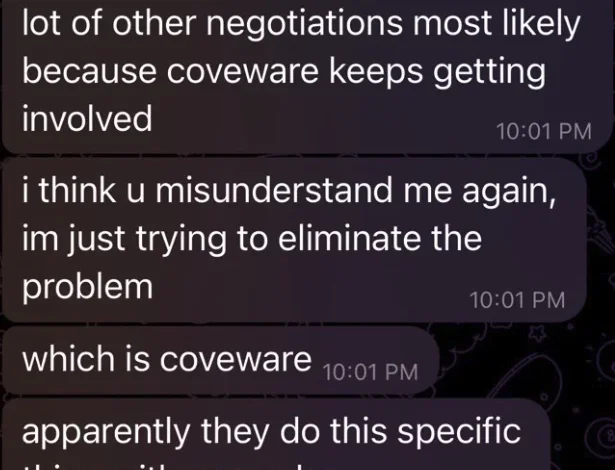
Investigators analyzing Van der Stap’s messaging history discovered that Dubrovsky maintained a continuous dialogue with the Dutch hacker. Alarming evidence suggested that Dubrovsky possessed advanced knowledge of the ShinyHunters breach targeting the FBI servers long before the public disclosure and subsequent social media taunts, yet he allegedly failed to notify federal authorities. Furthermore, investigators identified communications indicating that executives at various negotiation firms were routinely informed of new ShinyHunters data thefts even before the corporate victims themselves became aware of the compromises.
The Mechanics of Shinywire and Extortion Portals
Federal investigators have uncovered evidence indicating that at least one executive at a prominent U.S.-based consulting firm played an active, operational role in managing "shinywire.com," a now-defunct extortion portal utilized by the hacking group. Active from early May through mid-October, the Shinywire website cataloged nearly 100 victim organizations compromised by ShinyHunters.
The portal functioned as a digital pillory, featuring samples of stolen corporate and institutional data alongside countdown timers and direct demands for engagement and payment. Victims who failed to negotiate within a strict seven-day window found their proprietary data published on the primary ShinyHunters shaming blog, which is accessible exclusively via the Tor anonymity network. Notable targets listed on the portal included American medical technology giant Intuitive Surgical, which suffered a credential compromise earlier in the year following a targeted phishing campaign.
Corporate Disconnections and Shifting Alliances
The unfolding scandal has severely impacted several prominent cybersecurity firms, prompting swift corporate distancing. Cypfer, a prominent Toronto-founded incident response firm with global offices, issued a public statement clarifying that its business model does not involve facilitating ransomware payments. The company maintained that it had no prior knowledge of Dubrovsky’s arrest and confirmed it was not the target of any active law enforcement investigations.
Corporate registries and statements indicate that Cypfer was recently acquired by the Apros Group, a holding company led by Jason Hogg, a former FBI special agent and former CEO of Aon Cyber Solutions Group. Notably, Aon previously acquired Cytelligence, a security consultancy where Daniel Tobok served as founder and CEO, and where Edward Dubrovsky previously held the position of managing partner. Legal filings in Ontario have further illuminated bitter internal disputes, including lawsuits filed by Dubrovsky alleging a campaign by former business partners to undermine his standing within the industry.

Historical Precedents and the Ghostbyte Alias
As investigators dig deeper into the historical roots of the ransomware negotiation ecosystem, attention has turned to long-standing industry figures. Interviews with former colleagues indicate that Daniel Tobok was known among early ransomware actors years ago by the moniker "Ghostbyte."
Forensic analysis of historical extortion communications from 2018—specifically targeting a Canadian firm breached by the Dharma ransomware affiliate program—revealed that threat actors directed victims seeking payment guarantees to contact an IT representative using the email address [email protected]. Threat intelligence analysis firm Constella Intelligence subsequently linked email identifiers historically utilized by Tobok to online accounts operating under the username "ghostbyte." While investigators continue to examine the extent of these historical associations, no formal charges have been filed regarding these legacy incidents, and representatives for Tobok have not responded to requests for comment.
Structural Conflicts of Interest in Ransomware Remediation
The intersection of cybersecurity consulting and cyber extortion has long been a regulatory gray area. Under current U.S. law, paying a ransom to obtain an encryption key or secure a promise to delete stolen data is not inherently illegal, provided the threat actor is not formally designated as a sanctioned entity by the U.S. Department of the Treasury. While ShinyHunters has not been placed on official government sanctions lists, federal authorities are increasingly scrutinizing the financial arrangements underpinning ransom negotiations.
Industry experts and regulatory bodies have repeatedly highlighted an inherent conflict of interest within the incident response sector. Many specialized negotiation firms operate on a contingency fee model, collecting a predetermined percentage of the total ransom amount disbursed to threat actors. Consequently, critics argue these intermediaries possess a perverse financial incentive to inflate ransom payments, discourage negotiation pushback, and prioritize rapid payouts over long-term data security.
Mark Camillo, chief executive of CyberAcuView—an industry group established by major cyber insurance providers—emphasized the pressing need for systemic reform and transparency. "It has come to the industry’s attention that many of the ransomware payers charge a percentage of the final payment, which may or may not be disclosed," Camillo stated. "This makes no sense if they are also the negotiator. There needs to be more transparency in the process, as no one in the ecosystem should be profiting purely on the size of the ransomware transaction."

Law Enforcement Crackdown on Corrupt Intermediaries
The current federal investigation into ShinyHunters aligns with a broader, aggressive enforcement push by the U.S. Department of Justice targeting compromised professionals within the cybersecurity remediation sector.
In October, federal prosecutors charged MonsterCloud CEO Zohar Pinhasi with wire fraud and conspiracy. According to the indictment, Pinhasi systematically deceived clients by charging millions of dollars for technical remediation while secretly funneling millions to ransomware operators behind their backs. Similarly, in July, independent ransomware negotiator Angelo Martino was sentenced to 70 months in prison for conspiring with the BlackCat/ALPHV ransomware syndicate to exploit proprietary client negotiation strategies, thereby maximizing extortion payouts at the expense of corporate victims.
Broader Implications for National Security and Corporate Defense
The revelation that senior figures within Western cybersecurity and negotiation firms may have maintained active alliances with elite cybercriminal syndicates marks a watershed moment for the digital defense industry. For years, incident response firms have positioned themselves as trusted bulwarks protecting organizations from the ravages of digital extortion.
The ongoing federal probe into ShinyHunters and its alleged corporate enablers demonstrates that criminal networks have successfully infiltrated the trusted intermediaries of the cybersecurity ecosystem. As the Department of Justice expands its prosecutions and international law enforcement agencies continue to analyze seized digital infrastructure, the industry faces an urgent reckoning regarding ethical oversight, financial transparency, and regulatory compliance. The outcome of these federal investigations will likely permanently reshape how corporate entities and insurers navigate the treacherous waters of cyber extortion and incident response.
Related posts: