Crypto-Linked Stocks Plunge Following Historic $6.3 Billion Binance Exploit and Growing Corporate Resistance to Tokenized Equities

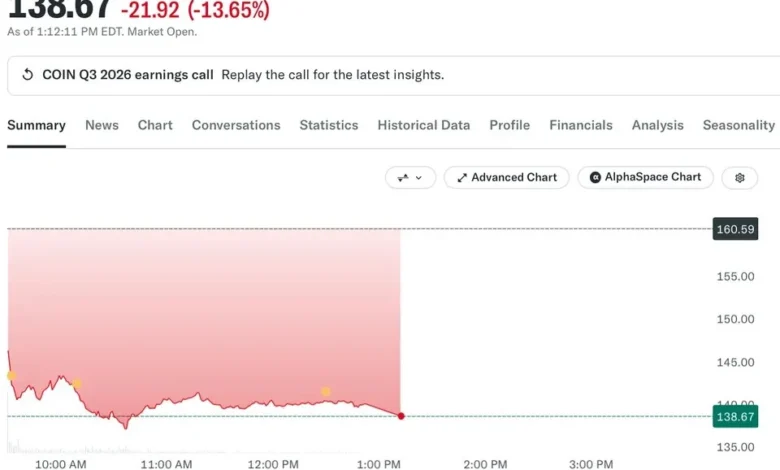
The global cryptocurrency market and its associated equities experienced a severe downturn, led by a sharp decline in shares of Coinbase Global. This downward pressure was compounded by a historic security breach on Binance resulting in an estimated $6.3 billion in stolen digital assets, falling core revenues across crypto enterprises, and a broader, macro-driven sell-off within the technology sector.
The confluence of catastrophic security failures, shifting monetary environments, and an intensifying turf war over the future of market infrastructure has placed digital-asset firms under unprecedented scrutiny. As institutional investors reassess risk parameters, the events underscore the vulnerability of crypto-linked equities to both systemic market shocks and idiosyncratic operational threats.
The Anatomy of the Market Sell-Off
The catalyst for the most recent wave of panic was the confirmation by Binance—the world’s largest cryptocurrency exchange by trading volume—that it had suffered a devastating security exploit. Unauthorized actors managed to siphon approximately $6.3 billion worth of digital assets, marking the largest exploit in the history of the cryptocurrency industry.
The sheer scale of the breach sent immediate shockwaves through global markets, triggering a flight to safety. Bitcoin and other major digital assets tumbled as investors aggressively trimmed exposure to risk-on asset classes. This crypto-specific panic coincided with broader macroeconomic headwinds, including surging anxieties over stretched technology valuations, escalating capital expenditures on artificial intelligence infrastructure, and tightening liquidity conditions.
Crypto-related equities absorbed the brunt of the volatility. Coinbase Global, the largest publicly traded cryptocurrency exchange in the United States, saw its stock price tumble alongside other digital-asset proxies. Market analysts pointed out that the sell-off vividly exposed the structural sensitivity of these equities to declining digital-asset valuations and volatile trading volumes.

Financial Realities Behind the Headlines: The Coinbase Earnings Paradox
Beneath the immediate turbulence of the market sell-off lies a more complex financial narrative concerning the underlying operating performance of publicly listed crypto giants.
A closer examination of corporate financial disclosures reveals a stark disconnect between headline profitability and core operational revenue. For instance, Coinbase recently reported a quarterly profit that was heavily bolstered by $715 million in non-operating cryptocurrency investment gains. However, when stripping away these volatile portfolio revaluations, the company’s adjusted net income stood at a much more modest $78 million.
This narrow margin underscores a persistent vulnerability within the crypto business model: heavy reliance on token price appreciation and trading fees rather than diversified, predictable enterprise revenue streams. When market sentiment sours and trading activity dries up, the underlying operating performance of exchanges and digital-asset firms faces immediate compression, leaving investors exposed to sharp downward corrections.
Traditional Finance Meets Decentralization: The Tokenized Stock Battleground
While digital-asset exchanges grapple with security breaches and revenue pressures, traditional financial infrastructure faces its own existential challenges driven by crypto disruption. A burgeoning institutional battle has erupted over the democratization—or unauthorized distribution—of tokenized traditional equities.
More than 20 major publicly listed corporations have formally registered strong objections to ambitious plans spearheaded by crypto exchange OKX and the Intercontinental Exchange (ICE), the parent company of the New York Stock Exchange. The contested initiative involves offering tokenized representations of blue-chip corporate shares, allowing investors to trade blockchain-backed versions of traditional equities outside of conventional clearinghouses.
Prominent enterprises—including tech giants, multinational conglomerates, and major financial institutions—have pushed back aggressively against the rollout. These firms argue that the creation and secondary trading of tokenized shares without explicit corporate consent infringes upon governance rights, dilutes regulatory oversight, and creates uncharted legal liabilities.

This high-stakes resistance exposes a profound ideological and structural divide over who will ultimately control the next generation of global financial market architecture. On one side, crypto-native enterprises and forward-looking exchanges are aggressively pushing for frictionless, blockchain-based trading and 24/7 global settlement. On the other side, established corporations and traditional market gatekeepers are fiercely defending the status quo, demanding strict regulatory compliance, issuer consent, and centralized control over how equity interests are represented in digital formats.
Chronology of Events
To understand the current multi-front crisis facing the digital-asset sector, it is helpful to trace the sequence of developments that converged in late 2026:
- Early Operational Pressures: Digital-asset exchanges begin reporting compressed transaction revenues as retail trading volumes stagnate amid broader macroeconomic tightening.
- The Historic Security Breach: Binance publicly discloses a catastrophic security exploit, confirming the unauthorized outflow of approximately $6.3 billion in digital assets, instantly setting a record for the largest hack in crypto history.
- Equities and Crypto Contagion: Crypto-linked stocks, led by Coinbase Global, plummet as institutional and retail investors rapidly divest from risk assets. Simultaneously, Bitcoin faces sustained downward pressure alongside a broader sell-off in technology and AI-related equities.
- Corporate Pushback on Tokenization: A coalition of more than 20 major U.S.-listed corporations formally objects to initiatives by OKX and ICE to introduce unauthorized tokenized versions of their corporate shares.
- Institutional Realignment: Dialogue intensifies between regulators, traditional financial institutions, and crypto innovators regarding the future legal framework for blockchain-based securities and exchange security standards.
Implications and Outlook for the Industry
The simultaneous occurrence of a multi-billion-dollar exploit and an institutional turf war over equity tokenization marks a critical inflection point for the digital-asset ecosystem.
For crypto exchanges and infrastructure providers, the Binance hack serves as an urgent reminder that systemic risk and cybersecurity vulnerabilities remain existential threats. Regulators across major jurisdictions are expected to respond with heightened scrutiny, demanding more robust proof-of-reserves, ironclad internal security protocols, and comprehensive incident-response frameworks. For publicly traded proxies like Coinbase, the market reaction demonstrates that investors are increasingly demanding sustainable, fee-based revenue growth rather than earnings dependent on volatile crypto market cycles.
Simultaneously, the fierce resistance from traditional corporations against OKX and ICE highlights the friction inherent in financial evolution. The path toward widespread tokenization will not be determined solely by technological capability, but by legal clarity, regulatory compliance, and the willingness of traditional market participants to negotiate terms with blockchain innovators.
Ultimately, the digital-asset industry finds itself pressed on two distinct fronts: defending its operational integrity against sophisticated criminal actors while fighting for legitimacy and integration within the traditional financial framework. How market participants navigate these dual challenges over the coming months will likely define the trajectory of digital finance for the next decade.